30 Sep 2006

Hardware Zone websites sold

Singapore (dpa) - Singapore Press Holdings (SPH) is buying all the magazine and online titles of Hardware Zone, which operates a website featuring new electronic products and reviews, SPH said in a published statement Saturday.

The website, which started in 1999 as a hobby for the co-founders, currently has operations in Thailand, Singapore, Malaysia, the Philippines, Indonesia, China and Australia.

Co-founders Eugene Low and Jackie Lee were 22-year-old undergraduates at the National University of Singapore when they started Hardware Zone.

The purchase price is 7.1 million Singapore dollars (4.5 million US dollars).

"Hardware Zone's online magazine business strategy will complement SPH Magazines' strong print magazine business," said the statement in The Straits Times.

The acquisition is scheduled to be completed around November 1.


[Reaction from Forumers...]
SPH have control of all major papers and magazines....
anything from straits times - business times - zao bao - berita harian
all the way to men's health, citibella, maxim...

the loooming issue here is actually bigger than any potential change in "forumer" privilege or rights in speech freedom but the monopoly control of local media offline and online in singapore. by Radish

29 Sep 2006

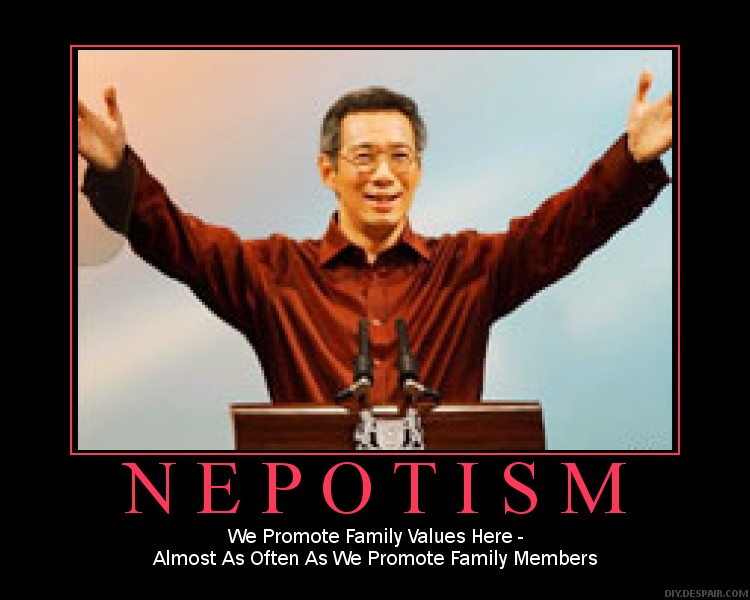
Mini Lee's Motivational Poster


A poster that mini-Lee might want to print out and post on his office wall from asiapundit.

Or how about this one I created at despair.com ...


Empower Singaporeans Seminar Series – register now!

Singapore Democratic Party

Following the landmark protest at Hong Lim Park during the WB-IMF Meeting, a workshop will be held on 15 October 2006, Sunday, under the Empower Singaporeans Seminar Series.

This day-long seminar is tailored for the Singaporean who yearns justice and democracy, but doesn't know how to go about working towards it.

The seminar, starting at 9 am and ending at 6 pm, will feature lectures, interactive discussions, debates, and role-playing on topics such as human rights, the development of democracy in Asia, and a history of repression in Singapore.

Participants will also learn about the principles and practice of Nonviolence, and how it can be applied to Singapore.

The activists at the Empower Singaporeans Rally and March on 16 September will be on hand to conduct some of the seminar discussions. This is your chance to talk to them and learn how they overcame their fears.

Learn how you can break through your crippling sense of powerlessness, fear and isolation. Discover the courage trapped in your hearts and unlock the shackles that imprison your minds.

Don't just sit by and criticize, channel your energy and ideas into constructive action. Join us at the seminar.

The seminar is open to all Singaporeans. To attend please register by sending us an email (speakup@singaporedemocrat.org). Details of the seminar will be sent to you if your registration is successful.

Please register early as places are limited.


The FEER Article that Caused Offence


Singapore’s ‘Martyr,’ Chee Soon Juan
July/August 2006
By Hugo Restall


Striding into the Chinese restaurant of Singapore’s historic Fullerton Hotel, Chee Soon Juan hardly looks like a dangerous revolutionary. Casually dressed in a blue shirt with a gold pen clipped to the pocket, he could pass as just another mild-mannered, apolitical Singaporean. Smiling, he courteously apologizes for being late—even though it is only two minutes after the appointed time.

Nevertheless, according to prosecutors, this same man is not only a criminal, but a repeat offender. The opposition party leader has just come from a pre-trial conference at the courthouse, where he faces eight counts of speaking in public without a permit.

He has already served numerous prison terms for this and other political offenses, including eight days in March for denying the independence of the judiciary. He expects to go to jail again later this year.

Mr. Chee does not seem too perturbed about this, but it drives Singaporean Prime Minister Lee Hsien Loong up the wall. Asked about his government’s persecution of the opposition during a trip to New Zealand last month, Mr. Lee launched into a tirade of abuse against Mr. Chee. “He’s a liar, he’s a cheat, he’s deceitful, he’s confrontational, it’s a destructive form of politics designed not to win elections in Singapore but to impress foreign supporters and make himself out to be a martyr,” Mr. Lee ranted. “He’s deliberately going against the rules because he says, ‘I’m like Nelson Mandela and Mahatma Gandhi. I want to be a martyr.’”

Coming at the end of a trip in which the prime minister essentially got a free ride on human rights from his hosts—New Zealand Prime Minister Helen Clark didn’t even raise the issue—this outburst showed a lack of self-control and acumen. Former Prime Minister Lee Kuan Yew, the man who many believe still runs Singapore and who is the current prime minister’s father, has said much the same things about Mr. Chee—“a political gangster, a liar and a cheat”—but that was at home, and in the heat of an election campaign.

Mr. Chee smiles when it’s suggested that he must be doing something right. “Every time he says something stupid like that, I think to myself, the worst thing to happen would be to be ignored. That would mean we’re not making any headway,” he agrees.

But one charge made by the government does stick: Mr. Chee is not terribly concerned about election results. Which is just as well, because his Singapore Democratic Party did not do very well in the May 6 polls. It would be foolish, he suggests, for an opposition party in Singapore to pin its hopes on gaining one, or perhaps two, seats in parliament. He is aiming for a much bigger goal: bringing down the city-state’s one-party system of government. His weapon is a campaign of civil disobedience against laws designed to curtail democratic freedoms.

“You don’t vote out a dictatorship,” he says. “And basically that’s what Singapore is, albeit a very sophisticated one. It’s not possible for us to effect change just through the ballot box. They’ve got control of everything else around us.” Instead what’s needed is a coalition of civil society and political society coming together and demanding change—a color revolution for Singapore.

So far Mr. Chee doesn’t seem to be getting much, if any traction. While many Singaporeans don’t particularly like the PAP’s arrogant style of government, the ruling party has succeeded in depoliticizing the population to the extent that anybody who presses them to take action to make a change is regarded with resentment. And in a climate of fear—Mr. Chee lost his job as a psychology lecturer at the national university soon after entering opposition politics—a reluctance to get involved is hardly surprising.

Why is all this oppression necessary in a peaceful and prosperous country like Singapore where citizens otherwise enjoy so many freedoms? Mr. Chee has his own theory that the answer lies with strongman Lee Kuan Yew himself: “Why is he still so afraid? I honestly think that through the years he has accumulated enough skeletons in his closet that he knows that when he is gone, his son and the generations after him will have a price to pay. If we had parliamentary debates where the opposition could pry and ask questions, I think he is actually afraid of something like that.”

That raises the question of whether Singapore deserves its reputation for squeaky-clean government. A scandal involving the country’s biggest charity, the National Kidney Foundation, erupted in 2004 when it turned out that its Chief Executive T.T. Durai was not only drawing a $357,000 annual salary, but the charity was paying for his first-class flights, maintenance on his Mercedes, and gold-plated fixtures in his private office bathroom.

The scandal was a gift for the opposition, which naturally raised questions about why the government didn’t do a better job of supervising the highly secretive NKF, whose patron was the wife of former Prime Minister Goh Chok Tong (she called Mr. Durai’s salary “peanuts”). But it had wider implications too. The government controls huge pools of public money in the Central Provident Fund and the Government of Singapore Investment Corp., both of which are highly nontransparent. It also controls spending on the public housing most Singaporeans live in, and openly uses the funds for refurbishing apartment blocks as a bribe for districts that vote for the ruling party. Singaporeans have no way of knowing whether officials are abusing their trust as Mr. Durai did.

It gets worse. Mr. Durai’s abuses only came to light because he sued the Straits Times newspaper for libel over an article detailing some of his perks. Why was Mr. Durai so confident he could win a libel suit when the allegations against him were true? Because he had done it before. The NKF won a libel case in 1998 against defendants who alleged it had paid for first-class flights for Mr. Durai. This time, however, he was up against a major bulwark of the regime, Singapore Press Holdings; its lawyers uncovered the truth.

Singaporean officials have a remarkable record of success in winning libel suits against their critics. The question then is, how many other libel suits have Singapore’s great and good wrongly won, resulting in the cover-up of real misdeeds? And are libel suits deliberately used as a tool to suppress questioning voices?

The bottling up of dissent conceals pressures and prevents conflicts from being resolved. For instance, extreme sensitivity over the issue of race relations means that the persistence of discrimination is a taboo topic. Yet according to Mr. Chee it is a problem that should be debated so that it can be better resolved. “The harder they press now, the stronger will be the reaction when he’s no longer around,” he says of Lee Kuan Yew.

The paternalism of the PAP also rankles, especially since foreigners get more consideration than locals. The World Bank and International Monetary Fund will hold their annual meeting in Singapore this fall, and have been trying to convince the authorities to allow the usual demonstrations to take place. The likely result is that international NGO groups will be given a designated area to scream and shout. “So we have a situation here where locals don’t have the right to protest in their own country, while foreigners are able to do that,” Mr. Chee marvels. Likewise, Singaporeans can’t organize freely into unions to negotiate wages; instead a National Wages Council sets salaries with input from the corporate sector, including foreign chambers of commerce.

All these tensions will erupt when strongman Lee Kuan Yew dies. Mr. Chee notes that the ruling party is so insecure that Singapore’s founder has been unable to step back from front-line politics. The PAP still needs the fear he inspires in order to keep the population in line. Power may have officially passed to his son, Lee Hsien Loong, but even supporters privately admit that the new prime minister doesn’t inspire confidence.

During the election, Prime Minister Lee made what should have been a routine attack on multiparty democracy: “Suppose you had 10, 15, 20 opposition members in parliament. Instead of spending my time thinking what is the right policy for Singapore, I’m going to spend all my time thinking what’s the right way to fix them, to buy my supporters’ votes, how can I solve this week’s problem and forget about next year’s challenges?” But of course the ominous phrases “buy votes” and “fix them” stuck out. That is the kind of mistake, Mr. Chee suggests, Lee Sr. would not make.

“He’s got a kind of intelligence that would serve you very well when you put a problem in front of him,” he says of the prime minister. “But when it comes to administration or political leadership, when you really need to be media savvy and motivate people, I think he is very lacking in that area. And his father senses it as well.”

However, the elder Mr. Lee’s death—he is now 82—is a necessary but not sufficient condition for change. Another big factor is how civil society is able to use new technologies to bypass PAP control over information and free speech. The government has tried to stifle political filmmaking, blogging and podcasting. Singapore Rebel, a 2004 film about Mr. Chee by independent artist Martyn See, was banned but is widely available on the Internet.

Meanwhile, pressure for Singapore to remain competitive in the region has sparked debate about the government’s dominant role in the economy. Can a top-down approach promote creativity and independent thinking? The need for transparency and accountability also means that Singapore will have to change. That is the source of Mr. Chee’s optimism in the face of all his setbacks: “I realize that Singapore is not at that level yet. But we’ve got to start somewhere. And I’m prepared to see this out, in the sense that in the next five, 10, 15 years, time is on our side. We need to continue to organize and educate and encourage. And it will come.”

He doesn’t dwell on his personal tribulations, but mentions in passing selling his self-published books on the street. That is his primary source of income to feed his family, along with the occasional grant. As to the charge of wanting to be a martyr, once he started dissenting, he found it impossible to stop in good conscience. “The more you got involved, the more you found out what they’re capable of, it steels you, so you say, ‘No, I will not back down.’ It makes you more determined.”

Perhaps it’s in his genes. One of Mr. Chee’s daughters is old enough that she had to be told that her father was going to prison. She stood up before her class and announced, “My papa is in jail, but he didn’t do anything wrong. People have just been unfair to him.”


Mr. Restall is editor of the REVIEW.


SINGAPORE: British reporter denied entry at airport

Mr Jaya Gibson [his official site] has also removed an article from his blog that refered to his 'assisting with administrative matters' with M. Ravi, which I refered to in an earlier post this week.


Authorities do not allow British Epoch Times reporter into country to cover trial of Falungong activists

Straits Times
Thursday, September 28, 2006

By Khushwant Singh

A British journalist who flew in from London on Sunday was denied entry at Changi Airport and asked to leave.

Mr Jaya Gibson works for New York-based The Epoch Times, which is strongly supportive of the Falungong movement.

The Immigration and Checkpoints Authority said that Mr Gibson was ineligible for a visit pass, but did not give any reason.

He left on Monday.

Mr Gibson was in Singapore last month to cover the trial of two Falungong followers who were charged with displaying insulting words on a banner opposite the Chinese Embassy in Tanglin Road on July 20.

When the trial was adjourned, Mr Gibson left for Geneva to attend a human rights conference, said Mr Sng Beng Kok, a photojournalist with The Epoch Times.

Mr Gibson had also been assisting the Falungong pair's lawyer, Mr M. Ravi, with administrative matters, Mr Sng told Agence France-Presse news agency.

The Epoch Times focuses on reporting alleged human rights abuses by China's Communist Party, especially its crackdown on Falungong, which Beijing outlawed as an "evil cult" in 1999.

The newspaper has been circulating here since 2004.

Mr Ravi has been hospitalised and the two Falungong practitioners on trial have till Monday to decide if they wish to hire a new lawyer.


Date Posted: 9/28/2006


28 Sep 2006

Singapore bans Far Eastern Economic Review magazine

AFX News Limited

09.28.2006, 08:21 AM

SINGAPORE (XFN-ASIA) - The government said it has banned the Far Eastern Economic Review magazine after it failed to comply with media regulations.

'The Minister for Information, Communications and the Arts has revoked with effect from 28 September 2006 the approval given to the Far Eastern Economic Review (FEER) for sale or distribution in Singapore,' a government press release said.

It added that it was also an offense to import or possess copies of the Hong Kong-based magazine for sale or distribution in the city-state.

The move comes two weeks after revelations that Singapore Prime Minister Lee Hsien Loong and his father Lee Kuan Yew had filed defamation suits against the FEER.

The Lees filed the lawsuits in August against editor Hugo Restall and Hong Kong-based Review Publishing, alleging the pair had been defamed in a July article based on an interview with opposition politician Chee Soon Juan.

it-rc/sst


Firing up the post-65ers

According to this report a third of those present were already blogging so it would be great to hear some of their interpretations of what happened. Post a link to your blog in the comment section, please.

PM wants them to make noise but they're just finding their voice


Thursday • September 28, 2006

Christie Loh
christie@newstoday.com.sg
• News Analysis

It takes a while to warm up young Singaporeans — even with the Prime Minister egging them on to jump up and take a shot in open dialogue.

"This evening, I've been trying hard to get people to put their hands up to speak. But some shy," quipped Mr Lee Hsien Loong, 54, at last Saturday's forum with 220 youth, aged 17 to 30, at the Supreme Court.

This was the 12th time a prime minister of the country had held an annual dialogue with young Singaporeans from schools, voluntary welfare organisations, the civil service and the media. For Mr Lee, the exchange fitted in with his priority, since becoming premier in 1994, to galvanise those born after 1965.

Then, he had called on the "P65", or post-65, group — which makes up about half the nation's current population — to step up and shape its future. On Saturday, he urged those not happy with things not to just up and leave but to "make a nuisance" of themselves until they had fixed it.

It was a rare event to witness the engagement between prime minister and youth; for the first time, the normally closed-door dialogue was open to media coverage. What was also different was a "pre-dialogue session" held the week before, where younger Members of Parliament and the participants brainstormed which 12 questions to ask the PM and by whom.

Except that Mr Lee didn't quite stick to the script when the day came. Instead of first answering the set questions and then taking follow-ups "if there was time", he often halted the flow of the 100-minute session to push for more spontaneity. Such as when he stopped co-moderator Minister Vivian Balakrishnan from moving on to the next topic because Mr Lee wanted to hear more views on race relations.

The room waited. Eventually, a Muslim teacher asked what the out-of-bounds markers are when it comes to religion and race.

"I think we're already discussing OB markers," a smiling Mr Lee said, before addressing her question on why schools in multi-ethnic Singapore prefer an open "common space" to one for each religious group.

Mr Lee wanted more crossfire. So he heard a girl's lament that her years in schools dominated by Chinese students had led to an ignorance about other cultures. Swiftly, Mr Lee whipped out a sheet listing cross-cultural activities organised by some of the schools.

No issue was taboo, from the impact of foreign talent to the rise of new media. The openness impressed participants who, afterwards, applauded Mr Lee for his "warmth", "clear, satisfactory answers" and being "not condescending".

Some voiced fears of foreign talent taking jobs away from the locals, a concern that had cropped during a string of recent dialogues between youths and P65 MPs. Mr Lee reiterated that foreign talents help enlarge the economy, creating more jobs for the locals.

The twin topics of new media and political expression took up about 40 minutes of the session.

Inquisitive youths wanted to know if Mr Lee's "older colleagues" would be able to accept an era of political expression with fewer boundaries. His reply: More young parliamentarians will be brought in to "do the talking", but opening up has to be done step by step because "politics is a serious sort of business".

What of the Government's plans to engage the young through their increasingly preferred medium of expression — blogging? Mr Lee's response was that while engagement by way of new media was necessary, "we have to experiment to see how it works". For example, should he start blogging to reach the young, he asked. He wasn't sure, but he would do it only if he had something "sincere and substantial" to share.

Turning the tables, Mr Lee then asked how many blogged. About a third raised their hands. At the same time, many participants started marching up to the mike to proffer their views on, what else, speaking up.

The lively exchange on youth expression heartened Mr Teo Ser Luck, parliamentary secretary for the Ministry of Community Development, Youth and Sports, who told Today: "If they want political freedom, it's because they want to have more say. If they didn't want to speak up or if the blogs were not active, then I'd be worried."

But encouraging as Saturday's session might be for Government-youth engagement, Mr Teo is only too aware of a much larger pool of youths that has not made it to any dialogue session.

Those who attend such "formal" settings, Mr Teo said, are the "converts" and "good youths who do their homework". Such as the polytechnic student who stumped him by asking, during the pre-dialogue session, if the $1,800 income bracket for S-Pass applicants (skilled middle-level workers) was too low.

But many more don't think about such things. "What should we do? Go to the void deck?" he asked, wondering if activities at housing estates would work.

For now, Mr Teo and his fellow P65 MPs can take heart in the email that have been streaming in, asking how one could take part in the youth dialogues — and they are "not from the usual-suspect schools".

"They're warming up to us," noted Mr Teo.

What's your view? Email us at news@newstoday.com.sg


27 Sep 2006

'Zahari's 17 Years' to premiere in Malaysia

From Singapore Rebel...

Three Singapore films have been selected for screening at the 2006 Freedom Film Festival in Malaysia. Martyn See's 'Zahari's 17 Years', Tan Pin Pin's 'Singapore Gaga' and 'Moving House' will feature among an international slate of films dedicated to raising the consciousness of socio-political issues.

Following Martyn See's participation in last year's festival, local documentary filmmaker Tan Pin Pin has been invited by this year's organisers to present her work. She will be attending the screenings at Taylor's College in Subang Jaya.

The festval will run over two weekends in two venues.

29 Sept to 1 Oct
KLANG VALLEY : Taylor’s College, 1, Jalan SS15/8, 47500, Subang Jaya,
For invite in Klang Valley, call Effa Desa 03-79685415

6 Oct to 8 Oct
PENANG : The Actors Studio Greenhall, Ground Floor, Zhong Zheng School Memorial Centre, 32, Lebuh Light, 10200 Penang
For invite in Penang, call Wee Ching 012-2755438 Or Chon Kai 019-5669518

Showtimes for 'Zahari's 17 Years'
Klang Valley on Oct 1, 2.30pm
Penang on Oct 8, 2.30pm

The full schedule of the festival here.


A short clip of the movie can be seen here...


Chees write to Chief Justice on summary judgement hearing

27 September 2006

Mr Chan Sek Keong
Chief Justice
Supreme Court
Republic of Singapore

Dear Sir,

In the recent summary judgement hearing presided by Judge Belinda Ang on 12 September 2006 in the matter of Lee Kuan Yew and Lee Hsien Loong v. Chee Siok Chin and Chee Soon Juan (Suit Nos. 261 and 262 of 2006), Ms Chee and I were not represented by counsel.

Before the proceedings began, we had informed Judge Ang that our counsel, Mr M Ravi, was not well and that we needed time for him to recover. The Plaintiffs lawyer, Mr Davinder Singh, insisted that our application was nothing but a ploy to delay the hearing. Judge Ang sided with Mr Singh and rejected our application.

This being the case, we then asked to discharge Mr Ravi as our lawyer as he could not continue arguing our matter and to have a two-week adjournment for us to find another lawyer.

Again, Mr Singh objected and again Ms Belinda Ang sided with him. The summary judgement hearing thus proceeded without us having legal representation. Ms Ang ruled in the Lees’ favour. All this was done in her chambers away from the media and public.

Mr Ravi has now been hospitalized. A medical certificate from the hospital has already been produced in court. Given his illness, Mr Ravi was also unable to represent his other clients in three other cases.

It is clear that Judge Ang was wrong not to allow our counsel time to recover or to give us time to try to find another lawyer.

I do not have to tell you that to have a hearing in chambers with one party not having legal representation is a grave breach of the principles of justice.

The defendants would like to appeal Judge Ang’s decision to proceed with the hearing despite the absence of our lawyer. However, we have to pay the security cost of $10,000 which we cannot afford. We would like to ask that the cost be waived given the nature of the case and the circumstances surrounding it. This will enable us to proceed with the appeal and have justice not only done, but also manifestly seen to be done.

I look forward to hearing from you.

Sincerely,

Chee Soon Juan
Secretary-General
Singapore Democratic Party


A sharing I gave regarding Singapore...

Below is the article written by Mr Gibson which he has removed from his blog. Mr Gibson is a reporter for the Epoch Times and had been in Singapore covering the case of two Falun Gong members. M. Ravi is the lawyer who was defending the two Falun Gong members. It was posted on the 9th of September 2006 and was available until 28th September 2006. It is posted in full below and may shed some light on the reason he was denied access to Singapore by the authorities.
Saturday, September 09, 2006


This is my understanding of the situation regarding Ravi. Please understand that so much has happened in the last week that it is hard to write everything down in great detail.

Through out this whole time my understanding of the entire situation is that no matter what the circumstances and details of the situation in this dimension, any outcome good or bad has been due to the strength/lack or clarity in our collective righteous thoughts and understanding of the Fa.

The entire first week Ravi was fine. He performed excellently in court and although he was very direct in his manner with whoever he spoke to he never used bad words and was calm. To me he seemed like an everyday person but with very righteous views when it came to Falun Gong's situation. I have never met an ordinary person other than David Kilgour or Edward Scott-MacMillan so determined to stand up for Falun Gong. He has risked much personally taking this case. It was only when he was in debate in court that he got excited but it seemed very effective and the prosecution and the judge had a hard time trying to beat him on his points so instead they would just try and side step the issue altogether.

The entire week he was clear and only at certain points when the collective understanding of the practitioners here was not clear, only then would Ravi become frustrated. But at those times either all or one of myself, You Xin and the 2 other Australian practitioners where present to clarify the situation and assist Ravi.

On the 3rd day Ravi offered You Xin and I to use a spare room in his office so that we can do everything we need to do to assist the trials. We can use any materials, the internet, the phone with no charge. This is very helpful as his office is just opposite the Subordinate Court so it has helped greatly. He shares with 2 other women lawyers who are all very close to Ravi and also very supportive of the situation. He also mentioned a lot that he felt very calm around practitioners. Since then I have kept very close to Ravi and I have been aware that I should not become attached to him through Qing or anything else, it has been hard and I made some errors but now I feel unmoved regarding Ravi.

Only when the overseas practitioners left did Ravi start to show some signs of instability but not too bad and it was a little more work to help him through that. It seemed as time went on each day some new pressure would come to bear on Ravi, like another complication regarding one of his other cases etc. With this it was obvious to anyone that he was feeling the pressure as an ordinary person would.

Then we had the teamspeak and halfway through Ravi came back very jittery and nervous. He insisted that I listen to him and didn’t wish to wait until after the teamspeak. He explained that something happened at the temple and he believed that he was being setup by the priests and the police to be arrested on false charges. I told him I couldn’t get involved in this matter and he got upset. I said that I had to stay focused on Falun Gong and be true to my understandings. He was sill very upset and angry with me saying all kinds of things. When I told him that I would do my best within my understanding to help him he calmed down a little. I persuaded him that it was very important that I get back on the teamspeak. Then on the teamspeak the practitioners overseas wanted to speak to him. He got on the teamspeak and talked a lot with the practitioners, he seemed to change quite quickly from nervous and jittery to becoming focused on the Falun Gong issue. I felt that the situation with the temple was just a distraction and to pay no attention to it.
Afterwards he was so clear and calm and determined to go on. He even gave up going to Australia to do his human rights tour which is related to his client who is going to be executed soon. He felt that this matter was a priority. That night he was worried about police coming and arresting him so we slept in the office.

That morning when he woke he was completely different and acting very unusual. I realised very quickly how this was not good. It was 5:30am and he wanted to go to his temple to do his rituals but he was worried that he would be falsely arrested and asked me to come just in case. Before I went into the temple I asked master to seal off my ears and not let anything I see, hear or sense get into me as I didn’t want to accept any of it. I was here to make sure Ravi was OK. At the temple his actions were not good and he behaved irrationally which upset the others worshipping there. I was doing FZN but it was hard to keep calm and I sometimes feel my heart beating very fast, I knew it was vital that I remain still but it was so hard because the situation seemed so utterly bizarre and inappropriate.

The police were called and turned up; they asked questions to both of us. At that point I decided I was not going to be a part of what he was trying to get me involved in, I refused and he got very upset. I felt that I did the right thing no matter what his reaction and that to trust master was the best thing. All of a sudden I felt better and relief that I had made this decision. I became much calmer. In the end the police determined that there was no cause for complaint and left after asking Ravi to leave peacefully. It took some persuasion from myself and the police but he left. When the police had first arrived I phoned You Xin and asked her to come immediately. The police were very calm and seemed to be very good people which surprised me.

Ravi and I left the temple went to a coffee shop very nearby while we waited for You Xin. In the temple he had called some of his friends – who were also clients - and they turned up at the coffee shop. I explained the situation to them and they were concerned but trusted us to look after him.

Ravi continued to act irrationally so either Ming Guo, You Xin or myself were with him to calm him down. You Xin and Ming Guo took him to the beach and helped him stay calm which worked very well. I continued to make a summary of what has happened in court and get the complaints from the public hearing together in Ravi’s office. I heard from You Xin that they share the Fa with Ravi and it was good.

We felt that it was important that he stay out of the public view while he was in this state so he went to stay with his friend Karen near the beach and he seemed to be very calm. The next day we had a couple of phone calls from him and it seemed that he was still a little confused. During the last week Ravi has slept very little, maybe a couple of hours a night.

Last night Ravi called me and asked if we could come over to be with him he felt that he needed us around. So You Xin, Ming Guo, William and myself went over and shared with him. He was calm but constantly talking, talking, talking about his understandings according to his practice. Eventually I get the idea to start reading the Fa to him; I started at Lecture Six on cultivation insanity. Immediately he stopped talking and started listening very carefully. Very soon he became sleepy and lay down. He went to sleep for 30 minutes but when You Xin and William tried to leave he woke up again. We decided that we should take turns to stay with him and help understand the Fa better. In the end Ming Guo and I stayed and we read Zhuan Falun from Lecture Six to some of the way through Lecture One. We read non-stop for 6-7 hours. He slept for 3 short periods through out this and remained calm but sometimes he would become irrational and make strange movements, we told him to be calm and just listen to the Fa at which point he would lie down again.

At 7am today his Ravi’s friend Karen woke up. Ravi woke up too and seemed like he was back to normal, very rational and calm. But slowly throughout the morning he started becoming irrational again. Ming Guo and I did the exercises and the meditation while Ravi and Karen tidied and cleaned up the house. You Xin turned up and after some sharing we felt that we needed to do FZN to this house as Karen was also a yoga practitioner and there were some unrighteous statues and what not that Ravi brought here. We decided that the evil was interfering with Ravi and didn’t want him to go to Geneva and we shared that the evil wanted to keep us busy maybe if we stopped running around after him like he was a little child wanting attachment. As soon as we decided to leave Ravi started banging things around and making noise. Ming Gou had asked some other practitioners to come also as we had no sleep and we had lots of other things to do regarding the trail here. Ng Chey Huey (one of the accused) and another practitioner came. Also Violet - one of the lawyers Ravi works with who practices a different form of mediation – arrived with her maid. We shared on what we should do, whether we should stay or go and we had a couple of different thoughts one that said we should stay and one that said we should leave. It was hard to know which was the best course of action. I felt that we were being distracted by running around after Ravi like he was a small child demanding lots of attention.

After a small sharing with the practitioners and some lunch that Karen organized I left. Violet followed me and wanted to share with me and help me understand Ravi’s situation some more as she has been very close to him and has seen him go through this before as this period of the year is around the time of his mothers dearth and also an important ceremony in his faith takes place soon.

My understanding as result of all this is quite simple; Ravi is confused because we are not solid in our understanding here collectively. So the evil is able to give him a hard time making him irrational and make us waiver on whether to continue with him. I think to just drop him would be bad for him also.

Through out this whole time my understanding of the entire situation is that no matter what the circumstances and details of the situation in this dimension, any outcome good or bad has been due to the strength/lack or clarity in our collective righteous thoughts and understanding of the Fa.

I also believe that Yuyi has been covering her attachments and that has caused some big problems here in Singapore. I have come to understand that she and William do not communicate much at all which I believe is a big gap on both their parts as they are the heads of FXH here.
On the whole Yuyi has been quite negative about me being here and has been negative towards Ravi. For the most part I have ignored it and just gotten on with what I have to do here. But after reading her email I believe she is being misleading as she has had very little contact with Ravi in comparison to myself or You Xin & Ming Guo.
Of course we must look inside and make sure we are not attached to Ravi. I believe that if Ravi is not part of the case that Master will of course arrange for the best to happen. But my heart tells me that for Ravi’s sake and ours, we must break through the evil interference and get him to Geneva. Ravi has done so much good for our case here so far the public hearing for example. Why are we all of sudden so willing to cut him off. Surely he needs our help right now too. I believe that will the issue of his faith has some relevance that getting distracted by that is what the evil wants. Didn’t he do well when we knew nothing of his personal life? Now that we know and we all have conflicting views within the body of practitioners involved is Ravi confused. I believe we should look inside as a whole on this issue.
I believe she was also not present at the initial teamspeak which I found out just now and I think it is odd that she wasn’t there.
The Australian practitioners that were here for the first week also shared with me that they felt the same way and were also surprised at the attitude towards us. At one of the group sharings she said that I shouldn’t be encouraged to share as I was a new practitioner and there were older practitioners with better understandings than me. Anyway you look at it this is not a good statement.
This has been passed onto me second hand but I did talk with her once and I was very surprised at her attitude. It seemed very negative and it felt like she wanted to have control of the situation and was jealous of You Xin’s and my involvement, until that point I thought she was glad that I was here to help but after talking to her it seemed not to be that way. She stated that Master said anyone coming here needed to have a good understanding of Singapore law along with the points that Theresa mentioned, I had never heard this sharing at this time and I didn’t understand why no one told me or the other Australian practitioners this before we came over here. At the time I challenged Diana on this saying that as head of FXH here surely it was her responsibility to make sure we understood these points. She didn’t respond to my query and said it was an unwritten rule and stated that she was the head of the FXH here like her position gave authority over any understanding I had share. I was surprised that someone who was FXH was so unwilling to look inside or consider other points of view.
Theresa didn’t mention this when she talked about what master said regarding Singapore’s situation on the teamspeak but I didn’t think anything of it until now. Could someone please clarify for me this point.
Also please remember that no other lawyer in Singapore has come forward and the story of how they came to have Ravi as their lawyer feels like it was predestined to me.
I am in agreement with Terri and Theresa on their understandings as they have first hand experience of the interference lawyers have had.
This is an issue that on the surface seems very complex but I think it comes down to looking within and having solid righteous thoughts. I feel it would better to share about this on Teamspeak sooner rather than later i.e. before Monday night.
This is just my understanding, please share anything you feel maybe incorrect.

posted by gifted01 at 4:23 PM 0 comments links to this post

M. Ravi - Get Well Soon

Here is an extract from a blogger by the name of Jaya Gibson in Singapore Saturday, September 09, 2006. It refers to M. Ravi someone although I have never physically met but feel close to as I have followed his human rights cases over the years. It seems to involve the Falun Gong and is I feel a very personal account of M. Ravi's current state. The validity and reliability of the testament given is not secure. However I do feel that if correct M. Ravi's family and close friends need to be called upon at this time of stress.

At 7am today his Ravi’s friend Karen woke up. Ravi woke up too and seemed like he was back to normal, very rational and calm. But slowly throughout the morning he started becoming irrational again. Ming Guo and I did the exercises and the meditation while Ravi and Karen tidied and cleaned up the house. You Xin turned up and after some sharing we felt that we needed to do FZN to this house as Karen was also a yoga practitioner and there were some unrighteous statues and what not that Ravi brought here. We decided that the evil was interfering with Ravi and didn’t want him to go to Geneva and we shared that the evil wanted to keep us busy maybe if we stopped running around after him like he was a little child wanting attachment. As soon as we decided to leave Ravi started banging things around and making noise. Ming Gou had asked some other practitioners to come also as we had no sleep and we had lots of other things to do regarding the trail here. Ng Chey Huey (one of the accused) and another practitioner came. Also Violet - one of the lawyers Ravi works with who practices a different form of mediation – arrived with her maid. We shared on what we should do, whether we should stay or go and we had a couple of different thoughts one that said we should stay and one that said we should leave. It was hard to know which was the best course of action. I felt that we were being distracted by running around after Ravi like he was a small child demanding lots of attention.


All this talk of 'the evil' makes my skin crawl. It sounds like the usual blah blah of a religious , dare I say the word 'cult'. Nothing more nothing less. The references continue...
So the evil is able to give him a hard time making him irrational and make us waiver on whether to continue with him. I think to just drop him would be bad for him also.


In my humble opinion Ravi should drop the Falun Gong case now.

...if Ravi is not part of the case that Master will of course arrange for the best to happen. But my heart tells me that for Ravi’s sake and ours, we must break through the evil interference...


M.Ravi needs our thoughts and best wishes at this difficult time. Not a bunch of religious individuals reading to him from...
"the Fa to him; I started at Lecture Six on cultivation insanity [...]We read non-stop for 6-7 hours."


Someone reading for 6-7 hours to you is not about working on a legal case but trying to induct you into a religion. Any interference in this case seems to becoming from the Falun Gong trying to get more converts as opposed to fighting a 'human rights case'.

Get well soon M. Ravi.

Falun Gong case postponed due to hospitalized lawyer

Deutsche Presse-Agentur dpa
Published: Monday September 25, 2006

Singapore- The lawyer for two Falun Gong members accused of displaying an insulting banner opposite the Chinese embassy has been hospitalized, resulting in the postponement of an appeal hearing until next month, news reports said Tuesday. M Ravi was scheduled to appear Monday in court to argue against the dismissal of his application to stay the Subordinate Courts' trial of housewife Ng Chye Huay, 42, and computer engineer Erh Boon Tiong, 49.

Ravi was admitted Wednesday to a private hospital offering psychiatric services.

His clients were accused of displaying a banner reading, "7.20 Stop persecution of Falun Gong in China" on July 20, the date marking the anniversary of China's crackdown on the Falun Gong movement.

The group is legal in Singapore.

Ng and Erh asked for the trial to be adjourned until Ravi recovers or to allow them to engage another lawyer, The Straits Times said.

District Judge Siva Shanmugam gave the pair until the end of Tuesday to find another lawyer.

© 2006 DPA - Deutsche Presse-Agentur dpa


Also read the comment section of this earlier post.


The Real Problem - Ginger Kids

Something I came accross that made me laugh and is kinda relevant to the current 'Chinese/Malays are better debate'.

"If you thought ginger kids were not a problem...Think again!"


Thaksin’s Assets Should be Frozen, say Opponents

Lets all try and keep our eye on this ball and not get distracted. It was enough to cause the collapse of an elected representative in Thailand. Surely this should be reverberating around Singapore?
(Online Commentary)
By Bruce Kent
September 26, 2006


While Thailand’s new ruling military council struggles to put the international community at ease about its intentions, Many people in Bangkok are pushing for a freeze on ousted Prime Minister Thaksin Shinawatra’s massive assets.

The Council for Democratic Reform under Constitutional Monarchy, as the generals call themselves, has quickly set up a new National Counter Corruption Committee and an offshoot special assets-investigation panel, which is to be applauded. Thaksin, and many members of his cabinet and business cronies, are suspected of making fortunes while he was in power.

Thaksin’s Shin Corp telecommunications empire is reliably calculated to have quadrupled its financial strength during his five years in power.

But for many observers in Bangkok, the CDRM’s moves to install the anti-graft network isn’t enough. They want the financial blood of Thaksin and his associates as quickly as possible. That means swiftly freezing their assets.

While the anti-corruption fighters are equipped with the power to freeze assets, they want to be seen to be carefully following the rule of law. They first have to have evidence of wrongdoing by the suspects, such as hiding assets, before any freeze.

The anti-corruption team and the CDRM—which has been the butt of mostly-ill informed criticism in the West since its military putsch—also don’t want to be seen to be persecuting Thaksin, whatever his sins.

An estimated US$ 1.3 billion of his $1.9 billion windfall from Shin Corp’s sale is reliably reported to be in three or four Bangkok banks.

That was when he claimed his “one son and two daughters,” all in their twenties, sold most of Shin tax free to the Singapore government’s investment arm, Temasek, run by Prime Minister Lee Hsien Loong’s wife, Ho Ching. Themasek is worth more than $100 billion, but Ho cannot be feeling that good over the acquisition of Shin.

Estimates in the squeaky-clean city state put Temasek’s losses on the Shin deal to date at more than $1 billion. This was because of the market fall of most of Shin’s subsidiaries since Thaksin’s political woes following the group’s sale. And this certainly wasn’t helped when the prime minister lost power in the September 19 coup.

Thaksin’s wealth, of course, is much bigger than the $ 1.9 billion Shin deal. There are persistent stories in Bangkok of two special flights leaving Bangkok airport’s military airstrip, each loaded with some 50 Thaksin suitcases just before the coup. There were, of course, no customs question asked in Bangkok, and the planes are said to have headed for unknown destinations.

That is probably a more reliable way of getting assets out of a country than a telegraphic transfer.


Apologise? But LKY was defending his race...

After posting this below, a thought [obviously not an original one] occurred to me that what the Minister Mentor should do is 'Do-a-Pope' on this issue. Simply argue that you were not being racist but merely trying to create a political space for a sincere, honest and calm debate on racism in South East Asia. Invite leaders of various ethnic or racial groups, [which one is more PC these days?] to come to Singapore for a meeting by invitation of the M&M. And there behind closed doors with no press he can kneel before the delegates and apologise. No one need ever know.

Amar AA
Sep 26, 06 6:34pm


Amid calls from Umno leaders for Singapore's Minister Mentor Lee Kuan Yew to apologise for his remarks that the Chinese minority in Malaysia and Indonesia are systematically marginalised, Lee may want to rely on the premise that 'there is no need to apologise if I am defending my race.'

After all, that infamous defence was used by no less a person than the prime minister's son-in-law against his fellow countrymen. And given that he is an Oxford graduate, the senior statesman, being a Cambridge product, could use the phrase assuredly.

I doubt however Lee would stoop to that level (he would prefer to justify his comment on facts) in view of the Singaporean psyche, i.e. Singapore has been many times more successful than us in forging a national identity as they consistently refer to themselves as Singaporeans unlike in our beloved nation where only 35% of Malays and just about 50% of the three major races on average think of themselves as Malaysians first as evidenced by the Merdeka Center research.

This is not to say that all is well and good in Singapore. Subtle prejudices do exist between the various ethnic groups.

But by virtue of the structure of the ruling PAP (Peoples’ Action Party), where it is a single party with membership cutting across the races, they have not sunk into an abyss of racial stratification where one coalition party manifests control, unfortunately along racial lines, and other component parties are gradually subjugated thus becoming second-class members of the coalition. In essence, PAP's structure forces it to address issues from a broader perspective and not just from a single ethnic viewpoint.

The dominant form of racism in various parts of the world today is ethnocentrism, i.e. the belief that one's own race is the most important, its culture superior to other ethnic groups and one's group is the centre of everything against which other groups are judged. Imagine the futility of every group claiming its superiority. The end result is incessant wars, arguments and bitterness with no true winner - an eye for an eye leaves the whole world blind as Gandhi said.

Isn't it easier therefore to administer a country based on facts and not ethnicity? If 90% of the poor and destitute are from community A, would not 90% of the resources for alleviating poverty be availed by them?

It is astounding to note that most of the problems between people and nations the world over are a result of double standards. Nobody seems to place themselves in the shoes of the other person. They consciously do unto others what they would not want done unto them. Hypocrisy is easy to overcome however; it just requires a sense of fairness and the will and conscience to follow through with righteous action.

There is a well-known saying that goes 'those who live by the sword, shall die by the sword'; similarly, those who live by racism shall die by racism (metaphorically speaking). History is replete with such instances.


26 Sep 2006

House angered by Lee's RI Chinese comments

This is not the first time I have said this and will probably not be the last but with all due respect sir, please stop talking without first checking that what you are saying will not cause an offence. Have someone else write or cross check your speeches, stick to the party line etc. This is happening too often.

Abdul Khalik, The Jakarta Post, Jakarta

Angry lawmakers are demanding a public apology and explanation from Singapore's founding father Lee Kuan Yew after he reportedly said the minority Chinese-Indonesian community was being systematically marginalized.

"The statement is full of lies. We are very upset because it has disgraced Indonesia. We will ask the government to send a letter of protest to Lee," Djoko Susilo, a member of the House of Representatives' Commission I overseeing security and international affairs, told The Jakarta Post on Monday.

Djoko, who represents the National Mandate Party (PAN), said there was no longer discrimination or systematic marginalization of the ethnic Chinese here.

"Now, the minority Chinese has access to all positions, even in the military. We even have ministers and lawmakers from the ethnic group."

According to reports, Lee told a forum in Singapore it was vital for the Chinese majority state to stand up to its majority Muslim neighbors, Malaysia and Indonesia.

He said the attitude of Malaysia and Indonesia toward Singapore had been shaped by the way the countries treated their own ethnic Chinese minorities.

"Our neighbors both have problems with their Chinese. They are successful. They are hard working and, therefore, they are systematically marginalized," Lee was quoted as saying.

Malaysian leaders also have reportedly demanded an apology from Lee.

Another lawmaker from Commission I, Amris Hassan of the Indonesian Democratic Party of Struggle (PDI-P), criticized Lee's remarks for the danger they posed to Indonesian unity as well as ASEAN's good relations.

"It is very dangerous for our unity because the false feeling of some people here will be justified, and they will think that marginalization really exists. Beside obstructing our bilateral relations, the remarks also hinder the process of establishing the ASEAN community."

Amris said Lee should issue a public apology, rectify his statement and explain what he meant not only to Indonesian leaders but also to the Indonesian people.

Indonesians of Chinese descent account for approximately 3 percent, or around six million, of the country's 220 million population.

Then president B.J. Habibie issued a decree ordering government officials to treat all Indonesians the same after he took power in 1998. In 1999, he renewed the call by issuing a decree banning discrimination against Indonesians based on their origins.

It was during the presidency of his successor, Abdurrahman Wahid, that Chinese-Indonesians were allowed to practice their faith and have cultural performances in public.

However, almost a decade after the antidiscrimination regulations, reports continue of persistent discriminative administrative policies in obtaining birth certificates, ID cards, family card and a citizenship certificate (SBKRI).

"We should analyze Lee's statement carefully because I think this time his remarks were not a slip of the tongue," Hariyadi Wirawan, an international relations expert at the University of Indonesia, told the Post.

"He's aiming at something. Probably, Indonesia is pressing Singapore on returning 'blacklisted' businesspeople, who happen to be ethnic Chinese who fled to the country, in recent extradition talks."


Thank you message from the protesters

From the Singapore Democratic Party
25 Sep 06

Dear Fellow Singaporeans,

We want to say a very heartfelt thank you for all the support you showed during our 72-hour protest last week.

In our small and humble way we wanted to show to the mighty PAP regime that it cannot continue to steamroll over our fellow citizens and us – at least without having to pay a political price.

And many of you helped us. Those of you who sat with us through the nights, you presence made us stronger. Those of you who sang, your voices lifted our spirits. Those of you who came by to share a meal with us or just to say hello, your kind gestures were soothed our minds and bodies.

As the days wore on, we could see that many of you had become bolder and came by to sit with us, despite the police cameras rolling. By the final night much of our fears had gone away.

Critics note that there were very few people who came to support us. It is true that we did not see supporters by the thousands. But in a climate where the police were doing everything they could to discourage Singaporeans from joining us – including seizing our publicity flyers, turning away the public at Speakers' Corner, taking photographs of our supporters and asking for their particulars, and most important blacking out the news of the protest – the numbers that we saw are truly remarkable and extremely encouraging.

Several of you who defied your own fears and police intimidation to show up at the protest site were marvelous. There were also some younger members of the Workers' Party who came and chatted for a while. A couple of them even bought some cheng tng and other refreshments. Thank you. Your gesture is greatly appreciated.

The many of you who took pictures and videos of the protest and posted them on the Internet, who helped to disseminate news reports as they came in thick and fast, who emailed your friends and told them what was going on you were all part of our protest and we owe you a debt of gratitude for your assistance.

And to the many of you who emailed us, a big thank you. To the couple of you who didn't have very nice things to say, we hope to change your minds one day.

September 16, 2006 will go down in history as a day when Singaporeans came alive. Every one of you who was involved in one way or another, big or small, was part of a team that took on the PAP machinery. Without you the protest could not have been as effective.

All of you can truly take pride that we, the proud citizens of this nation, have begun this process of taking back what rightfully belongs to us.

Movements never start with the masses. They always take place with the few taking the first steps followed by greater numbers. We hope to see more of you in the coming weeks and months when we organise seminars to raise awareness and train more democracy activists.

Take heart and don't stop believing that one day, democracy, too, will come to Singapore.


Yours in solidarity,

Gandhi Ambalan
Chee Siok Chin
Jeffrey George
Charles Tan
Teoh Tian Jin
Rizal
Chee Soon Juan
Francis Yong


25 Sep 2006

FEER Misses Deadline For Singapore Representative, Bond

Monday September 25th, 2006 / 8h00


SINGAPORE -(Dow Jones)- The Far Eastern Economic Review, which is being sued by Singapore's leaders, hasn't complied with a requirement to appoint a legal representative in the city-state and pay a S$200,000 bond, a government spokeswoman said Monday.

"FEER has yet to comply with the conditions," said Krishnasamy Bhavani, communications director of the Ministry of Information, Communications and the Arts.

The deadline was Sept. 11. The magazine can be stopped from circulating in Singapore if the conditions aren't met.

The Dow Jones & Co Inc. (DJ) owned publication and its editor Hugo Restall are being sued for libel by Prime Minister Lee Hsien Loong and his father Lee Kuan Yew over an article about local opposition politician Chee Soon Juan in the July/August issue of FEER.

Restall declined to comment.

A note from the editor in the September issue of the monthly journal said the publication hopes Singapore will reconsider the bond and legal representative requirements.

"Whatever they decide, we will continue to publish well-reasoned analysis of the country free of fear or favor. More on this in our next issue," the note said.

In August, Singapore imposed tighter restrictions on foreign publications, including FEER, Newsweek, Time, the Financial Times and the International Herald Tribune.


The Ministry of Information, Communications and the Arts said FEER would be reclassified as an "offshore newspaper" and must comply with legal provisions governing such publications.

Under Singapore's Newspaper and Printing Presses Act, an offshore newspaper must obtain a permit to circulate in Singapore. It also must appoint a person within Singapore to accept any notice or legal process on behalf of its publisher, and submit a S$200,000 security deposit with the government.

For the other foreign publications, the exemption from the requirements was lifted effective expiry of their current permits.

Ruling party leaders have successfully sued several opposition politicians and publications for defamation over the years. They said they sue to protect their reputations.

But domestic and international critics - including the U.S. State Department and London-based rights group Amnesty International - have accused Singapore's rulers of using defamation lawsuits to stifle opponents.

In addition to this and other newswires, Dow Jones publishes The Wall Street Journal and its international and online editions, Barron's, MarketWatch, Dow Jones Indexes and the Ottaway group of community newspapers. Dow Jones is co-owner with Reuters Group PLC (RTRSY) of Factiva and with Hearst Corp. of SmartMoney.

-By Stephen Wright, Dow Jones Newswires; 65 6415 4151; stephen.wright@dowjones.com
-Edited by Paul Baylis


The fallout from the Thai coup is yet to hit Singapore's Madame Ho

The fallout from the Thai coup is yet to hit Singapore's Madame Ho, writes Eric Ellis.
THAILAND'S military junta has gone out of its way to assure that it's business as usual in Bangkok.

The baht has wobbled, likewise the stock exchange, but neither with symptoms to have neighbours sniffling with the contagion they caught here during the late 1990s financial crisis. The coup has been smooth as silk, as Thais like to say.

But there is one woman in Singapore who desperately hopes the generals are as good as their word, the person whose dealmaking with Thailand's ousted Prime Minister, Thaksin Shinawatra, precipitated the coup.

Her name is Ho Ching. She is chief executive of the Singapore Government-owned Temasek Holdings, which controls a $100 billion-plus portfolio, including Optus.

She bought Thaksin out of his family businesses, Shin Corp, in March in a highly questionable $4.5 billion transaction that outraged Thais.

The Singapore company bought the Thai leader's controlling half share in Shin Corp and then quickly snapped up most of the rest on the stockmarket. Temasek now controls 96 per cent.

As Thaksin banked Temasek's tax-free cash, Thais burnt Madame Ho's effigy on Bangkok streets, traducing the reputation created for her by Singaporean spin doctors as a safe pair of hands. It was, at best, a spectacular misjudgement.

Far from being the great buy Temasek claimed, the deal ignited six months of political turmoil, culminating in the coup. Thais stopped using the television, airline, finance and technology businesses Temasek bought.

Now Shin buyers wear a $US2 billion ($2.6 billion) paper loss on the deal after less than six months.

As Thai regulators deepen their probe into the transaction and Thaksin's "rampant corruption", Temasek and its partners reportedly face fines of up to $US2 billion if it's proved, as many suspect, that Thai licensing laws have been breached. Or have the deal declared illegal, the assets nationalised.

Coups d'etat tend to arouse shrill demonstrations of nationalism; Temasek is the convenient foreign villain, its predicament entirely self-inflicted.

In these post-Enron days where blameless corporate governance is paramount, if the chief executive blows $2 billion in six months, the bloodletting in the boardroom would be swift and brutal. But even if her Thai adventure worsens, that seems unlikely to happen to Ho, who is the wife of Singapore's Prime Minister, Lee Hsien Loong; the daughter-in-law of the nation's long-time strongman, Lee Kuan Yew.

At 54, Ho is no Singapore Girl. Dour and grim, with a penchant for unflattering grey business suits, she's been Temasek's unsmiling CEO since 2001, presenting as an untouchable corporate dominatrix protected by the formidable Lee family edifice.

The Lees, as compliant Singaporeans famously know, don't make mistakes. Any questioning of their methods - as bankrupted opposition politicians and the foreign press have frequently discovered - hazard libel suits heard in Singapore's courts, where the Lees' history of success is unparalleled.

Not that the Singaporean media does much questioning either. The day's newspapers after the coup did not report Temasek's obvious dilemma, odd given that ultimately it is Singapore taxpayers' money Ho has hazarded.

It was left to a sole letter writer, presciently published a week before the coup, who suggested that an alliance with the much-hated Thaksin might not be a wise risk for the national nest egg. "Hitching our investment bandwagon to the first family is a double-edged sword," wrote Danny Chua in Today.

"We can go higher with their rising star but when they fall, we can fall too. Our investment must stand up to scrutiny in the eyes of the law. There must be compliance with corporate governance and transparency. We must be able to sleep peacefully, knowing that we have done the right thing."

Singapore loves to control and, when it can't, to quietly work its power relationships behind the scenes. Temasek claims to be independent of government but often seems to follow government policy in its investment portfolio, spending to boost neighbours.

And in Thaksin, Singapore found an autocrat after its own heart, rare in a region where mostly-Chinese Singapore isn't much liked, derided though grudgingly admired as rich and arrogant.

Thaksin was a big fan of the Lee's long-ruling People's Action Party and its compliant "Singapore System". Thaksin and Lee were allies in pushing EU-style ASEAN integration and there was resentment in Jakarta and Kuala Lumpur of a supposed Singapore-Bangkok axis within the group. Not any more.

Serious questions abound for a Singapore that likes to lecture the world about "best practices" of corporate governance it supposedly employs.

Temasek is suspected of funding Thai partners in the Thaksin deal, the implication being to avoid breaching foreign investment laws.

And where did Temasek pay Thaksin? Thailand's central bank limits personal cash transfers to $US1 million a year - thus it would take about 2000 years to transfer Thaksin's pile - and needs special permission from the central bank to go higher.

But Thailand's central bank governor is seen as a cleanskin, and a contender to be appointed caretaker prime minister by the generals.

Thaksin presumably knew that so it raises questions whether Temasek paid some of the funds offshore, in a foreign tax haven perhaps, avoiding Thai rules altogether.

And then there's impact beyond Bangkok. Economic contagion seems to have been contained but the bloodless ease in which Thaksin has been removed, the popularity of the coup, has been noticed in Jakarta and Manila, both struggling to secure their own democracies.

Temasek is in serious trouble in Thailand. It's suddenly friendless, losing its main political ally in Bangkok and his cronies, and runs the risk of having its assets seized as the Thaksin probe deepens. The deal itself is a fait accompli; Thaksin banked his $US2 billion months ago and, now in gilded exile in London, is unlikely to offer to return Temasek's cash.

If Temasek and Thaksin fall out, the legal implications are fascinating. For the moment however, the silence from Temasek has been deafening. It simply says it is "monitoring events". With $4 billion of other peoples' money in the balance, it might've added "anxiously".

Eric Ellis is South-East Asia Correspondent for Fortune magazine.


STEVE-O RISKED DEATH PENALTY BY SMUGGLING DRUGS

STEVE-O RISKED DEATH PENALTY BY SMUGGLING DRUGS

JACKASS star STEVE-O risked the death penalty in Singapore after smuggling "ass grass" into the country in condoms he swallowed. The hellraising star, who is famous for his wild stunts, carried out his most dangerous one to date away from the cameras after refusing to leave his stash of pot behind when he filmed in India. He boasts, "I had filled condoms with grass, swallowed them, then s**t them out in India. "I flew through Singapore, though, where if you're caught as a drug trafficker, they'll hang you."

25/09/2006 03:27


Lee Kuan Yew told to explain himself

5.20am Monday September 25, 2006
New Zealand Herald
Malaysia's leader has demanded that Singapore's elder statesman, Lee Kuan Yew, explain his claim that Malaysia marginalises its ethnic Chinese minority, saying such remarks are "mischievous" and may inflame racial sentiments.

Prime Minister Abdullah Ahmad Badawi also indicated Lee's comments could strain bilateral ties.

Lee reportedly said the ethnic Chinese minority population in the city-state's neighbouring countries, Malaysia and Indonesia, "are hardworking and, therefore, they are systematically marginalised".


And Malays are ... what, Sir?

Singapore Detains Reporter Covering Sensitive Trial

The Epoch Times

reporter Mr. Jaya Gibson was detained Sunday night local time upon attempting to enter Singapore.
At the end of August and during the first half of September Gibson had covered for The Epoch Times two stories that highlighted the difficult human rights situation in Singapore.

He filed several reports regarding the trial of two Falun Gong practitioners in Singapore who had been arrested for displaying a banner on a sidewalk opposite the Chinese Embassy asking for an end to the persecution of Falun Gong.

Gibson also covered the attempts by the Singapore government to restrict any protest activity outside the I.M.F. meetings held there last week.

After a brief trip to Europe, Gibson attempted to re-enter Singapore in order to resume covering the trial of the Falun Gong practitioners.

That trial has been treated by the Singapore government as a matter of great sensitivity. Initially, press from outside Singapore were not allowed into the courtroom to cover it.

Gibson reported that after he began covering the trial he was subjected to regular monitoring by the Singapore police.

The defense lawyer in the trial, Mr. Ravi, had intended last week to fly to Geneva to make a presentation to the U.N. Human Rights Commission about this trial, but was detained before he could leave Singapore.

At issue in the trial, and perhaps one reason why the Singapore government has taken extraordinary measures regarding it, is the influence of the Chinese regime on Singapore.

Asked for the reason for Gibson's detention and deportation, a Singapore immigration official told The Epoch Times that they had "no comment on this case" and that they did not "reveal the reasons to outsiders". They refused to explain the relevant process of law with regard to deportation and the rights of deportees.

Gibson is due to be deported on Monday.


22 Sep 2006

Empower Singaporeans Rally & March - Speeches (Day 4)

Approx. 20 minutes


Activists standing down from their protest on Sept 19, 12.30pm. The speakers were Chee Soon Juan, Gandhi Ambalam and Chee Siok Chin. The activists left Hong Lim Park in a private car.


IMF Meeting Shines Light on Singapore's Rigid Ways

Maggie Lee 21 Sep 2006
World Politics Watch Exclusive
In August, employees of the Singapore Ministry of Education received a memo telling them to guard their computers against miscreants "targeting Singapore government's web presence . . . in an attempt to discredit the event and embarrass the organizing country." The event is the annual meeting of the Boards of Governors of the International Monetary Fund and the World Bank. The miscreants are anti-globalization protestors.

Yes, the IMF and World Bank are in town, with a total of more than 10,000 delegates, advisors, and hangers-on. This time, the hangers-on will not include the sideshow of civil society and anti-globalization protesters in the streets. In Singapore, public protest is illegal, and the world is seeing an IMF meeting where civil society is restricted to an 8-by-8-meter spot in a mall, beside Starbucks.

Most Americans who have heard of Singapore associate it with caning, the punishment meted out more than a decade ago to an American diplomat's son for vandalizing cars.

The Far Eastern Economic Review's blog has called Singapore the "Confucian answer to Plato's republic," alluding to the ruling People's Action Party's air of paternalism and discipline. But perhaps FEER just feels stung; its September 2006 issue drew government ire for publishing a slightly cheeky interview with a local opposition politician. The furor was accompanied by a defamation suit against the magazine brought by current Prime Minister Lee Hsien Loong and his father Lee Kwan Yew, the long-time prime minister and the real strength in the party.

Lawsuits are a well-known People's Action Party (PAP) method to stave off political threats. Several foreign press organizations, such as the Economist and Bloomberg, have been required to fork over a $126,000 bond to cover any damages should they become embroiled in a defamation suit. They must either submit the bond or be banned from distribution in Singapore. In the case of defamation, not only is the bond forfeited, the publication must usually print a written apology.

It is overkill like this and the paranoia evidenced in the Ministry of Education memo that makes Singapore a puzzle to liberals. In a June press conference in New Zealand, Prime Minister Lee Hsien Loong answered a question about opposition politician Chee Soon Juan by saying "he's a liar, he's a cheat, he is deceitful, he's confrontational." He is bankrupt too, incidentally, after being on the losing end of several defamation suits brought by the Lees over the years.

Also in June, popular columnist "Mr. Brown" was suspended from the state-owned Today newspaper for a satirical article about the rising cost of living in Singapore. A response from the Ministry of Information, Communications, and the Arts said Mr. Brown's "piece is calculated to encourage cynicism and despondency, which can only make things worse, not better, for those he professes to sympathise with." Among the treasons in this free daily tabloid column were sarcastic jokes about the government's cheerful tone in a report about Singapore's growing wage gap and about high road taxes.

In February 2003, when millions of people all over the world took to the streets to protest the U.S. invasion of Iraq, a text-message went around in Singapore calling for a protest in front of the U.S. embassy. Six people came to the embassy between three and four o'clock bearing flyers reading, "War is not healthy for children and other living things." All were hauled down to the police station for questioning as they arrived. A seventh man arrived late and was questioned and released on the spot.

Singapore says it is bending over backwards to accommodate the hippie hangers-on of the IMF by allowing the tiny protest area. However, it is no accident that the 500 anti-IMF protesters will look ridiculous corralled into a spot the size of a basketball court while Singaporeans gaze on this zoo-like exhibit and sip latte. But just so the locals don't identify with the people on the other side of the barrier, no Singaporeans are allowed to join and certain internationals have been blacklisted.

Lee Kwan Yew formed the Peoples Action Party when Singapore was still a British crown colony in 1954. Lee was left-leaning, though never a Communist. He set himself up as socialist enough to woo 1960s voters who admired the Chinese model, but not enough to get arrested by the British as an actual Communist.

After British rule, and a short period of federation with Malaysia, PAP swept Singapore's first elections as an independent country in 1968. In most constituencies, the party ran unopposed. In successive elections, right up until today, the PAP has continued to dominate Parliament. They have historically leveraged their control of broadcast and print media to shut down opposing voices. A winner-take-all voting system means that with 67 percent of the popular vote in 2006, PAP won 82 of 84 seats in Parliament. And most Singaporeans agree with the party's mantra that only the PAP can be trusted to ensure economic growth and racial harmony on the small island nation. Today Lee Kwan Yew's son, Lee Hsien Loong, is prime minister, and the father stays in the cabinet as "mentor minister."

Most of the PAP's legitimacy comes from its undeniable record of economic triumphs over the last four decades. Today, the country is literally without poverty. While some countries struggle to provide clean water, everyone born after independence in Singapore always has had access to health care, work, and an excellent education for a nominal fee. And the party does not tolerate corruption.

No party can beat the PAP on economic development. And should any opposition figure criticize a PAP member directly, he will risk being bankrupted with a defamation suit. Several politicians have been hounded out of public life in this way. Young people aspiring to a political career either join PAP or decide on another profession. Singapore is so small that it does not take very many PAP cadres to run the country, keep an eye on opposition and spread the government's message. After years of this, an opposition hardly exists.

The Indonesian island of Batam is an hour's ferry ride from Singapore. During the IMF meeting, blacklisted activists planned to move their protests over the water to Indonesia, which has a rich tradition of "street parliament," However, local businesses had no desire for a bunch of foreigners to come and make their island look anti-capitalist. Eventually, Batam agreed to host a forum with indoor protests only. After 1998, when Indonesia suffered from austerity measures that in retrospect even the IMF says were too harsh, people took to the streets. But perhaps now the Singapore model is looking attractive.

Indeed much of the Singapore model is popular with the people of neighboring countries. For reasons of political rivalry, Indonesia and Malaysia never officially praise Singapore very much. But many of their citizens look at the wealth and security across the straits with admiration. For Cambodians and Laotians making their first trip abroad, the Singapore subway is enough to amaze. Vietnamese democrats look at Lee Kwan Yew as a shining example of integrity that contrasts with their corrupt politicians. Many Southeast Asians are surprised to hear that anyone criticizes Singapore.

Indeed, Singapore knows how to make money. Government-controlled Singapore Airlines turns a profit every year, without subsidies, and provides excellent service. The country even squeezes money out of public transportation most years. The government has recently sold a gambling license for a casino to be built on reclaimed land downtown. It will be for foreigners and high rollers only. The entity behind such deals is Temasek Holdings, the government-run investment company. Temasek's average yearly return since 1974 is about 20 percent. The Singapore government runs a surplus every year and gives annual rebates to citizens -- holders of "New Singapore Shares."

And making money is the goal. The PAP says the cost of wealth is never-ending vigilance against confrontation. The vast majority of Singaporeans accept this. They are completely aware of their government's actions from reading the local newspaper. Without leaving home, Singaporeans can study the negatives of one-party rule if they want. Contrary to popular myth, the libraries stock Marx, Hobbes, Mao, Soviet history, and plenty of other political literature. And it is easy enough to get around periodic censorship. Singaporeans are plugged in. They could probably even change things if they tried hard enough.

But mostly, they're not interested. They're happy with their snug country and a clean ruling party -- for now.

Maggie Lee is an Atlanta-based writer and researcher specializing in Southeast Asia.


21 Sep 2006

SG IMF - Democracy's "愛拼才會贏" / Strive In Order To Win...


Thai-Singapore axis set to unravel

John Burton of the Financial Times
21 Sep 06

Singapore could suffer the most among countries in the region from the military coup against Thaksin Shinawatra, the Thai prime minister, who forged close ties with the city-state and sold his telecommunications group to Singapore's state investment company.

It was the $1.9bn sale of a 49 per cent in Shin Corp by Mr Thaksin's family to Temasek Holdings in January that triggered the political crisis that led to the coup after it was revealed the family paid no taxes on profits from the deal.

Mr Thaksin was seen by Singapore as its strongest supporter for closer economic integration of the Association of South-east Nations, which provoked talk of a Singapore-Bangkok axis within the group.

The ousted Thai leader also expressed admiration for Singapore's political system, telling Singapore officials that he wanted to model his Thai Rak Thai party on the long-ruling People's Action party.

Mr Thaksin decided to sell Shin Corp to Temasek to dispel allegations of conflicts of interest between his family's corporate holdings and his government duties as he prepared to stand for a third term as prime minister.

The deal turned out to be the most controversial conducted by Temasek since Ho Ching, the wife of Singapore's prime minister, became the group's chief executive in 2002 and launched an ambitious global acquisition strategy.

Public protests in Thailand over the deal have led to a nearly 40 per cent fall in Shin Corp's share price since then. In April, Lee Hsien Loong, Ms Ho's husband, told parliament that "Temasek invested in Shin Corp because it saw value in the investment" but added it was not government policy "to second guess Temasek's risk assessments".

A former senior Singapore official, however, criticised Temasek's handling of the deal in light of Mr Thaksin's growing unpopularity at the time. "Temasek did financial due diligence, but not political due diligence," he told the Financial Times. Temasek said it had considered all aspects in concluding the deal.

A Temasek-led consortium increased its stake to 96 per cent in Shin Corp under a mandatory offer, but the takeover has been investigated by Thai regulators over whether Temasek used proxy companies to avoid a 49 per cent ceiling on foreign ownership in strategic industries. Temasek said it fully complied with Thai law.

Michael Montesano, a Thai specialist at the National University of Singapore, believed it was unlikely a new government would nullify the Shin Corp deal, but Temasek might have to reduce its stake if it was found in breach of foreign shareholding limits. Temasek said it was premature to comment on the coup's impact.

Most regional governments expressed concerns about the coup and called for a restoration of democracy in Thailand.

Indonesia's defence minister, Juwono Sudarsono, said the Thai coup illustrated one of the pressures facing south-east Asia's civilian democratic governments. "If there's a lesson it is this: politicians and parliamentarians must get their act together and consolidate party building and deliver on performance," he said. "Otherwise people turn to the military for decisiveness and stability."

In the Philippines, Gloria Macapagal Arroyo, the president who declared a brief state of emergency to crush an alleged coup attempt early this year, was keen to quell speculation the Thai coup might encourage the military to attempt a similar takeover.

Additional reporting by Shawn Donnan in Jakarta and Roel Landingin in Manila


Activists do not have a voice

Another reply to TODAY letter from Ministry of Home Affairs.

==

I refer to the article, Activists did have a voice, by Mr Ong-Chew Peck Wan, Director of Corporate Communications, Ministry of Home Affairs letter published on 21 September.

Time and again, I have written to this paper, expressing my views that outdoor demonstrations have been practised peacefully in many countries, and do not necessarily lead to riots or violence. I have also stated that the freedom to assembly is a guaranteed Universal Declaration of Human Rights of which Singapore is a signatory of. Therefore, a complete ban by the government is neither valid nor unacceptable.

As for the march that SDP has organised, the low attendance cannot be attributed to low support or 'antics'. The police has issued statements to the public, warning them from joining the march. They have also cordoned the public from the activists during the standoff, while at the same time, employing containment and harassement tactics on the activists or the public (such as taking pictures and videos of anyone who comes up to them); thereby effectively preventing the public from communicating with the activists.

Prior to the march, the police has also harrassed activists while they were distributing leaflets for the march. They have confiscated the leaflets though there are no laws on that. The local papers, which has been impartial, has also often, refused to portray a fair picture of the Opposition. The police has also detained and questioned three activists; and confiscated their leaflets and computers while they were planning on distributing leaflets on the anti-globalisation materials during the IMF/World Bank meeting.


With censorship and climate of fear hanging in the air, the average Singaporean is hence hardly educated on the issues or are too afraid to be involved.

Activists do not have a voice in Singapore.

The banning of international CSO activists, preventing activists for distributing leaflets, drawing up ridiculuous boundaries for indoor protests, and preventing the SDP Empower Singaporeans rally and march shows how much the authorities are afraid of dissent.

===

Activists did have a voice
Thursday • September 21, 2006
Letter from
Ong-Chew Peck Wan
Director
Corporate Communications
Ministry of Home Affairs

In an editorial on Sept 13, the Wall Street Journal Asia (WSJA) criticised the Singapore Government's handling of the protests during the International Monetary Fund-World Bank meetings here. The Government's response to the WSJA was published in its Sept 20 issue.

Your editorials "Singapore protests" (Sept 13) and "Singapore backtracks" (Sept 18) criticised Singapore's restrictions on outdoor demonstrations during the International Monetary Fund-World Bank Meetings, and mocked Singapore for allowing in 22 antiglobalisation activists after the "reprimand" from World Bank President Paul Wolfowitz.

Singapore is all in favour of peaceful dialogue and argument. Other than disallowing outdoor demonstrations, our arrangements for engaging civil society organisations (CSOs) during the IMF-World Bank meetings in Singapore are no different than for previous meetings elsewhere.

We have provided a well-equipped CSO center within the meeting venue itself, and accredited CSO members have access to practically the whole meeting venue.

We do not allow outdoor demonstrations by anyone, citizens or foreigners. Singapore is a multi-ethnic society. We know from bitter experience how easily street demonstrations and protests can degenerate into riots and violence.

But we have provided an indoor area near the meeting venue, which affords high visibility to delegates and the media, for accredited CSOs to demonstrate.

CSOs can also apply to use any other suitable indoor locations for demonstrations and activities. These arrangements support all CSOs who genuinely seek constructive engagement through debate and discussion.

After Singapore expressed concerns over 27 activists out of the 526 whom the IMF and World Bank had accredited, the IMF and World Bank raised the matter with Singapore.

In order to be as helpful as possible, Singapore reviewed the names whom the IMF and World Bank were prepared to vouch for, and lifted the bans on 22 of them.

We did this before the public statement by Mr Wolfowitz.

Singapore's laws on public demonstration are for Singaporeans to decide. In the general election this year, voters gave the People's Action Party a clear mandate.

Chee Soon Juan's Singapore Democratic Party were soundly defeated, collecting only 23 per cent of the votes in the two constituencies they contested, the lowest garnered by any of the opposition parties. That is why Mr Chee's antics to stage a protest march during the meetings have been ignored by Singaporeans.

Copyright MediaCorp Press Ltd. All rights reserved.

20 Sep 2006

Singapore's Temasek Monitors Thai News

Sept. 20, 2006, 5:58AM

By TANALEE SMITH Associated Press Writer © 2006 The Associated Press

SINGAPORE — The Singapore state investment company that bought control of Thailand's Shin Corp. from its prime minister and his family earlier this year said Wednesday it is watching developments after he was ousted by a military coup and that it was premature to worry about any impact on the business transaction.

"It's a matter for the Thai people to resolve," Myrna Thomas, Temasek Holding's managing director for corporate affairs, said of the bloodless coup that ousted Prime Minister Thaksin Shinawatra on Tuesday night while he was in New York City for the U.N. General Assembly.

Thai army commander Gen. Sondhi Boonyaratkalin declared martial law and revoked the constitution. He announced he would act as prime minister for two weeks until a new leader "who is neutral and upholds democracy" is found, and that a post-coup interim government would retain power for no more than one year.

Asked whether there would be moves to confiscate Thaksin's vast assets, he told a news conference that "those who have committed wrongdoings have to be prosecuted according to the law."

Thaksin faced months of calls for his resignation over allegations of corruption and abuse of power. The opposition gained momentum in January when his family announced it had sold its 49.6 percent controlling stake in telecommunications company Shin Corp. to Temasek Holdings for a tax-free US$1.9 billion (euro1.5 billion). Critics allege the sale involved insider trading and complain a key national asset is now in foreign hands.

A tender offer for the remaining shares resulted in holding companies controlled by Temasek owning 96 percent of Shin Corp., sparking an investigation in August by Thailand's Commerce Ministry into whether Temasek breached the kingdom's limits on foreign ownership _ which could lead to the nullification of the sale.

The deal led to strong anti-Singapore sentiment among some in Thailand. Hundreds of Thais demonstrated outside the Singapore Embassy in Bangkok in March demanding Temasek abandon the sale, prompting Singapore to insist that the ties between the nations were strong and durable.

Temasek said in a statement Wednesday that it had complied with Thailand's laws and was "fully cooperating" with the Commerce Ministry.

A spokesman said the company was not worried about the coup's effect on the deal.

"At this stage it is quite premature to be concerned about the coup's effect on the Shin Corp. deal," a Temasek spokesman said on condition of anonymity.

Coup leader Sondhi told reporters that foreign policy and international agreements would not be changed.

In its annual review earlier this month, Temasek announced a net portfolio value of 129 billion Singapore dollars (US$82 billion; euro64 billion) at the end of March, up 24 percent from a year earlier.

Temasek has controlling stakes in several of Singapore's biggest companies, including Singapore Telecommunications Ltd. and Singapore Airlines Ltd. The company has been investing aggressively outside of Singapore in fast-growing economies such as India and China to diversify its portfolio. Its annual report noted S$21 billion (US$13.4 billion; euro10.4 billion) in new investments in the financial year ended in March.


Singapore concerned with military coup in Thailand


I bet they are...


Singapore said on Wednesday it was concerned with the situation in Thailand which has fallen to military coup and urged all parties involved to work towards a positive outcome.

The Ministry of Foreign Affairs said in a statement that Singapore joined the rest of the international community in watching the latest developments in Thailand with concern. Singapore hoped all parties involved would work towards a positive outcome.

"Thailand is an important country in the region and prolonged uncertainties there will be a setback for Thailand and the region as a whole. We hoped that the situation will return to normal as soon as possible." the ministry said. Peoples Daily Online


Some videos showing Empowering Singaporeans Rally & March


Singapore's International Idol


Someone is managing the IMF/WB visits opportunity for international publicity well and it is Dr Chee.

Click on the images to enlarge.


19 Sep 2006

"Singapore? Isn't that part of China?"

The article below sums up this recent mess created by the authorities in Singapore. Trying to attract the worlds talent while at the same time having world headlines read as the one below does highlight the flaw in the so called 'pragmatic approach'.

The pragmatic approach to decision making is founded on a simple idea that you use the option which works best at that particular time or rather decisions are to be made without reference to a core set of 'political values' or grand plans.

'Singapore Works' is a phrase that encapsulates that notion. The 'old' politics of 'left and right' no longer hold sway over those in power, the rhetoric of Confucianism has been abandoned, 'Asian values' is a term that has gone by the way. Today Singapore is placed at the mercy of globalisation as every other nation is. Globalisation is referred to as an 'invisible hand' that alters the fortunes of men and women on a global scale. When the Singapore economy performs badly - simply place the blame on globalisation. When the Singapore economy does well - accredit the praise by remarking that the Singaporean government has opened its doors to the invisible hand.

To argue that multi national corporations and the financial markets determine the fortunes of the people of Singapore is tantamount to blasphemy. Blasphemy because we all live in societies that have supposedly turned their backs on the old ideologies of politics. Today we are said to live in a pragmatic world that is without ideology.

A greater number of those who had wished to protest on the streets of Singapore are not anti-capitalist or communist/Marxist. They are aware of the reality of the situation we find ourselves in - we need capitalism to continue for our own survival. All they were trying to ask for was that their voices be heard when they call for a 'kinder - softer capitalism'. A capitalism that factors in human beings and the environment into their decisions. One that encourages corporate responsibility.

To argue that we now live in a world of 'pragmatic' decision makers unencumbered by 'values' whether they be universal or local, is merely an uncovering of the dominant hegemony of our time. The image of boats rising with the tide of 'globalisation' as if it were another force of nature creates the image that there is no alternative. This is the lie.

The leaders of Singapore are without vision. They make decisions on an ad hoc basis which on this particular occasion has created the fiasco that is the IMF/WB meeting. They, as politicians, are without affect on the global stage and reduced to micro-managing the lives of their electorate. All they have left is the politics of behavioural management. Their success in the politics of behavioural management has been well illustrated by the clamping down of peaceful protest. Not that many tried to take part on this occasion but that the population has no desire to protest at all. The people of Singapore have accepted their political behaviour manipulation without question.

When Lee junior came to power a few years ago he talked of a marvelous future for Singapore - an open society. With individuals making their voices heard without fear of suppression. The cameras of the world will show a picture of the passive Singaporean when a better image would have been a dynamic, risk-taking society that was progressing and changing, involved in decisions that would effect their own futures and the futures of millions of others.

Often people have been known to ask - "Singapore? Isn't that part of China?" This mistake isn't based on geographic location alone.

Singapore seems to be walking a very fine tight rope. On one side we have the danger of collapsing into the arms of the US and on the other China. When you have a US statesman of Wolfowitz's stature commenting on how 'authoritarian' the decisions are it seems to indicate a wobble towards the Chinese model of the 'open society'. And we all know just how 'open' that is.

Singapore activist ban "authoritarian": Wolfowitz
Fri Sep 15, 2006 2:16am ET

SINGAPORE (Reuters) - World Bank President Paul Wolfowitz on Friday called Singapore's restrictions on the entry of activists for the World Bank/IMF meetings "authoritarian".

But he said the World Bank and IMF did not plan to postpone their annual gathering, which is being hosted by the Southeast Asian city-state this month.

"Enormous damage has been done and a lot of that damage is done to Singapore and self-inflicted. This could have been an opportunity for them to showcase to the world their development process," Wolfowitz said in response to questions from civil society organizations at a town hall meeting in Singapore.

"I would argue whether it has to be as authoritarian as it has been and I would certainly argue that at the stage of success they have reached, they would do much better for themselves with a more visionary approach to the process."

He added that the bar on entry into Singapore for some activists "is a violation of the understanding that we had drawn up" with Singapore.

The city-state has put 27 civil rights activists on a blacklist for entry to the annual meetings of the IMF and World Bank, and some would-be participants to the meetings have been deported.
© Reuters 2006. All Rights Reserved.


Singapore democracy campaigner ends standoff

Singapore - A Singapore pro-democracy activist on Tuesday ended a three-day standoff with police who stopped him from marching to the venue of the International Monetary Fund and World Bank meetings.

Chee Soon Juan, 44, vowed to accelerate his fight for more freedom in the city-state and evoked memories of US civil rights campaigner Martin Luther King Jr and India's Mahatma Gandhi.

"The world now knows the extent of the repression in Singapore and hopefully this will translate into pressure on the Singapore government to reform the system," said Chee, secretary-general of the opposition Singapore Democratic Party.

"Over the next few months, we will step up our efforts to raise awareness of the need for democracy in Singapore," he said.

As a large contingent of international journalists watched, police blocked Chee and a handful of supporters on Saturday when they tried to leave a city park that serves as a government-designated free speech area.

About 30 plainclothes and uniformed police were still watching Chee's group Tuesday as a military helicopter conducted surveillance above them before he ended his protest at the edge of the park.

Under Singapore law, any public protest of at least five people without a permit is deemed illegal. Chee's applications for a permit were denied.

He made a final attempt just after midday Tuesday to proceed with his march but was stopped by the same plainclothes policeman who had been Chee's shadow since Saturday.

"I can't let you do that... because that assembly, you do not have a permit for that assembly," said the officer, who gave his name as Hassan.

Chee then made a speech to mark the end of his standoff.

"It may have come to a close but I assure you that our movement, our campaign for democracy, will grow and gain momentum and strength," Chee said as his supporters clapped.

"We will step up our efforts to recruit activists and train them and we will step up our efforts to organise more activities and more public protests in a peaceful manner," he said.

Chee said he will train fellow activists on the "theory and practice of non-violent action" as preached by civil rights campaigners Martin Luther King Jr in the United States, and India's Mahatma Gandhi.

Chee is one of the rare few in Singapore who have spoken out against the People's Action Party which has ruled since 1959.

He was protesting poverty and restrictions on freedom of speech in the city-state, which is one of Asia's wealthiest.

Despite appeals by the World Bank, Singapore refused to waive its long-standing protest restrictions during the meetings.

Police have defended their strict security measures, saying Singapore is a high-profile "terrorist" target.

Chee has served three jail terms -- a total of about two months -- for speaking publicly without a permit.

He and his sister were found by the Supreme Court last week to have defamed the Prime Minister Lee Hsien Loong and his father Lee Kuan Yew, Singapore's founding father and first prime minister.

The Lees sued Chee for implying that the prime minister was perpetuating a corrupt political system.

Chee was also declared a bankrupt in February for failing to pay 500,000 Singapore dollars (316,455 US dollars) in libel damages to the elder Lee and another former prime minister, Goh Chok Tong, in a separate defamation suit.

Political stability has been the bedrock of the economic success of Singapore. The elder Lee said at a forum on governance Friday that the city-state cannot take the same approach as Western countries. He cited New Zealand and Denmark as examples because these nations have a "different physical, economic and geographical strategic base".

Agence France Presse

The Picture of Intimidation


The police are not surrounding felons caught in a raid. They are surrounding the roots of democracy in Singapore. Keeping them huddled together. Keeping them contained. Keeping them under watch.

Singapore: The Convenient Scapegoat

The 140th has done it again. Now by hosting this IMF and WB meeting, Singapore has sullied their own reputation.

Since the start of the meeting, Singapore has not spoken a word on Singapore 2006. Nope. Not one word. Zilch. Nada. Along comes Paul Wolfowitz in a smart suit and tie, telling the activists that it was Singapore who engineered the meeting to be as such. It is Singapore’s doing he says, for disallowing the foot of activists to touch this land. He pleads innocence, saying that he was not in office when the decision for Singapore to host the meeting was made.

Singapore on the other hand, has kept her silence. Those who are familiar with the government’s modus operandi would know that when the government is accused as such, immediate retaliation is certain as a show of her sovereignty. Not this time around though. Singapore has held her tongue.


Protest here only.
In the vacant lobbies of Suntec, delegates can be heard sniggering on how peaceful and quiet it is. Definitely, since the activists are stationed away from the main lobby where the delegates would have to pass through.

Why did the IMF and WB only coerced the Singapore government to grant entry to all activists only after the civil societies threatened to boycott the event? Given Singapore’s reputation and as president of WB, Wolfowitz should have exercised his initiative as the head of the institution to look into the matter. But he didn’t. Activists flew into Singapore from all over the world to hear him put the blame on Singapore.

While Singapore makes international headlines for all the wrong reasons, IMF and WB sit back and bask in the comfort provided by the scapegoat.

4 million smiles anyone?


17 Sep 2006

Feet of Clay

So now 22 out of 27 initially banned protestors are allowed in. All because foreign NGOs and international institutions like the World Bank managed to pressure the regime into bending. Foreign pressure, in the form of carrots and sticks, work in making the regime changes its ways. Who would have thought that the regime could cave in when the entire world is watching?

Let's start change.

For Singapore's main champion of democracy, let Chee Soon Juan be unmolested (the regime is now in a daze after they gave in on the banned activist case and dared not arrest him yesterday). Cracking down on peaceful protests is embarassing for Singapore so the regime should put Singapore's interests first and change its position.

For the CSOs at the IMF meetings in Singapore now, let the CSOs protest in the main and bigger lobby of Suntec in full view of the delegates like it was orginally promised. Even better, allow outdoor protests. The small indoor protest space is embarassing to Singapore so the regime should put Singapore's interests first and change its position.

For all Singaporeans, let the the regime be more tolerant of dissent in general. The authoritarian regime and its engineered climate of selfcensorhsip is stiffling for Singaporeans so the regime should put Singapore's interests first and change its position.

Activists might sue Singapore

Despite being gramatically incorrect, the title of this Reuters article says it all.

Activists say might take legal action against Singapore
By Koh Gui Qing

BATAM, Indonesia (Reuters) - Activists are considering legal action against Singapore, accusing the government of violating human rights after police held members incommunicado before deporting them, an activist said on Saturday.

Lidy Nacpil said several NGOs that gathered on the Indonesian island of Batam are considering taking legal action in international courts or appealing to the United Nations Commission on Human Rights.

Singapore, which is hosting the annual World Bank-IMF meetings, initially blacklisted more than two dozen activists who had been accredited to attend the event.

The government said late on Friday that it would allow 22 of the 27 blacklisted activists to enter, following strong criticism of its actions by the World Bank and International Monetary Fund.

"The point is we have to show that we are serious, that they can't get away with this," Nacpil said on the sidelines of a three-day forum in Batam, a short boat ride from Singapore.

"We are still in the exploratory stage as to what our options are," added Nacpil, international coordinator of Jubilee South, a network of non-governmental organizations.

She said NGOs including Jubilee South and the International NGO Forum on Indonesian Development (INFID) were discussing the "appropriate action" to take.

"The fact is that they detained all these people without giving them a chance to inform their colleagues or their family" or to make any telephone calls, she said.

Singapore police declined to comment.

Jakarta-based INFID is an umbrella group of more than 100 non-governmental organizations (NGOs) in Indonesia and abroad. The group lobbies governments on issues affecting Indonesia.

© Reuters 2006. All Rights Reserved.


All this, in the full glare of the international limelight, with every major news outlet keenly following everything going on in the light of the World Bank/IMF meeting?

Well done, Singapore.

Yawning Bread is right, it really and truly is embarrasing to be a Singaporean.

15 Sep 2006

sit-ins promote democracy!!

sit-ins promote democracy!!

Like the much older "bartop dancing promotes creativity!", the statement in the title is based on hope rather than logic. However, it is not entirely stupid either.

Democracy means people decide; in Singapore, people have mostly kept quiet and given the government freedom to make social and economic policies, except that every 5 years or so an election is held to re-affirm the state of affairs and provide the government with a "mark", i.e., the vote % - this is how the people decide.

How to stop a government becoming incompetent or corrupt? In the standard western model, opposition parties and mass media are supposed to monitor government performance, but this assumes that there are sufficient economic opportunities outside government control so that opposition politicians and journalists do not fear being deprived. If this is not the case the model is not applicable, and the public is required to rely on the government's own self-discipline, both in maintaining standards, and in seeking out critical views so that it may constantly try to correct errors and improve performance.

Sit-ins, demonstrations and acts of civil disobedience are a particular form of critical view, from a numerically small group that holds qualitatively strong views. Whether to allow these acts to take place is actually less important than knowing what motivates them, how widely the same motivations are shared, and whether it is necessary to do something to de-motivate them. Currently, to quite different degrees, Taiwan and Singapore are both looking at this issue.

Singapore, World Bank tussle over activist blacklist

From The Washington Post

By Geert De Clercq
Reuters

Thursday, September 14, 2006; 9:50 AM

SINGAPORE (Reuters) - Singapore said on Thursday it might admit some of the 27 civil rights activists it barred from an IMF-World Bank meeting, but the bank rejected the government's softer stance as being insufficient.

Singapore had originally blocked the activists from attending the September 11-20 meetings on the grounds they posed a threat to security and public order.

But in an apparent attempt to placate the monetary chiefs, who along with the European Union have criticized the city-state's tight security, Singapore said on Thursday it was willing to reconsider the ban on the activists.

"The IMF/WB have asked the government to allow in the 27 activists. The government has responded that if these activists travel to Singapore, we will assess at the point of entry whether they pose a security or safety risk," the Singapore 2006 Organizing Committee said in a statement.

"If we judge the risk to be acceptable for that particular activist, we are prepared to allow him or her in. However, we cannot guarantee that all 27 activists will be admitted to Singapore," it said.

The statement was issued shortly after World Bank President Paul Wolfowitz met with Singapore Prime Minister Lee Hsien Loong.

"This statement is not a sufficient response to give the individuals in question the assurance that they would be granted access," a World Bank official told Reuters.

"We have accredited these individuals based on clearance by their respective governments and we believe they should be able to participate in our meetings."

Wolfowitz had said earlier that he hoped the ban on the activists was not a case of censorship, adding that it might be in breach of a 2003 agreement with the city-state.

But the Singapore 2006 committee said the memorandum of understanding signed between IMF/WB and the Singapore government "obliges Singapore to take all necessary measures for the safe passage of all persons in and out of Singapore."

It said the government takes this duty seriously in view of the international security environment.

Antonio Tricarico of Italy's Reform the World Bank said that according to the list, Singapore's objection to his accreditation was based on security and law and order considerations.

"Technically, that means terrorism. This is absurd," he told Reuters. Tricarico is the first person on the blacklist, a copy of which was obtained by Reuters.

Earlier, Singapore police said they had detained three Singaporeans who were planning to distribute flyers criticizing the IMF and World Bank and had seized their computers.

Police spokesman Mohamed Razif said they were investigating the men under legislation stating that anyone possessing materials which contain "any incitement to violence or counseling disobedience to the law" would be jailed for up to three years or fined, or both.

On Wednesday, Singapore deported two Filipino activists who had been planning to join anti-IMF protests.

(Additional reporting by Wee Sui Lee)


14 Sep 2006

EMPOWER SINGAPOREANS RALLY AND MARCH


Related Articles
Singapore police probe three for IMF protest plan
Govt harassment begins: Police steal flyers from activists
Singaporean activist arrested
Open letter from SDP to WB and IMF chiefs
More Details - Rally and March set for 16 September


Singapore police probe three for IMF protest plan

SINGAPORE (Reuters) - Three Singaporeans who were planning to distribute flyers criticizing the International Monetary Fund (IMF) and World Bank were detained and their computers were seized, police said on Thursday.

Police said they received a tip-off that three Singaporeans may cause "disturbances" at the convention center where the IMF and World Bank meetings are being held, and then traced the identity of the men "as a security precaution."

The trio were called for questioning on Wednesday.

"Some pamphlets concerning IMF-related issues and some computer hardware have been seized for investigation," police spokesman Mohamed Razif said.

The move comes after the World Bank's sharp criticism of Singapore's tough restrictions on civil society groups. The city state has refused to relax a longstanding ban on public demonstrations during the Sept 11-20 meetings.

Razif said they were investigating the case of the three men under the Printing and Processing Materials Act.

The act states that those who possess materials which contain "any incitement to violence or counseling disobedience to the law," would be jailed for up to three years or fined, or both.


Singaporean activist arrested


Singaporean activist arrested
13 Sept 06

Singaporean activist Mr Seelan Pillai has been arrested. The SDP can confirm that Mr Pillai, who started the 400 frowns campaign to counter the Government's 4 million smiles project, is now under custody at the Clementi Police Station.

When contacted the police would not reveal anything more other than to say that Mr Pillai's family has been informed of his arrest.

The activist's arrest comes in the wake of unpopular decisions the PAP Government has been making to clampdown down on attempts to organise protests by local and international civil society groups.

Mr Pillai is also an animal rights supporter as well as a music artist. He has also taken part in anti-death penalty campaigns.

The Singapore Democrats registers its concern over the arrest and calls on the police to be forthcoming with information on what Mr Pillai is being arrested for. The SDP also states that Mr Pillai must be accorded all the rights of an arrested person, including the right to legal counsel.

Singapore leaders file suit against publisher, editor of Far Eastern Economic Review

Not now! when the entire world is staring at the PAP. Yet again a wonderful PR campaign.
The Associated Press

Published: September 14, 2006


SINGAPORE Singapore's prime minister and his father, who founded the modern city-state and holds a Cabinet position, have filed a defamation suit against the publisher and editor of the Far Eastern Economic Review.

Citing court documents, Dow Jones Newswires reported Thursday that Prime Minister Lee Hsien Loong and his father, Lee Kuan Yew, filed the suit on Aug. 22 against Hong Kong-based Review Publishing Company Ltd. and FEER editor Hugo Restall. FEER is owned by Dow Jones & Co. Inc.

The lawsuit centers on an article published in July about Chee Soon Juan, an opposition politician in Singapore.

Restall wrote about Chee's campaign for more democratic freedoms in the tightly controlled city-state and how the ruling People's Action Party has sued a number of opposition politicians. The article also criticized the government's handling of a corruption scandal at a charity, the National Kidney Foundation.

Chee, an outspoken critic of Singapore's government, was bankrupted in February and barred from standing in elections after failing to pay former prime ministers Lee Kuan Yew and Goh Chok Tong some 500,000 Singapore dollars in libel damages for comments he made during the 2001 elections. In March, he was jailed for eight days for questioning the independence of Singapore's judiciary.

FEER's publisher and Restall have until Sept. 25 to appear at Singapore's High Court to respond to the suit, Dow Jones Newswires reported.

A FEER spokesman declined to comment.

Before filing the suit, the Lees sent a letter to Review Publishing demanding that it remove the interview from the magazine's Web site, issue an apology and pay compensation.

Review Publishing proposed publishing the Lees' letter on its Web site and asked for an interview with Lee Kuan Yew, who ran the city-state from 1965, after it separated from a short-lived federation with Malaysia, to 1990. His son took over in 2004 from Goh, though the elder Lee retains the Cabinet title of Minister Mentor.

Ruling party leaders have successfully sued several opposition politicians and journalists for defamation over the years. They say they sue to protect their reputations.

Domestic and international critics, including the U.S. State Department and London-based rights group Amnesty International, have accused Singapore's rulers of using defamation lawsuits to stifle opponents.


BBC: Singapore 'breaks protest deal'

From the BBC

A small area has now been set aside for designated protests
The International Monetary Fund (IMF) and World Bank have accused Singapore of reneging on a deal to allow activists into their annual meeting.

The World Bank said it was "very displeased" with Singapore's decision to bar 28 activists from the country.

The Bank and IMF argue the presence of pressure groups is key to improving the work of financial institutions.

Singapore says it has banned the activists as they have taken part in "disruptive protests" in other nations.

"The most unfortunate thing is what appears to be a going-back on an explicit agreement," World Bank chief Paul Wolfowitz told about 50 activists in Singapore ahead of the annual meetings.

"So far we've had no satisfactory explanation why," he added.

The institutions added that they were particularly unhappy with the bans as they had signed an open access agreement in 2003.

"We work with these representatives of civil societies, and we value their role - even when we disagree with what they say," a statement from the World Bank added.

Protest ban

Singapore had banned public protests for the duration of the IMF and World Bank meetings amid concerns they could lead to violence and damage to property.

Following the ban, pressure groups and non-governmental organisations decided they would demonstrate on Batam Island instead - an Indonesian island located close to Singapore by boat.

However, Singapore has now set aside an indoor area where activists can gather to express their views.

But the designated protest area could become more than a little cramped as it is only an eight metre by eight metre square.


Related BBC Article
Singapore welcome raises doubts
More criticism has come from one of Singapore's tiny opposition parties. In an open letter, the Democratic Party has accused the authorities of stifling dissent, behaving like despots.

What is more, the party has thrown down a direct challenge, vowing to go ahead with a big outdoor protest this Saturday, and inviting all the visiting delegates to come along and see what happens.


EU urges Singapore to lift ban on IMF activists

Wednesday September 13, 5:16 PM

BRUSSELS/SINGAPORE, Sept 13 (Reuters) - The European Union urged Singapore on Wednesday not to bar activists from entering the country to attend the annual International Monetary Fund and World Bank meetings this week.

Singapore has defended its move to prevent about 28 activists from attending the meetings, saying they posed a threat to security.

A statement from the Finnish EU Presidency said the activists had been accredited by the World Bank and should have the right to participate.

"The Presidency of the European Union is worried about the decision of the Singaporean authorities," it said. "The Presidency considers civil society participation an indispensable part of the World Bank and IMF Annual meetings."

The World Bank in a separate statement again urged the city-state to allow the activists into the country, saying the move by the Singapore government was a breach of an earlier agreement.

"This is a breach of the formal agreement we had with the government of Singapore, in a September 23, 2003 memorandum of understanding," an aide to World Bank President Paul Wolfowitz said in a statement.

"We work with these representatives of civil society and we value their role -- even when we disagree with what they say," the World Bank said in the statement.

On Friday, the IMF and World Bank had issued a joint statement urging Singapore to allow accredited activists to attend the high-profile event. Earlier, World Bank President Paul Wolfowitz and non-governmental groups had also criticised Singapore's decision.

The EU said in its statement that open and constructive dialogue between civil society and the World Bank institutions was very important for the development of World Bank policies as well as for the transparency, credibility and legitimacy of the institutions.

"The Presidency urges the Government of Singapore to reconsider its decision to impose an entry ban on these civil society representatives," the statement from the EU Presidency said.

Singapore police said in a statement on Wednesday that no accredited activists had been barred from entering the city-state.

But it said it had deported two Filipinos and denied entry to one Indian national, none of whom was officially accredited, because they posed a potential threat to security and public order.

One of the two Filipino activists who had been planning to join anti-IMF protests, said on her return to the Philippines she had been questioned for more than five hours before she was sent back to the Philippines.

Chona Leah Ramos of the anti-globalisation group Jubilee South told Reuters that officials of Singapore's Changi airport approached her and Bobbie Diciembre of the Freedom from Debt Coalition as they were walking towards the immigration counter.

She said that the two were asked questions about their background, their mobile phones and laptop computers were inspected, they were photographed and their fingerprints were taken.

Singapore police said it had objected to the grant of accreditation to certain activists by the IMF and the World Bank but said that none of those had so far arrived in the city-state.

"If they come to Singapore, we will assess their suitability to enter Singapore subject to a set of security criteria," police said. It did not disclose the criteria.

Police has previously said the list of banned activists included people who had disrupted World Trade Organisation ministerial conferences in Seattle in 1999 and in Cancun in 2003.


Guidelines For The Use By Civil Society Organisations of the Designated Area Within Suntec Singapore

The official guideline for the "indoor protests", entitled "Guidelines For The Use By Civil Society Organisations of the Designated Area Within Suntec Singapore" from the Singapore 2006 website.

They call this a protest? What a joke...

==
Abstracts -

Some Do's and Don'ts when using the designated area

Do: Keep both your IMF/WB and designated area passes visible
at all times.

Do: Keep the noise to an acceptable level. For this reason, sound
amplification systems should not be used.

Do: Be appropriately attired at all times and respect the cultural
sensitivities of all participants to the Annual Meetings.

Do: Keep all activities within the designated area

Do: Keep the designated area free of food or drinks.

Do: Avoid moving any of the barricades marking out the
designated area.

Don't: Burn anything as part of the gathering.

Don't: Display anything or behave in a manner that would:
a. Provoke a breach of the peace;
b. Cause alarm or distress;
c. Offend religious or racial/ethnic sensitivities; or
d. Be prejudicial to the security of Singapore.

Due to safety concerns for persons in Suntec Singapore, we will not allow certain items to be brought into Suntec Singapore. Such items include wooden and metal poles or wooden cut-outs. Upon request and subject to availability, substitute materials will be made available to hold up banners and placards.

Street Protests are not acts of Gangsterism

A reply submitted to TODAY. Simply amazing how some people can make such offensive comments...

=

I refer to TODAY's article, "With no big fuss, S'pore's civil society organisations get to work" dated Thursday, September 14, 2006.

In the article, Miss Viki Esther Chang, founder of Climate Change Organisation (CCO) was quoted, "Being a civil society, we are not some gangsters in the streets protesting. I don't think stripping in front of a fast food restaurant will make people listen to you. Why should we go for shock value when there are civil ways of doing things?"

While Miss Chang is entitled to her comment, which coincides with the Singapore's government stance towards a blanket ban on protests, I find them offensive as she labels activists who protests as gangsters.

The right to freedom of assembly and freedom of speech is guaranteed under the Universal Declaration of Human Rights, of which Singapore is a signatory of. Street protests are practised in many countries all over the world by activists, not gangsters. In some of these countries, these protests have proceeded with the assistance of the authorities, namely the police, who act as road marshall to ensure the safety of everyone. They have and can be conducted in a peaceful dignified manner; serving as legitimate forms of socio-political expressions.

==

With no big fuss, S'pore's civil society organisations get to work
Thursday • September 14, 2006
Loh Chee Kong
cheekong@newstoday.com.sg

WHILE some of their foreign counterparts are still up in arms over accreditation issues and the ban on outdoor protests, Singapore's civil society groups are working with little fuss to get their messages through to the bigwigs in town for the IMF-World Bank meetings.

The Climate Change Organisation (CCO), for one, is putting forth a proposal calling for the setting up of an international environmental committee that will either be funded by the nations or get a cut of the world's carbon trading market.

Yesterday, the World Bank confirmed arrangements for its founder Viki Esther Chang to speak to the panel after an official environmental seminar on Sunday.

Said Ms Chang: "Being a civil society, we are not some gangsters in the streets protesting. I don't think stripping in front of a fast food restaurant will make people listen to you. Why should we go for shock value when there are civil ways of doing things?"

At press time, the World Bank is unable to provide the number of accredited activists from Singapore, but Today understands that some 43 Singapore civil society activists attended an Institute of Policy Studies (IPS) briefing in July, with 10 groups eventually submitting proposals to the IMF-World Bank to host sessions during the Civil Society Forum.

Four organisations — the Singapore International Foundation (SIF), Tsao Foundation, World Vision International (Singapore) and IPS — were selected to host sessions at the forum, which runs concurrently with the IMF-World Bank meetings and seminars for the official delegates. Topics they would be tackling range from accountability in disaster relief work, social entrepreneurship to income support for the elderly.

SIF's executive director Dr Tan Tay Keong hopes to raise the issue of accountability by sharing its experience in post-tsunami reconstruction and rehabilitation projects in Aceh and Sri Lanka.

Said Dr Tan: "Many events happen on the ground that makes accountability according to budget, timeline and specified deliverables difficult, if not impossible… My hope is that CSOs (Civil Society Organisations) will have the opportunity to learn from each other, instead of repeating each other's mistakes."

While not part of the official forum, a handful of groups including Transient Workers Count Too (TWC2) would also hold side events that would be attended by foreign activists who are in town. TWC2 would be holding a forum next Monday to release its findings on the wages of migrant workers.

While Think Centre's president Sinapan Samydorai felt that Singapore could take a leaf from the IMF and World Bank in being more "inclusive of people who disagree", he called on civil society groups to engage the authorities constructively.

His organisation has been helping "seven or eight" foreign CSOs, who are fellow members of the Asian Forum on Human Rights and Development, by facilitating their travel arrangements and managing their expectations.

"We have told them at least two months before that outdoor demonstrations are unlikely to be approved here and encouraged them to hold more indoor discussions," he said.

Some think, however, that the networking chances the events provide are more invaluable than the discussions per se.

Said Ms Tan Joo Hymn- the president of the Association of Women for Action and Research: "The Government has denied entry to several dialogue participants. The World Bank and IMF are also not known to be particularly receptive to different opinions – they may have dialogues but nothing ever gets implemented.

"We are approaching this more with curiosity than anything else as we don't have high hopes that there would be any changes resulting from this. It is an especially great opportunity for the CSOs to network, not so much to achieve anything."


Copyright MediaCorp Press Ltd. All rights reserved.

13 Sep 2006

Open letter from SDP to WB and IMF chiefs

13 Sept 06

Mr Paul Wolfowitz
PresidentWorld Bank
Mr Rodrigo de Rato y Figaredo
Managing Director
International Monetary Fund

Dear Sirs,
On behalf of the members of the Singapore Democratic Party, may I extend a very warm welcome to you to Singapore.

Unfortunately, I write to you under much less cheerful circumstances.

Apart from the ban on outdoor protests during the WB-IMF Meetings, the Singapore Government has also banned a rally and march for Singaporeans scheduled on 16 September 2006.

The "security" reasons given for the ban are but a smokescreen. The Minister for Home Affairs said in 2003 that "The government does not authorise protests and demonstrations of any nature." In fact, I have been repeatedly prosecuted for speaking in public without a permit since 1999. There is an outstanding charge against two of my colleagues and I for speaking in public without a licence during the election period in April this year.

In August last year, four activists conducting a silent protest to call for transparency and openness in Singapore were met by the riot police. The judge then ruled that the protesters' message was "incendiary" and that Singaporeans cannot "picket public institutions" because to do so would be to "question [their] integrity and cast a slur on their reputation."

So is the Singapore system as transparent and corrupt-free as it is made out to be?

There are many reports of Singapore becoming the center of money-laundering activities. A senior fund manager in Asia commented that "Singapore has truly become the global centre for parking ill-gotten gains." These funds are believed to have even come from druglords operating in Burma.

The Government of Singapore Investment Corporation (GIC), of which Mr Lee Kuan Yew is the Chairman and his son, Prime Minister Lee Hsien Loong, is the deputy, handles about S$100 billion of public funds. Yet, the GIC does not make public its accounts. Singaporeans have no idea and no say in how the Government manages this public money.

All this doesn't get any attention because the Government owns and runs the entire local media. Reporters Without Borders ranked Singapore 140th out of 167 countries in its Global Press Freedom Index 2005, one spot above Azerbaijan.

Making videos that carry political content is prohibited. Podcasting was banned during the elections in May 2006.

Even the foreign media in Singapore have been sued and prosecuted into self-censorship. A senior correspondent in Bangkok wrote: "The unfortunate result has been…a foreign press corps that doesn't dare report critically on the nepotism and cronyism that underpins Singapore's development model."

And speaking of lawsuits, my opposition colleagues and I have been sued repeatedly for defamation by ruling party leaders and made bankrupt when we cannot afford to pay the crippling damages that are awarded to them by the judiciary. As bankrupts we are barred from standing for elections. In my case, the Singapore Government has even seized my passport and banned me from traveling overseas.

As for the judiciary, its independence has become the subject matter of an on-going legal wrangle involving two business companies that will be heard in Canada's Supreme Court in a few months. Does this inspire confidence in the rule of law in Singapore that free trade so cherishes?

Our elections are far from democratic. Freedom House wrote in its annual report that "Singapore citizens cannot change their government democratically." An international team that studied the country's elections system concluded that "free and fair elections do not exist in Singapore nor can we expect the political system to open up in the future."

Prime Minister Lee Hsien Loong gave us a glimpse of how his regime works when he said during the 2006 elections: "Suppose you had 10, 15, 20 opposition members in Parliament. Instead of spending my time thinking what is the right policy for Singapore, I'm going to spend all my time thinking what's the right way to fix them, to buy my supporters'votes."

Without freedom, free trade is untenable. Despotism plus globalization equals exploitation. We need look no further than the Indonesia under Suharto's rule. This is exactly the situation that we have in Singapore and this is what our protest this Saturday is all about.

Consider this: The incomes of the bottom 30 percent of households in Singapore have fallen since 2000. According to the latest UN Development Programme Report Singapore's income inequality ranks at 105th in the world, between Papua New Guinea and Argentina.

While the poor get poorer, Government ministers continue to lavish themselves with salaries that are highest in the world; Prime Minister Lee Hsien Loong pays himself three times more than President George W. Bush.

Through all of this, Singaporeans have been thoroughly silenced. What you are witnessing vis-à-vis the clampdown on WB-IMF activists and protests is but the tip of the iceberg.

Workers have no voice because the umbrella National Trades Union Congress is headed by a cabinet minister and he has six deputies – all of them ruling party members of parliament.

As if this isn't bad enough, the wages of Singaporean workers are adjusted by the National Wages Council which, by the way, has American, German, and Japanese business representatives sitting in it. Is there any other country that allows foreign nationals to help determine the wages of its citizens? The exploitation is so bad that domestic maids are not even allowed to have a day off from work.

Sirs, we believe that for the free-market system to serve the masses and not just the elite, there must be transparency, openness and democracy. Economic progress and political openness are two sides of the same coin.

This Saturday a group of peace-loving but courageous Singaporeans are defying despotism and going ahead with our peaceful assembly. We do this because we love our country and we love democracy, freedom and human rights.

The Singapore Government has vowed to stop us. We want to alert you to this matter and would even invite you to come and observe first-hand the repression. The event is scheduled to commence at 11 am at the Speakers' Corner, Hong Lim Park.

We would also like to ask for a meeting with you to elaborate on some of our concerns that we are unable to make in this letter.

My colleagues and I have been sued, made bankrupt, fined and jailed. But we are not complaining because we know that this is the price that we have to pay for freedom, and we gladly pay it.

All we ask is that you let the Singapore Government know that the continued repression of our fellow citizens is unacceptable in this globalised world.

As this letter would be of immense interest to the Singaporean public as well as international observers, I would like to make it available to them.

Once again, I bid you a very warm welcome and wish you a successful and enlightened Meeting in Singapore.

Sincerely,

Chee Soon Juan
Secretary-General
Singapore Democratic Party


NGOs mull boycott of IMF, World Bank

[Four Million Smiles Photos submitted by Matilah_Singapura]
SINGAPORE (AFP) - Non-governmental organizations are discussing a boycott of the IMF and World Bank meetings in Singapore to protest the city-state's hardline stand against activists, organizers said.

"We are still in the process of discussing it. We will make a decision by tomorrow afternoon or tomorrow night," said Lidy Nacpil, international coordinator of Jubilee South, one of the groups calling for the boycott.

She said a boycott would apply to the official programme of seminars and meetings between the International Monetary Fund and World Bank and groups critical of the institutions' policies.

Nacpil said the boycott would be a protest against the blacklisting by Singapore of 28 anti-globalisation activists even though they had been accredited by the IMF and World Bank. Police cited security reasons for the blacklist.

Activists are also protesting against the Singapore government's refusal to waive a long-standing ban on outdoor protests during the IMF and World Bank event.

At least 14 NGOs have signed a draft statement calling for the boycott, and activists said they hoped for the number to grow.

"In solidarity with those denied entry into Singapore and denied the exercise of their fundamental rights to freedom of expression and association, we will stay away from all meetings and seminars in the official programme at the World Bank and IMF 2006 annual meetings in Singapore," said the draft statement published in The Straits Times newspaper on Wednesday.

"We want to make an announcement (of the boycott) when we have a critical mass. The number of groups is expanding. We want it to be widespread in terms of geographic coverage and to also include many of the major players in the civil society community," said Nacpil by telephone from Jakarta.

She added that "this is not a boycott of Singapore but a boycott of the IMF-World Bank programme."

Wilson Fortaleza, vice president of the Philippine-based Freedom From Debt Coalition whose four accredited members were among those blacklisted, called the IMF and World Bank "helpless and toothless" in the face of the Singapore ban.

He said the NGOs whose members have been blacklisted are in talks with those allowed into Singapore over heeding the boycott.

Two Filipino anti-globalisation activists were deported Wednesday after trying to enter Singapore ahead of the IMF and World Bank meetings.

Chona Ramos and Bobby Diciembre of the International People's Forum (IPF) were approached before they could reach the immigration counter at Changi Airport on Tuesday afternoon.

They were held at airport on Tuesday night and deported to Manila on Wednesday morning.

The two were not among the 500 activists accredited by the Fund and the Bank to attend the Singapore meetings this week.

They were passing through Singapore to the Indonesian island of Batam, 45 minutes away by ferry, where anti-globalisation activists are to hold conferences to air their criticisms of the IMF and World Bank.

Diciembre told AFP that he asked officials why they had been refused entry. He said he was told they were "ineligible" for a visa under immigration rules.

Singapore puts the squeeze on protesters at IMF meet

Wed Sep 13, 2006 2:51 AM ET


[My SketchBook]

SINGAPORE (Reuters) - The most jam-packed event at this year's International Monetary Fund-World Bank meeting in Singapore could end up being an indoor protest.

If all 487 civil rights activists registered for the annual meeting want to use the space marked off for protest, they will have to stand very, very close together.

The much talked-about protest area -- Singapore's only concession to its ban on demonstrations in the city -- measures about 8 by 8 metres (26 by 26 feet).

Red and green tape neatly section off the area at the back entrance of the cavernous convention center where the meetings' nearly 24,000 delegates will congregate.

At the official start of the meeting on Wednesday, the protest area was conspicuously empty, surrounded by officials and police.

Civil rights activists said they were shocked that the area was so small.

"At the WTO meeting in Hong Kong there was no designated area. We could march in the streets," Lee Chen Chen of ActionAid International, an NGO that fights world poverty, told Reuters.

"What is happening here is very bad PR for Singapore," said Lee, a Singaporean national who works in Cambodia.

To make their point, civil rights groups plan to use the square on Saturday to protest against not being allowed to protest, and will demonstrate quietly with gags over their mouths.

Police routinely deny applications for street demonstrations in Singapore. Public speeches are only allowed in designated places during election campaigning or, after registration, at an outdoor "speakers' corner" which was fashioned after the one in London's Hyde Park and situated next to a police post.

Orators at speakers' corner in Singapore rarely attract a crowd.

Nonetheless, opposition politician Chee Soon Juan plans to use the venue on Saturday. Police have rejected Chee's request for a permit to stage a protest march, which is scheduled to start at 11 a.m. and to make its way to Suntec City, according to the Web site of Chee's Singapore Democratic Party.


Judge gives summary judgement without Chees' lawyer present

From Singapore Democrats
12 Sep 06

Judge Belinda Ang refused to grant Dr Chee Soon Juan and Ms Chee Siok Chin time to look for another lawyer to represent them in their defence against the lawsuits by Mr Lee Kuan Yew and Mr Lee Hsien Loong.

Instead she awarded the case to the Lees in a summary judgement. Summary judgement is a hearing in the judge's chambers where witnesses cannot be called and the Lees cannot be put under oath and cross-examined. In other words, the Chees were denied a trial.

Dr Chee told the court on the morning of 11 September 2006, the scheduled date for the summary judgement hearing, that their lawyer Mr M Ravi was unable to attend court as he was not feeling well.

The Judge then directed that a medical certificate (MC) be produced. When the session was reconvened in the afternoon, Dr Chee presented the certificate from a dentist that indicated a one-day rest for Mr Ravi.

The Lees' lawyer, Mr Davinder Singh, insisted that the hearing continue the following morning. The Judge acquiesced.

Dr Chee arrived in court this morning and informed Judge Ang that Mr Ravi was still unable to attend court. He asked the judge to please give Mr Ravi time to recuperate as the lawyer had been under intense pressure handling cases such as the Falungong trial, the impending execution of Nigerian Mr Amara Tochi, and this present lawsuit by the Lees.

Dr Chee pointed out that these were high profile matters that few lawyers, if any, in Singapore would dare take up and that Mr Ravi had worked tirelessly to serve his clients. He also cited that in the Falungong case, the police were harassing the lawyer and his clients.

From all this, Dr Chee added, Mr Ravi was mentally and physically very weak and exhausted. The lawyer's dental problem was just a symptom of a more serious health issue.

Mr Ravi had also consulted a general practitioner on the evening of 11 September. The doctor diagnosed the lawyer as suffering from asthenia, a medical condition where one feels general fatigue and weakness.

But at every step of the way, the Lees' lawyer objected and said that the story was nothing more than a ploy to delay the proceedings.

At this point, Dr Chee shot back and told Mr Singh that this was the lowest form of argument any lawyer could make.

He told the Senior Counsel that he was happy to engage Mr Singh in a political fight at any other time and place (Mr Singh is a former PAP MP). But at the moment, a fellow legal officer's health was in question and it was unbecoming of a lawyer such as Mr Singh to cast such aspersion on a fellow professional.

Dr Chee said that Mr Ravi would have been present if at all possible but his health was in serious question. Dr Chee asked for some compassion and good sense to allow Mr Ravi to recover and continue arguing the case

Mr Singh pointed out again that his clients' instructions were to proceed with the summary judgement hearing.

Dr Chee said that if that was going to be the case he had no choice but to discharge Mr Ravi and look for another lawyer. He asked for a two-week adjournment to be able to do this.

Again Mr Singh objected and insisted that his clients wanted to proceed with the hearing immediately.

Dr Chee pointed out that he and Ms Chee would be without legal representation if that happened. He said that he was asking for only two weeks to try to get another lawyer and that this was not an unreasonable request.

Mr Singh vehemently objected.

Dr Chee then asked for permission to leave the courtroom because he did not want to be present arguing the matter further without a lawyer.

And so Judge Ang sat in her chambers with Senior Counsel Singh, and with no other parties present – away from the public and away from the media – during which she:

One, denied the Chees' application for a two-week adjournment to look for another lawyer.

Two, consented to the Lees' insistence to proceed with the summary judgement hearing despite the absence of legal representation of the Chees.

Three, awarded summary judgement to the Lees.

How much more tragic can it get?

Singabloodypore Has Been Adopted

I actually felt rather touched when I read the title for this article on 'Another World is Possible'. I have been frantically involved in gathering articles on the IMF/WB meeting when I searched technorati and came upon a link to a blog which I believe is being run by an undergraduate media studies student at a university in Australia.

It was also nice to get some feedback which was not simply a full on attack. I do have one thing to say though - it would have been great to be able to leave a comment on the blog.


Adopting Singabloodypore.
September 11th, 2006 by Administrator
We have been set the task of adopting a blog we like and preferably one that is a 'good' blog in terms of content, sources, style, personality, readership and from this we can learn what makes a good blog, how the blog interactes with its network, and how we can emulate this into our own authorship of our blogs.

The blog that I have chosen to adopt is, Singabloodypore.

I was introduced to this blog last year as part of my research into Singapore press freedoms and cybercultures. The blog describes itself as Social and political issues related to Singapore and the South East Asia region. A blog which attempts to do so in a non trivial manner treating opposing views with the respect they deserve.
Contributions are welcomed from all regardless of your political persuasion.

This blog provides an example of the important role blogs can play in countries where press freedoms are controlled by authoratative governments, and methods of censorship have been put in place. Although the Internet is an uncensored source of information, government legislation attempts to block or censor content of blogs and websites deemed 'undesirable' by the Singaporean government. Unfortunatly, the right to press freedoms and freedom of speech are not given to the citizens of many Asian countries like China, Singapore and Viet Nam. It is here where we can begin to realise the power that the Internet, and indeed blogs, can have in a society that is not open to the democratic ideals that we have come to accept as 'normal', and that the independent media sources, such as Singabloodypore, can make people begin to question the government led media they are fed in National newspapers and television stations, and this can be a catalyst for change.

So how is Singabloodypore a 'good' blog and how is it 'bloggy?

Content: The information provided in this blog is well resourced information, providing a differing opinion to what is provided in the mainstream media within SA Asia. It may have been 'suggested' by one of the blogs many readers, and then published by one of its fourteen editors/authors who have the authority to contribute to the blog. The posts provide sources of information.

Interactivity: The user has the ability to suggest articles, comment on posts, add to one of many rss feeds avaliable on the site, link into online petitions, and also if your a Singaporean blogger you also may be linked to under the 'Singaporean blog', this is important as it confirms the need and want for independent media sources. User can also recieve email updates or add a banner to thier blog/website and contact the site via email. All of these functions demonstrate how 'bloggy' this blog is as it utilises the intergration of the web.

Design: The design of the blog is simple and clean. There is not a strong personality, e.g. the isn't strong colour schemes or graphics. This design work well as it comes across as serious. The header of the blog is a barcode, suggesting materialism and capitalist accumulation and wealth since Singapore's economic boom.
Readership: the blog has a site meter located at the bottom of the page, and has at the time of writing recieved 370, 273 visitors since September 24th 2003.

Links out: The site has many opportunities to visit related blogs and websites, located in the sidebar, such as Human Rights Watch, Amnesty International There is also advertising space provided by Google and Amazon- supporters of the site- who advertise products that may be of interest to readers, such as animal activist books, vegan clothing. There was also the oppurtunity to vote for the blog in the Freedom Blog Awards, run by the Reporters Without Borders team and the New Media Awards.

Searchable: There is also a search function powered by Google within the page, and Archives.

All in all Singabloodypore is a good bloody blog!

12 Sep 2006

IMF/WORLD BANK gets ALIEN TALENT banned!

According to TalkingCock...
Posted by Big Cock on Monday, September 11, 2006

Topic: Alien Talent

The New Paper rejected the following two ALIEN TALENT strips with no reasons given, though one might make an educated guess that it has something to do with putting on a smile for the IMF/World Bank... oh well, looks like criticisms are not only NOT allowed outside the small area in Suntec, but also in our local press...


The sorry saga by Singapore to prevent WB-IMF protests

Lidy Nacpil
Jubilee South
12 Sept 06


1. The International Peoples Forum vs the IMF and the World Bank is an initiative of more than 30 international, regional and national organizations to provide a venue for the convergence of activities and actions by social movements, NGOs, peoples organizations and citizens groups. Our Indonesian hosts, led by INFID, first notified the Indonesian national authorities about this event in late July. They also met with Batam local authorities subsequently. The Indonesian government, both national and local (Batam), gave all indications of openness and cooperation.

2. In late August (Aug 28 -31), however, our INFID colleagues had to rush to Batam because of the news that the Singapore police had visited the Batam local police and asked them not to allow the IPF to be held in Batam (in so many diplomatic words).

Following this visit, the Batam police changed their stance and attitude towards the IPF activity, and in early September the head of Police of the province, Brig. Gen Sutarman started giving interviews to print media that they were not allowing the IPF to take place in Batam.

3. Meantime, the national authorities maintained their stance of openness. In the first week of September, the Foreign Affairs office even gave assurances that the issuance of visas to IPF participants would be facilitated. Indonesian colleagues also clarified to us that under the Indonesian constitution, freedom of speech and peaceful assembly is guaranteed, the only requirement being that the police be notified of activities at least three days before the scheduled event. On this basis, they are continuing preparations for the IPF and seeking dialogue with national authorities.

4. On Sept 6 Brig Gen Sutarman, head of Police of the province came out on Indonesia national television stating that the IPF is definitely not being allowed. Together with him in the panel were leaders of so-called local NGOs from Batam who, police claim, are opposed to the holding of IPF in Batam. Indonesian colleagues say these "local NGOs" are syndicates involved in dubious activities and are sometimes used by politicians and police. At least one of these organizations date back to the Suharto era.

With this announcement on national television, IPF organizers prepared for the worst - that this might be the final word of the Indonesian Government. It was decided to go full steam to protest these developments publicly even as Indonesian colleagues intensify their lobby with the national authorities.

5. In the following 48 hours (Sept 7-8), numerous statements from international networks, social movements, citizens groups and NGOs expressing concern, protest and condemnation were circulated globally, sent to the media, various governments, especially Singapore and Indonesia, and to the World Bank and IMF. While the Singapore government is being severely criticized and denounced, many are also pointing out that the IMF and WB should bear part of the responsibility for what is happening -- for choosing Singapore as site of the meeting in the first place, knowing full well that it would mean suppression of civil society voices and actions.

6. On September 8 afternoon, IPF organizers received word that finally the Indonesian National Police will be releasing a “permit” for the event, following a long discussion in the Indonesian Cabinet over this matter. However, the permit comes with restrictions against any kind of outdoor activities, and granted only for activities on the days of 15 to 17 September.

On this basis, the IPF organizers are pushing through with the IPF as scheduled on the 15th to the 17th, but with adjustments on plans for outdoor events like the public concert/cultural activity originally scheduled for the 16th evening.

Unfortunately, however, organizations who scheduled related activities in Batam before and after the 15th to the 17th (like the Asian Labor Assembly) have had to change their plans.

7. The Batam police were still being quoted by media over the weekend (September 9 and 10) that the IPF is prohibited from taking place. Today, Monday, September 11, IPF organizers are expecting that the Batam local police (and provincial police) will be officially notified of the national decision to allow the IPF.

Ban on organizations and individuals from entering Singapore

1. From the 7th of September, colleagues from different countries and organizations started receiving notice from the World Bank and/or the Foreign Affairs offices of their governments that they are in a list of organizations/individuals that the Singapore government has banned from entering Singapore.

2. Sources from the World Bank said that it is a list of 20 (some reports say 19) individuals from the following organizations ­ INFID Indonesia, CRBM Italy, Freedom from Debt Coalition Philippines, World Development Movement UK and Focus on the Global South ­ and all of them have received accreditation from the WB and IMF to participate in their official events with NGOs.

3. More organizations and individuals to be banned -- The eventual number of banned organizations and representatives is likely to be far longer than 20. A source in the Bank said that the Singapore authorities might not have vetted all those accredited yet, only those who got accreditation early. Others who were notified of their accreditation just recently may also suffer the same fate.

Furthermore, the list furnished to the World Bank by the Singapore government includes only those who have received accreditation. Other participants of the International Peoples Forum who did not apply for accreditation for the official events may likewise be barred from entry to Singapore.

4. The ban on individuals and organizations has led to further intensification of civil society reactions and protests over the suppression of basic rights and freedoms by the Singapore government.

5. Last Saturday, September 9, a Joint Statement from the World Bank and IMF, dated Sept 7, came out urging the Singapore government to reverse its decision and allow all accredited participants from NGOs entry into Singapore. However, many have expressed dissatisfaction over the inadequate and lame response of these institutions, and the view that the WB and IMF must share part of the blame for having chosen Singapore as venue for the meeting in the first place.

6. A number of IPF participants have already reported more than the usual difficulties in making travel arrangements (visa processing, booking being refused by Singapore Airlines etc). Many others have had to change their route to Batam and go via Jakarta.

7. To date, the Government of Singapore continues to insist that they will not allow “troublemakers” and “undesirables” into the country.


Singapore opposition leader found guilty of defamation

From ABC Online

The leader of Singapore's opposition Democratic Party, Dr Chee Soon Juan, has been found guilty of defamation in a case brought by the government.

The case centres on an article written by Dr Chee for his Singapore Democratic Party's newsletter.

He criticised poor financial controls in Singapore after a national charity was found to have misused public donations.

Dr Chee has told the ABC he wants to highlight the issue at the IMF World Bank meeting in Singapore over the next week.

"We had said that in a system where there is hardly any transparency and hardly any accountability, you know, such cases are inevitable," he said.

It is not the first time the opposition leader has been sued by the government.

But Dr Chee says the ruling will not deter him from demonstrating at the weekend in defiance of Singapore's anti-protest rules.


Related Link:
Dr Chee's statement in full.

The Common Good

Did someone in Singapore say that the world wasn't watching?
John Aglionby sees the IMF, World Bank and political activists become unlikely allies in the fight for freedom of speech in Singapore

Tuesday September 12, 2006
Guardian Unlimited


[Police officers stand guard in front of the Suntec Convention Centre in Singapore, venue for the International Monetary Fund annual conference. Photograph: Wong Maye-E/AP]

Singapore's streets have been swept, buildings spruced up and thousands of additional flowers planted to welcome the 16,000 delegates for the annual meetings of the International Monetary Fund and World Bank group, from September 14-20.

But if the tiny nation's government is hoping the gatherings will project the island on to the world stage as a modern, funky business hub then its PR machine will have a lot of firefighting to do in the next few days.

Virtually all the publicity to date, including in the tightly controlled domestic media, has been about the authorities' refusal to grant visas to an uncertain number of non-governmental organisation activists whom the World Bank and IMF have accredited to attend the civil society sections of the meetings.

The Singaporean police chief, Soh Wai Wah, said yesterday 28 people are blacklisted, because they pose a threat to law, order and security. Senior World Bank officials say they only know of 17 people who have been refused entry while some NGOs believe the number is much higher than 28.

Among the 28 banned is Walden Bello, a 60-year-old Filipino who heads an NGO called the Focus on the Global South. His 'crimes' according to the police, were to break into the World Bank headquarters to steal documents and occupy a consulate in San Francisco.

Mr Bello told Reuters he published a book in 1981, based on leaked World Bank documents and in 1978 staged a sit-in in the Philippines' San Francisco mission to protest the regime of the then dictator Ferdinand Marcos.

Another activist denied entry is Antonio Tricarrio, a co-ordinator of the Italy-based Campaign to Reform the World Bank, which has been engaging with the two institutions for more than a decade.

"We have never been involved as an organisation or as individuals in undemocratic and violent behaviour, we have never been charged in our lives and we don't understand why this is happening," he was quoted by Singapore's Straits Times newspaper as saying.

The 508 civil society representatives from 261 groups who have been given visas - more than for any other IMF/World Bank meetings, according to one World Bank official - are being kept on a very tight leash. Outdoor protests have been banned - out of fears they might be used as cover by terrorists to launch an attack - and indoor demonstrations have been confined to one section of the conference centre lobby that is about 50 square metres, less than the size of a volleyball court.

World Bank officials, including the president, Paul Wolfowitz, have condemned both the banning of the activists and the restrictions on demonstrations.

"What makes us mad is the fact that people we've accredited are not allowed in," the World Bank's Indonesia country director, Andrew Steer, told Guardian Unlimited.

"This has forced the World Bank to clarify what it believes in, and what it believes in is freedom of speech."

Some NGO activists believe the World Bank and IMF are shedding crocodile tears in that they were fully aware of Singapore's attitude to dissent when the country won the right to host the meetings five years ago.

Singapore's riot police will probably get the chance to flex their muscles, however, because one of the nation's minority parties, the Singapore Democratic Party is planning a gathering at the city's speaker's corner this Saturday - which legally the authorities cannot stop - and from there to march to City Hall, which the police have refused to grant a permit for.

"We're just against the fact that there's so much repression in Singapore, that we can't say what we want to," Chee Siok Chin, one of the organisers, told Guardian Unlimited.

"Realistically, however, I would be surprised if we get more than 10 people showing up beyond the hardcore of activists here."

Singapore has also banned civil society organisations from holding their own parallel forum to the formal meetings. So some 800 activists are gathering on the Indonesian island of Batam, a half hour ferry ride from Singapore, for an international people's forum this Friday to Sunday.

The local police initially did not object to the event but then, according to one of the organisers, Donartus Marut, after pressure from the Singaporean authorities, they banned it. Indonesia's police chief then intervened and ordered the local police to grant permission for an indoor event to go ahead.

Singapore has denied putting pressure on the Batam authorities. Mr Steer said he asked to attend the event but was refused permission "out of respect for those NGOs with a no-engagement policy [with the World Bank]."


Special reports
Debt relief
Hear Africa 05

Useful links
World Bank
IMF
Infid (organiser of the Batam conference)
Focus on the Global South
Campaign to Reform the World Bank
Singapore police

Singapore bans 28 from country during IMF/World Bank meetings

The propaganda has started.

What is of interest is the police's justification of banning protests, banning CSOs and activist's entry into the country, and of course the rally/march to be held this Saturday at Speaker's Corner. Can the reason of "law and order" be justified in every occasion?


===

By Asha Popatlal, Channel NewsAsia
Posted: 11 September 2006

At least 28 activists from eight civil service organisations, including some in Asia, have been barred from entering Singapore during the IMF/World Bank meetings.

Police explained the sort of activities these people had engaged in that put them on the no-entry list.

"Among the people that we have raised objection to, they are characters who were involved in disruptive activities in Seattle in 1999, in Genoa in 2001, in Cancun in 2003," said Soh Wai Wah, Chief of Staff, Singapore Police Force.

He was referring to violent anti-globalisation protests which have marred the World Trade Organisation and other international meetings in these cities.

He said one of those barred is known to have broken into the World Bank headquarters and stolen confidential documents while another was involved in the takeover of a consulate in San Francisco.

"So we are talking about characters that are of security concern, that are of law and order concern," he said.

While these individuals had already been accredited by IMF/World Bank, police say it is the Singapore government's decision whether to let them in or not.

"The World Bank makes the decisions on who to accredit. And the Singapore government makes the decision on who is to be allowed into the country," said Soh.

For now, the Police are trying to contact these individuals through the World Bank or their embassies in Singapore so that they do not end up making an abortive trip.

Despite these developments, police say discussions are still ongoing between Singapore and the IMF/World Bank and relations remain cordial. They say that although they may not agree on everything, every effort is being made to reconcile differences. - CNA/ir

September 16th Flyer


This is what the fuss was all about on Sunday. The more the regime tries to silence something, the more the regime loses legitimacy as they are acting paranoid and repressive. Ironic isn't? The regime undermines itself.

11 Sep 2006

Corporate Social Responsibility (CSR) in the Asia-Pacific


About CSR Asia

CSR Asia is a social enterprise* that strives to be the leading provider of information about Corporate Social Responsibility (CSR) in the Asia-Pacific region. CSR Asia builds capacity in companies and their supply chains to promote awareness of CSR in order to advance sustainable development across the region.

The first CSR Asia office was opened in Hong Kong in 2004 by Richard Welford of the University of Hong Kong and Stephen Frost of the South East Asia Research Centre (SEARC) at the City University of Hong Kong. The Singapore office was opened in 2005 by Erin Lyon, formerly a lawyer with Freshfields.

Our Vision:

Promoting Corporate Social Responsibility in the Asia Pacific Region

Providing information about CSR issues as they emerge

Providing expert CSR knowledge to businesses and their stakeholders

Contributing to the sustainable development of the region

Incorporating Asian perspectives in the global CSR debate.

Singapore an ‘immature state,’ activists say

This is here for my own records but I just love the quote highlighted below. "Immature" and "children" this argument sounds faintly familiar.

By Norman Bordadora
Inquirer

Last updated 06:04pm (Mla time) 09/11/2006

FAIR trade activists in the Philippines on Monday called economic tiger Singapore an "immature state" that can't stand public debate after its government banned 20 persons and five groups from entering the territory in connection with the International Monetary Fund-World Bank (IMF-WB) conference this week.

Walden Bello, a sociologist and professor at the University of the Philippines, said the IMF and WB have actually accredited the individuals and groups banned by Singapore in its conference on, ironically, governance, corruption and transparency.

"After a long while of not having protests, Singapore conjures up images of violent protests," Bello said.

Bello, executive director of the Focus on the Global South, is one of the individuals banned by the city-state and his group, one of the organizations prohibited.

"Singapore is showing its dark side. One that does not respect civil rights, one that treats people like children," Bello said.

Bello said the IMF-WB has already sent notice to the Singaporean government that they disagree with the banning of civil society representatives that have been accredited to attend the conference scheduled September 14 to September 18.

"But the communication came from minor officials of the IMF-World Bank. We have to hear from people like(WB president) Paul Wolfowitz," Bello said.

Bello said the IMF-WB officials should also be held accountable for holding the meet in Singapore when they know fully well that the city-state does not allow any form of protest in its territory.

Also banned was the Freedom from Debt Coalition and its president Ana Maria Nemenzo.

"News has reached me in the Netherlands that I have been banned by Singapore authorities from entering their country to attend the WB-IMF Annual Meeting `based on security and law and order considerations.' This, despite my accreditation as a representative of the Freedom from Debt Coalition," Nemenzo said in a statement.


Govt harassment begins: Police steal flyers from activists


Singapore Democratic Party website...
9 Sep 06

A bunch of police officers tried to intimidate activists who were handing out leaflets to alert the public to the Empower Singaporeans Rally and March on 16 September 2006.

Three officers approached Ms Chee Siok Chin and Mr Charles Tan at Raffles City Shopping Mall and warned the two that they were committing an offence.

When asked what offence was being committed, the police could only say that it was a "seizable offence." Pressed to be more specific, one officer said that his superior would inform them.

The officers also said that they would have to seize the flyers and quickly grabbed the bag of leaflets sitting on the ground.

When Dr Chee Soon Juan appeared another bunch of police officers told him that he had to stop distributing the flyers.

"Under what section of the law is it an offence?" Dr Chee queried.

"It is a seizable offence," came the exasperating reply.

"You haven't answered my question. What Act says that it is an offence to distribute leaflets? If you cannot tell me which specific law I am breaking, how can you tell me to stop doing what I am doing?" Dr Chee continued.

Quickly changing the subject, the officer said, "I have to take the flyers." He reached out to grab the leaflets which Dr Chee was holding.

"If you want to seize the flyers then take me as well. We go together," Dr Chee suggested.

The police officer retracted his hand.

At this point there were at least six police cameras lurking in the various corners recording the encounter.

"I can come with you right now if you want me to. Where is your car?" Dr Chee offered again. "If you say I am committing an offence, then let's go to the police station. Otherwise please move aside as you are blocking my way."

The bunch withdrew into the crowd and hung around the shops, looking from afar.

The activists continued distributing whatever pamphlets they had left. When they ran out, they approached the police officers to ask them to give back the flyers they had stolen.

But as soon as the activists got close to the officers who were all in civilian wear, they dispersed in different directions like suspects fleeing the scene of the crime.

One, Senior Staff Sergeant Lee Hong Chee, who pretended to be a shopper looking at a window display whilst sipping on an ice-blended coffee, was not quick enough. When asked where his colleagues were he said, "I don't know."

"Do you know it was wrong to take our pamphlets when you haven't told us what offence we had committed?" Dr Chee asked.

Sgt Lee searched for an answer but could only play back the pre-recorded message, "I don't know."

"Where are the flyers?" Dr Chee asked again.

"They are with my colleagues."

"Where are your colleagues?"

"I don't know..."

"You're not a very competent officer, are you?" Dr Chee continued.

"I don't know...Thank you," the sergeant stammered, and quickly walked away.

Seeing two more officers sitting in the distance, the activists sought their assistance. As before the two quickly scuttled away. But Dr Chee called them back and after asking them to produce their warrant cards, one was Senior Staff Sgt Zaihir Shan s/o Syed and the other was Sgt Andrew Ong, he asked them for the confiscated pamphlets.

Almost simultaneously the two officers' cellphones rang and they both pretended to be engaged in deep conversation while quickly walking away.

These officers were not behaving the way our men-in-blue should – with dignity and professionalism. Instead, when asked they could not cite the law they were supposed to enforce and they behaved like a group of suspects who quickly dispersed when confronted.

First World Government? Yeah, right.


IMF denounces Singapore barricades

A large cynical part of me feels that the IMF is not really that upset at the machinations of the Singapore PAP. It is well known on a global level that Singapore is a repressive regime and by choosing to hold their annual meeting in this state the IMF/WB have to an extent endorsed this 'police state'.

The 'denouncing' from the IMF/WB and the words of condemnation from leaders like the American Paul D. Wolfowitz, are simply and plainly 'words'. No action of any consequence will be taken - the PAP will not be hauled before of any international court, the security council of the United Nations will not be called into session and business contracts will remain as before.

Singapore and in particular the PAP are more than aware of their regional significance on the global stage. With China entering the market at a greater speed than most could have imagined and depending more and more on oil from the middle east, most of which passes through the Strait of Malacca, Singapore is a strategic military base for the United States of America. Only if and when China manages to get its oil direct from the middle east via pipelines will Singapore have lost that strategic military importance. But for now and the foreseeable future the USA needs to keep onside with the 'police state' that is Singapore.

The war of rhetoric will continue for the next few days but we all know that nothing will actually be done by those in power beyond verbal attempts to appear on the side of human rights to calm the NGO's of the USA, Europe and the region.

Just how close are these IMF and WB leaders prepared to appear to be dancing with this little 'police state'? At the moment they appear to be at arms length, but then again the music has only started.

Singapore (dpa) - Steel barricades were erected Monday around a park opposite the Suntec City venue of International Monetary Fund (IMF) and World Bank meetings in a clear signal that the city-state has no intention of relaxing its tough stand on civil society groups.

"Enhanced security measures against potential terrorist and public order threats need to be implemented," said a police spokesman.

The IMF and World Bank in addition to non-governmental organizations (NGOs) have issued stinging criticisms of Singapore's ban on all outdoor demonstrations during the annual meetings this week, and barring of 20 of the 500 people representing NGOs accredited by the two international financial institutions.

Arriving members of civil society organizations (CSOs) made their disappointment clear when confronted with the 14-by-8 metre space allocated to them for indoor protests in a corner of the lobby.

Goh Chien Yen, a representative of Third World Network, said the government was misinformed about the role of CSOs.

They are not in Singapore "simply to demonstrate." Many are serious professionals who "have worked on many of these global issues for a very long time," he said.

In addition to putting up barbed wire and steel fences around War Memorial Bark, police said that similar structures were being erected around parts of City Hall and other places where they are deemed necessary.

The refusal to ease constraints on civil-society groups was seen as particularly embarrassing for World Bank President Paul Wolfowitz, who has called on poor countries to strengthen the roles of NGOs.

Last week, he urged Singapore authorities to reverse the prohibition on the 20 prohibited activists and earlier pressed for outside demonstrations.

The 16,000 delegates from 184 countries were descending on Singapore ahead of Wednesday's official start of the IMF-World Bank meetings.

Among the issues they will focus on are plans to give poor and rapidly developing countries more voting power in the IMF, addressing criticism of the IMF since its handling of the 1997 currency crisis in Asia and giving the body more of a surveillance role.

Although demonstrations at past annual meetings have sometimes turned violent, recent years' protests have been peaceful.

Police defended the indoor area designated for the civil society groups as practical because the majority of delegates will pass by after they get off buses and clear security.

Jarrod Pereira, Singapore police assistant director of operations for security and counterterrorism, said that materials such as wooden poles for banners brought by activists would be replaced with cardboard shafts.

Several surveillance cameras were mounted above the demonstration area.

"These civil society organizations are intrinsically peaceful," said Lee Chen Chen of Action Aid International.

Leaders have described Singapore as a "prime target for terrorists" to justify the overwhelming security and barring of the group of activists.

Singapore has been counting on its largest event drawing 16,000 delegates to propel the city-state in its bid to become a safe place to hold international conventions and other meetings.

Activists note that standing fast in the government's position against them will result in embarrassment for the city-state, the IMF and the World Bank, particularly at a time when the two agencies have been accused of being less responsive to activist complaints.

Chee Soon Juan, a Singapore opposition party member, tried Sunday to distribute pamphlets urging the public to take part in a march this week. Police seized the pamphlets and are investigating the case.

Singapore has outlawed public assembly since the 1960s, when violence killed 36 people. Any outdoor gathering of four or more people requires a police permit.

More than 10,000 police and military will be on the lookout for unlawful gatherings, including the use of helicopters hovering above. Security has also been beefed up on vessels offshore.

Singapore has spent 60 million US dollars on the event since it was awarded the bid six years ago.


Singapore snub stings IMF and World Bank

Steven Weisman and Wayne Arnold
September 11, 2006

THE World Bank and the International Monetary Fund, two organisations that repeatedly praise the role of "civil society" activist groups in poor countries, have protested against a decision by Singapore to bar representatives of several such groups at their meeting with the leaders of poor countries next week.

The action by Singapore was taken out of fear of protests and violence, according to the Singapore police. But several of those barred were invited by both the World Bank and IMF to attend the meetings, as part of an effort in recent years to reach out to non-government organisations.

"We believe that all individuals who have been accredited to the annual meetings should be allowed to attend," the two organisations said last Friday. "We strongly urge the Singapore Government to act swiftly and reverse their decision on entry and access to the meetings for these representatives."


to read the entire article...

10 Sep 2006

The Singapore ban on WDM will not work.

Faced by the ban - by the Singapore government of participants attending the annual meetings of the World Bank and IMF – Britain’s World Development Movement today brought forward the issue of its blockbuster report ‘Scrap the World Bank and IMF’.

WDM director Benedict Southworth said ‘Our government cannot allow critical voices on aid, trade and debt to be silenced by the Singapore regime. The development agenda has been a centrepiece of the Chancellor’s strategy and it would be both a tragedy and a comedy if authoritative and respected critical voices were silenced while he is chairing the key IMF decision making committee.’

WDM debt campaigns officer Martin Powell, who is to represent WDM at Singapore, said ‘Our government is yet to tell us that we have been banned. Our hope is that the government will finally add its voice to those of the World Bank and the IMF who have called for the banned participants be allowed to attend. Our government must move swiftly to agree with the Singapore authorities that both the World Development Movement and our colleagues from the global South who face a parallel ban will be permitted to participate in the annual meetings process.’

Editors Notes

-Gordon Brown chairs the key IMF decision making committee (the IMFC) which meets on the 17th September during the IMF and World Bank Annual Meetings (16th-20th September). Reform of the IMF is on the agenda.

-Martin Powell is WDM’s debt campaigns officer and joint chair of the Jubilee Debt Campaign. He has attended the last three annual meetings of the World Bank and IMF. Benedict Southworth is director of the World Development Movement.

-WDM is the only UK organisation that has been banned. The Italian group CRBM was banned as were Focus on the Global South, Freedom from debt coalition (Philippines) and INFID, Indonesia.

About WDM

Founded in 1970, WDM campaigns to tackle the root causes of poverty. WDM believes that charity is not enough and aims to change the policies that keep the developing world poor. It is a democratic and politically independent organisation with 15,000 supporters and a strong role for its 100 local groups across the UK.

The full report is available as a pdf


9 Sep 2006

NGO ban 'will embarass Singapore'

Singapore (dpa) - Singapore's banning of 19 accredited activists from a giant world financial conference ignited predictions Saturday that the move would backfire and embarrass the city-state, the International Monetary Fund and the World Bank.

"The world will see the reality of Singapore," said Sinapan Samydorai of the Asian Forum on Human Rights and Development, with the city-state so saturated in security that members of the public will be subject to random searches.

More than 16,000 delegates from 184 countries were starting to arrive during the weekend for the September 11-20 seminars and annual meeting of the IMF and World Bank.

Members of civil society organizations (CSOs) were also expected following the government banning of 19 representatives deemed possible security threats by police despite the urgings of the IMF and World Bank to allow them to attend.

Among those prohibited was Antonio Tricarrio, coordinator of the Campaign to Reform the World Bank, who described the Singapore government's stand as a "major blow" to the two institutions and "terribly embarrassing."

The prohibition followed Singapore's refusal to comply with World Bank requests to allow outside protests and has relegated the more than 500 CSOs to two rooms in the corner of the Suntec City lobby. They will be allowed to engage delegates in front of the rooms.

Earlier this month Peter Stephens, with the World Bank's Singapore office, said the body was working to ensure that "diverse civil society voices are very much heard before, during and after the annual meetings."

In contrast, police said on Friday, "While we welcome bona fide travellers to visit Singapore during the event, those who are deemed undesirable will not be eligible for entry."

"Whether the activists, many of whom are familiar with street protests outside venues, will comply with the restrictions is unknown," Samydorai said.

More than 10,000 police and military will be on the lookout for unlawful gatherings boosted by helicopters hovering above.

Gatherings of more than four people outside without a police permit have long been banned in the city-state, determined to boost its image as a safe destination for high-profile conventions.

With the city under siege, financial firms have told their staff to go on leave or work from home to cope with the security measures, access blocks and traffic.

Giant UBS is having nearly half of its staff either go on leave or work from other sites, including their homes and even overseas offices. The bank is asking staff to work in shifts.

The government has spent 60 million US dollars on the event since it was awarded the bid six years ago.

"UBS's approach to contingency arrangements is based on pragmatic measures designed to minimize the logistical issues of getting staff to and from the Suntec area," The Business Times quoted chief operating officer Teo Lay Sie as saying.

UBS employs nearly 1,800 people in the city-state, with the vast majority at Suntec city.

At Kim Eng Securities, executive vice-president Tan Pei San said more staff than usual are taking leave during the IMF/World Bank meetings.

Other staff of the securities firm have been encouraged to work staggered hours.

"We can't stagger hours of our trading staff," he told the newspaper.

Despite the measures banks and businesses are taking in the Suntec City area, they do not want to deter customers.

"The measures we have established will provide the environment for us to ensure it is business as usual," Teo said.

To minimize clients' inconvenience, UBS has informed them to avoid coming to the Suntec area as access is expected to be very difficult.

Retailers in the area are hoping the delegates and their spouses will compensate for the drop in local shoppers and are offering tempting discounts.

"There may be some difference in the number of shoppers because the security arrangements will cut out drivers from entering the Suntec area, but we hope that the delegates will make up for it," Alan Tan, OSIM's head of marketing said.

OSIM will have 12 of its massage chairs ready to soothe weary delegates at the meeting, Tan said.


Someone else is also embarassed by Singapore.
The move by Singapore was especially embarrassing for the bank’s president, Paul D. Wolfowitz, who has made his appeals for proper “governance” a cornerstone of his 15 months at the bank and called on poor countries around the world to strengthen the role of nongovernment organizations.


Three PETA activists deported from Singapore over planned protest

Taken from Channel News Asia,
Saturday September 9, 10:17 AM

SINGAPORE - Three animal rights activists with People for the Ethical Treatment of Animals (PETA) have been deported.

They had planned to hold a demonstration outside a KFC restaurant along Rochor Road.

There was no demonstration.

PETA's executive director Jason Baker, an American, and 20-year-old Canadian Ashley Fruno had planned to hold a naked demonstration outside the KFC restaurant - wearing just a banner - to protest against what they called the fast food chain's abusive treatment of chickens.

In a statement, police said they received a call on Thursday afternoon about suspicious behaviour.

When they arrived, they found two banners in the woman's possession.

Police said she was reported to have cooped herself in a chicken cage clad in a yellow bikini in Bangkok and went topless outside a KFC outlet in Canada.

Separately, police on Friday received another call about a Filipino woman, Astudilo Sonia Gueverra, behaving suspiciously in Bencoolen Street.

Based on their profile and records, police assessed they would all be participating as PETA activists in an anti-KFC campaign without a permit.

Immigration authorities had cancelled their Social Visit Passes and they were asked to leave Singapore by Friday.

At least two of them were believed to have left the country on a flight on Friday at about 3pm.

The police statement added it would not allow any individuals or groups whose presence may compromise its security arrangements for the IMF/World Bank meetings.

8 Sep 2006

IMF and World Bank rebuke Singapore

IMF and World Bank rebuke Singapore
By John Burton in Singapore and Shawn Donnan in Jakarta

Published: September 8 2006 13:16 Last updated: September 8 2006 13:16

The International Monetary Fund and World Bank on Friday issued an unprecedented rebuke to Singapore over a ban on accredited activists invited to attend the annual meetings of the two financial institutions next week.

The IMF/World Bank suggested that Singapore had violated the terms of its agreement to host the event by blocking the entry of 19 civil society representatives, who allegedly posed a security threat.

"Singapore had promised to faciliate the entry of accredited representatives under the memorandum of understanding with us," a World Bank official said. The IMF/World Bank was only informed this week of Singapore's plans.

The crackdown is part of tough security measures that Singapore will implement during the September 11-20 meetings. The government will also ban all outdoor demonstrations and has warned it will shoot at violent protesters, citing the threat of terrorist attacks.

The incident represents a setback to the IMF/World Bank, which has sought to improve relations with non-governmental organisations that have accused them of conducting policies that have ignored the plight of the world's poor. A record 500 NGO representatives are accredited to attend this year's meeting.

"This is a major blow to the credibility of the IMF/World Bank. It's terribly embarrassing since the World Bank had adopted good goverance as the theme of this year's meeting," said Antonio Tricarrio with Campagna per la Riforma della Banca Mondiale, who was one of those banned.

Mr Tricarrio said he was "astounded" at Singapore's decision since his group was a widely-respected organisation that had never been associated with violent activities.

Some NGOs alleged that the IMF/World Bank, which holds its annual meetings outside Washington every three years, had selected Singapore as the venue for this year's meeting because of its authoritarian reputation. Previous IMF/World Bank meetings have been marred by violent protests.

Among those banned by Singapore were representatives from the UK-based World Development Movement, Thailand's Focus on the Global South, the Freedom from Debt Coalition in the Philippines and the Forum on Indonesian Development (Infid).

The IMF/World Bank said these "individuals have been cleared to attend the annual meetings by their respective governments and we have accredited them according to our standard procedure."

"We strongly urge the Singapore government to act swiftly and reverse their decision on entry and access to the meetings for these representatives," the IMF/World Bank said in a joint statement.

The Singapore police force said this week that it had compiled a list of potential "troublemakers" who would be denied entry to the city-state. “Every country reserves the right to determine whether a foreigner would be eligible for entry into the country,” said the Singapore police on Friday.

Some NGOs had planned to hold rallies on the neighbouring Indonesian island of Batam because of the security measures in Singapore. But they were told this week by the local police that the protest would be banned because foreign groups were involved in violation of the law.

The chief of Indonesia’s national police, Sutanto, told reporters that NGOs would not be allowed to hold protests on Batam, although authorities would let them meet. “Seminars are welcome,” he said. “But there should be no political agenda, let alone rallies, because this could make foreigners think Indonesia is not safe for investment.”

Additional reporting by Alan Beattie in London and Taufan Hidayat in Jakarta


And the response to this recent request...
Police firm on banning undesirable groups from IMF/World Bank meetings
By Wong Siew Ying, Channel NewsAsia | Posted: 08 September 2006 2226 hrs


Call for Action: Boycott Singapore Airlines in protest against government repression during World Bank and IMF Annual Meeting.


It appears that the current ban on protests in Singapore has merely woken global NGO's to the repressive situation in Singapore.

Boycott Singapore Airlines
The Singapore Government has issued a warning that it is prepared to cane or imprison protestors who commit “violent crimes” during the forthcoming Annual Meeting of the World Bank and International Monetary Fund (IMF), which will be held in Singapore in September this year.

As part of a policy of constructive engagement, the World Bank and IMF have allowed non-governmental organisations to hold rallies at annual meetings as long as the groups are accredited by the two organisations.

But the Singapore Government does not normally allow demonstrations so this warning to cane or imprison "violent" protesters is indeed most disconcerting.

It is difficult to fathom how the Government will be able to anticipate and vet those suspected of "violent' acts. The result will likely be an unwarranted screening of participants to the official meetings and related events as well as anyone who enters Singapore during that period.

Imposing restrictions on demonstrations by civil society to express their outrage at the brutal policies of the IMF and World Bank is a restriction on the freedom of expression and their right to dissent against the unjust policies of the Bretton Woods institutions.

In order to show our protest against the Singapore Government's approach in this regard, we urge all citizen groups to do the following:

- Immediately boycott Singapore Airlines (the national carrier) for all world travel

- Express our protest in front of the Singapore Airlines offices around the world calling on people to boycott the airlines in view of the policy of the Singapore government


We hope you will make all efforts to ensure that sufficient pressure is put on Singapore Airlines as a symbol of our collective protest against the Singapore Government.


Space for Dissent Narrows on Eve of Bank/IMF Meet

Emad Mekay

WASHINGTON, Sep 7 (IPS) - Singapore and Indonesia are moving to restrict planned activities and a conference by civil society groups that oppose the economic policies of the World Bank and the International Monetary Fund (IMF), the two financial powerhouses that will be holding their high-profile annual meetings in Singapore later this month.

Local authorities in Indonesia made a last minute decision to withdraw a permit to hold a gathering for anti-corporate globalisation groups on the island of Batam that would have discussed the World Bank and IMF policies towards borrowing nations.

About a thousand people were expected for the "International Peoples Forum vs the IMF & World Bank" on the tourist island of Batam.

Singapore, the official host of the meetings, has also singled out 20 activists on a blacklist and said they will be barred from entering the country and participating in the Sep. 19-20 official meetings, according to civil society organisers and a letter seen by IPS protesting the ban from the IMF and World Bank to the Singaporean government.

The individuals, whose names have not been publicly released, were already accredited by the IMF and the Bank, a process that normally clears participants for entry into the host country.

Barring activities in Batam would deprive the activists from airing their views at the meeting and looks certain to ignite a battle over the virtues of good governance and freedom of expression that the IMF and the Bank say they champion.

In their letter, the two Washington-based institutions said that, "Singapore's authorities have not shared any information that would make us... consider these individuals as potential threats. Blocking entry of any of these individuals into the country or into the annual meetings venue would undermine engagement with civil society."

But the Indonesian daily Jakarta Post reported Wednesday that some local non-governmental organisations have joined hands with the local police in opposing hosting their international counterparts for fear of undermining Batam's "investment climate", which, with the help of Singapore, itself a financial hub in Asia, was recently declared a special economic zone.

Other Indonesian NGOs, however, have warned that the ban could tarnish the country's international image and assured the local authorities the meetings will be peaceful.

Groups that planned to gather in Batam include 50 Years is Enough Network, Jubilee USA Network, European Network on Debt and Development, Bretton Woods Project, Bank Information Centre, Committee for the Abolition of Third World Debt and Friends of the Earth International -- all known for their non-violent advocacy.

Sources close to these groups say they are perplexed by the sudden move and are having intense discussions on how best to proceed.

Others say they are preparing to condemn both the Singaporean and Indonesian governments for denying the basic rights to peaceful assembly and freedom of speech if the decisions are not reversed.

"The IMF and WB should also be condemned for their false claims to championing democracy and good governance and choosing Singapore as a site for the annual meeting," one activist said in an email message seen by IPS.

Some have even said they are discussing whether or not to call on NGOs to boycott the meetings altogether.

Under intense pressure from grassroots groups, the IMF and the World Bank have opened the door for some groups to gather around the official meetings.

But beginning early this year, many groups questioned the choice of Singapore as a venue for the supposedly international meeting after the authorities warned in February that certain civil society actions may "attract severe punishment, including caning and imprisonment" in this southeast Asian country where a political gathering of more than four people requires a security permit.

The groups say the Bank and the Fund should have taken a tougher stance earlier on if they were indeed serious and sincere about participation and inclusion of their critics.

"The crackdown on civil society highlights the irony of the Bank's choice to hold its meetings in a place as repressive as Singapore while claiming to be a champion of good governance," said Manish Bapna, executive director of the Bank Information Centre, in a statement. "As authorities are denying public rights to freedom of speech and assembly, the Bank is commending Singapore as the world's most business-friendly country."

Shalmali Guttal of Focus on the Global South noted, "It is surprising that Indonesia, which was one of the worst hit countries during the Asian financial crisis, would be intolerant of public debates on alternative development and finance policies. In recent years Indonesia has made great strides towards popular democracy. We would hope that the government would continue this trend and appreciate the importance of freedom of expression and assembly."

The episode has now cast a cloud over the meetings' agenda. The Fund will discuss internal reforms and better representation for poor countries while World Bank President Paul Wolfowitz will be going to Singapore carrying the banner of good governance and the fight against corruption.

"What is most ironic is that these developments are taking place when good governance is at the top of the agenda for the World Bank Development Committee and is the signature issue for President Wolfowitz," said Manish Bapna, executive director of the Washington-based Bank Information Centre, a watchdog group.

The 184-member IMF and the World Bank will hold their annual meeting amid what is expected to be highly tight security in the wealthy city-state, where public demonstrations are banned and the last police license for a demonstration in Singapore was issued in the late 1980s.

The annual meetings, held outside of Washington once every three years, are the largest gathering of government and private sector financial representatives in the world, along with numerous non-governmental groups. They are expected to draw about 16,000 visitors this year.

Meetings of these international financial and trade institutions, which often discuss the course of global economic development and plan the underpinning policy strategies, have also attracted massive street protests and other activities.

Some 30,000 demonstrators turned up for the 1999 World Trade Organisation (WTO) talks in Seattle in the United States, and more than 20,000 protested against the Bank and Fund in Washington the following year. However, fewer numbers have protested since the Sep. 11, 2001 attacks in the United States.

Some critics have pointed out that these institutions have increasingly been organising their meetings in countries with scant regard for civil rights, with the last IMF/World Bank meeting outside of Washington held in Dubai.

In 2001, the WTO organised its ministerial conference in Doha, the capital of Qatar, ruled by an authoritarian regime with close military ties to the United States. (END/2006)


Batam officially bans anti-IMF protests

Police cite security reasons; protesters plan to hold informal discussions instead

Loh Chee Kong
cheekong@newstoday.com.sg


A MOVE to protest International Monetary Fund (IMF) and World Bank policies — right at Singapore's doorstep — has been officially banned by the Batam police.

Unable to stage outdoor demonstrations in Singapore during the IMF-World Bank meet next week, about 1,000 delegates from non-governmental organisations around the world had decided to hold their protest at the nearby Indonesian island instead.

Under Indonesia laws, Indonesians are allowed street protests if they write in to inform the authorities three days ahead. However, since the activists' plans were made public, various Indonesian officials — and even fellow NGOs — were reportedly lukewarm toward their proposed demonstrations and forum. Some 18 Indonesian NGOs also took out a half-page advertisement in a Batam daily voicing their opposition to the forum, arguing that a big gathering of NGOs activists would "undermine the investment climate on the island".

And on Wednesday, the Batam police sent a letter to the organisers that not only would their four-hour protest, planned for Sept 18, be outlawed, but their forum would be banned as well. The activists had planned to dissect IMF-World Bank policies during discussions at the forum.

The Batam police declined to comment when contacted over the phone by Today. Nonetheless, in the authorities' letter which was obtained by Today, the police cited political, economic and security reasons for the ban, adding that the other NGOs were not in favour of the event as well.

Mr Donatus Marut, co-chairman of the international steering committee of International People's Forum, said he could not understand the authorities' decision.

Some 1,000 delegates — 700 Indonesian and the rest from countries like Italy, Norway, the Philippines and Tanzania — from 74 NGOs in 40 countries were due to arrive on Batam next Monday, said Mr Marut, who is based in Jakarta.

He added: "They have bought air tickets and the hotel bookings have been made. We will meet and discuss our next step.

"Or they could just come and be tourists," he added wryly.

Mr Ramches Merdeka, an anti-human trafficking activist based on Batam, told Today that they would probably cancel the protest and the forum, but would still try to hold "informal discussions". On Sept 14, some 250 of the originally scheduled 1,000 delegates will still come to Singapore to attend a seminar with IMF and World Bank representatives. Batam police will also help to maintain security in Singapore during the meet, according to Indonesian officials.


Singapore under fire as World Bank-IMF protest

WASHINGTON (AFP) - Furious campaigners accused the "police state" of Singapore of leaning on Indonesia to ban a conference that was meant to coincide with World Bank-IMF meetings in the city-state.

The complaints, which also alleged a blacklist against campaigners by Singapore, came a day after senior officials at the Bank and International Monetary Fund issued their own letter of protest to the city-state.

IMF external relations director Masood Ahmed and his Bank counterpart, Kevin Kellems, said they were "very surprised and disappointed" by Singapore's decision to forbid entry to several members of non-governmental organisations.

"While we understand and agree that security at the meetings is of paramount importance, Singapore's authorities have not shared any information that would make us ... consider these individuals as potential threats," they said.

About 20 NGO members who were already accredited by the World Bank and IMF to attend the September 19-20 annual meetings have now been "blacklisted" without explanation, campaigners alleged.

The list was said to include Antonio Tricarico of Italy's Campaign for World Bank Reform, a respected NGO advocate who has attended board meetings of the Washington-based lender.

"To blacklist someone like that just doesn't make any sense," said Sameer Dossani, executive director of the 50 Years is Enough Network.

Dossani's group was among signatories to a press release that accused Indonesia of revoking police permission for a gathering of NGOs that is traditionally held alongside the annual meetings.

They said that months of planning had gone into the "International People's Forum" (IPF), which would have drawn over 1,000 participants to the Indonesian island of Batam, a short ferry ride from Singapore.

"Everything was moving forward just fine until two weeks ago when we started making press statements, and the Singapore authorities immediately put pressure on the authorities in Batam to stop this (IPF) from happening," Dossani said.

The campaign groups noted that Batam's economy relies heavily on Singaporean tourists, while Singapore is a major investor in Indonesia itself.

Bank Information Center, which campaigns for "social justice" in countries where the World Bank and IMF do business, said Singapore's zero tolerance for dissent made a mockery of the annual meetings.

"The crackdown on civil society highlights the irony of the Bank's choice to hold its meetings in a place as repressive as Singapore while claiming to be a champion of good governance," said Center executive director Manish Bapna.

"As authorities are denying public rights to freedom of speech and assembly, the Bank is commending Singapore as the world's most business-friendly country," he said.

In an annual report this week, the World Bank said Singapore was the world's easiest place to start and operate a business.

The wealthy city-state has mounted its biggest-ever security operation to secure the 16,000 delegates from more than 180 countries expected to attend this year's World Bank and IMF meetings.

Aubeck Kam, director of the Singapore Police Force operations department, vowed last week that his officers would "use all necessary means" to stop any violence.

But the letter from the World Bank and IMF officials underscored that Singapore, as the host, had agreed to abide by the organisations' promises of access to NGO representatives.

Dossani, however, said the Washington bodies should not be surprised.

"If the Bank is interested in accountability and preventing corruption, why are they holding their meetings in a police state that has openly said it plans to cane protestors?" he said.


7 Sep 2006

WTO : Why is it BAD for you ?

Yet another video on the WTO.


Related Websites:
Council of Canadians
Friends of the Earth International
Global Exchange
Institute for Global Justice
Focus Web
Our World is Not for Sale
AIDC
Anti-Privatisation Forum
CorpWatch
Worker Democracy
Polaris Institute
Public Citizen
Third World Network


Falun Gong trial takes extraordinary turns in Singapore

[Ms. Ng Chye Huay (L) and Mr. Erh Boon Tiong held a protest across from the Chinese Embassy in Singapore on July 20. (The Epoch Times)]
Epoch Times
September 4, 2006
SINGAPORE
By Jaya Gibson and Steven Smith

See Epoch Times for related articles

M RAVI, the lawyer representing Falun Gong practitioners Ng Huey Chuen and Erh Boon Tiong, appeared today in the High Court of Singapore to obtain a ruling on a Criminal Motion he filed yesterday against Judge Singh.

The Singapore police arrested and charged the protesters for writing on a banner: "Stop persecution of Falun Gong in China." The words according to the prosecution are insulting, because they believe the persecution of Falun Gong in China is untrue. Previously, cross examination had established that the Investigating Officer agreed that the words could not be insulting if the persecution was verified factually correct.

The motion cited breaches of his clients' constitutional rights to a fair trial. At the heart of the issue was the verifying of the persecution of Falun Gong in China and a UN report whose findings confirmed this. M Ravi felt Judge Singh had not facilitated proceedings to allow this exhibit to be admitted.

Present in the High Court were the accused, witnesses for the defence, the Deputy Public Prosecutor, government members, members of the press, police representatives, some 30 plus Falun Gong practitioners and some of the highest-ranking judges in the Supreme Court.

Ms Chen, who had been deported by the Immigration Department despite being acquitted and had to be subpoenaed to appear as a witness, was also present in court.

M Ravi began by summarising the persecution in China including evidence cited in the UN report in question, organ harvesting of live Falun Gong practitioners cited in David Kilgour and David Matas's report, Vice President of the European Parliament Edward Macmillan-Scotts' statement that he was in no doubt that this abominable practice of organ harvesting was indeed occurring in China and constituted genocide, the numerous court cases worldwide against members of the Chinese Communist Party involved in this persecution, and the 610 office set up in China solely to persecute Falun Gong.

M Ravi noted that Falun Gong practitioners' books were withheld at the Supreme Court security checkpoint pointing out this discrimination.

M Ravi also indicated he would hold members of the press accountable for misleading reports on this matter and would submit subpoenas which would be a matter for another court.

The High Court Judge ruled that the matter be looked at in a broader context and the Subordinate should resolve the issue itself thus denying the motion.

M Ravi then filed a subpoena against the Deputy Public Prosecutor which was not only refused by the subpoena judge but it was also ruled that he should apply to the Subordinate Judge; a first in Singapore legal history.

Proceedings continued at the Subordinate Court later that afternoon with Judge Singh instructing that the cross examination of the witness should continue despite a 3-hour delay due to Ravi's applications at the Court of Appeal and the Subordinate Court. In a shocking turn of events, M Ravi discharged himself for this trial stating that he had run out of resources and energy. He further recommended that his clients seek legal aid and other counsel. He further stated that while dismissed he would continue to be present in court and offer his counsel where possible and had many subpoenas to apply for. All in all it was an extraordinary day for the Singapore courts.


Rally and March set for 16 September

From the Singapore Democratic Party site.
6 Sep 06

The Empower Singaporeans Rally and March planned by Singaporean activists is fixed for next Saturday, 16 September 2006.

The event will commence at 11 am at the Speakers' Corner at Hong Lim Park. Singaporeans are strongly encouraged to turn up to support the struggle for democracy in Singapore.

The peaceful rally will also highlight the economic hardship of many Singaporeans. Not only are the poorest of the poor suffering under the PAP, but many working- and middle-class Singaporeans are also reeling from the uncaring economic policies of this Government.

Singaporeans need a voice and there is no better opportunity than this rally and march to tell the PAP that we, the citizens of Singapore, demand – not request – our rights for free and fair elections, a free media, and freedom of peaceful assembly.

Participants are encouraged to wear white T-shirts or tops, and bring along signs calling for democracy in Singapore.

The event will begin with speakers addressing the relevant issues. The schedule for the rest of the day will take place as follows:

11:00 am Assembly and rally at Speakers' Corner

1:00 pm Walk to Parliament House

1:30 pm Rally outside Parliament House

2:30 pm Walk to Suntec City

3:00 pm Rally outside Suntec City

4:00 pm Walk to Istana

5:00 pm Rally outside Istana

6:00 pm End and dispersal


This rally will be an historic occasion and will mark the beginning of the campaign for political and civil rights in Singapore.

Citizens of other countries are so concerned that they have taken the trouble to come to Singapore to make their voices heard. Are we that apathetic and uncaring that we are even afraid of speaking out for our own country, in our own country?

If you are a Singaporean, you must care. Because if you don't, no one else will.


Activists urged to be creative at giant banking event

More IMF protest news...


Deutsche Presse Agentur
Published: Wednesday September 6, 2006

Singapore- Foreign activists wondering if anyone will hear their pleas amid the restrictions imposed by the Singapore government during the annual meeting of the International Monetary Fund (IMF) and World Bank (WB) are being urged to "come and be creative." Although members of civil society groups have been threatened with arrests and worse should they dare to gather anywhere beyond the designated indoor area at the Suntec City venue, advisers are confident the anti-globalization and other causes can still be heard in both the city-state and on the Indonesian island of Batam.

The world's top bankers and finance ministers are among the 16,000 delegates descending on Singapore from September 11-20. Outdoor protests that normally accompany such high-profile events have been banned to prevent a deterioration into violence or a terrorist attack.

"It's not hopeless," said Roderick Chia, head of information at the Bangkok-based Asian Forum for Human Rights and Development. "It's an opportunity for civil society groups to come and be creative."

To attract the attention of delegates to the area of the lobby reserved for them, Chia suggested skits and forums. "Putting on plays centering on themes they want to highlight could be very effective. They have been in other situations."

New and alternative ways of presenting long-standing laments will enable delegates to see the civil society group members as "polite and diplomatic," he added.

Police used tear gas at the 2005 World Trade Organization conference in Hong Kong and arrested more than 1,000 people. Nearly 600 were injured during IMF meetings in Prague in 2000 after protestors hurled stones at police.

According to guidelines issued by the police, accredited groups must not move out of designated areas, burn items or behave in a manner that would "provoke a breach of peace."

An estimated 300 activists are expected either in Singapore or Batam, an hour ferry ride away. Many are likely to travel between the sites.

Public protests have long been prohibited in the city-state. Gatherings of more than four people require a police permit. Those convicted of unlawful assembly can be fined up to 1,000 Singapore dollars (645 US).

Hoping the world's biggest banking event will catapult Singapore further in its bid to become a global financial centre, elaborate precautions have been taken.

Helicopters will circle above on a watch for any illegal gatherings, and more than 10,000 soldiers and police plan to provide round-the-clock security.

Organizers are confident a parallel International People's Forum (IPF) planned by a consortium of non-government organizations will go ahead as planned on Batam.

"We're not backing out from the forum," said Chona Ramos, with the IPF secretariat in Manila.

Although media in Jakarta reported earlier that police said permits would not be issued for the event, Ramos said negotiations were continuing with Batam officials and the forum would most likely proceed. Foreigners would be able to attend, she said, but are banned from street protests under Indonesian law.

Sinapan Samydorai, head of the Think Center based in Singapore, noted the bulk of people going to Batam are Indonesians who, under law, have the right to protest as long as they give police three days notice.

"Come!" was also his message. "Civil society members will have opportunities for engagement with delegates.

As for the suggestion that they be creative in Singapore, Samydorai proposed wearing bright coordinated colours. "Adopt a grim expression" over the restrictions, he added.

6 Sep 2006

World Bank - Time to Collect

A rather controversial video I found on youtube made by Christian Aid and Jubilee 2000.

Two men from the World Bank go to a hospital to collect debt from a new born baby. Campaign ad against Debt made by Christian Aid and [allegedly] banned from UK TV.


Foreign, local NGOs firm on Batam protest

Fadli, The Jakarta Post, Bintan

Foreign and local nongovernmental organizations (NGOs) insisted Tuesday they would go ahead with plans to hold a protest meeting in Batam called the International People's Forum vs the IMF and World Bank, despite opposition from local police.

Ramches Merdeka, chairperson of the Child Protection Forum, which will act as the meeting's organizing committee, said the 700 participants of 74 NGOs from 40 countries were determined to gather.

"We're still focused on our preparations to hold the meeting in Batam. Sure, it will be in Batam, there is no change. If the police dare to ban it, it means we're entering the Soeharto era again," Ramches said.

The NGO meeting is planned for Sept. 12-18, to coincide with the annual meeting of the boards of governors of the International Monetary Fund and the World Bank Group in Singapore.

Riau Islands Police chief Brig. Gen. Sutarman said the police would not support the group's plan.

"We have agreed not to recommend their meeting in Batam. If they insist, we will disperse them by force. We will arrest them if they continue," Sutarman said on the sidelines of President Susilo Bambang Yudhoyono's visit to Bintang.

Sutarman added that businesspeople investing heavily in Batam had sent a letter to the police to express their objections to the NGOs' plan.

There are at least 60 foreign investment companies operating at the 300-hectare Batamindo Industrial Estate as a result of close cooperation between the Indonesian government and its Singaporean counterpart.

Sutarman argued the police's determination to break up the meeting did not contradict the 1998 law protecting freedom of expression in public.

"Just look for another locale. You can see how Batam is aggressively promoting itself as a major investment destination. If they want to protest a meeting in Singapore, why are they doing it in Batam?" Sutarman asked.

Wawan Irawan of the operations section of the Haj Dormitory in Batam, where the NGOs plan to hold their meeting, said the dormitory had been booked by the International NGO Forum on Indonesian Development (Infid) as a coordinator of the event four months earlier.

"If they go ahead with their plan, it will certainly help the dormitory's coffers," Wawan said, explaining that the dormitory would reap about Rp 100 million (US$11,000) from the meeting.

"However, they do not have a recommendation from the police, which is one of the requirements we asked from them."

Due to the absence of the police recommendation, he said, the dormitory had not given the NGOs final approval.

"We have delayed all other bookings from Sept. 12 to Sept. 18. We are turning away other proposals because they would coincide with the NGOs' meeting," he said, adding that his office would wait until this weekend to resolve whether the group could use the dormitory.


Government urged to withold funding from IMF and World Bank

From the web site of ekklesia, a think-tank and news service that promotes radical theological ideas in public life

-05/09/06

Thousands of campaigners and a group of celebrities are to march past the Treasury next week to demand that the UK government cuts funding to the World Bank and the International Monetary Fund (IMF).

The rally, which takes place on 14 September, and timed to coincide with World Bank and IMF meetings in Singapore which will be attended by Gordon Brown, will be calling for the institutions to reform and stop pursuing damaging policies that harm poor people in developing countries.

Musician Ronan Keating, and actors Damien Lewis, Pete Postlethwaite and Adjoa Andoh will be speaking at the event.

Ronan and Damien have travelled with Christian Aid to Ghana and Bolivia respectively, to see the negative effects enforced liberalisation have had on the agricultural sector and people’s access to clean water.

Ronan Keating said: ‘I met Ghanaian chicken farmers who, under pressure from cheap frozen imports from Europe, are struggling.

"The government in Ghana, like governments in many developing countries, is not allowed to help its farmers with subsidies, or protect its own chicken market with higher tariffs on imports.

"When they did try, the IMF put pressure on the government to back down. This is just one example of how institutions like the IMF and World Bank use their muscle to impose policies on poor countries."

Last year one of the successes of the Make Poverty History campaign, was that Tony Blair announced the UK would no longer force poor countries to implement controversial economic policies in return for aid.

This radical call to withdraw UK money from the World Bank and IMF is to try to persuade them to follow suit.

Anna Thomas, policy manager at Christian Aid, said: "The IMF and World Bank are insisting on pursuing anti-poor policies.

"The UK needs to cut funding until they reform. Imagine what life would be like if you had to run every decision you made by your bank manager, and if he or she didn’t like it you’d have to change it.

"This is the reality for many poor countries - and they can’t just switch accounts. In return for loans they have to surrender the right to decide their own policies. The poor end up paying the price."

Every year the Treasury gives the World Bank and IMF £15.72 for every taxpayer in the UK. Campaigners are encouraging tax payers to ask the Treasury to withhold this money until these damaging policies are stopped.

5 Sep 2006

Why Protest?

Although WTO is a seperate organization from the IMF and world bank, all of them work toward a common trade policy that promotes free trade.


The World Trade Organisation's Doha round of trade talks is coming to a head and the future of the world's poor hangs in the balance. But what is the WTO, and how did it get to be so powerful? War on Want's short film exposes the truth behind the WTO and its damaging 'free trade' policies

This film was made possible through funding from the Cooperative Bank's Customers Who Care scheme. Thanks also to the following for providing images, music and other input: Charles Battrick, Ben Nugent, Chris Franck, Suicide Speedboats and the Norwegian Development Fund


WARONWANT

The Truth Behind Seattle Protests in 1999

Published by Singapore Election.

When peaceful protest turns ugly, who is to blame? According to Singapore Elections it is "The authorities!" The site also contains video of the Hong Kong WTo protests.

Part 1


Part 2


Part 3


Indonesian Police To Help Maintain Security During IMF Sessions

The Bank Information Center partners with civil society in developing and transition countries to influence the World Bank and other international financial institutions (IFIs) to promote social and economic justice and ecological sustainability. BIC is an independent, non-profit, non-governmental organization that advocates for the protection of rights, participation, transparency, and public accountability in the governance and operations of the World Bank, regional development banks, and event information circulated by the IPF.

Following is some updated information on the upcoming IMF/World Bank Annual Meetings and related civil society events, including:

Registration, venues and visas
Compiled World Bank and civil society event calendar, including information on how to submit event details
Who’s in town for the meetings
Additional resources and recent press

Download the September 1 update and calendar for CSOs

Indonesian Police To Help Maintain Security During IMF Sessions

Batam (ANTARA News) - A number of Indonesian police personnel will be involved in maintaining security during the International Monetary Fund (IMF) and World Bank sessions in Singapore next September 14-19, Batam City Police Chief Senior Commissioner Eko Hadi Sutejo said in Singapore on Tuesday.

Contacted via cellular phone, Eko Hadi Sutejo said the Indonesian police personnel would take part in the IMF`s internal security activities before and during the IMF and World Bank sessions.

"I have been in Singapore since yesterday and will possibly return to Batam today to organize the final preparations for the dispatch of Batam police personnel," he said.

He said the Batam police personnel who would be sent to Singapore had actually been well prepared but final preparations should be made. He did not disclose the number of police Batam would send to Singapore.

In the run-up to the IMF sessions, many foreign guests, including non-governmental organization activists from various countries have been arriving during the week in Singapore.

It is in the face of this condition that the Indonesian police personnel got the honor and were given the opportunity to take part in the internal security activities, according to Sutejo. (*)


Singapore blocks IMF street protests
Bloomberg News

Published: September 4, 2006

SINGAPORE Singapore will not lift a ban on street protests during International Monetary Fund and World Bank meetings this month because it wants to avoid the riots seen at similar events elsewhere, the senior minister, Goh Chok Tong, said Monday.

"We cannot allow processions, demonstrations in the streets," said Goh, a former prime minister. "It got out of hand in Seattle, it got out of hand in Hong Kong and this is Singapore. We will not allow that."

Singapore is wary of the type of riots that marred World Trade Organization meetings in Seattle in 1999 and in Hong Kong last year. Singapore has restricted public assembly since communal violence killed 36 people in the 1960s, and will not make exceptions for overseas visitors at the joint annual meetings of the IMF and World Bank, Goh said. The meetings are scheduled for Sept. 19-20.

The ban on outdoor protests "reflects Singapore's very strong preoccupation with security," said Bruce Gale, an independent consultant on political risks based in Singapore.

At the WTO meeting in Seattle in 1999, the city's mayor declared a civil emergency and ordered an overnight curfew after protests turned violent. During a WTO meeting in Hong Kong in 2005, more than 950 people were arrested after protesters blocked a main thoroughfare for almost 24 hours in the city's worst riots in a decade.

"This is denying the opportunity for millions of people in the world to have their voices heard," said Ruki Fernando, a spokesman for the Asian Forum for Human Rights and Development, a human rights group based in Bangkok.

At the Singapore meetings, groups accredited by the World Bank and IMF will be allowed to demonstrate in part of the Suntec Singapore convention center that is the site of the meetings.

Some 200 civil society organizations have been accredited to participate in the meetings and another 200 have applied to attend, said the World Bank, which has said it would like Singapore to allow the organizations to conduct outdoor protests.

Singapore will allow groups that obtain police permission to gather indoors or at designated venues away from the city-center convention center, though not in any way that will affect the functioning of the city, Goh said.

"Lives must not be disrupted," he said during an interview on the grounds of the Istana, the official residence of the Singapore president. "If they demonstrate peacefully, it must be within the rules which have been set."

The government will not waive rules to which the country's 4.4 million residents are subject or create the impression that "foreigners have more rights than Singaporeans," said Goh, who was the prime minister from 1990 to 2004.

The authorities in Singapore, which will also be host of a meeting of Group of 7 finance ministers this month, also said that they wanted to prevent the meetings, or any outdoor demonstrations, from being used as cover by terrorists.

Separately, Goh said that Singapore and other Asian countries should push for a bigger voice in the IMF as the region gains more importance in the global economy.


4 Sep 2006

Anti-WB/IMF Protestors Have Nowhere to Go

RIGHTS-SINGAPORE:
Anti-WB/IMF Protestors Have Nowhere to Go
Kalinga Seneviratne

SINGAPORE, Sep 3 (IPS) - Threatened with arrests and canings, activists planning demonstrations at the annual meet of the International Monetary Fund (IMF) and the World Bank (WB), to be held here this month, are organising a parallel event on the nearby Indonesian island of Batam. But, even in that ‘free trade zone' they are going to be less than free.

Commander Anggaria Lopis, a spokesman for police in the Riau Islands province (where Batam is located) told the ‘Jakarta Post' newspaper on Thursday, that permits would not be issued for holding the parallel event.

Freedom of expression laws, introduced in Indonesia after the fall of dictator Suharto in 1998, have done away with permits for public gatherings or demonstrations. All that is needed is to inform police three days beforehand so that security arrangements can be made. However, Indonesian law does not allow foreigners to protest on the streets. Thus, foreigners taking part in a proposed anti-IMF/WB protest rally on Sep.18 could be breaching Indonesian law.

Except for the restrictions on foreigners demonstrating, Batam might have been the ideal location for the parallel International People's Forum (IPF) being planned by a consortium of non-governmental organizations (NGOs) and community-based organizations from around the world, coordinated by the Jakarta-based International NGO Forum on Indonesian Development (INFID).

Singapore and Batam present either side of the development coin. Affluent, savvy Singapore creams away the benefits of globalisation while impoverished Batam is exploited by the same forces. The two islands are living examples of how IMF/WB policies create wealth for some at the cost of others.

Thanks to easy investment rules and cheap labour in Indonesia, Batam has developed rapidly into a manufacturing centre especially for the electronics and garments industries. Less than an hour away by ferry, the island has also developed an unsavoury reputation for pandering to the needs of affluent Singaporean men who want to evade the sanitised environment of their ‘nanny state' -- fuelling the rise of sex and gambling industries.

Lopis told Jakarta Post that if foreign NGOs insisted on coming to Batam, police will close down the forum. "It's not true that they have been permitted to hold the forum in Batam. The forum is of no benefit to Batam," he was quoted as saying in the newspaper.

The IPF organizers believe that Singapore has put pressure on the Indonesian government to stop the protests. Singapore, with its management expertise, is formally collaborating with Indonesia to develop Batam into a major special economic zone capable of attracting foreign investors from Japan and other major industrialized countries.

There already have been demonstrations outside the Singapore embassy in Jakarta urging the Singapore government to allow outdoor protests on the island republic during the meeting. In fact, the police spokesman made the statement to Jakarta Post following this demonstration.

According to INFID, over 1,000 people are expected to attend the Sep. 15-18 IPF, with about 300 of them coming from some 40 countries.

Donatus Marut, co-chair of the international steering committee of IPF told Singapore's ‘Today' newspaper that Indonesian government officials have suggested shifting the forum from Batam. Marut was due to discuss the arrangements for the forum with Jakarta police officials before meeting Singapore embassy officials on Monday to explain their plans. "The protests are against IMF and the World Bank and not against Singapore," he said.

Over 16,000 people from 184 countries are expected to attend the week-long IMF/WB talkfest beginning on Sep.13. This is the biggest international gathering hosted so far by this affluent city state of four million people and the government has already spent some 60 million US dollars on it in the hope that it will establish Singapore's growing reputation as an efficient and safe place to hold international conventions.

The event is also shaping out to be the country's biggest security operation ever, with the entire police force along with 23,000 National Servicemen deployed to prevent terrorist attacks or illegal demonstrations. Early morning drills have been held near the convention centre, where Molotov cocktail-wielding demonstrators (played out by police reservists) have been confronted by regular police officers in full battle gear. Ships entering the bustling Singapore harbour, this month, may be searched. Surveillance helicopters will be hovering overhead and residents can expect to be checked randomly on the roads.

Singapore police chief Soh Wai Wah says that IMF and WB-accredited activists will be given permits and allocated a designated area at the conference venue to "gather" and "engage" the delegates. According to guidelines issued by the police, licenced activist groups must not move out of the designated areas, and are not allowed use of amplification systems or burn items or behave in a manner that would "provoke a breach of peace."

A spokesman for the IPF organizers told IPS that civil society groups first considered holding the forum in Singapore but, after seeing the conditions imposed on them, they decided to hold most of the events in Batam "since the WB and IMF deliberately wanted to get a shield from a nanny state". The spokesperson said, since any event with the presence of foreign speakers needed Singapore government clearance, IPF could not risk allowing Singapore to control the agenda.

"Although Singapore could have maximized our potential coverage because the big media outfits will flock there, IPF is also organizing media events in Batam and has invited foreign media there," said the spokesman, adding, "some media people will be shuttling from Singapore to Batam and vice-versa."

Ramches Merdeka from the NGO Children's Protection Forum and a member of the IPF organizing committee told Jakarta Post on Thursday that even though the Indonesian police has been threatening to close down the forum, they are going ahead with preparations since they have no official word, as yet, from the police.

"If they do it (ban the protests), Indonesia will revert back (sic) to the time under former president Suharto," he said. According to him the foreign ministry has said that they have no objection "as long as the protests don't target Singapore." (END/2006)


2 Sep 2006

Guilty verdict shows China not ready for world stage

PRESS RELEASE
Thursday, August 31, 2006

Human Right Community Condemns PRC’s Guilty Verdict and Spy Accusation of Straits Times Correspondent

(Los Angeles) The Visual Artists Guild joins human rights supporters to condemn PRC’s prison sentence of five years - and charges of espionage - for Hong-Kong based Ching Cheong, a foreign correspondent for Singapore’s Straits Times.

Ann Lau, Chair of the Visual Artists Guild stated: “Just one day after the New York Times reported how the United States is busy encouraging China to become more active in its role with the International Monetary Fund (IMF), China’s crackdown on journalists is undermining any trust the international trading community could possible have with the PRC. How can PRC official think they will build pre-Olympics relations with the international community while their paranoia against Taiwan and international reporters is unceasing? Not only does this verdict send a chill throughout everyone in the journalist community, but throughout all researchers in any kind of discipline. It will certainly put a cloud over any future academic exchanges.”

The Visual Artists Guild joins those who wonder how Ching Cheong, who worked for a Taiwanese think tank which has maintained close contact with high level PRC party members and scholars inside China, could be considered a spy for that organization while their other contacts remain unscrutininzed.

When Mr. Ching Cheong, tried to obtain a manuscript more than one year ago by the late Zhao Ziyang, an opponent of the PRC’s 1989 Tiananmen Square Massacre of students, he was arrested and remained in prison uncharged for 16 months. After his trial two weeks ago, the Beijing Intermediate People's Court No. 2 sentenced him to five years in prison for selling “top secrets” to Taiwan. He was also fined him HK$300,000.

Ching Cheong is the second journalist employed by a foreign news organization to receive a prison sentence during this past week, and the third major sentencing story from China this month. Last week, Zhao Yan, a researcher for the New York Times was accused of revealing "state secrets" and was given three year sentence for fraud charges. On August 24, 2006, Chen Guangcheng, a blind activist, was sentenced to four years and three months in prison after recording complaints of PRC’s brutal forced abortion policy in Shandong province.

The Visual Artist Guild reminds democracies throughout the world – including the United States – that while many permit and encourage greater involvement for economic development and partnership with China, time after time we are shown how any unfavorable inquiry about the PRC by any journalist can result in jail and imprisonment. The Visual Artists Guild will continue to monitor this situation and attacks on journalists as the 2008 Olympics approaches.

For further information, please contact Ann Lau at 310/539-0234


Empower Singaporeans March

The critics are out in force to pour cold water on the Empower Singaporeans march. Some are urging people to go to Batam instead for the anti-IMF protest. That might be the regime's hope all along and Uncle Yap sees through the fog and filthy air.

The raison de'tre of the Empower Singaporeans March is to show that Singaporeans, and not only foreigners, have a right to protest peacefully. We want to have a say and we want to show others what we think of national and transnational issues. The regime is not allowing us that. Imagine what the PAP would have said in the pre-1959 years if the non-PAP government then banned peaceful street demonstrations. The PAP would have whipped up the crowd and screamed "oppression of the people".

The application for the Empower Singaporean march was rejected by the police. Just like the casino march was rejected. The regime is showing over and over again that they are recalcitrant in letting Singaporeans have some space to express themselves responsibly. Hong Lim Park should not be the excuse that Singaporeans have that space but just choose not to use it. Besides, it should not be the case that Hong Lim Park is the only space for freedom of expression in a Singapore that wants to open up and include different views.

Singaporeans should decide for themselves how we can play a role in the coming Empower Singaporeans March to coincide with the IMF-WB extravaganza. You could take part in the march to contribute although the police prohibits it. But there are other lawful ways of contribution as well. You could be there on the sidelines observing and taking photos of any police provocation. You could petition at 400 Frowns. You could give moral support in the Internet. You can do many things to show that you want a voice and you support others who are fighting for that voice for you. It is just like Total Defence. Everyone has that seperate but important parts to play.

1 Sep 2006

How Politicians and the Media Misrepresent the Public

If anyone still doubts the importance of the media watch this.

It is a little bit dated but the argument remains relevant, especially regarding the use of opinion polls.


Singapore's media controls clash with regional aims

Fri Sep 1, 2006
(Page 1 of 3)


By Sara Webb
SINGAPORE (Reuters) - A month before Singapore goes under the international spotlight as the venue of a major International Monetary Fund conference, the government flexed its muscles to remind the media of its controls on the press.

On August 3, it ordered five foreign publications -- the Far Eastern Economic Review, Time, Newsweek, the Financial Times and the International Herald Tribune (IHT) -- to post bonds of S$200,000 and appoint representatives in Singapore.

It was a sharp reminder of hefty damages paid in the past by media groups such as the Economist, IHT and Bloomberg to Singapore's leaders. The bonds would serve as security in any future government lawsuit for alleged defamation.

The moves highlighted the contradiction between Singapore's desire to become Asia's leading business center and its determination to maintain the tight controls that have given the country decades of stability in a turbulent region.

But such steps -- which press freedom groups see as intimidation -- did not go unnoticed in the business world, where investors depend on warts-and-all coverage of economics, politics and business in the countries in which they invest.

Mark Mobius, a fund manager at Templeton, declined to comment specifically on Singapore, where his firm has an office. But he said the general rule of thumb is that investors value a free press in countries where they put their money.

"In general, if there is a climate of fear or intimidation, it's a drag on investments," said Mobius, who oversees about $20 billion invested in various emerging economies.

Many analysts say they prefer not to comment directly on Singaporean issues because of the risk of legal action, given that government leaders have successfully sued opposition politicians and the foreign media in Singapore's courts.

IMF CONFERENCE

Singapore is seeking to shift from manufacturing to services such as higher education, the media and finance to boost its international profile as it competes with Hong Kong as a base for foreign investment in the region.

Analysts say strict media laws might hamper this effort.
Continued ...


Indonesian Social Movements Denounce Crimes Against Humanity by WB and IMF


By Web Editor
Created Sep 1 2006 - 12:14
August 29, 2006 from La Via Campesina

As the September 19-20 Annual Meetings of the World Bank and the IMF in Singapore draw nearer, public protests against the international financial institutions kicked off in Jakarta, Indonesia, on August 28.

Federasi Serikat Petani Indonesia (Federation of Indonesian Peasant Union, FSPI) initiated an action in front of the Singapore Embassy, Kuningan-Jakarta . The action was also supported by other organizations, such as Perhimpunan Bantuan Hukum dan Hak Asasi Manusia Indonesia (Indonesian Legal Aid and Human Rights Association, PBHI), Koalisi Anti Utang (Anti-Debt Coalition, KAU), Front Perjuangan Pemuda Indonesia (Indonesian Youth Struggle Front), Serikat Buruh Jabotabek (Jabotabek Workers Union, SBJ), and other student movements.

Activists gathered on Monday morning and held a theatrical action, performing scenes of people suffering from debt—symbolized by a man hung at the gate of the Embassy. The protesters asked the Singapore government not to host the World Bank and IMF meetings because they are criminal institutions. However, if the meetings eventually take place, the activists urged the Singapore authorities to open the public space and to allow people to express their views democratically.

FSPI and their allies oppose the new imperialism imposed by the World Bank and the IMF: the institutions force developing countries to adopt policies that benefit large transnational companies and destroy local economies. The farmers group also denounce the crimes against humanity perpetrated by the World Bank and the IMF in poor and developing countries—especially Indonesia.

“Indonesian debt mounted over US$ 151 billion, and the World Bank and the IMF have contributed to sink our country in what people see as an endless debt” said Achmad Ya’kub from FSPI.

The debt itself is far beyond the government budget for public services. It is six times higher than the national health budget, twice the education budget, 11 times higher than public housing and facilities budget, and 33 times higher than the social security budget. World Bank projects such as the Land Administration Project (LAP) or the Water Resources Sector Adjustment Loan (WATSAL) caused havoc and suffering to people in the agrarian sector: water privatization and the opening of the land markets to investors have deprived rural communities from their livelihood and have destroyed the environment.

During the meeting in Singapore, Indonesian civil society organizations will continue to struggle against the World Bank and the IMF and will keep fighting for people’s rights and livelihood.

Contact person: Achmad Ya’kub (FSPI) + 62 817712347 – www.fspi.or.id

A Briefer for Media and NGOs Covering the IMF-WB

[My Sketchbook]
Free Expression in Singapore: A Briefer for Media and NGOs Covering the IMF-WB Meetings in the Lion City this September

1 September 2006
Source: Southeast Asian Press Alliance (SEAPA)

The Southeast Asian Press Alliance (SEAPA) and Asian Forum for Human Rights and Development (FORUM-ASIA) invite the public to attend a panel discussion on Free Expression in Singapore on September 6, 2006, 20.00-22.00 hrs at the Foreign Correspondents’ Club of Thailand (FCCT), Maneeya Center Building on Ploenchit Rd, Bangkok.

SEAPA and FORUM-ASIA are holding the forum a week in advance of the IMF-World Bank meeting in the Lion City in September. Given Singapore's recent assertion of its rules for foreign media, online commentators and the international civil society movement, as well as guidelines for their proper behavior during the IMF-WB meetings, SEAPA and FORUM-ASIA believe it would be timely to talk about the Singaporean atmosphere for media and free expression—or lack thereof.

At the same time, the forum is envisaged to provide insights into how new or alternative media in Singapore are trying to push the boundaries of free expression in ways that mainstream Singaporean journalists have never done. Will the present legal and political realities allow the new media to thrive and make significant impacts as the only viable medium of change to bring a more open society to Singapore?

Finally, SEAPA and FORUM-ASIA hope to provide NGOs’ representatives to the IMF-WB meeting information that may be crucial to navigating the event and the rules surrounding it.

Panelists expected for the September 6 discussion are headlined by Mr Alex Au, a prominent gay rights activist who in 1996 started a website because the Singapore government would not give him a permit to publish a magazine for the gay and lesbian community; and Ms Gayle Goh, one of Singapore's most popular bloggers.

For more information and confirmation of your attendence, please contact Kulachada Chaipipat at SEAPA at 02 243 5579 or 01-373 4202, or Roderick Chia at FORUM-ASIA at 02 391 8801 (ext. 606).

For reservations for a table at the FCCT, please contact Khun Leng at 02-652-0580-1, Fax: 02-652-0582


Xskew me, can I protest?

A supplement to Charles' write-up. He has included the necessary links.
---

Hello delegates,

Welcome to Singapore. Yes, yes all 16 000 of you.

The heat that you feel here is real. The torrential perspiration running down the sides of your forehead and that expensive white shirt of yours unglamorously stuck to your back is real too. You are here in Singapore at last, for the Board of Governors Annual Meetings of the International Monetary Fund and World Bank Group.

Great. Take this red pill. Now, swallow.

Confused by the non-existant greetings of placards wielding activists? That’s only because the activists have dutifully submitted their applications to protest and the Singapore government has turned them all down. Ask Doctor Chee Soon Juan. He can attest.

You remember the cab driver that drove you from the airport? Wasn’t he gingerly showing you his pearlie whites? That’s phony. His smile was engineered via a 4 day training programme. Same difference to everyone else you bump on the streets of Singapore. Yes Singaporeans, stretch those lips! 4 millions smiles we were told instructed. You see the green trees, hey stupid that’s real. So are the flowers by the expressways. Those are the taxpayers’ money by the way. Then again, I am sure you already know.

The silence can be so deafening. If this façade of normalcy pales very much in comparison to the previous meetings that u have attended, take the ferry from Harbour Front and scoot over to Batam. There, you will receive a welcome befitting for a hero zero. Details here.

That said. Xskew me, can I protest?

Do Something during this upcoming IMF-World Bank Meeting

My previous post calling for civil disobedience has triggered quite a few comments. I leave it to readers to decide for themselves what they want to do, how they want to educate themselves or engage on these global issues.

Meanwhile, an independent social art project, entitled, 400 Frowns, started by Seelan Palay is now online at http://400frowns.lioncitydiy.com/. It also comes with a factsheet on the harmful effects of globalization. It gives you a basic idea on why structural adjustment programs aren't working.

Meanwhile, readers can also choose to participate in the International People's Forum in Batam while the IMF-World Bank meeting is being held in Singapore.

There is no reason not to get involved...