30 Nov 2005

Why Nguyen must die

By Joseph Koh
November 30, 2005

Singapore's decision to execute Nguyen Tuong Van for drug trafficking is correct and responsible.

ALTHOUGH opinions in Australia are not unanimous, many Australians strongly oppose Singapore's decision not to commute the death sentence on Mr Nguyen Tuong Van for drug trafficking. I respect these views, which spring from a deep sense of human compassion. However, the outcry has also made it difficult to separate fact from fiction.

Fiction No. 1: Singapore has breached international law.
There is no international agreement to abolish the death penalty. Capital punishment remains part of the criminal justice systems of 76 countries, including in the United States, where it is practised in 38 states.

We respect Australia's sovereign choice not to have capital punishment. We hope Australia will likewise respect Singapore's sovereign choice to impose the death penalty for the most serious crimes, including drug trafficking. The overwhelming majority of Singaporeans support this.

Fiction No. 2: The death penalty has not deterred drug trafficking.
This logic is flawed. The death penalty has not completely eliminated drug trafficking, but it has certainly deterred drug trafficking. Since the introduction of tough anti-drug laws in the mid-1970s, drug trafficking and drug abuse in Singapore have come down significantly. Potential traffickers know that, once arrested, they face the full weight of the law.

Fiction No. 3: Mr Nguyen is an unsuspecting victim
Mr Nguyen may not be a hardened criminal, but he is not an unsuspecting victim either. He knew what he was doing and the penalty if he was caught. Had he succeeded, he would have made a lot of money. If we let off a convicted courier because of age, financial difficulties or distressed family background, it will only make it easier for drug traffickers to recruit more "mules", with the assurance that they will escape the death penalty.

Fiction No 4: The punishment does not fit crime.
Mr Nguyen was caught with 396 grams of pure heroin, enough for 26,000 "hits", with a street value of more than $A1 million.

Yes, he was transiting Singapore, and not smuggling drugs into the country, but Singapore simply cannot afford to allow itself to become a transit hub for illicit drugs in the region.

Fiction No. 5: Mr Nguyen can testify against Mr Bigs.
All drug syndicates assume that some of their couriers will get caught. They never let the couriers know enough to incriminate themselves. The information that Mr Nguyen provided to the Singapore authorities was of limited value, and was, in fact, intended to mislead and delay the investigation.

Fiction No. 6: Singapore connives with drug lords.
This is an old falsehood propagated by Dr Chee Soon Juan (Singapore opposition leader). He has alleged that the Singapore Government had invested in projects in Myanmar (Burma) that supported the drug trade. When this first surfaced in 1996, the Singapore Government explained that its investment in the Myanmar Fund was completely open and above board. The fund held straightforward commercial investments in hotels and companies. Other investors in the fund included Coutts & Co, an old British bank, and the Swiss Bank Corporation. The Singapore Government offered to set up a commission of inquiry so Dr Chee could produce evidence to prove his wild allegations. Unfortunately, Dr Chee never took up the offer.

Fiction No. 7: Singapore has treated Australia with contempt.
Singapore highly values good relations with Australia and with Australian leaders. We share a common belief in the sanctity of the law. The Singapore cabinet deliberated at length on Mr Nguyen's clemency petition. It considered all relevant factors, including Mr Nguyen's personal circumstances, and the many public and private appeals from Australian leaders. Unfortunately, finally the cabinet decided that it could not justify making an exception for Mr Nguyen. It had to treat Mr Nguyen consistently with similar past cases, and apply the law equally to Singaporeans and foreigners.

Singapore's leaders have taken pains to explain our decision to Australian leaders, both in writing and in person. Singapore's Foreign Minister had also informed Foreign Minister Alexander Downer confidentially in advance of when the family would be notified of the execution date, and explained to Mr Downer that that the family should be the first to learn of the execution date. So when Singapore's Prime Minister, Lee Hsien Loong, met Prime Minister John Howard in Busan, he could not inform Mr Howard of the execution date either. Mr Lee did not know that the letter of notification had by mistake already been delivered to Mrs Kim Nguyen, one day early. Once Mr Lee discovered what had happened, he promptly apologised to Mr Howard.

Australians who oppose the death sentence on Mr Nguyen will not agree with everything I have said. But I hope they will accept that the Singapore Government has a responsibility to protect the many lives that would otherwise be blighted and destroyed by the drug syndicates, and to prevent Singapore from becoming a conduit for illicit drugs in the region. We are all touched by the pain and anguish of Mr Nguyen's mother, but if we waver in our firm position against drug trafficking, many more families will be shattered.

Joseph K. H. Koh is Singapore high commissioner in Australia.
Singapore digs in as execution looms

Aljazeera.com

Wednesday 30 November 2005 5:58 AM GMT


Nguyen Tuong Van is scheduled to die on Friday

Singapore has dismissed calls to save a young Australian drug smuggler from imminent hanging despite threats of retaliation from his compatriots and condemnation from international human rights groups.

With less than 48 hours to go before Nguyen Tuong Van's execution at Changi Prison, Prime Minister Lee Hsien Loong and Singapore's envoy to Australia have made it clear the execution of the former south Vietnamese refugee would go ahead.

Lee, currently in Europe, told French newspaper Le Figaro that the death penalty "is necessary and is part of the criminal justice system", rejecting claims that executing people for non-violent crimes is out of date and inhuman.

"We also think that drug trafficking is a crime that deserves the death penalty. The evil inflicted on thousands of people with drug trafficking demands that we must tackle the source by punishing the traffickers rather than trying to pick up the pieces afterwards," he said.

"It's a law which is approved of by Singapore's inhabitants and which allows us to reduce the drug problem," the son of Singapore's founding prime minister Lee Kuan Yew said before calling on French President Jacques Chirac.

"It's a law which is approved of by Singapore's inhabitants and which allows us to reduce the drug problem"

Lee Hsien Loong,
Singapore prime minister

Some private groups and opposition politicians in Australia have called for sanctions against Singapore, but Prime Minister John Howard has adopted a more restrained approach and sought clemency for Nguyen.

Singapore's high commissioner in Canberra, Joseph Koh, in an opinion piece published on Wednesday in Australian newspapers, dismissed what he said were "fictions" about the Nguyen case.

Supporters of the Vietnamese-born man, who said he agreed to be a drug mule to help pay off his twin brother's debts, say mitigating circumstances including his cooperation with investigators justified commuting his death sentence to a prison term.

But Koh said: "The information that Mr Nguyen provided to the Singapore authorities was of limited value, and was, in fact, intended to mislead and delay the investigation."

Arrest

Nguyen was arrested at Changi Airport - near the prison where he will be hanged - three years ago carrying 396 grams of heroin strapped to his back from Cambodia to Australia.

Singapore officials say the amount is enough to supply drug abusers 26,000 doses.

"Contrary to assertions, the death penalty has no unique deterrent effect in relation to drugs or other serious crimes"

Timothy Parritt,
Amnesty International

In Singapore, possession of more than 15g of heroin is deemed as trafficking and punishable by a mandatory death sentence.

Amnesty International says Singapore has the world's highest execution rate relative to its population of just 4.2 million, including resident foreigners.

About 420 prisoners were sent to the gallows between 1991 and 2004, Amnesty said.

Singapore's Home Affairs Ministry says 66 Singaporeans and 22 foreigners have been executed between 2001 and September 2005.

Timothy Parritt, a researcher for Amnesty's Southeast Asia team, said the watchdog was "unaware of any scientific studies" showing the death penalty was a greater deterrent than other forms of punishment.

"Contrary to assertions, the death penalty has no unique deterrent effect in relation to drugs or other serious crimes. The certainty of arrest, prosecution and the prospect of long periods of imprisonment form the basis of effective deterrence," he said.

Parritt added that Amnesty regarded the death penalty "as the ultimate, irreversible denial of human rights" and stressed that "no criminal justice system is immune from error, and the risk of miscarriages of justice can never be excluded".

Meanwhile, envoy Koh also dismissed allegations that Singapore's drug policies were hypocritical because it backs military-ruled Myanmar, a major heroin producer.

The charges were "an old falsehood" propagated by a Singapore opposition leader, Chee Soon Juan, he said, adding that the city-state's investments in Myanmar are "straightforward" commercial transactions.

He said the Singapore cabinet deliberated at length on Nguyen's clemency petition and considered all relevant factors but decided not to treat him differently.

"We are all touched by the pain and anguish of Mr Nguyen's mother, but if we waver in our firm position against drug trafficking, many more families will be shattered," he added.

Drug trafficking 'deserves death penalty': Singapore PM

Singaporean Prime Minister Lee Hsien Loong has defended his country's decision to execute convicted Australian drug-runner Van Nguyen this week, saying "drug trafficking is a crime that deserves the death penalty".

Speaking to France's Le Figaro newspaper ahead of a meeting in Paris with French President Jacques Chirac, Mr Lee justified Singapore's position when asked specifically about the case of Van Nguyen.

The 25-year-old Melbourne man of Vietnamese background was arrested at Changi airport three years ago while in transit from Cambodia to Australia with 400 grams of heroin in his possession.

Mr Lee says the death penalty, which is mandatory for the trafficking of significant amounts of drugs in Singapore, "is necessary and is part of the criminal justice system," he says in his interview with the paper.

"We also think that drug trafficking is a crime that deserves the death penalty. The evil inflicted on thousands of people with drug trafficking demands that we must tackle the source by punishing the traffickers rather than trying to pick up the pieces afterwards," he said.

"It's a law which is approved of by Singapore's inhabitants and which allows us to reduce the drug problem."


- AFP

Amnesty denies glorifying Nguyen

Related Audio
SA Premier Mike Rann says has described Van Nguyen as a potential murderer and says his sentence should be kept into perspective.

[RealMedia 28k+] [WinMedia 28k+ ] [MP3]

The lawyer for convicted drug smuggler Van Nguyen says there is little hope his client will escape his looming execution.

[RealMedia 28k+] [WinMedia 28k+] [MP3]


Amnesty International says it is not trying to portray Melbourne man Van Nguyen as a hero in the lead-up to his hanging in Singapore for drug smuggling.

The human rights group has responded to comments made by South Australian Premier Mike Rann, who has called for people to put the planned execution of the 25-year-old on Friday into perspective.

Mr Rann says while he opposes the death penalty, he believes calls for sanctions against Singapore and a minute's silence to mark the execution are outrageous.

But Amnesty International's anti-death penalty coordinator, Tim Goodwin, says the Premier is missing the point.

"This campaign is not about defending Van Nguyen by any means," he said.

"He committed a very serious criminal offence and an offence that he clearly needs to be punished for and punished very severely.

"This is an argument about a fundamental violation, which is the death penalty."

Extradition

The Greens say they have legal advice that Australia may be able to extradite Nguyen.

Senator Kerry Nettle says she will move a motion in the Senate today, calling on the Federal Government to try everything possible to extradite him.

Senator Nettle says the Government has previously been advised that extradition is not possible.

But she says there may be a loophole if Nguyen is charged by Australian authorities with conspiracy to import heroin.

"The Government has put forward arguments to say that you would not be able to charge Van Nguyen here with importing heroin," she said.

"That's why the request from the Council of Civil Liberties is to charge him with conspiracy to import heroin because it's a separate charge so the double jeopardy does not come into play."

Visits

Just two days away from his scheduled execution, Nguyen is again being visited by family and friends.

His lawyer Lex Lasry, QC, has also arrived for an official visit to his client.

Earlier, Nguyen's friends Bronwyn Lew and Kelly Ng visited him, while his mother and brother are expected to come to Changi Prison this afternoon.

There has been no word on whether Singapore will agree to a request from Nguyen's mother, Kim, to be allowed to hug her son before he is executed.

Nguyen's case is drawing attention in Singapore's media.

The influential Straits Times newspaper has today run a number of articles and letters about the case, some of them from Australians supporting the Singapore Government's stance.

Outcry over death penalty blurs line between fact and fiction: High Commissioner

By Pearl Forss, Channel NewsAsia

Singapore's High Commissioner in Australia Joseph Koh said the outcry over the death penalty for drug trafficker Nguyen Tuong Van had made it difficult to separate fact from fiction.

In an article published in The Age and The Sydney Morning Herald on Wednesday, he noted that many Australians strongly oppose Singapore's decision not to commute the death sentence.

While he respected these views, some facts remained.

For instance, contrary to some beliefs, Singapore has not breached any international law as there isn't any international agreement to abolish the death penalty.

And while some Australians feels the death penalty has not deterred drug trafficking, statistics in Singapore show otherwise.

Mr Koh also refuted arguments that the Australian drug trafficker was an unsuspecting victim.

While Nguyen may not be a hardened criminal, he is not an unsuspecting victim either.

He knew what he was doing and the penalty if caught.

Had he succeeded, Nguyen would have made a lot of money.

Some have also pleaded for leniency for Nguyen as they believe he can testify against the drug syndicates.

But Mr Koh said the information that Nguyen provided was in fact intended to mislead and delay investigations by the authorities.

Responding to allegations that Singapore connives with drug lords in Myanmar by investing in the Myanmar Fund, Mr Koh said Singapore had made clear its investments in Myanmar were open and above board.

Stressing that Singapore values its good relations with Australia, Mr Koh added that both countries shared a common belief in the sanctity of the law.

The High Commissioner said Australians who oppose the death sentence on Nguyen would not agree with everything he has said.

But he hoped they would accept that the Singapore government had a responsibility to protect the many lives that would otherwise be destroyed by the drug syndicates, and to prevent Singapore from becoming a conduit for illicit drugs in the region.

Mr Koh said Singapore was touched by the pain and anguish of Nguyen's mother, but if it wavered in its firm position against drug trafficking, many more families would be shattered.

Nguyen's execution has been scheduled for Friday December 2. - CNA/ch

Singapore paper claims Australians support execution

November 30, 2005 - 1:45PM

Singapore's leading newspaper claims ordinary Australians support the decision to hang convicted drug courier Nguyen Tuong Van.

The Straits Times today cited an email sent to Singapore Foreign Minister George Yeo from a man whose 40-year-old son and daughter-in-law were said to be drug addicts.

The man, who asked to remain anonymous, expressed anger at those who showed sympathy for drug peddlers such as Nguyen, who is due to be hanged on Friday.

The report entitled "Few Aussies against Nguyen hanging, says addict's dad" concluded that: "His email coming amid criticism from human rights and other activists, suggests ordinary Australians hold a different view and back Singapore."

Nguyen was caught in transit at Changi airport in 2002 with 396 grams of heroin. Repeated pleas for mercy from the Australian Government, his family and friends, and the Catholic Church have fallen on deaf ears.

There is still no word from authorities as to whether Kim Nguyen will be allowed to hug her 25-year-old son when she sees him for the last time.

The Straits Times report on the unnamed Australian carried no reporter's byline. The email was not released to the foreign media based in Singapore.

The report went on to describe the contents of the email, which talked about the difficulties faced by the father coping with his son and daughter-in-law's addiction.

"I have the heartbreaking experience of dragging my son from our toilet with a needle in his arm, and he had stopped breathing," the email was quoted as saying.

"If it hadn't been for his wife knowing what to do, he would have died," it said.

The email said that Australians backed the Singapore court's decision to hang Nguyen.

Singapore's main print and broadcast media, including The Straits Times, is firmly tied to the ruling People's Action Party Government, which has run the country uninterrupted since independence more than 40 years ago.

The local media are not free in the mainstream western sense, but support what officials call "nation-building".

The email to Mr Yeo said few Australians would support a call for a minute's silence on Friday for Nguyen.

- AAP

29 Nov 2005

Elitism in stratified education.

There's been some talk in the news lately about Singapore's Gifted Education Programme (GEP) and whether it breeds elitism. While acknowledging that people should, generally, move on from their narrow educational backgrounds and create lives which are not defined by which class in which school they went to decades ago, I would have thought this was so obvious as not to require controversy. Of course the GEP - and all stratified education - breeds elitism.

The justification frequently raised in favour of stratified education is that it helps children learn better. The argument goes that the teacher can pitch the tenor of the lessons according to the abilities of the children involved, so that brighter kids can be taught at a faster rate without leaving others unable to follow, while slower kids can be instructed at a pace appropriate to them without boring the more talented. The result, it is claimed, is better education for all. And because children are streamed into the GEP or other better streams according to tests that determine their merit, this ensures equality of opportunity, regardless of socioeconomic background.

But is this what really happens? I'm going to address this question on three bases: first, the one of equality of opportunity; second, the one of pedagogical effectiveness; third, the question of what primary and secondary education should seek to do.

First, equality of opportunity. Any streaming system and the GEP presuppose that the tests that separate children into various strata do so on the basis of innate merit, and that such merit can be effectively identified at the ages when the tests are administered. But the criticisms of this are obvious. First, there are always children with the potential to be late bloomers, for whom being labelled as underachieving or a failure at an early age may prove a major obstacle to what would otherwise be a successful academic career. Secondly, these tests are undeniably biased towards those who with cultural advantages such as English-speaking parents or parents savvy enough to know the consequences of passing these tests, as well as towards those whose families have the money to supply them with books, tutors, and pleasant surroundings in which to study (and who don't have to have their kids hold down part-time jobs to help the household make ends meet). The result is that children end up having a different quality of education not according to merit but according to class.

But does this matter? Don't kids who have the disadvantages I've talked about need to be taught at a slower pace anyway, so that not being in the GEP or in a more advanced stream would ultimately be better for them? This brings me to the second question, that of pedagogical effectiveness. The argument that "everyone gets a better education" from stratification might be arguable if there were indeed equal resources being poured into both "good" schools and "bad" schools. But there aren't. Motivated teachers prefer to teach classes full of bright kids rather than classes full of kids who are seen as disruptive wastrels, so clever children get better teachers and other children get worse ones. Moreover, the GEP has historically had a disproportionate amount of money allocated to it by the Ministry of Education, manifested most obviously in smaller classroom sizes.

Moreover, even if equal amounts were being spent on each kid per capita, regardless of their stream, this doesn't neutralise the problem with stratified education in terms of classroom dynamic, which is a large part of the reason for streaming to begin with. It's probably true that clever kids do better academically in an environment full of other clever kids: most of the kids who pass these tests are likely to be fairly well-behaved and task-oriented, because, as I've already mentioned, the selection procedure favours kids with at least moderately well-off, pushy and savvy parents. But this is at the expense of kids who've achieved less, because, by definition, if the proportion of disruptive kids in GEP and other high-stream classes has decreased, the proportion of disruptive kids in the other classes has increased. So that children left in these classes - the vast majority of children in the educational system - face an environment that makes it harder for them to learn. In many cases, these kids don't need to be taught at a slower pace so much as they need to be in an environment where a focus on teaching is possible at all.

And I haven't even begun to talk about the psychological effects of being told from an early age that you're not as smart as Johnny Tan or Michelle Lim from the school next door, and you never will be, and that's why you need to get dumped in the thicko bin.

But that ties in quite nicely with my third objection to stratified education. Is the point of education simply to churn out people who can do sums and write summaries? Or is part of the value of education the social factor - the opportunity it provides for children to learn to interact with a peer group and socialise with people? It seems to me that if, as I have suggested, kids with inherent advantages from their background will do well in any case, it is far less important that they learn one more scientific theorem or Shakespearean text than they otherwise could have, and more important that they learn what it's like to be someone who doesn't come from the sort of background that they come from. To learn that they are not those "other people" who go to that "other place" which is for people who aren't as smart as you. It's equally important that children who don't achieve as much academically learn that they can interact with those who do as equals and peers, and that not everyone who goes to a good school is a rich snob.

People say you don't need school to do this - that children can mix with other children in their own time - but you can't discount the influence of the school environment. Children spend the vast majority of their time there. What they see in their classes becomes, in their minds, a sort of normalised, representative vision of the world they live in. It may well be the case - it should hopefully be the case - that they may change their minds about this the more they see of the world, and come to realise that they came from a very specific background. But too often this takes the form of a sort of subcutaneous elitism, a deeply rooted assumption that as a gifted or highly educated child one is innately better or more rational or intelligent in some overarching, holsitic way - when all they've done is answer test questions better. Yes, people can shrug off the influence of the school environment towards elitism, but why install that influence to begin with? We shouldn't underestimate the impact of the place that they spent every working day for years upon years during a formative stage of their life, especially as many children who do well in school then go on to tertiary education where they continue to be surrounded by others who share their social and economic status to a large degree.

A final word: it seems to me much of the claims relating to better teaching in streamed systems can be answered by simply having a much less weighty syllabus to begin with. Teach kids less in the regular curriculum, so that most kids can keep up with it; and then offer completely optional courses and extra-curriculuar activities so that kids who are interested in finding out more have the opportunity to do so. I think bright kids will do even better out of a system that lets them shape their own intellectual - and other - exploration in their free time.

Singapore denies Van Nguyen chewing gum as last meal

The following article from The Chaser is a spoof/satire/not real... It does however show Singapore in an extremely legalist light. One that tends to show itself in a number of the commentators attempted rejoinders to the death penalty being 'barbaric'. The "law is the law is the law", to quote one commentator. I am of the opinion that yes laws are necessary but they are not cast in 'absolutist terms' like the laws of physics can claim to be. Sometimes the law is an ass.

Tuesday, 29 November 2005

Van Nguyen risks being hanged a third time if authorities discover the graffiti he left on his cell wall Singapore has refused Nguyen Tuong Van’s request for chewing gum as his last meal, saying that to grant the condemned man’s wish could harm Singapore’s international reputation as a brutal but litter-free nation. “We’re more likely to give him clemency than the chance to litter,” said the superintendent of Changi prison Gong Chok Lee. “Besides, chewing gum is most uncivilised, even on death row.”

The superintendent says Nguyen’s request put authorities in a difficult position. “If we gave him the gum and he littered, we’d have to hang him twice” Gong explained. “And when someone is about to be executed, capital punishment is even an even less effective deterrent than it normally is.”

Senior Minister Lee Kwan Yew has applauded the decision on Nguyen’s last meal, saying he hoped it would show the world that Singapore’s justice system is not just excessive and rigidly inflexible in relation to drug offences. Mr Lee also said the Singapore government should introduce the death penalty for criticism of the death penalty, threatening to sue anyone who disagreed with him for defamation.

Meanwhile in Australia, John Howard has been criticised for planning to attend the Prime Minister’s XI cricket match on the day Nguyen is scheduled to be executed. But the PM relented earlier today, formally asking the Singapore government the delay Nguyen’s execution until the lunch break.

Although Foreign Minister Alexander Downer has ruled out taking Singapore to the ICJ over Nguyen’s case, the PM is considering a last minute request to the ICC to change the schedule for the day’s cricket.

As the execution date nears, Nguyen’s supporters have made a last ditch effort to save him, engaging Michelle Leslie’s legal team to try and buy the condemned man out of trouble. Nguyen’s family have also appealed to Leslie’s millionaire boyfriend Scott Sutton to provide $AUD300,000 in “immediate emotional support.”

Australian anger over Singapore hanging


By Phil Mercer
BBC News, Sydney


Time is running out for 25-year-old Australian drug trafficker Nguyen Tuong Van, who is due to be executed at Singapore's Changi prison on Friday.
His death sentence has sparked widespread criticism in Australia.

The Canberra government has repeatedly pleaded for clemency, as have lawyers, trade unions and church groups.

But Singapore remains unmoved, and insists the hanging will go ahead as planned.


"People have been praying for a change of heart," said Father Peter Norden, a friend of Kim Nguyen, the condemned man's mother.

"They want the Singapore government to change its heart from one of stone to a heart of flesh, as well as compassion and reason," he told the BBC.

Father Norden said Nguyen should be spared: "We believe this young man has committed a serious crime deserving of punishment, but not the loss of his life."

Nguyen was arrested carrying almost 400 grams (14 ounces) of heroin at Singapore's Changi airport in late 2002.

He said he was trying to smuggle the drugs from Cambodia to Australia to pay off his twin brother's debts.

Hardline approach

The Australian government believes Nguyen should not face the gallows because he has no previous criminal convictions. It has also argued that he could help investigations into drug syndicates if allowed to live.

But in a letter to his Australian counterpart, the Speaker of the Singapore Parliament, Abdullah Tarmugi, said there was no room for compromise.

"We have an obligation to protect the lives of those who could be ruined by the drugs Nguyen was carrying," he wrote. "He knew what he was doing and the consequences of his actions."

No-one has the right to take the life of someone else
John Karousos, Sydney retiree


According to Amnesty International, about 420 people have been hanged in Singapore since 1991, mostly for drugs offences.
If these figures are correct, they would give the prosperous city-state of 4.2 million people the highest execution rate in the world, relative to its population.

At the weekend Australian Prime Minister John Howard made his fifth personal plea to the Singaporean leadership, during the Commonwealth Heads of Government Meeting in Malta.

Mr Howard warned that Singapore should prepare for "lingering resentment" in Australia if the execution went ahead.

He has, however, rejected calls for boycotts of Singaporean companies, as well as trade and military sanctions with one of Australia's closest Asian allies.

"I believe John Howard has done as much as he could do," said Gerard Henderson, from the conservative think-tank The Sydney Institute.

"Listening to talk-back radio, there are some people who think that heroin smugglers deserve the death penalty, but I believe that the majority of Australians hold a different view," Mr Henderson told the BBC News website.

"They will be approaching Friday's deadline with a sense of dread," he added.

Little hope

Nguyen was born in a refugee camp in Thailand in 1980, after his mother fled from Vietnam. The family eventually settled in Melbourne.

Several last-ditch efforts to save him have been suggested, including taking Singapore to the International Court of Justice or arranging a prisoner swap, but legal experts have said none are likely to succeed.

Simon Rice, a lecturer at Macquarie University in Sydney, said that Singapore was not a signatory to international human rights covenants, and there was little hope the 25-year-old drug trafficker would be saved.

"[Nguyen's] execution is a seriously tragic reminder of how far short we are of a global commitment to human rights," Mr Rice told the BBC.

Some church leaders have called on Australians to observe a minute's silence for Nguyen on Friday, but overall opinion remains mixed.
"No-one has the right to take the life of someone else," John Karousos, a 66-year-old retiree in Sydney, told the BBC. "It doesn't matter what he's done or his mistakes. The death penalty is unacceptable."

"I have a small hope that it will be stopped at the last moment," he added optimistically.

But Gilly Parminter, a 40-year-old mother, was less sympathetic.

"Personally I think if you go into a country you have to abide by their laws, and you have to live with the consequences."

"It does seem harsh but they [the Singaporeans] can't change their minds at this late stage because it will undermine their system," she said.

The last Australian to be executed overseas was Michael McAuliffe.

The barman from Sydney was hanged in Malaysia in June 1993, after serving eight years in prison for heroin trafficking.

In 1986 two Australian citizens, Kevin Barlow and Brian Chambers, were also hanged in Malaysia after being convicted of drug smuggling.

There appears to be little hope that Nguyen Tuong Van will avoid a similar fate in Singapore this Friday.


Story from BBC NEWS:


Published: 2005/11/29 00:52:00 GMT

Singapore: Only leadership can save Van Tuong Nguyen

A press release from Amnesty International.
Friends,

Recent weeks have seen a monumental effort by Amnesty International Australia to save the life of Australian Van Tuong Nguyen, who is on death row in Singapore. That campaign, led by Tim Goodwin, AI Australia's Coordinator for their anti-death penalty work, is coming to a climax with the execution date set for this Friday, 2 December. Below is AI Australia's media statement of today.

Many of you have already sent messages to the Singaporean authorities. And you are aware of the massive amount of media coverage by Australian and international news agencies. Van's mother and twin brother have visited him in prison. Australia's Catholic bishops have written to the authorities. Both the late Pope and the current Pope appealed for clemency, Australian government leaders appealed directly. The UN Special Rapporteur on executions appealed. Anti death penalty campaigners in Singapore -- including the Anti Death Penalty Committee, the Think Centre and Dr Chee Soon Juan -- have spoken publicly at home and abroad and held vigils. Some refer to the utter cruelty of the death penalty, or its lack of deterrent effect. Others accuse the Singapore government of hypocrisy by retaining the death penalty for drugs offences, yet maintaining a relationship with drug-trafficking Myanmar. Although I have no information on its specific action on this case, the Canadian government assures me that it is active on human rights in Singapore.

ACTION REQUEST

Please fax a brief message via AI Australia to Singapore's High Commissioner to Australia, urging clemency on the grounds that executing Van Tuong Nguyen is the ultimate cruel and inhuman punishment and will not protect Singapore against drugs any more effectively than any other punishment. These letters are delivered daily to the Singapore High Commissioner to Australia. Australia is about 13 hours ahead of Canada. AI Australia fax: +61 3 9427 1643


Further information and appeals are available at AI Australia's website www.amnesty.org.au


Singapore: Only leadership can save Van Tuong Nguyen

Amnesty International is appealing directly to the Singapore Government to show leadership on human rights and commute the death sentence against Van Tuong Nguyen.

With the hours counting down towards his planned execution, the members of the Singapore Cabinet can show their leadership by saving his life,� said Tim Goodwin, Amnesty International Anti-Death Penalty Coordinator.

"The death penalty is the ultimate cruel and inhuman punishment and it does not protect Singapore against drugs any more effectively than other punishments.

This is the only chance left for the Singapore Government to acknowledge this and show its strength by stopping the execution," he said.

Over the past five weeks, Amnesty International has worked with tens of thousands of people in Australia and around the world to send a strong and loud appeal to the Singapore Government.

Now we are making a direct appeal to the members of the Singapore Cabinet: Please reconsider your decision.

There is a growing worldwide trend towards the abolition of the death penalty. More than half of the world's countries have abolished the death penalty and more countries abolish it each year.

As well as the worldwide trend towards abolition, there is also a growing view that a mandatory death penalty is a particularly cruel and unfair punishment.

"No court had the power to consider the punishment that might be appropriate for Van Tuong Nguyen," Tim Goodwin said.

"It is up to the members of the Singapore Cabinet to decide that the death penalty is inappropriate for Van, and it is inappropriate for every person convicted of serious crime in Singapore," he said.

Amnesty International has been campaigning for the Singapore government to call a halt to the mounting toll of executions and release information about its use of the death penalty.

Amnesty International is fundamentally opposed to the death penalty, in all countries and in all cases, as a violation of the most basic human right � the right to life.

Nguyen's walk to death

From Herald Sun

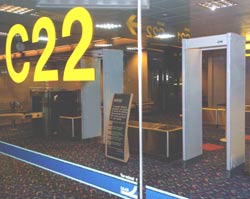
IT was through this gate that Tuong Van Nguyen's journey to hell began.

And as he sits on death row awaiting execution on Friday, Nguyen has no doubt reflected on the night the "beep" of the metal detector signalled the collapse of his world.

It was just on three years ago when the 22-year-old Melbourne salesman approached Gate C22 at Singapore's Changi Airport with much trepidation.

He was carrying two bags of high-grade heroin -- one strapped to his body and the other stuffed into a backpack -- and was rushing to catch the flight to Melbourne.

He was in transit from Cambodia, where he'd collected almost 400g of the white powder to smuggle into Australia for a Sydney syndicate.

Nguyen would later tell Singaporean police he had become a drug mule to pay off his twin brother's debts.

Airport security officers in Cambodia had failed to detect the two plastic packets of heroin he'd taped to his body.

Once on the Silkair flight MI622, Nguyen started to have breathing problems, so he went to the toilet and removed the packet taped to his stomach, then stuffed it in his hand luggage. He kept the other taped to his lower back.

After arriving in Singapore, Nguyen had to connect with Qantas QF 10 for his flight home.

But he fell asleep in the Business Lounge, and when he awoke realised he had only 10 minutes to make the plane.

In his police statement, Nguyen said his anxiety levels were further raised by fears that his movements were being monitored by the drug syndicate.

"At the metal detector, I placed my backpack and my business bag on to the X-ray machine," he stated.

"Then I walked through the metal detector and as I was crossing it beeped.

"At that point I knew I was going to be caught.

"A policewoman told me to stand to one side so as not to obstruct traffic.

"She then used a metal detector wand to search me by going up and down my body. The wand did not beep.

"She then touched my back and when she reached my lower back, she must have discovered the packet of heroin strapped there."

Nguyen, who has no criminal record, was immediately taken to a room where he was ordered to place his hands against the wall.

"I told him, 'No need, I will get it for you'," he stated. "I lifted up my shirt and pulled out the strapped packet on my lower back and gave it to the officer.

"He asked me what that was and I replied to him, 'It's heroin, sir'.

"I also told him that there was more and went and retrieved the pack of heroin which I had hidden inside my backpack."

At this stage, Nguyen became distressed and began to cry, at the same time hitting his head against the wall. He then sat on the floor, holding his head in his hands.

Shortly before midnight, December 12, he was taken to Singapore's Central Narcotic's Bureau and later charged on serious drug offences, with an automatic penalty of death by hanging.

It had been his first overseas trip.

Just before midnight last night all was quiet at Gate C22. About 5km away, the lights were also out at Changi Prison.

Nguyen's execution date falls on the third anniversary of the day he flew out of Australia.

Death row case divides Singapore

Yes I have posted a link to this broadcast very recently however it now includes an MP3 download and a transcript of the broadcast.


Listen to the programme
Download the mp3 (8 Mb)


Andrew Harding
BBC correspondent
, Singapore
At dawn next Friday, a 73-year-old pensioner will put a rope around the neck of a 25-year-old man, and open a trapdoor.
For the older man, it is a routine which he has now performed more than 500 times.

I'm told he informs each condemned prisoner - in his final moments - that he's being sent to a better place.

Technically the hangman, Darshan Singh, has already retired from the prison service after a long and busy career.

But it turns out that his particular skills are in short supply and regular demand here.

Tiny Singapore - with its zero tolerance approach to drugs - has the highest execution rate, per capita, in the world. And so Mr Singh keeps getting called in.

No clemency

His latest "assignment" is a Vietnamese-born Australian called Van Nguyen, a confessed heroin mule caught in transit at Singapore's airport.

A first-time offender, Van said he had been trying to pay off a debt owed by his brother.

Change is going to take years here. We're a society conditioned to living in fear
Constance Singham
Women's rights activist


The Australian government has asked, firmly but politely, for clemency. No deal.
The Australian media has demanded the same, rather less politely. There have been editorials urging economic sanctions, and pointed questions about the Singaporean government's hardline drugs policy.

Why execute the hapless couriers, but invest heavily in the repulsive regime of Burma, where so much of the world's opium is grown?

None of this seems likely to save Van's life.

In all likelihood, on Friday morning, Van's mother and twin brother will be invited to collect his coffin from the prison.

The hangman and the Australian journalists will go home. The £4.5bn trading partnership between Australia and Singapore will continue as before. And this peaceful, prosperous, strange little country will shrug off the whole incident.

End of story? Well, maybe not.

Winds of change?

A few miles from the prison there is a giant conference centre called Suntec City.

Over the past few days it has been hosting something very un-Singaporean: a sex trade exhibition. Lingerie, electric toys, scantily clad models, and so on.
It is a bold step for a famously straight-laced country where homosexuality and oral sex are still illegal.

And it is a sign, some claim, that this authoritarian government is getting ready to embrace more fundamental changes, that the nanny state plans to turn into, shall we say, a chaperone state.

A western advertising executive summed it up for me recently at a party here. Basically, they want to re-brand Singapore, he said.

To keep the economy growing, they need a more dynamic, more creative workforce, and they have realised that the only way to do that is to give people more freedom.

But how much freedom?

It is hard to generalise, as the subject does not get much coverage in the state-controlled media, but my sense is that an awful lot of Singaporeans believe that killing Van is wrong.

It is one issue which really seems to have galvanised people.

What's more, they are starting to make their views heard. Not on the streets. Unlicensed outdoor protests involving more than four people are illegal here.

'Living in fear'

But check out the internet and you will find a lively debate raging, complete with online petitions and blogs. Sometimes it goes a bit further.

"I'm a bit scared," said a young man called Jason, in a half-whisper. "Maybe I'm paranoid, but everyone here fears repercussions."

We were standing in a crowded hotel function room with about 100 Singaporeans who had responded to an online invitation to a meeting in support of Van.
"Making a public stand isn't exactly part of our culture," said Jason. "But I think in this case the death penalty is a bit extreme, and I feel strongly about this."

Next to him, an older woman called Constance Singham let out a rich belly laugh. She is a women's rights activist and a restaurant owner.

"Change is going to take years here," she said. "It took us 15 years to convince people to take domestic violence seriously.

"It may sound funny," she went on. "But we're a society conditioned to live in fear. Still, as people become more educated and start to ask questions, our government will have to listen to us."

So much for long term.

Right now Singapore's elderly hangman has work to do. Mr Singh doesn't give interviews to the media.

But it is understood that he is keen to retire fully as soon as possible. The trouble is, no one else wants his job.


From Our Own Correspondent was broadcast on Saturday, 26 November, 2005 at 1130 GMT on BBC Radio 4. Please check the programme schedules for World Service transmission times.

28 Nov 2005

Garry Rodan: Image of Singapore tarnished

From The Australian
November 29, 2005
WHATEVER the merits or otherwise of the Singapore Government's refusal to grant clemency to Nguyen Tuong Van, its handling has dealt a blow to Singapore's image. The city-state is renowned for bureaucratic efficiency and meticulous attention to detail by its political leaders.

This didn't square with John Howard learning from reporters that, while he was making his plea to Singapore Prime Minister Lee Hsien Loong, Van's mother was already in receipt of the Singapore Government's decision letter.

More than clumsy diplomacy, the clemency episode is the latest illustration of growing challenges facing the ruling People's Action Party in managing contradictions inherent in the Singapore development model. Singapore's increasingly sophisticated market economy has also involved the proliferation of government-linked companies that are central to the power base of the PAP. And Singapore's rise as a regional media and information hub has gone hand in hand with stringent curbs on free expression.

For four decades, its leaders have skilfully reconciled competing political and economic pressures to preserve state economic interests and authoritarian rule. But in the context of globalisation, managing and concealing contradictions is proving more difficult.

It is the internationalisation of government-linked companies that has driven involvement in Burma and which contradicts the harsh, punitive stance on drug trafficking within Singapore. As Australian media have highlighted, while Singapore's courts have been sending hundreds of drug mules to the gallows, GLCs have seized on business opportunities in one of the world's leading drug-source countries. At home, GLCs are insulated from such media scrutiny.

With the internationalisation of Singapore's cashed-up GLCs, the negotiation of free trade agreements and the more comprehensive integration of Singapore into the global economy, official rhetoric depicting Singapore as a transparent market has also come under unprecedented critical international scrutiny. Temasek Holdings, with a portfolio of $83billion in about 40 companies, and the Government Investment Corporation, managing more than $140billion of taxpayers' money in overseas investments, have been the principal focus. Many of the companies involved are not publicly listed and are exempt from legal or regulatory requirements for routine external reviews or public declarations.

In separate FTA negotiations with the US and Australia, the lack of transparency of GLCs and the independence of Singapore's regulatory authorities were contentious issues, viewed by the US in particular as serious obstacles to competition in the domestic market.

The International Monetary Fund has also called for more transparent fiscal and monetary frameworks and raised concerns about the scope for conflicts of interest in Singapore owing to interpenetration of executive power, regulatory authority and leading GLCs. For instance, Lee's wife, Ho Ching, is the executive director of Temasek.

Contradictions are also playing themselves out in domestic politics. The Government's transparency claims have been an unwitting political opportunity for critics. In August, 12 anti-riot squad police wearing helmets and knee-high protective gear, and armed with shields and batons, formed a phalanx in front of the Central Provident Fund (national superannuation) building in the city centre. This was in reaction not to a security threat but to four silent protesters wearing T-shirts and carrying placards demanding greater transparency and accountability in the use of public funds.

Although the protesters did not appear to violate the Public Entertainment and Meetings Act, which requires a permit for a public meeting of more than five people, they were dispersed and their T-shirts and placards confiscated on the pretext of possible charges of causing a public nuisance.

Tension between the media hub and curbs on free expression also entered a new phase this year with the mushrooming of internet weblogs (or blogs). With no moderators, system administrators or web content managers for Singapore's authorities to monitor, filter or warn, they have provided new avenues for government critics. The blog of Chen Jiahao, the former beneficiary of a government scholarship to study at the University of Illinois, was at the centre of one controversy when he criticised scholarships as overly restrictive. After threats of defamation proceedings from a leading state bureaucrat, Chen was intimidated into shutting down his blog.

The Films Act contradicts the state-nurtured image of Singapore as a creative arts hub, as does propaganda by the government-controlled media. This act was invoked earlier this year when Martyn See's Singapore Rebel, a documentary on political dissident Chee Soon Juan, was withdrawn from the Singapore International Short Film Festival. The making, distribution and showing of films containing "wholly or partly either partisan or biased references to or comments on any political matter" is banned under the act, which provides for a two-year jail sentence or an $80,000 fine.

Creative thinking is alive, though, with political activist Yap Keng Ho filing a police complaint against Singapore's national broadcaster MediaCorp for allegedly violating the Films Act by screening a number of pro-PAP, party-political programs.

Significantly, such contradictions have not hitherto prevented a string of international educational institutions from conducting operations in the city-state. However, concerns about academic freedom weighed heavily when one of Britain's leading institutions, the University of Warwick, last month declined Singapore's invitation to set up a campus. This not only put Singapore authorities in damage control, it has raised the bar for all other courted institutions. Can the University of NSW, for instance, maintain its academic reputation without the formal and binding protections of academic freedom sought by Warwick's faculty? To genuinely realise its ambition of becoming a global schoolhouse, Singapore might have to make significant concessions. This is easier said than done.

The authoritarian PAP regime is not going to collapse any time soon. It has proved remarkably resilient precisely because it has been constantly modified. But new challenges present Singapore's leadership with a dilemma. Either it embarks on a successful new phase in refining the mechanisms of authoritarian rule or it will increasingly struggle to manage the inherent contradictions of its own success.


Garry Rodan is director of the Asia Research Centre and professor of politics and international studies at Murdoch University in Perth.

Related Articles:
Links with Burma
Silent Protest
Martyn See's Singapore Rebel
AcidFlask and AStar
University of Warwick

Artist's protest against death penalty silenced by Singapore censorship

This is a transcript from AM. The program is broadcast around Australia at 08:00 on ABC Local Radio.

You can also listen to the story in REAL AUDIO and WINDOWS MEDIA and MP3 formats.


Transcript
AM - Monday, 28 November , 2005 08:00:00
Reporter: Lisa Millar
TONY EASTLEY: Singapore is a shopper's paradise and a protestor's nightmare.

It's illegal for more than four people to have an outside protest unless it's licensed, so open dissent in the island state is rare.

In 1989, post-Tiananmen Square Chinese populations around the world demonstrated publicly against Beijing's brutal crackdown, but not in Singapore.

So this week's execution of a convicted Australian drug smuggler isn't likely to cause any waves at all.

Indeed, the Singaporean Government is confident the majority of its citizens agree with its tough stance on drugs.

But as Lisa Millar reports from Singapore, there is one small group of local artists who are feeling the heavy hand of Singapore's censorship over Van Nguyen's case.

LISA MILLAR: Singapore's Lasalle College of Art invited students from around the world to spend two weeks observing life before showcasing their work.

ANNOUNCER: From Slovenia, Matija.

(Sound of applause)

LISA MILLAR: Matija Milkovic Biloslav from Slovenia produced a piece featuring a dozen nooses hanging from the ceiling, beneath them upturned stools.

Only one chair was standing, on it a rope and a card that read C856 - Van Nyugen's prison number.

Tonight's 7.30 Report reveals just how sensitive Singaporeans are about the death penalty. We were stopped from speaking to the artist. And the school's director objected, saying she wasn't dressed well enough for an interview.

AVIS FONTAINE: Oh well, we don't mind. I'm really not looking my best for this (laughs).

LISA MILLAR: Off camera she said she thought the artwork was about suicide. Her staff said any connection to Van Nguyen was a coincidence.

The school's dean, Milenko Pravachi, a Singaporean resident for more than a decade, said the student didn't intend to make a statement.

MILENKO PRAVACHI: They're looking for some kind of attractions, they're looking for some of the issues that they maybe want to highlight or question what is really normal, but I don't think that it's anything like a political statement in this case.

LISA MILLAR: Andy Ho, a senior writer with the Straits Times, says Singapore is unfairly portrayed as a tightly controlled nation.

ANDY HO: So the freedoms are always there. I don't think protests or dissent has been stifled at all. If people want to stand up and be counted, they are always free to do so. I sincerely think and believe and am convinced that the Government has no problem.

LISA MILLAR: But the college had a problem with this piece of art.

The day after the 7.30 Report's visit, the nooses remained but the card with Van Nguyen's prison number was blank. Other media were stopped from taking photos.

Andy Ho, though, says Singaporeans aren't sensitive about the decision to execute Van Nguyen; the death penalty still wins overwhelming support.

ANDY HO: Whether the law will be changed or not will depend, I think, on political developments in the future. But as it stands, absolutely, whoever breaks the law, regardless of nationality, will face a mandatory death sentence.

TONY EASTLEY: Andy Ho, a senior writer at The Straits Times newspaper in Singapore.


Related Links:
Emerging artists from across the globe to collaborate with LASALLE-SIA students in the first Asian Art Camp

27 Nov 2005

Anger in Australia as Singapore PM rejects Plea


From 24 x 7 updates
Australian Prime Minister, John Howard made another personal appeal to Singapore’s Prime Minister Lee Hsien Loong at the Commonwealth Heads of Government Meeting (CHOGM) in Malta on Saturday, Australian media reported on Sunday.

But Singapore Prime Minister Lee Hsien Loong rebuffed Howard’s fifth appeal for clemency for Nguyen Tuong Van, 25, and refused to allow the International Court of Justice to intervene, Howard told reporters in Malta where the two leaders attended a three-day Commonwealth heads of government meeting.

In a letter to Australian MPs, the Speaker of the Singapore Parliament said an example must be made of Nguyen.

"He was caught in possession of almost 400g of pure heroin, enough for more than 26,000 doses of heroin for drug addicts," Abdullah Tarmugi wrote to his Australian counterpart, David Hawker.

"He knew what he was doing and the consequences of his actions."

"There is broad-based concern in this country that what is going on here is simply not right and (that) we ourselves have things that we want to see Mr Van Nguyen do for us in terms of capturing the Mr Bigs of the drug industry and that simply cannot happen if his life has been terminated in Singapore."

New Zealand Prime Minister Helen Clark also raised Nguyen’s case during informal talks in Malta, media reported.

Singapore has one of the world’s toughest drug laws. Laws enacted in 1975 stipulate death by hanging for anyone aged 18 or over convicted of carrying more than 15 grams (0.5 ounce) of heroin, 30 grams (1.1 ounce) of cocaine, 500 grams (17.6 ounces) of cannabis or 250 grams (8.8 ounces) of methamphetamines.

Amnesty International said in a 2004 report that about 420 people had been hanged in Singapore since 1991, mostly for drug trafficking, giving the city-state of 4.2 million people the highest execution rate in the world relative to population.

Singapore's Anti-Death Penalty Campaign

Singaporeans have been fed one side of the story for the past 40 years or so. So much so that most of us have come to accept it as normal. The public's access to information on the issue of the Death Penalty in Singapore is a very important part of the campaign. But one can't rely on the hopelessly bias local media to provide the information. That's where this blog comes in to fill that void for information.


Public Forum LIVE Audio Recording


The forum that was held on 7.Nov.2005 was recorded, and this MP3 audio file is the essense of the recordings. Click on above link to download. It is approximately 58 minutes in length.
.

26 Nov 2005

Looming execution prompts call for suspended defence exercise

Looming execution prompts call for suspended defence exercise
Friday, 25 November 2005

The Greens are calling on the Federal Government to suspend Singapore's military activities in Australia unless the death sentence for an Australian drug trafficker is commuted.

Van Nguyen is due to hang in Singapore next Friday.

Thousands of Singapore troops are in central Queensland for their annual military exercise at Shoalwater Bay.

Greens' leader Bob Brown says Prime Minister John Howard should activate termination clauses in Australia's agreements with Singapore, over its mandatory death penalty.

"There is a lot the Prime Minister could be doing here, but it will take statesmanship, it will take a preparedness to use leverage on Singapore," he said.

"We have a lot of leverage, we should use some of it and Prime Minister Howard should use this military arrangement, which Singapore depends mightily on, to ensure that Singapore gets the message."

Senator Brown dismissed concerns the cutting of ties could hurt Rockhampton's economy.

Singapore sacks its hangman

There are somewhat conflicting reports coming out as to whether or not Darshan Singh has been sacked, fired, resigned or is now actually doing the hanging this Friday. The story does have an interest value only with reference to the plight of Van. It is nothing other than a distraction from the main focus of the issues surrounding the death penalty.

From: By Clare Masters in Singapore
November 27, 2005


Darshan Singh ... No longer Singapore's hangman. SINGAPORE has sacked its long-serving hangman on the eve of the execution of Australian drug courier Nguyen Tuong Van.

A new executioner is expected to be flown into Singapore this week to carry out Nguyen's death sentence as scheduled on Friday despite pleas for mercy from Australia. It is believed the new hangman will be flown in from another Asian country, possibly Malaysia, with which Singapore has a close relationship.
The 25-year old from Melbourne will become the first prisoner in Singapore in 46 years not to be sent to his death by Darshan Singh. The 74-year-old grandfather was dumped after his identity and picture was revealed by The Australian newspaper.

Mr Singh said he was in big trouble and was out of a job.

"It has been very, very difficult for me," he told The Sunday Telegraph. "I am not the hangman anymore."

Mr Singh said he would miss the $400 fee for each execution but was relieved he would not be placing the noose around Nguyen's neck. "In a way I am happy," he said.

Nguyen's lawyer Lex Lasry said the prospect of an inexperienced hangman was disturbing because mistakes could cause extended suffering. "If this must happen it must be done as humanely as possible. It just shows the high level of inhumanity of it."

A spokesman for Foreign Minister Alexander Downer said the Government was continuing to plead to Singapore to stop the execution.

Australia's Catholic bishops yesterday wrote to Singapore's Prime Minister Lee Hsien Loong urging him to reconsider clemency for the condemned man.

Nguyen was caught with 396.2 grams of heroin at Singapore's Changi Airport in December 2002 while in transit from Cambodia to Sydney. He claimed he was trying to pay off his heroin-addicted twin brother's legal debts.

Nguyen's mother Kim and brother Khoa have been in Singapore for a week visiting Nguyen at Changi each day until yesterday when the prison was closed.

Singapore human rights lawyer M. Ravi has led the local campaign to save the Australian because it was the final wish of his previous death row client.

Thirty eight-year-old Shanmugam Murugesu, who became Nguyen's best friend and confidant in jail, was executed in May for bringing one kilogram of marijuana into the country.

"When I saw Shanmugam on his last day he said to me 'let my death not be in vain, please help this young man next to me'," Mr Ravi said.

It was his last wish that on his birthday, eight days before Nguyen's execution date, his family hold a vigil to pray for the condemned. They fulfilled it last week. "We are not just fighting for my father," Murugesu's 15-year-old son Gopal said at the candle-lit Indian ritual.

"We are fighting for everyone. No one should have to go through this pain, it is not the pain of missing a girlfriend or a friend, the pain of seeing your father's body is very difficult to handle.

"I do not want his mother to have to feel this pain."

Gopal and his twin brother Krishnan, now work alongside Mr Ravi with their grandmother Madame Letchumi Ammah as the only family of a condemned prisoner to speak out publicly against the government. It is a battle largely waged in secret as the lobbyists dodge the government's strict laws. Of the 10 activists who formed the Singapore Anti Death Penalty Committee (SADPC), nine will not divulge their identity.

"But we are slowly making a difference," said one activist.

"Van has made an impact. He has struck a chord. But this will be a long and slow fight."

From Our Own Correspondent

From Our Own Correspondent on the BBC covers numerous stories this week but one reporter Andrew Harding talks about a strange little city in South East Asia, a certain 73 year old who is attempting to resign from a job that has a murderous timetable and a young man by the name of Van Nguyen who is soon to be his latest assignment.

Also refers to the recent meeting against the death penalty in Singapore.

As far as I am concerned this report by the BBC is long overdue. The report from Andrew Harding starts at 00:17:00 and ends at 00:22:00. Really worth a listen.

To Download From Our Own Correspondent click here... Saturday, 26 November 2005

Related Video from ABC News.

New Zealand Prime Minister Helen Clark has raised the case of Nguyen with Singapore's Prime Minister, independently of Australian efforts.

[Real Broadband] [Real Dialup] [Win Broadband] [Win Dialup]

Don't promise what you can't deliver: MM Lee

Weekend • November 26, 2005

ONE of Asia's most respected leaders, Minister Mentor Lee Kuan Yew's views on leadership were much sought after during his recent visits to both Dubai and New Delhi.

In a recent interview with India TV in New Delhi, Mr Lee stressed that a crucial factor in leadership was credibility.

He recounted how he gained credibility the hard way — by being knocked about by the communists and by having nasty conflicts with the communalists.

And Mr Lee said that this was when the people concluded he was not a fake and was prepared to put his life on the line.

Speaking at a memorial lecture in the name of India's first Prime Minister Jawaharlal Nehru, Mr Lee dished out some advice to India's young politicians.

"I think the first thing they must remember is to not promise something they can't deliver. It sounds good at election time but three years later, they become empty words.

"You know you couldn't produce it, you promised this, you're not credible and you lose credibility," said Mr Lee.

He added: "You take George W Bush, he's a tough man, 9-11, if you saw him on television at the World Trade Centre, he took that bullhorn and he says to the firemen; 'I heard you and the world will hear from you'.

"And he went to Afghanistan and he hit the Taliban. Now he's in trouble in Iraq, but he's not a quitter. If he has good policies out of this chaos to establish a stabilised Iraq, maybe not a full democracy, but a stabilised Iraq with a properly democratic Iraqi elected government, his credibility will be very high, he'll go down in glory.

"And there's still a chance, in fact, I believe he's going to fight to create that. I think you want that kind of leader.

"Of course, his opponents say he's misled us into a wrong war but they were the people who voted for the war.

"Everybody believed there were weapons of mass destruction including the intelligence agencies.

"I would say that's leadership," Singapore's first prime minister said.

Copyright MediaCorp Press Ltd. All rights reserved.

====

I can't help being disturbed when our leaders started commenting on the situation in other countries but I think this one cuts the cake. Not everyone believed that there were weapons of mass destruction before the war begun. Moreover, George Bush went to war despite lacking UN and home support. What does Mr Lee mean when he said "they were the people who voted for the war"

Last I know, Bush did not call for a referendum before he attacked Iraq and there were obviously strong opposition from the grounds. There were worldwide protests before the war begun. 3 million people in Rome against the war which is listed in the Guiness Book of Records as the largest ever anti-war rally. Millions of people protested, in approximately 800 cities around the world. The event was listed by the 2004 Guiness Book of Records as the largest mass protest movement in history. When a few Singaporeans tried to protest outside the American embassy pre Iraqi invasion, our police hauled those protestors away and gave them a stern warning. Do we want seriously want to endorse leadership despite protests from the ground?

Dr Chee trains guns on foreign media, former Australian PM

Weekend • November 26, 2005
Derrick A Paulo
derrick@newstoday.com.sg

Opposition figure Dr Chee Soon Juan has long criticised the local media for feeding Singaporeans with only the Government's views.

On Friday, he admitted he has also been disappointed with the foreign media for the longest time.

Speaking at a lunch with foreign and local journalists, Dr Chee said that international media organisations with offices here either "stay away from critical and hard-nosed reporting" or self-censor political stories on Singapore.

He claimed that overseas publications, too, have "capitulated in every instance" to the Singaporean authorities.

The Government's stance that foreign media should not meddle in Singapore's domestic affairs has long been established.

However, Dr Chee questioned the foreign media's objectivity.

"That is exactly why I am so vexed. By self-censoring or completely staying away from reporting Singaporean politics, are you being neutral?" he asked members of the Foreign Correspondents' Association.

An example of this, he claimed, was the lack of coverage on the growing civil society and activism here.

"In the past 12 months, we've seen some Singaporeans finally become more active in speaking up, that you'd never have seen in the years past.

"And it's the most disheartening, discouraging feeling when they get into trouble and the foreign media stays away, doesn't want to report," he said.

However, the "bigger point" for Dr Chee is that other governments are following Singapore's method of handling the media. He mentioned Thailand and China.

"People are looking at Singapore ... How do you do it? To be able to continue to keep this facade that you are a well-run society, have the popular backing of the people," he said.

"They are learning. They see Singapore as a model. I do worry that are we going to see a rollback (of democracy)."

Interestingly, while he has been criticised for joining the Australian chorus against the government over the impending execution of Nguyen Tuong Van, he took umbrage at former Australian prime minister Gough Whitlam's characterisation of Singapore as a "rogue Chinese port city".

"In the first place, Singapore is a nation and not just a port city ... To use language that does not recognise this fact is disrespectful to the people of Singapore," Dr Chee wrote to the Australian High Commission.

"Second, Singapore is not 'Chinese'. Our population is made up of various ethnic groups including Chinese, Malays, Indians, Eurasians, and smaller communities of various ethnicities. We call ourselves Singaporeans, not Chinese."

He added that many Singaporeans disagreed with the Singapore Government and were praying that the execution would not take place.

Copyright MediaCorp Press Ltd. All rights reserved.

Chee replies to PAP supporters: Is the life of a Singaporean that cheap compared to a foreigner's?

25 Nov 05

Below is the letter Dr Chee Soon Juan sent to Today and Straits Times in reply to letters published in the newspapers' forum pages on 24 Nov 05.

I am not surprised that the Government-controlled media has again portrayed me as a “traitor” out to “undermine” Singapore. This is exactly the tactic the press is adopting with the flurry of letters published. (24 Nov 2005)

It merely confirms my suspicion that the Government cannot answer the questions and arguments that I and other Singaporeans have raised about the execution of small-time drug couriers. As a result, it resorts to labeling me as a traitor in the belief that if you smear the messenger, you don’t have to address the message. It’s an age-old tactic.

Singapore is reported to be the biggest business partner of Burma with US$1.5 billion worth of investments. Former US Assistant Secretary of State Robert Gelbard stated that “since 1998 over half of [the investments from] Singapore have been tied to the family of narco-trafficker Lo Hsing Han.''

There are reports that Lo Hsing Han now operates a deepwater port in Rangoon and a highway from the center of Burma's poppy–growing region to the China border, facilities well-suited for exporting drugs.

Remember, the drugs that flow from Burma are ones that our youth consume. If the PAP is really concerned about the scourge of drug abuse, why did it do business with a notorious drug lord and, hypocritically, take the moral high ground by executing drug couriers many of whom are Singaporeans.

Let me ask the questions that I have been asking since 1997: Will the Government open its books so that we can verify if our GIC funds are still invested in projects linked with Lo Hsing Han? What steps has the Government taken to pressure the Burmese regime to crackdown on drug kingpins like Lo? Why does our Government continue to trade with the Burmese junta when it has been shown that the military has close ties with narco-producers like Lo?

In addition, Singapore has been fingered in the laundering of Burma’s drug money. Bruce Hawke, an expert on narco-trafficking in Burma, wrote: “The entry [of drug money] to the legitimate global banking system is not Burma but Singapore.” Is this true?

I have been raising these questions since 1997 but each time the local media assiduously blacks them out. Other arguments against the mandatory death penalty for drug peddlers raised by people like Dr Anthony Yeo, Mr J B Jeyaretnam, Mr M Ravi, Mr Alex Au, Mr Sinapan Samydorai, and Brother Michael Broughton have similarly been censored.

The same arguments were raised when a Singaporean, Mr Shanmugam s/o Murugesu, was executed in May this year. I brought up the Singapore-Burma affair then when we were fighting to save Mr Shanmugam as I am doing now for Mr Nguyen Van Tuong.

The only reason why this issue has gained more prominence now is because the Australian media, which unlike its Singapore counterpart are not controlled by the state, have seen it necessary to highlight it.

Criticising our government for killing small-time drug peddlers while doing business with drug lords is necessary. Whether it is a Singaporean or an Australian who is going to dangle at the end of the rope is immaterial. A life is a life and if we are going to take it, let us be absolutely clear of the excruciating hypocrisy that currently exists.

Ms Siow Jia Rui argues that Singapore’s laws must be allowed to “run their course” and that “no other country has a right to interfere.” If that is the case then why was the charge for Ms Julia Bohl reduced after the German ambassador and government had mounted a diplomatic campaign on her behalf, meeting several senior Singaporean ministers in the process. Within months several of the charges were dropped and the amount of drugs she was accused of carrying was reduced from 687g to 281g. She escaped the gallows and served about three years for her crime. Is this not outside interference in Singapore’s justice system?

Ms Siow continues that laws in Singapore are “applied fairly across the board to Singaporeans and foreigners alike.” The life of Julia Bohl, a German, was spared because of pressure from the German Government. What about the life of Mr Shanmugam, a Singaporean who served in the army and did Singapore proud by winning medals in ski competitions? Ms Bohl served three years in prison but Mr Shanmugam was hanged. Is a Singaporean’s life so cheap compared to a foreigner’s?

I have no doubt that when Singaporeans come to hear both sides of the debate, a debate that the media is determined to quash, they will reject the hypocrisy and discrimination of the PAP Government.

CHEE SOON JUAN
Secretary-General
Singapore Democratic Party

25 Nov 2005

Singapore press unmoved by clemency pleas for Nguyen

This is a transcript from PM. The program is broadcast around Australia at 5:10pm on Radio National and 6:10pm on ABC Local Radio.

You can also listen to the story in REAL AUDIO and WINDOWS MEDIA and MP3 formats.


Transcript

PM - Friday, 25 November , 2005 17:22:00
Reporter: Lisa Millar
MARK COLVIN: More about the press and other reaction from Singapore now from Lisa Miller who's in Singapore and joins me on the line now.

Lisa, Daniel just mentioned in passing the Straits Times editorial there.

What about the rest of the media? Are they getting slightly more concerned about the Australian reaction than they have been?

LISA MILLER: Well, the Straits Times is what we had actually been pointed to. In fact, I was speaking to some local reporters when I first arrived here and said to them - reporters who worked for Reuters and AAP and the like - and I asked them how they got on operating here in Singapore, because I had already found so much difficulty trying to get access to any members of Parliament or anyone who was prepared to speak publicly to me.

And they said they have the same trouble even though they live and work here in Singapore, and they said to watch out for editorials in the Straits Times, that rather than holding a press conference the government will make sure that its thoughts and its opinions are being read.

So of course this morning the Reuters reporter actually rang me and said have you seen this editorial? This is very important. This is not just a newspaper editorial. This is the main English language daily.

And when we talk about the free press in Australia as we know it, that is not how people regard the Straits Times, that it is very closely connected to the governing party, the People's Action Party, and anything that is written in the party can basically be taken to reflect the government position.

And so we've got this editorial right next to a very lengthy feature piece by a senior writer who sets out a very complicated but interesting defence of the death penalty.

And when you put that on top of what we've seen over the last few days - we had the letter from the Speaker of the Parliament sent to David Hawker in Australia and we also had a press release that came out of here after the meeting with Rob Hos (sic) and Ho Peng Kee the Minister of State and Home Affairs…

MARK COLVIN: Rob Hulls.

LISA MILLER: … Rob Hulls, sorry, and Ho Peng Kee. And Ho Peng Kee put out a press release basically saying, thanks very much for coming but this is our opinion, this is how it stands and it absolutely isn't going to change.

So there's certainly been a real push in the strength and the tough stance from the Singapore Government and I think it's culminated with this editorial and the feature in the paper today.

MARK COLVIN: So, as you say, Singapore doesn't have a particularly free press. But any other outlets talking about it at all?

LISA MILLER: No, not at all. All we've seen is reports in the Straits Times. It's not been on any of the local television programs. And when we have gone to the prison to see the family arriving or have turned up at the press conferences with Rob Hulls as we did yesterday, there haven't been any local media who've been taking an interest in it at all.

Of course the anti-death penalty campaigners have been desperate to try and get some publicity here and even the stories that are making it into the Straits Times are really just clutching onto the rebuttals that have occurred. So it…

MARK COLVIN: And Lisa, no real reaction to the rumblings from Australia, some in newspapers and some from individuals, about boycotts of Singaporean products?

LISA MILLER: No. And that wasn't touched on today in this editorial either. It almost seemed to make fun, in a way, describing as in that earlier report that the execution is churning up quite a wash of angst from across the seas. But we're not seeing any sort of concern about the trade sanctions. I don't believe that they feel that that is a real threat.

MARK COLVIN: And what about any pressure that might or might not come on at CHOGM. They feel unthreatened by that as well?

LISA MILLER: Well, they do, and Ho Peng Kee was asked… Rob Hulls was asked whether Ho Peng Kee had given him any guarantee or indication that the letter that came from the Victorian Premier would actually be passed on to the Prime Minister immediately at CHOGM rather than waiting until he returns from his lengthy trip - I understand he's going on after CHOGM to see other people - so, there was no guarantee whether that letter was going to be passed on.

They feel that they are so right with this decision, that this is their laws, it's their country and they almost cannot understand that Australians think that it can just be altered, that leniency can be granted, that clemency can be granted just like that. This is the message they're trying to get through.

MARK COLVIN: Alright, Lisa Miller, thank you very much, as the clock runs down in Singapore for Van Nguyen.

Former leaders call on Singapore to grant reprieve for Nguyen

This is a transcript from PM. The program is broadcast around Australia at 5:10pm on Radio National and 6:10pm on ABC Local Radio.

You can also listen to the story in REAL AUDIO and WINDOWS MEDIA and MP3 formats.


Transcript
PM - Friday, 25 November , 2005 17:18:00
Reporter: Daniel Hoare
MARK COLVIN: Australia's backlash against Singapore continued today.

Former Prime Ministers Gough Whitlam, Bob Hawke and Malcolm Fraser all joined the chorus of politicians and lawyers calling for Nguyen to be spared the death penalty.

But Malcolm Fraser has told PM that Singapore would only ever bow to private diplomacy in such a case. He says the public backlash has been counter-productive.

Mr Fraser says the Nguyen case should spark renewed efforts to abolish the death penalty in all Commonwealth nations.

And Justice Ronald Sackville, the Chairman of the Judicial Conference of Australia, says Singapore has ignored its own constitution in the case of Van Nguyen.

This report from Daniel Hoare.

DANIEL HOARE: In the absence of a miracle, this time next week, Van Nguyen will have been hanged. But that hasn't stopped the growing chorus of opposition to the death penalty handed out to him.

Former Prime Ministers Gough Whitlam, Malcolm Fraser and Bob Hawke have all called for the Singaporean Government to grant Van Nguyen an eleventh hour reprieve.

Mr Whitlam told Southern Cross Radio today that the issue needs to be raised at this week's Commonwealth Heads of Government Meeting.

GOUGH WHITLAM: Singapore has a very thick skin in these matters. But the point is that the matter should be raised at CHOGM, and this is a matter which should be discussed in the Commonwealth, which has a very wide coverage around the world.

DANIEL HOARE: But the man who succeeded Mr Whitlam as Prime Minister has told PM that raising the Nguyen matter at the CHOGM meeting won't achieve anything.

Malcolm Fraser didn't want to speak on tape when PM contacted him this afternoon, but he was happy to put his views on the record.

Mr Fraser says the only approach which might have convinced the Singaporean Government to spare the life of Van Nguyen would have been private diplomacy.

Mr Fraser agrees with Prime Minister John Howard, who has, throughout the case, firmly rejected the use of what he calls 'megaphone diplomacy'.

Malcolm Fraser says the Nguyen case should spark a fresh look at the use of the death penalty by Commonwealth nations.

He says a panel of judges should be appointed by the Commonwealth countries to make recommendations about how to convince all member nations to abolish the death penalty.

Justice Ronald Sackville, who chairs the Judicial Conference of Australia, which represents over 550 judges and magistrates, has joined the growing criticism of the Singaporean Government.

Justice Sackville says the judges in the Van Nguyen case may have breached the country's constitution.

RONALD SACKVILLE: The Singapore Constitution provides that all persons are entitled to equal protection before law. That is a provision which is similar to one found in the United States Constitution and it's also found in many human rights instruments throughout the world. Of course, it's not found in Australia because we don't have a Bill of Rights.

The interpretation that was taken by the Singapore Court of Appeal in this very case involving Mr Nguyen was a rather narrow view. Of course, it is a matter for the Singapore courts as to how they interpret their own constitution, but the point we are making is that that particular interpretation might be thought to be somewhat out of step.

DANIEL HOARE: Despite an unprecedented backlash in Australia against its use of the death penalty in the case of Van Nguyen, the Singaporean Government has made its intransigence strikingly clear.

The country's state-controlled newspaper, the Straits Times, today published a pointed editorial for anyone wishing to test its drug laws. The editorial warned:

"More Australians can expect to face the death penalty here because too many choose to dice with death."

The newspaper said that Van Nguyen's looming execution had "churned up a wash of angst from across the seas".

MARK COLVIN: That report from Daniel Hoare.

Fears Singapore execution linked to shortened military exercise

From ABC News

A former RSL official says the forthcoming execution of an Australian drug trafficker in Singapore may have led to a military exercise being cut short in central Queensland.

Former Rockhampton RSL president Keith Joyce says he has been told the Singapore Armed Forces have cut the exercise at Shoalwater Bay by a week, and are now due to fly out by December 2, the day that Van Nguyen is due to hang.

Mr Joyce says there is concern about a possible backlash towards Singapore troops in central Queensland.

He says Singapore's refusal to stop the execution is damaging valuable military ties.

"I see the aircraft coming over my house every day, the trucks going past with the armoured vehicles on them," he said.

"We have obviously a very close link with Singapore and if the pleas of our Government, of our Prime Minister and of our Foreign Minister aren't having any effect on them, it makes me wonder why we are so closely involved with them at all."

New scams uncovered to sneak Indonesian prostitutes into Singapore

The Jakarta Post

SINGAPORE (DPA): New scams used by pimps have been uncovered to sneak women from Indonesia's Batam island into Singapore to work as prostitutes, a news report said Friday.

The most common ruses are fake marriage documents, forged doctor's referral letters and posing as tourists, The Straits Times revealed.

With fake marriage papers, a Singaporean man and a Batam woman pass themselves off as a married couple. A 42-year-old man was nabbed with 23 so-called marriages to his name.

The forged physician referral letters claim that the women need to visit Singapore for medical treatments including surgeries.

Those posing as tourists produce at least 500 Singapore dollars (US$295) as proof to immigration authorities that they want to visit or see relatives.

The women are often older than and less attractive than prostitutes at home, said Batam social worker Martje-Rogi.

"They are not sellable in Batam, so they try their luck in Singapore," she was quoted as saying.

Hundreds of men primarily from Singapore travel to the nearby island on weekends for sex, often with girls in their early teens.

The latest tactics by trafficking syndicates follow a vice crackdown by Singapore police, Comr. Bonny Djianto, chief of the Batam police station, told the newspaper.

Syndicates usually consist of a Singaporean chief, an Indonesian agent who procures the prostitutes and their fake documents, and a Singaporean runner who accompanies the women.

A suspect arrested for his alleged role in one of the syndicates estimates that there are 10 to 15 Singaporean syndicate chiefs and 20 to 30 minders who help run the sex trade into the city-state.

Singapore opposition leader says foreign media shy away from political reporting

(Updated 05:35 p.m.)


2005/11/25
SINGAPORE (AP)


The international media often avoids reporting on politics in Singapore because it fears lawsuits and financial penalties imposed by the government, an opposition leader said Friday.

Chee Soon Juan, head of the Singapore Democratic Party, said foreign correspondents based in Singapore engage in "self-censorship" on sensitive issues, and he urged journalists to interview activists who campaign for more political freedom.

"Talk to them. It's the most disheartening, discouraging feeling when they get in trouble and the foreign media stays away from it and doesn't report it," Chee said at a lunch hosted by the Foreign Correspondents Association.

Some foreign news organizations have paid large fines or had their circulation restricted from lawsuits brought by members of Singapore's ruling People's Action Party. Those organizations include the Economist magazine, The International Herald Tribune, the Far Eastern Economic Review and The Asian Wall Street Journal.

Singaporean authorities have said they welcome the foreign media as long as it is objective and takes into account the viewpoint of the tightly controlled country.

Last week, Singaporean Prime Minister Lee Hsien Loong said on the sidelines of the Asia-Pacific Economic Cooperation forum in Busan, South Korea, that hundreds of magazines were available in Singapore, the Internet was easily available and that many international media organizations had offices there.

"If you're reporting the facts, you have nothing to fear," Lee said. "All we ask is the right to put our position on the record."

Chee, however, said foreign media, some of which have regional offices in Singapore, were likely to put "corporate interests" above the principles of their profession.

Chee currently faces bankruptcy after he was ordered to pay a fine to Singapore's former prime ministers, Lee Kuan Yew and Goh Chok Tong, for defaming them during an election campaign in 2001.

He has said he won't pay the amount, but the impasse curtails his political activities because the law bars bankrupt people from running for public office.

The ruling party holds 82 out of 84 elected seats in Parliament.

"Are you being completely neutral?" Chee said at the lunch with foreign reporters. "I am just very concerned that our only line of communication with the international community is also being slowly, gradually choked."

Singapore's media face strict censorship, while home TV satellite units remain off-limits.

The government says its tight media regulations help maintain harmony, that it does not seek to implement the features of a Western-style liberal democracy and that local journalists must be sensitive to national interests.

Only a miracle can save Nguyen, Downer says


Related Video
There will be no appeal to the International Court of Justice to stop convicted drug smuggler Van Nguyen's execution.

[Real Broadband] [Real Dialup] [Win Broadband] [Win Dialup]

Related Audio
Foreign Affairs Minister Alexander Downer says nothing but a miracle will save Van Nguyen from execution, as all diplomatic and legal options are exhausted.

[RealMedia 28k+] [WinMedia 28k+] [MP3]

Former prime ministers Gough Whitlam, Bob Hawke and Malcolm Fraser have joined the chorus of politicians and lawyers calling for Van Nguyen to be granted clemency.

[RealMedia 28k+] [WinMedia 28k+] [MP3]

An editorial in the Straits Times is the best clue so far to the Singapore Government's thinking on the case of Van Nguyen.

[RealMedia 28k+] [WinMedia 28k+] [MP3]

From ABC News
Foreign Minister Alexander Downer says only a miracle can now save Melbourne man Van Nguyen, who is due to be executed in Singapore next Friday for drug trafficking.

The Federal Government has shut the door on taking Singapore to the International Court of Justice.

Mr Downer says he has received expert legal advice supporting the opinion of Government lawyers that Australia has no basis for court action.

But Mr Downer says he will continue to make representations to the Singaporean Government.

"And hope that by some miracle they decide to change their minds," he said.

Nguyen's lawyer Lex Lasry QC says his legal team will not give up.

He says the issue of a mandatory death penalty should be considered by those attending the Commonwealth Heads of Government Meeting (CHOGM).

Mr Lasry says Singapore should also allow its position on Nguyen to be tested in the International Court of Justice.

"So my request with respect to the Australian Government is to formally ask the Singapore Government to consent to the jurisdiction of the international court and let's hope that it's made with Singapore's consent," he said.

Mr Downer says CHOGM offers no hope to those seeking to prevent the execution of Nguyen.

Mr Downer doubts the matter would get much traction at CHOGM.

"In the context of CHOGM, in the context of the Commonwealth it might be slightly less than, but around half of all the members of the Commonwealth do have capital offences," he said.

"They do execute people."

Former Labor prime minister Gough Whitlam says Australia has acted too late.

"They should have been taking it up with Singapore and our neighbours for many years," he said.

The Government says it has always argued strongly against capital punishment.

Execution presence denied

Nguyen's lawyers say they have been denied permission to attend his execution.

Mr Lasry says he and lawyer Julian McMahon wanted to offer support to their client.

Mr Lasry says Singapore's decision is hard to understand.

"We applied to be present for our client's sake for the comfort that it would give him," he said.

"Although we'll say more about this later, but it's difficult to understand why our attempt to comfort our client by being present would be rejected out of hand by the Government but it has been."

Singaporean media

The Singapore media have warned that more Australians will probably face a similar fate.

Nguyen's family visited him for the fourth day in a row, knowing their time together is quickly coming to an end.

The case is attracting more attention in Singapore with the nation's biggest newspaper the Straits Times warning that more Australians will be hanged if they try to smuggle heroin.

Strongly defending Singapore's death penalty policy, the paper's editorial said Australians had to show their breeding by learning to accept it.

The English language paper has close links to the Singaporean Government and its editorials are considered a clear indication of official views.

Anger as Singapore hanging looms

Story from BBC NEWS:
http://news.bbc.co.uk/go/pr/fr/-/2/hi/asia-pacific/4468644.stm

A former Australian prime minister has called Singapore a "rogue Chinese port" for ignoring appeals to save a drug smuggler from the death penalty.
Gough Whitlam, in office in the 1970s, made the remark in an interview about the case of an Australian national who is due to be hanged next week.

Australia has appealed for clemency to be granted to Nguyen Tuong Van.

Singapore insisted the law must take its course, saying that drugs ruined the lives of addicts.

Nguyen's lawyer welcomed Mr Whitlam's support but said his remarks about Singapore would not help.

Mr Whitlam said the Australian Prime Minister, John Howard, should go further by raising the issue at the Commonwealth Heads of Government Meeting in Malta on Friday.

"If [the meeting] is of any use then it should be raised there, because it concerns many other countries - some larger, some smaller than the rogue Chinese port city," he told The Age newspaper.

Nguyen is due to be executed on 2 December after being convicted of trafficking 400 grams (14.11 ounces) of heroin in 2002.

Mr Howard said he would not campaign for support in Malta for his clemency pleas, saying that would likely harden Singapore's determination.


Published: 2005/11/25 02:29:25 GMT

Australians Call for Singapore Boycott Over Nguyen Execution

Nov. 25 (Bloomberg) --
Australian consumers and politicians called for boycotts of companies including Singapore Airlines Ltd. and Singtel Optus Ltd. to protest Singapore's decision to hang convicted Australian drug smuggler Nguyen Tuoang Van next week.

``I want our government to yell more loudly and make it very clear to Singapore that this will have consequences in our relationship and our dealings with them,'' said Democrats Senator Natasha Stott-Despoja, who urged investors to shun a planned A$1.6 billion ($1.2 billion) initial public offering of Australian assets this month by Singapore Power Ltd.

The public outcry may derail an improvement in relations between the two countries, which signed a free-trade accord in 2003 that helped expand bilateral trade to more than A$15 billion a year. Government-controlled Singapore Airlines is lobbying for permission to fly lucrative Australia-U.S. routes, while customers could desert Optus, which contributes two-thirds of Singapore Telecommunications Ltd.'s sales.

``This is a very dramatic turnaround as the relationship with Singapore, especially since the advent of the free trade agreement, has been on a high,'' said Garry Rodan, director of the Asia Research Centre at Murdoch University in Western Australia. ``For the last three decades I can't think of an incident that has whipped up such public concern.''

Nguyen, 25, was caught at Singapore's Changi airport in 2002 with 396 grams (14 ounces) of heroin. He claims he was carrying the drug to Australia for a Sydney syndicate to help his brother Khoa, a former heroin addict, pay A$30,000 in debts. Nguyen was sentenced to death and will be hanged on Dec. 2.

`Serious Criminal'

His fate has dominated Australian newspapers and talkback radio. ``Stop this injustice. Let him live,'' said the front-page of the Sydney Morning Herald on Nov. 19.

``Nguyen was a fool. And he's a serious criminal. But he should not be executed,'' Sydney's top-selling Daily Telegraph said in an editorial yesterday.

Prime Minister John Howard, opposition leader Kim Beazley, Governor-General Michael Jeffery, the British Queen's representative in Australia, and Pope Benedict XVI have asked the Singapore government to spare Nguyen's life. Thousands have signed petitions calling on Prime Minister Lee Hsien Loong to grant clemency for Nguyen, according to the Sydney Morning Herald.

Howard, who met Lee at an Asia-Pacific Economic Cooperation forum leaders' meeting in Busan, South Korea last week, dismissed calls for boycotts and economic sanctions as counterproductive.

``It's a desperately sad case, and we remain very regretful that the execution is going to go ahead,'' he told Australian Broadcasting Corp. radio on Nov. 21. ``But it's not going to contaminate our relationship with Singapore.''

In a Nov. 2 letter to Australia's Foreign Minister Alexander Downer explaining the decision not to grant clemency, Singapore Foreign Minister George Yeo said his government has ``a responsibility to prevent Singapore from becoming a conduit for the trafficking of illicit drugs in the region.''

Nguyen's 396 grams of pure heroin was enough to supply more than 26,000 doses to drug addicts, Yeo said.

Boycott

Some newspaper readers are calling for customers to switch from Optus, the Australian unit of Singapore Telecommunications Ltd., Singapore's biggest telephone operator.

``If just a half million current Optus subscribers immediately transferred their business to an Australian telco, a resounding message would reverberate in Singapore government circles,'' reader Geoff Temple-Smith wrote to the Australian newspaper this week.

``Australians are free to make their own purchasing decisions, as are Optus' own customers,'' said a spokesperson for the unit. ``As a company, we have no comment on the issue.''

Another target is government-controlled Singapore Airlines, the world's second-largest airline by market value.

``A simple form of protest is for Australians not to fly on Singapore Airlines,'' said a letter from Donal O'Sullivan, published in the Australian.

The carrier has tried to distance itself from the case. ``We hope our customers in Australia will understand this matter isn't connected, in any way, with Singapore Airlines, and that they will make their choice on commercial grounds,'' the company said in an e-mailed statement.

`Bargaining Chip'

Government legislator Bruce Baird said Singapore's decision to proceed with the hanging should be taken into account when assessing whether to give Singapore Airlines permission to fly between Australia and the U.S.

``I'm not saying it's a bargaining chip, but the execution is one of the things that should be considered as we look at the proposal,'' Baird told ABC radio yesterday.

Nguyen is the latest high-profile case of a young Australian facing drug-related charges in Asia.

Model Michelle Leslie, 24, returned to Sydney this week after a Bali court sentenced her to three months in jail for ecstasy possession. Schapelle Corby, 28, is serving 15 years in prison for smuggling 4.1 kilograms (9 pounds) of marijuana into Bali. Nine other Australians are awaiting trial in Bali on heroin trafficking charges that carry the death penalty.

In Vietnam, two Australians have been sentenced to be executed for heroin trafficking, said Tim Goodwin, coordinator of Amnesty International's Asia Pacific Anti-Death Penalty Network.

Mandatory Death

Singapore, which has mandatory death penalties for murder and drug trafficking, has executed more than 420 people since 1991, Goodwin said. The nation has granted clemency only six times, and ``never as late as this in the process,'' he said. ``It's an extremely grave situation.''

Australia's Foreign Minister Downer discouraged hopes he could save Nguyen's life by taking the case to the International Court of Justice in The Hague, a court whose jurisdiction Singapore doesn't recognize.

``It seems to us there's nothing much more we can do,'' Downer told ABC television on Nov. 23.

The gathering tide of public protest may overwhelm government attempts to avert an economic backlash against Singapore. ``Public opinion has had a strength to it I don't think the Prime Minister anticipated,'' Murdoch University's Rodan said.

Burma the Focus of Drugs Row Between Australia and Singapore

November 24, 2005
By Clive Parker
Irrawady Online

Burma today remained the focus of a dispute over a death sentence imposed by Singapore on Australian citizen Nguyen Tuong Van, as Canberra’s Foreign Minister Alexander Downer entered the argument, saying the city-state was not hypocritical on drugs.

The case has created a media frenzy in Australia this week after the Singaporean opposition leader, Dr Chee Soon Juan, condemned his government for double standards due to its alleged involvement in Burma’s opium trade.

The leader of Singapore’s Democratic Party has called on the government not to hang Van and instead go after the “big fish,” which he says includes drug lords with strong ties to Singapore.

Chee Soon Juan’s comments were immediately picked up by the Australian media, making Rangoon the epicenter for those seeking the release of Van and the end of capital punishment in Singapore. The opposition figure has made similar statements repeatedly in the past, calling on the government to answer questions about its involvement in Burmese drug money.

However, Downer backed the Singaporean government, saying it was not guilty of hypocrisy and stressing the debate would not prevent the hanging from taking place on December 2 as planned.

“I don't think we're going to get anywhere in this discussion about trying to save Van…by suggesting Singapore is giving a nudge and a wink to drug traffickers,” Downer told The Australian.

“I don't think they are being hypocritical,” he added.

Singapore is accused of providing an outlet for drug lord Lo Hsing Han and his son, Steven Law, to launder money generated from Burma’s opium trade, which has then entered the international financial market. Lo Hsing Han—who was granted an amnesty by the Burmese authorities—owns Asia World Construction Company with his family, which built Traders Hotel in downtown Rangoon.

It is not known whether Singapore has current ties to any drug producers in Burma, although experts contacted by The Irrawaddy considered it unlikely. Its government enacted a law in 1999 that criminalizes the laundering of money made through the drugs trade, while the US State Department considers the country to have a good record on fighting narcotics.

"As a matter of policy, Singapore strongly opposes money laundering and terrorist financing,” it says.

Experts say the Singaporean government has done little to help drugs prevention in Burma, instead concentrating on hitting small-time dealers once they reach its borders. The city-state remains the largest investor in Burma, but—like most other countries—it is yet to contribute to the UN Office of Drugs and Crime, which runs the main program to eradicate opium in Burma. Australia has donated money on numerous occasions.

One political analyst based in Singapore, who requested anonymity and claimed that commenting on Singaporean politics “is more dangerous than talking about Burmese politics,” agreed with Downer that talk on Burma in this case was largely irrelevant.

“The Singapore government would not care that much about what the media wrote, but if the US government pressured it to do something about Burma, it might do something about it. Other than that, I don't think the inclusion of Burma in the debate would have any impact on this case,” he said.

Govt preparing Nguyen case for ICJ

ABC Online
AM - Govt preparing Nguyen case for ICJ
AM - Friday, 25 November , 2005 08:05:24
Reporter: Alison Caldwell

Transcript

This is a transcript from AM. The program is broadcast around Australia at 08:00 on ABC Local Radio.

You can also listen to the story in REAL AUDIO and WINDOWS MEDIA and MP3 formats.

TONY EASTLEY: The Federal Government is trying desperately to find a way to mount a case before the International Court of Justice on behalf of convicted heroin trafficker Van Nguyen, who has only seven days to live.

Nguyen is scheduled to be executed this time next week, and so far all of the diplomatic pleas for clemency have failed.

The only hope now for Van Nguyen is a legal argument based on a series of conventions signed by both Australia and Singapore which contain clauses allowing recourse to the International Court.

The case though would have to be lodged in The Hague by Monday, as Alison Caldwell reports.

ALISON CALDWELL: On the diplomatic front, there's now very little if anything Australia can do to save Van Nguyen.

The Prime Minister John Howard has ruled out lobbying other countries to put pressure on Singapore at the Commonwealth Heads of Government Meeting in Malta.

The Commonwealth Secretary-General Don McKinnon is even refusing to buy into the subject of capital punishment.

DON MCKINNON: I'm not going to say whether it should or should not be raised, but I certainly know that any leader has the opportunity to raise anything they wish on the issue of capital punishment.

Yes, there are a number of Commonwealth countries that still do have capital punishment.

ALISON CALDWELL: The best hope is here in Australia, where the Federal Government is trying to find a way to mount a case in the International Court of Justice.

The Government is examining a legal opinion put forward by barrister, Dr Christopher Ward, which focuses on narcotics conventions agreed to by Australia and Singapore.

The conventions contain clauses permitting recourse to the ICJ.

Challis Professor of International Law at the University of Sydney, Don Rothwell, has been involved in the discussions with the Federal Government.

DON ROTHWELL: We were impressed by the sincerity with which the Government was coming to the table on this matter and it was quite clear to us that they were very seriously looking at the legal options we'd put on the table to take this matter to the International Court of Justice.

ALISON CALDWELL: The stumbling point all along seems to have been jurisdiction, that Singapore just wouldn't agree to going to the ICJ. Has that somewhat been overcome now?

DON ROTHWELL: Yes, I think we've fairly conclusively resolved the issue of jurisdiction, because the treaties that were considering ones in which Singapore has already consented to the court's jurisdiction.

So, what we now have been investigating is finding a dispute under those relevant treaties which could be taken to the court.

ALISON CALDWELL: Is it fair to say that lawyers who are acting for the Government are actually sort of finding ways of bolstering the case?

DON ROTHWELL: Yes, look, I think it's clear from our discussions that Government lawyers have looked seriously at the options we've raised, they've done some further investigations, they've bolstered certain aspects of the argument.

So, to that end, it's very clear that Government lawyers are very much engaged in exploring ways to put forward a credible case.

And I think as Mr Downer says, the last thing the Government wants to do, and I think quite understandably, is to put up a stunt before the International Court of Justice.

And so any case that Australia takes forward clearly has to be credible, not only in terms of initially convincing the court to issue provisional measures some time next week, but further on down the track in terms of actually winning the final legal argument before the court.

ALISON CALDWELL: Let's look at the deadline. Initially we thought it would be by the close of business today, but you think that deadline can be pushed out into early next week, do you?

DON ROTHWELL: Yes, look I think the deadline has been extended, but it is possible that if the Government does make a decision over the next few days, the legal documentation and the application to take the matter to the court can be drawn up in Canberra on Monday, it can be lodged by the Australian Ambassador in The Hague on Monday, Netherlands time, and that would still permit time for a hearing before the court on Thursday of next week.

TONY EASTLEY: Professor Don Rothwell, the Challis Professor of International Law at the University of Sydney speaking there with Alison Caldwell.

© 2005 Australian Broadcasting Corporation

More Aussies 'to die over drugs'

By Jake Lloyd-Smith in Singapore
25-11-2005
From: AAP

MORE Australians would face the hangman if they tried to smuggle heroin through Singapore, the city-state's biggest newspaper said today, in a warning that echoes its government's tough anti-drugs stand.

In a strong defence of Singapore's decision to execute convicted trafficker Van Tuong Nguyen, the Straits Times newspaper also commended Prime Minister John Howard for the "polite" way he had raised concerns about the case.

In an editorial, headlined "Execution of a drug runner", the paper held out no hope for Nguyen, who is scheduled to die next Friday.

"The reality is more Australians can expect to face the death penalty here because too many choose to dice with death," it predicted.

The daily said while it "shared the anguish" of Nguyen's family, Australians needed to understand why the Melbourne man deserved to die for his crime.

The newspaper is Singapore's main English-language daily, and like all the domestic press has intimate links to the governing People's Action Party.

The paper is not "free" in the mainstream Western sense.

It supports what local officials dub nation-building and editorials typically, but not always, reflect government positions.

Today's broadside comes exactly one week before Nguyen, 25, is scheduled to hanged at dawn on next Friday.

The Melbourne man was arrested carrying almost 400 grams of heroin while in transit at Singapore's Changi airport in 2002.

All pleas for clemency have been rejected, and the chances of a reprieve appear almost non-existent.

The newspaper described the looming execution as "churning up a wash of angst from across the seas".

It recommended that "Australians should take an objective look at the crime, not only the punishment".

"The drugs trade is a destroyer of lives and society, vividly so in this region. Australians who have an imperfect understanding of this can only learn to educate themselves."

The editorial praised Mr Howard's "polite" diplomacy, but it also recited the city-state Government's position that it was up to Singapore to choose its own criminal justice system.

"As much as Singaporeans make no judgment on the value of jurisprudence which has served the Australian Commonwealth well, Australians show their breeding by learning to accept what the Singapore situation requires."

The paper's salvo reflects the Singapore Government's more muscular approach in recent days to defending its position on Nguyen's case.

Earlier this week, Singapore's Speaker of Parliament Abdullah Tarmugi wrote a powerful letter to his Australian counterpart defending the decision not to grant clemency.

And yesterday there was a similar rebuttal from a mid-level minister after he met Victorian Attorney-General Rob Hulls.

Today's editorial added: "The message has been forthright: Singapore shall not be laid low by narcotics and the drugs trade.

"From this vantage point it would seem all of establishment Australia, from the Howard Government on down, has an ideological problem with Singapore's judicial act of giving the worst drug offenders mandatory death."

24 Nov 2005

ABC Forum and Views on Capital Punishment in Singapore

Singaporeans who are against the death penalty are not alone.


Death Penalty a Sign of Society's Weakness

"Australians travelling overseas have to be respectful of the laws of those countries in which they visit.

It is not as though travellers aren't warned of the consequences of trafficking in drugs.

That said though, I do not believe in the death penalty. Countries that impose the death penalty do so as an easy fix and it is usually a domestic political decision.

It is hypocritical of a society to have laws against murder, for example, and yet put to death a murderer. Murder is murder whether it is State sanctioned or not. No person or society has the right to take another's life.

An execution cannot be reversed and the victim cannot be compensated. At present in the United States, the legal and illegal murder capital of the world, the death sentence has not deterred would-be criminals.

The death penalty treats the symptoms of crime rather that the root causes - it is simply an easy fix."

"
I think question we should being ask is if we are comfortable with the state killing someone in our name. In a western liberal democrcay all stake holders and in essence we can all have a responsobility for the actions of our government. I for one would be deeply uncomfortable and the thought of a society I was part of advocating state sanctioned killing."

Singapore Government Support Drugs lords?

"What about the people who produce the drugs? Are they not supported by the Singapore Government as we heard on Lateline last night? The usual hypocrisy! Anyway count yourselves lucky, compared to our poor Singaporean cousins, we can even talk like this in Australia!

They support the drug lords!

Don't blame the Singaporeans, blame the PAP!"

Sentencing is all wrong.

"Can any one give life to anyone? If the answer is no, u have no right to take another person's life.

Life is the most precious gift of nature and if it is taken away the person can never regret for the crime committed, so what is the use of capiatl punishment if the person is killed?

Is it fair to punish some one to scare others?

A governmetn is there to save lives and protect its citizens. How come a democratic government such as Singaporean, can hang a citizen? It is bullying and misuse of authority by government? What is the difference between govt and tessrorist if both take life in an open day ligh infront of a mother? The civilisation is heading towards its end I am afraid. Ego and illusions are changing human to a cruel being of this universe. Please appreciate our life, its is easy to bring up a 25 yr old human. Let him an opportunity to regret for his did."

CAPTAINS OF LIVES?!?!?

"Did you see the detail on the letter to Mrs. Nguyen from the Singapore Prison at Changi? It is awful that there is the Singapore Prison Service's "CAPTAINS OF LIVES" logo directly UNDERNEATH the prison superintendant's signature. That must have been very offensive to Mrs. Nguyen when she read it! Their spiel is to "...protect society through the safe custody of offenders, as well as the rehabilitation of inmates..." despite the fact that they want to hang Van Nguyen on 2nd December"

Freedom of Speech

I was emailed the following via Sg Review. I believe it was written by Sarong Party Girl although I will have to wait for confirmation.

Singapore ranks a dismal #140 on the Press Freedom index, and our eminent Senior Minister has pointed out that a more liberalized press does not necessarily result in ‘ a clean and efficient government or economic freedom and prosperity’. Looking at the Press Freedom index, with Singapore ranking behind countries like Argentina, the Philippines and even Indonesia, that statement certainly has more than an ounce of truth in it.

It must be acknowledged that the press has the potential to be as corrupt as any government, and that an independent media has as much propensity towards corruption as a press controlled by the government. A corrupt independent press would not necessarily encourage an efficient government, economic freedom or prosperity. As such, the purpose of a free press is questionable.

The inability to discern between the level of education of the general public of a nation and its economic state is where the Freedom of Press index falls short. An independent press is no use if people are not educated, open-minded or affluent enough to first understand and then change or make reasonable demands for change, of the state of their society.

An independent, objective press however, that seeks the truth beyond government interests, for the benefit of the country as a whole, while being aware that the government and the people make up the state of the nation, and that one cannot function efficiently without the other, is what is desired.

A press that is able to function autonomously within legal guidelines run by sensible people that is biased to no one, who’s aspiration is the thoroughly considered opinion of the truth, is what will eventually be needed for any country that desires to be taken seriously as part of the democratic elite of the developed countries.

The point for a more liberalized press, in my humble opinion, isn’t a clean and efficient government or economic freedom and prosperity, although given the right social situation in which people are educated and open-minded enough to discern truth from mere opinion, more economic freedom and prosperity will result. This is clearly observable in the developed nations that rank highest on the freedom of press index. Switzerland, one of the world’s richest nations, after whom much of Singapore’s democratic aspirations and politically neutral state with respect to the rest of the world is modelled after ranks #1 on the index.

A more liberalized press in a country of Singapore’s status as an educated nation is necessary for the freedom of expression in matters that Singaporeans feel strongly about. Matters that go beyond public spending for peripheral social desirables like toilets for the disabled, or the necessity for later opening hours for shops or even the changes in the education system and the opening of casinos upon our shores. In matters that question bureaucratic and corporate decisions without the fear of expulsion from the country without the means to appeal to a judiciary system that rests each decision upon her people. Because fear taints the sincerity of any opinion, and would naturally lead it to being biased towards the entity to which the fear is responsible.

An independent press, desirably, is the rational, objective voice of the people, not set up to be at odds with the government, but to bring out a broad public opinion on decisions that affect the core of Singaporean society. It allows for the communication of the genuinely taboo at its most unadulterated, taking into consideration all its factors, from cultural resistance to even and especially, political complication and corporate interests.

A press that is independent and thus freer is an outlet of expression for the people. It is important, not to mention only humane, that Singaporeans live in a state knowing that they are free as individuals, and that they have a collective right and thus a collective power to change things for the general good of society.

That capitalist aspirations and corporate interests initially came before the welfare of the people was necessary for Singapore’s economic development, and necessary for the development of an affluent society. But if Singapore is ever to become dynamic economically and culturally, a nation that truly belongs to the people, an independent press is inevitable, because her people need a voice that is our own.

Singapore opposition leader preaches disobedience

Thu Nov 24, 2005 4:32 AM GMT

By Geert De Clercq

SINGAPORE (Reuters) - Singapore's most vocal opposition politician believes that politics in the city-state will not be reformed through elections but by civil disobedience against what he calls "unjust laws".

Chee Soon Juan, secretary-general of the Singapore Democratic Party (SDP), said he plans to use forthcoming elections to talk about democratic reform and will continue to promote civil liberties in the face of libel laws and limits on political activities.

Prime Minister Lee Hsien Loong is widely expected to call a general election at the end of this year or early in 2006.

"For us it is not a matter of getting into parliament. Under the current system you will be used as window dressing to show that Singapore is a democracy when in fact it is not," Chee, 43, told Reuters in an interview last week at the dilapidated shophouse that serves as his party headquarters.

Singapore has been ruled since independence in 1965 by the People's Action Party (PAP), whose economic policies have made the city-state the second-wealthiest nation in Asia after Japan in terms of income per capita.

Opposition parties complain the deck is stacked against them.

"In order to have free and fair elections we need to have free speech and a free press," Chee said.

Singapore bars demonstrations or speeches without a permit but allows unlicensed public talks if they are held indoors and avoid "sensitive subjects" such as race or religion. Public gatherings of more than four people require a police permit.

Comparing his struggle to Mahatma Gandhi's non-violent fight against British colonisers and drawing parallels with the American civil rights movement, Chee said he would continue to defy curbs on public expression and free assembly.

"It is never enough to appeal to the good sense of the government. Authoritarian governments never budge. It really takes action on the part of the citizens," Chee said.

Chee's attempts at civil disobedience have landed him in jail several times and in 2002 he was slapped with a S$3,000 fine for speaking in public without a permit. A fine of S$2,000 or more bars a person from standing in a general election for five years.

The government has warned against acts of civil disobedience that break the law.

Home affairs minister Wong Kan Seng said in a speech in August that one's beliefs did not give a person the right to break the law and it was up to an elected government to change laws that were deemed out of date or oppressive.

FAILING TO STRIKE A CHORD

Critics say Chee has failed to strike a chord with the Singaporean public because of his adversarial style and because he fights for abstract causes such as human rights rather than the bread-and-butter issues Singaporeans care about.

Chee blames that on the government's success at wearing potential opposition politicians down.

In 1993, months after Chee ran in a by-election for the SDP, he was sacked from his job as a lecturer at the National University of Singapore, which accused him of improperly using S$226 (US$137) of his research grant to send his wife's academic papers to a U.S. university.

When Chee said the evidence was fabricated, he was sued by his former department head -- a PAP member of parliament -- and ordered to pay $200,000 plus court costs.

This year he lost another libel case for comments made during the 2001 poll and was ordered to pay about $300,000 in damages.

Chee said he is set to be declared bankrupt as a result, which could permanently block him from elections as the law bars declared bankrupts from holding political office.

The U.S. State Department says the threat of libel has stifled political opinion in Singapore. Singapore leaders say such actions are necessary to protect their reputations.

Chee said the next poll is set to be another walkover as the opposition will probably not be able to field enough candidates.

"Who in their right mind would jeopardise their career, their future, their family, given what has happened to the opposition before. We have been jailed, we have been sued, made bankrupt, driven out of the country," said Chee, who lives with his wife and three young children in a two-bedroom flat.

In the 2001 election all the opposition parties combined fielded 29 candidates for 84 seats, a three-decade low.

The opposition had its best showing in 1991 when the SDP won three seats out of 81 and the Workers Party one. But a conflict between then SDP leader Chiam See Tong and Chee led Chiam to form a new party. Chiam now has one of two opposition seats, whereas the SDP has never made it back into parliament.

Unveil the Violent truths

Thursday • November 24, 2005
Constance Singam

THIS Friday is the International Day to End Violence Against Women.

Violence, especially that which takes place behind closed doors, is not an easy subject to talk about.

Most men are uncomfortable when confronted with the issue and a lot of women don't want to be labelled victims. Unfortunately, there are many victims.

A 2002 World Health Organization (WHO) report states that domestic violence constitutes the majority of violent acts, yet is the least reported.

I remember my first speech about domestic violence at the Marine Parade library, 19 years ago, as part of a national campaign to raise awareness of the problem.

We went around to community centres and libraries to speak about domestic violence. Nobody wanted to hear about it.

When I went to make that first speech, nobody turned up. The librarian was so embarrassed that she rounded up a few people still in the library!

The WHO report stresses how violence affects not only the victim, but also entire communities and nations, socially and economically.

For example, in some countries, health care expenditures caused by violence account for up to 5 per cent of the gross domestic product.

There are other forms of violence against women:

• Systematic rape, used as a weapon of war, has left millions of women and adolescent girls traumatised, forcibly impregnated or infected with HIV.

A study by the United Nations Development Fund for Women revealed that 20,000 women were believed to have been raped during the fighting in Kosovo. Perhaps as many as 500,000 women were raped during the genocide in Rwanda.

• In Singapore, approximately one rape takes place every three days.

• In Asia, at least 60 million girls are "missing" due to pre-natal sex selection, infanticide or neglect.

• Female genital mutilation/cutting affects an estimated 130 million women and girls. Each year, 2 million more undergo the practice.

Violence against women also takes the form of other harmful practices — such as child marriage, honour killings, acid burning, dowry-related violence, and widow inheritance and cleansing.

• Forced prostitution, trafficking for sex and sex tourism appear to be growing problems (as it is between Singapore and Batam).

Each year, an estimated 800,000 people are trafficked across international borders — 80 per cent of them women and girls.

Most of them end up trapped in the commercial sex trade.

This figure does not include the substantial number of women and girls bought and sold within their own countries.

Nelson Mandela once commented on "the pain of children who are abused by people who should protect them, women injured or humiliated by violent partners, elderly persons maltreated by their caregivers".

"We must," he said, "be tireless in our efforts not only to attain peace, justice and prosperity for the country, but for communities and members of the same family."

The very idea of child abuse, trafficking, incest or elderly abuse is abominable and in some ways, as controversial as domestic violence was and continues to be in some cultures.

But we must raise questions and talk about such issues.

The writer is a former president of Aware — which also marks its 20th anniversary on Friday — and the Singapore Council of Women's Organisations.

Copyright MediaCorp Press Ltd. All rights reserved.

Death Penalty – Morally Bankrupt and Barbaric Form of State Murder

A letter which I submitted to TODAY.

=====
Death Penalty – Morally Bankrupt and Barbaric Form of State Murder
=====

I refer to TODAY’s letters, “Where is the respect for Singapore's laws?” by Siow Jia Rui and “Dr Chee's actions 'a shame'” by Anthony Prakasam who condemns Dr Chee for “speaking and aligning with foreigners to meddle in our local affairs”

While hanging can be constituted as a local matter, it is also a human rights issue that needs to be debated in Singapore. Unfortunately, the local media has chosen to refrain from reporting it altogether except giving official replies and publishing prejudiced propaganda.

None of the local press has given any coverage of the anti-death penalty vigil organized for Ngyuen in Singapore despite an attendance of about 130 and the amount of sizzling debate that the forum has generated.

Is it any wonder that Dr Chee has to resort to communicate his message via foreign media?

Siow Jia Rui mentioned that the death sentence is mandatory and henceforth, Ngyuen deserves no sympathy for his action. That is however not the discussion highlight with regards to Ngyuen’s case. There are strong mitigating circumstances surrounding his case which would have defeated the sentence if it was to be debated in a court that pegs itself to international human rights benchmarks.

Moreover, laws are not cast in stone and they have to be changed if they are proven to be unfair, unjust, invalid, improper punishment to the accused or in this case, breaches the very basic universal human right to life.

When Anthony Prakasam said that Dr Chee lamented on the “death penalty, spoke about Singapore's lack of democratic freedoms and how the coverage of the Nguyen case in Singapore has been minimal (the latter of which is completely bollocks)”; he should try to qualify his above mentioned points; of which are none are true.

With regards to the death penalty and the coverage of the issue by the local media, it is nothing if pathetic. The media blackout is blatantly obvious from the coverage of the death penalty forum in Singapore to EU’s delegation spokesperson on the death penalty during their visit to Singapore and suspected links that the government has with the Burmese drug lords just to list three examples.

It is also well-known that the Singapore authoritarian government has refused to grant its citizens their democratic freedom. A very good example is our freedom to speech, association and assembly that has been constantly denied by the powers to be.

He also mentioned that Dr Chee should fight at home like Low Thia Kiang and Chiam See Thong by being voted into the parliament. Ironically, he does not see that Dr Chee is doing what he said. The man has neither drop out of politics nor went into exile despite the accusations and law suits hurled at him. He has launched a book, Power of Courage this year and can still be seen selling them and the Singapore Democratic party’s newspapers at times in the HDB neighbourhoods. In his book, The Power of Courage, he advocates non-violence which is about regaining power back to its citizens. What he advocates is grassroots activism at its very basic. In short, he is fighting his battles at home; and not through some theoretical or academic armchair discussions but suggesting practical means to disrupt the power held by the authoritarian regime.

It is ironical Anthony mentioned he would never be seen “damaging my country's reputation abroad to effect such change.” It is precisely Dr Chee who has chosen to speak up on Singapore issues that will send a clear message to the international community that there is some dissent despite the repressive situation. Singapore needs more activists and Opposition leaders like Dr Chee who will stand up and voice the fallacies of the current regime.

The international community needs to be aware that Singapore is controlled by an authoritarian government and that there exists concerned Singaporeans fighting the battle at home; willing to make sacrifices for these changes. We need international pressure and citizen support for democracy to take root at home.

Unlike Anthony or Jia Rui, I am of the opposite view.

Singapore, I am truly ashamed of your actions with regards to the death penalty and I regret that some of us has chosen to believe in the government blindly. There is no justification for death penalty as it is a morally bankrupt and barbaric form of state murder that has to be repealed.

====
Where is the respect for Singapore's laws?
Thursday • November 24, 2005
Letter from Siow Jia Rui

In recent days, the campaign in Australia to prevent the execution of a heroin trafficker in Singapore has intensified.

Amidst the calls in Australia for the government to take the case to the International Court of Justice, Singapore opposition leader Dr Chee Soon Juan has chosen to lend his support in protest against the planned execution.

In an interview with the Australian Broadcasting Corporation, Dr Chee called on Australia to "appeal to other countries, including the United States, to put pressure on Singapore not to carry out its plan to hang Nguyen".

He added that "the international commmunity ... should put a stop to this insanity ... "

In my opinion, his comments are clearly unhelpful and unconstructive.

These comments clearly demonstrate the extent Dr Chee will go to align himself with other Western democracies to undermine Singapore.

Lest Dr Chee is mistaken, the hanging is a purely domestic matter that no other country has a right to interfere in. It is simply letting our law run its course.

Mind you, this was a man caught smuggling almost 400g of heroin. Our laws are very clear as to the consequences for committing such a serious crime.

The disembarkation card clearly states that the death penalty is mandatory for drug offences. Our airport too displays such warnings prominently.

Nguyen knew what he was getting himself into if he were to be caught, yet he deliberately chose to take the risk.

Our laws are applied fairly across the board to Singaporeans and foreigners alike. In this case, our Government has found no grounds for clemency.

Australia's federal opposition foreign affairs spokesman Kevin Rudd accused Singapore of treating Australia "with contempt".

Unfortunately, he fails to realise Australia is the party showing contempt for refusing to recognise Singapore's sovereign right to let our laws run their course.

As a Singaporean, it is shameful of Dr Chee to actively call on other countries to interfere in Singapore's judiciary process.

Copyright MediaCorp Press Ltd. All rights reserved.

====
Dr Chee's actions 'a shame'
His talk about getting the US to pressure Singapore on drugs hanging is ironical
Thursday • November 24, 2005
Letter from Anthony Prakasam

I am a Singaporean student studying in Australia, where the imminent execution of drug courier Nguyen Tuong Van has sparked a frenzy in the Australian media, which has traditionally never been too sympathetic to Singapore.

On Monday evening, Dr Chee Soon Juan appeared on Australian Broadcasting Corporation's (ABC) "Lateline", just about the only decent current affairs programme that comes out of Australia these days.

In typical fashion, he lamented our Government's stance on the death penalty, spoke about Singapore's lack of democratic freedoms and how the coverage of the Nguyen case in Singapore has been minimal (the latter of which is completely bollocks).

I am unsurprised that Dr Chee has to resort to speaking to the foreign media since nobody in Singapore would listen to his typically baseless rhetoric.

In fact, I was surprised ABC and all the News Limited newspapers in Australia referred to Dr Chee as "Singapore's leader of the opposition", considering he does not hold any seat in parliament, nor has he won any election.

Among other things, Dr Chee talked about the need to persuade the United States to pressure Singapore not to execute Van Nguyen.

This is strange, considering that George Bush's state of Texas has executed nearly 400 people since the death penalty was reintroduced in 1978.

Though Dr Chee may complain about the odds against him, whining to the foreign media and damaging our interests overseas do not serve the Singaporean people any good.

Mr Low Thia Kiang and Mr Chiam See Tong have consistently won the support of the electorate despite the odds being heavily stacked against them.

Perhaps Dr Chee would like to take a cue from them on how to win the support of Singaporeans while in opposition.

I have lived in Europe and Australia and am exposed to other cultures and newspapers other than Singaporean ones. Like many other Singaporeans, I am able to get alternative views on the Internet and on international television.

If I want to change the way things in Singapore are done, I will stay in Singapore and brave it out like what Mr Chiam and Mr Low have done.

I will never ever resort to damaging my country's reputation abroad to effect such change.

Dr Chee, I am truly ashamed of your actions and I regret the fact that you have embarrassed our country in front of millions of Australians.

Copyright MediaCorp Press Ltd. All rights reserved.

Afterthoughts as a Singaporean on Ngyuen & the Death Penalty

Come 2nd December, Nguyen Tuong Van, an Australian will be hanged by the Singapore government for drug trafficking.

As an anti-death penalty believer in Singapore (signed online petitions, attended the anti-death penalty vigil for Ngyuen and traced my hands and wrote a message for the reach out campaign, contributed a review for the event, posted it on Singabloodypore, translated related articles from the Australian press into Mandarin and posted it on my personal blog. I even got into a heated argument with my mother who believes that the death penalty is an effective deterrence to drug trafficking and the Singapore government is right to go ahead with the execution. I can only blame it on the local Mandarin media news which she is constantly being fed with)

I am extremely upset that many Singaporeans are either unaware or unconcerned about the issue. I used to be one of them but am no longer bought over by the deceptive logic and twisted reasoning that the government has desperately wanted me to believe in.

The media reports in Australia paints a bleak picture of Singaporeans who have not voiced out against death penalty. Certainly, a proportion of the population is not educated on this issue because of the media blackout.

On the other hand, I believe it shows a certain level of ignorance, apathy, and self-indulgence on the majority of Singaporeans who are ironically Internet savvy and yet refused to do more online research on this life and death threatening topic.

One can debate on why we should remove the death penalty but this is not my intention of the letter because far too many compulsive and well-researched articles and arguments have been written.

Instead, I would be open on what I am going to say here; that this is first and foremost an emotive letter.

I would like to apologise to Ngyuen and his family and friends as a Singaporean for the grave injustice that has been and will be done to him. The acts of the Singapore government does not represent my beliefs and in this particular instance and with regards to death penalty; is definitely incongruent and an abhorrence to what I believe in.

As such, I am ashamed as a Singaporean to see that the government has chosen to go ahead with the execution despite pressure from the Australians, UN and EU.

I am disappointed with the cowed and propagandistic Singapore press which has refused to give balanced coverage of the issue.

I am infuriated at the government that has refused to look at the mitigating circumstances surrounding the case and its stubborn stance on the death penalty.

I am sorry for my fellow citizens who believes in the death penalty and who has refused to see that it contravenes the very basic universal human right to life.

I am regretful that there are Singaporeans who are not educated about the issue; and hope that they would soon show concern and actively seek to repeal the law.

I would like to salute the actions of the Singaporeans, Australians, Activists and concerned individuals who have organized and participated in the information dissemination, anti-death penalty forums, petitions and reach out campaigns to abolish the death penalty or at least try to save the live of Ngyuen

Brought up as a Singaporean, I was told that I should be proud of what my country has achieved over the years despite our size. We have a world class Singapore Airlines; a busy trading port and a clean and beautiful city coupled with an efficient public transport system that will make any nations green with envy.

Unfortunately, I have felt less so as I begin to see her in a clearer light. I have even begun to understand why some has chosen to leave for greener pastures.

This very basic issue of granting a person clemency and his right to life in spite of strong mitigating evidence has exposed what the government is.

Nevertheless, I still hold on to the hope that a miracle will occur. I am optimistic that more Singaporeans will see a clearer picture on this issue and speak out against the death penalty; that we will join our heads, hands and hearts to fight against this form of unjust and barbaric state sanctioned killing.

Singapore rebuffs calls for death row reprieve

By Michelle Nichols

CANBERRA (Reuters) - Singapore rebuffed calls on Wednesday to reprieve an Australian drug smuggler who is due to hang next week, hours before a senior law officer arrived from Melbourne to make a last-ditch plea for the man's life.

The move appeared to all but seal the fate of 25-year-old Nguyen Tuong Van, whose Dec. 2 execution Australian Prime Minister John Howard said earlier in the day could now only be stopped by the Singapore government.

Lawyers for Nguyen had asked the Australian government on Monday to take the case to the United Nations International Court of Justice, but Howard said the court has no jurisdiction and there was no point giving Nguyen's mother any false hope.

In a letter to Australian members of parliament which was quoted by the Australian Associated Press (AAP), the speaker of Singapore's parliament said Nguyen must be made an example of.

"He was caught in possession of almost 400g of pure heroin, enough for more than 26,000 doses of heroin for drug addicts," Abdullah Tarmugi wrote to his Australian counterpart, David Hawker. "He knew what he was doing and the consequences of his actions."

"We cannot allow Singapore to be used as a transit for illicit drugs in the region. We know this is a painful and difficult decision for Mr Nguyen's family to accept, but we hope you and your colleagues will understand our position."

Victoria state Attorney General Rob Hulls arrived in Singapore late on Wednesday to plead for the Melbourne man's reprieve. He was due to meet Singapore Senior Minister of State for Law and Home Affairs Ho Peng Kee on Thursday.

PUTTING ON PRESSURE

Nguyen's mother, who privately met Howard last week, and the condemned man's twin brother visited him in Singapore on Tuesday.

Australia has said Nguyen was carrying drugs from Cambodia -- transiting in Singapore -- to help his brother pay off debts to loan sharks.

"She is a dear woman who is understandably feeling completely desolate and distressed and I wished I could have found it within my executive power to have done something, but it is a matter for the government of Singapore," Howard told reporters during a visit to Pakistan late on Tuesday.

Australia asked for clemency on the grounds that Nguyen had cooperated and could be a witness in future drug cases.

Opposition Labor leader Kim Beazley said that while it was unlikely an appeal to the International Court of Justice would be successful, Australia should still proceed with the case.

"It's not simply just about winning -- it's about putting on a bit of pressure," Beazley told reporters on Wednesday.

A television straw poll showed on Wednesday that 43 percent of Australians believed Nguyen's case should be taken to the International Court of Justice, while 48 percent agreed with Howard that nothing more could be done.

Internet lobby group www.getup.org.au said nearly 6,000 Australians had emailed Singaporean Prime Minister Lee Hsien Loong, while Amnesty International received several thousand text messages supporting its campaign opposing Nguyen's hanging.

Although Howard has dismissed calls for trade sanctions to be imposed on Singapore over the case, human rights campaigners have suggested Australians boycott companies linked to the city-state.

Open letter to drug traffickers

Posted by mrdarren on Be Serious, Okay? and submitted for publishing via email.

Dear Drug Trafficker,

We take pride in our harsh and transparent drug laws. We tell the whole world that if you get caught transporting drugs, you pay the price, you die. No room for negotiation.

No, we are not interested in hearing your excuses, motives, and reasons for choosing to transport drugs. No, we don’t care that you were a young man of 22 with no previous criminal record when arrested, you confessed your guilt, and you are willing to cooperate with the police to identify your drug boss. So what if you are truly remorseful and you realize the severity of your crime; you can promise to change for the better but you don’t deserve a second chance in life.

You beg for our forgiveness. Why don’t we be merciful and forgive you for a grave mistake, a wrong choice in life? You ought to understand this: Transporting drugs is an unforgivable crime. You showed no concern for the people who will continue their addiction to drugs and the people who will be tempted to try drugs and become addicted. You wanted to profit from their misery. We hate drugs. We hate you for what you did. Don’t you think you deserve to die?

Your death, like many others before you, will serve a greater purpose. The publicity (depending on your nationality) from your execution will send a message to the international drug syndicates: Singapore is no-nonsense when it comes to drugs, don’t send your men here unless you want them to die. The black and white approach to the use of death penalty must be working to keep drugs out of Singapore. Logic says that if we take a harsh non-negotiable stand against drug trafficking, no ordinary person will dare to transport drugs here. What can be scarier than death itself? Everyone is afraid of dying. Everyone knows Singapore shows no mercy to drug traffickers. You will definitely die if you get caught transporting drugs. So why do you still choose to gamble with your life? Don’t be stupid.

We have a responsibility to Singaporeans and the right to take all measures to protect ourselves from the scourge of drugs. Believe you me, Singaporeans are not cruel. We are sad when lives are lost, whether from drug overdoses or executions. Imposing a mandatory death penalty for drug traffickers is not an easy policy decision to make. Deciding to kill someone never is. We really have no choice but to kill you.

May you rest in peace.


Yours Sincerely,
A typical Singaporean


If anyone can find articles in the Singaporean press or other sources that refer to the death penalty please list them in the comments section here or request that they be posted using the submissions function.

23 Nov 2005

3rd racist blogger sentenced to supervised probation in Singapore

www.chinaview.cn
2005-11-23 19:22:57

SINGAPORE, Nov. 23 (Xinhuanet) -- 17-year-old Gan Huai Shi, the third Singaporean charged with posting racist remarks online, was sentenced to 24 months of supervised probation on Wednesday.

According to Channel News Asia report, Gan will undergo psychological evaluation, attend counseling sessions to correct his misguided dislike of Malays and perform 180 hours of community service.

He was also requested to post a bond of 10,000 Singapore dollars (about 5,904 US dollars) to ensure good behavior.

The judge suggested that part of his community service be done in Malay welfare homes and a Malay probation officer be attached so as to let Gan know the Malay community better.

In early October this year, two other Singaporeans, Koh Seng Huat and Lim Yew in their 20s, were sentenced to jail for making racist remarks on their blogs, becoming the first people jailed under the Sedition Act since 1966.

Under the law, any act which promotes feelings of ill-will and hostility between different races of the population of Singapore is defined as having a seditious tendency.

Singaporean lawyers question compulsory death sentences

From ABC News.

Related Video
Foreign Affairs Minister Alexander Downer is studying legal advice that a treaty on narcotics could form the basis for an International Court of Justice challenge to save Van Nguyen.

[Real Broadband] [Real Dialup] [Win Broadband] [Win Dialup]

Victorian Attorney-General Rob Hulls is heading to Singapore this afternoon to plead for clemency for Melbourne man Van Nguyen. The convicted drug smuggler is due to be hanged in 10 days time.

[Real Broadband] [Real Dialup] [Win Broadband] [Win Dialup]

Related Audio

As the execution of Van Nguyen nears, both the federal and Victorian governments are continuing to investigate ways of convincing Singapore to grant the condemned man clemency.

[RealMedia 28k+] [WinMedia 28k+] [MP3]

With just nine days to go until his client faces the executioner in Singapore, the lawyer for condemned Australian Van Nguyen, has received expert advice which contradicts the Federal Government position on appealing to the International Court of Justice.

[RealMedia 28k+] [WinMedia 28k+] [MP3]

There appears to be little that can be done to save the life of Australian drug trafficker Van Nguyen. The Federal Government has ruled out an appeal to the International Court of Justice, believing it would fail. The Victorian Attorney-General will arrive in Singapore tomorrow for one last-ditch plea for clemency for the 25-year-old Melbourne man. But there is no sign the Singaporean Government is considering the issue.

[RealMedia 28k+] [WinMedia 28k+] [MP3]


Top Singaporean lawyers have called for a review of the city-state's compulsory death penalty for some crimes as criticism grew over the scheduled execution of Australian drug smuggler Van Nguyen.

While lawyers were not opposed to the death sentence, they said the Government should abolish laws which dictate mandatory execution and instead give judges the discretion to impose life-long jail terms.

Singapore's use of the death penalty has come under fire after it turned down repeated pleas by Australia to reconsider clemency for Nguyen, who was sentenced to hanged on December 2 for carrying 400 grams of heroin.

"With current laws, the judges' hands are tied. They must issue the death sentence even if there are serious mitigating circumstances," KS Rajah, a senior counsel and a former deputy public prosecutor, told Reuters.

"It's time to re-look at this issue, simply because it is a matter of life and death."

The wealthy South-East Asian city-state, which has had capital punishment since its days as a British colony, executes those found guilty of murder, kidnapping, treason, arms offences and drug trafficking.

One of Singapore's top criminal defence lawyers Subhas Anandan told Australian media on Tuesday that Nguyen's life, along with many of those who have been executed, could have been spared if judges were given discretionary powers.

In its pleas for clemency, Australia has said 25-year-old Nguyen, who is from Melbourne, was carrying drugs to help his brother pay off debts to loan sharks.

A groundswell of public protest and anger has erupted in Australia over Nguyen's impending execution.

Chandra Mohan, a criminal lawyer and a former member of parliament, said the majority of Singaporeans backed the mandatory death penalty and it was unlikely the Government would review the law soon.

"Singapore maintains that the tough laws have kept the place safe for its people. They will not bow to international pressure and send signals that it is wavering on its stance," Mr Mohan said.

Singapore has one of the world's toughest drug laws.

Laws enacted in 1975 stipulate death by hanging for anyone aged 18 or over convicted of carrying more than 15 grams of heroin, 30 grams of cocaine, 500 grams of cannabis or 250 grams of methamphetamines.

Amnesty International said in a 2004 report that about 420 people had been hanged in Singapore since 1991, mostly for drug trafficking.

-Reuters

In cold blood

23/11/2005

From The Bulletin.
By Eric Ellis


Singapore seems determined to hang Melbourne man Nguyen Tuong Van as an act of defiance in the face of international criticism. Eric Ellis reports.

Everyone loves Singapore, don’t they? It’s just so easy, so clean, so ... well, so not like Asia at all.

The superlatives flow easily as you fly into this real-life version of The Truman Show on one of the world’s best airlines, your every inflight whim met by impossibly gorgeous women; Asia’s beauty, promise and mysticism neatly compacted into a sarong kebaya.

Getting through the idiot-proof airport, naturally one of the world’s best, is an efficient breeze. Then it’s into a gleaming white limo – many taxis are Mercs of course – to stay in some of the world’s best hotels and sup on some of the planet’s best cuisine.

Easily understandable, then, why Big Business so readily reaches for its investment chequebook to keep costs down, profits up and Lee Kuan Yew’s “economic miracle” ticking along in Singapore Inc’s masterful selling of itself as “Asia Lite”. But as the typical global investor towels down after a post-flight shower, consider that the fluffy white gown they don while catching up on emails using some of the world’s fastest broadband may have been laundered by people like Prisoner C856, the 25-year-old Melburnian Nguyen Tuong Van, soon to be one of an average 70 to 80 people, as former Prime Minister Goh Chok Tong estimated in 2003, that the Singaporean state executes every year, with barely a whiff of the due process Australians would expect of a transparent legal system.

Changi prison, restored partly with Australian dollars and where part of the iconic Australian character was shaped in such grim conditions during World War II, is where, on December 2, Singapore will kill Nguyen for trafficking heroin through airport transit from Cambodia en route to Melbourne. He is the first Australian to be executed by a government anywhere for 12 years.

Changi boasts one of Asia’s biggest laundries, a much-favoured source of cheap labour for Singapore’s hotel sector. Changi officials happily explained this last week while hosting a prison open day, an event not so coincidentally convened on World Kindness Day as Singapore’s justice was being assaulted by – as the ruling Lee family sees them – interfering western liberals demanding that Nguyen’s sentence be commuted.

“The excursion proved to be a bonding session for residents,” gushed the state-controlled Straits Times, the paper having an uncanny knack of publishing sweetness-and-light articles about Singapore when the nation is under attack from abroad. “Three households from Jalan Pernama ... they didn’t know one another very well, but began chatting merrily at the reception, over refreshments prepared by inmates. Yesterday’s visitors felt comforted and relieved that life was not too bad for the inmates.”

Changi’s charnel house might be a fun day out for the good burghers of Jalan Pernama. But to Lex Lasry, QC, Nguyen’s Melbourne-based lawyer, “Singapore is Australia’s Texas”. Lasry is beyond wit’s end at what he regards as the sheer bastardry brought to his client’s case. “Indeed it’s worse than that ... it’s almost as if Singapore prides themselves on it, that they derive some perverse pleasure from it. They have to understand this type of thing is not acceptable in today’s society, anywhere. It’s not stopping with this case.”

Prime Minister John Howard would seem to agree, after his shabby treatment by a country Australia has long regarded as its diplomatic best friend in South-East Asia. Last week at the APEC summit in Busan, South Korea, as he was making yet another plea on Nguyen’s behalf to Singapore’s Prime Minister Lee Hsien Loong, Lee’s prison apparatus was handing Nguyen’s family the letter advising they will kill him on Friday week. The Australian government is now reported to be considering an appeal to the International Court of Justice.

Lee, whose year-long pre-ordained leadership was flagged as ushering in a gentler Singapore, didn’t tell Howard of the letter during their meeting. Howard, learning later, was furious. Howard has pledged to carry that fury this week to Malta when he will again see Lee, at the CHOGM conference in Valetta. It will be Nguyen’s last chance to have his death sentence commuted, if what the Singaporeans have offered him could be described as a chance.

“The Singaporeans say it was all done in due process, in a clear and transparent way,” says Lasry. “But there was no trial before a jury. We argued his case with 70 pages that I doubt they even read, and they responded with one paragraph to deny it, and not even debate it. There was no legal analysis, no ­reasons given ... it has always been an ­executive process, an executive decision.

“We asked them to tell us why, what was the problem? We got nothing,” he says. “To call it due process is an insult to the term.”

Singapore sells itself as oh-so- efficient. But despite so much practice at judicial murder – Amnesty International ranks it alongside Iran and China as the world’s most enthusiastic executioner – Singapore’s system still needs tweaking, according to local human rights lawyer M. Ravi.

Singapore proudly say it has “humanised” the hanging process – weighing the condemned and carefully calibrating bodyweight with a “drop” system so as to deliver a swift, clean kill when the platform gives way.

Ravi says Malaysian drug addict Vigmes Murthi wasn’t so lucky. When he was hanged at Changi in September 2003, Ravi says, his head was nearly torn off by the force of the 500kg-plus drop, about seven times his bodyweight. “They got it horribly wrong,” Ravi says, “his mother was screaming, screaming ... there was so much blood in the coffin, it was overflowing.”

By 1pm, the family – delayed coming in from Malaysia – hadn’t yet collected the corpse so Singapore summoned the state cremator to dispose of it. The family got there by 2pm and Ravi was called from chambers to have a most unseemly brawl over Vigmes’ bloodied corpse with the contracted cremator, who was banking on a nice little earner. In the end, Ravi and Vigmes’ family prevailed, “but with no help from the government”.

By this year, Ravi says, the famous ­Singa­porean efficiency corrected itself; too much so. On May 13, Singapore’s only hangman, a corpulent 72-year-old locally born Indian called Darshan Singh, roused another Ravi client, Shanmugam Murugesu, convicted in 2003 of trafficking 1kg of cannabis, at 2am on the morning of his execution.

In a procedure that awaits Nguyen, he was served a light breakfast before being led to the gallows chamber where he waited and waited – “and one can only imagine his torment”, says Ravi – until dawn to die.

Two days earlier, Ravi says, after asking Shanmugam’s mother to send in her boy’s best clothes, the state had taken him from his cell and photographed him in 14 different poses, including one seated behind a desk. “He looked as if he was the general manager of a big company,” says Ravi.

The photo set was presented to Shanmugam’s mother by the state after it had killed him, Ravi says, suggesting she might wish to hang the picture of him in his suit in the family living room “as a memento of the potential of her boy”. In Singapore, it seems, death comes with interior design advice.

The mere fact of Ravi speaking out places his own career in peril. Like the many opponents who have challenged the government and been bankrupted by libel actions for it, Ravi is now getting a taste of what happens to Singaporeans who speak out.

In May, a profile of 36-year-old Ravi in the Straits Times portrayed him as a grandstanding publicity-seeker, describing an alcoholic father and a mother who had committed suicide. His misdeeds, as the paper saw it, were to hand out leaflets calling for the abolition of the death penalty and – shocking, this – to be quoted in the foreign media.

When United Nations special rapporteur Philip Alston spoke out against Nguyen’s sentence he, too, was pilloried, and told he had exceeded his brief.

Singapore has a typically home-grown dilemma over its steel-trap policy of ­mandatory death sentencing. But, unfortunately for the western liberals the ruling Lee family so viscerally hate, it’s not about such high-minded notions as human rights.

For the Lees, it’s a manpower issue, one in the same camp as the tiny country’s frequent labour crises. Singapore doesn’t have enough people to do the job. Darshan Singh has reportedly been doing it since the Brits gave up the island in 1965. At $S400 ($320) a kill, he gets coaxed out of retirement every week or so, according to press reports. And he apparently does his job with some gusto. Singh has – by some accounts – killed more than 800 people in his long career, toasting his 500th victim in 2000 with friends at Changi over a bottle of Chivas Regal.

Singapore’s problem is that Singh is long past retirement age and it can’t get anyone to replace him. No one in Singapore’s superstitious – and mostly Buddhist – majority Chinese community will do it, while Malays demur on religious grounds. Singapore could outsource it, as it does for much of the urban pleasantness foreign investors so love, to a guest worker from Sri Lanka or ­Bangladesh labouring on a fraction of the salary a ­Singaporean would be offered.

If Singapore can’t be internationally shamed by an Amnesty International, or pressured by Howard, into halting its official barbarism, Nguyen’s campaigners hope a blow to Singapore Inc might.

Singapore companies, in particular the government-owned Temasek Holdings – where Lee’s wife Ho Ching is CEO – are some of Australia’s biggest investors. Big brands facing boycotts include Optus, Singapore Airlines and the Qantas joint venture Jetstar Asia. Singapore’s Australian business network is huge and as anger rises over Nguyen’s treatment, the long-ruling autocracy might discover it is harder to squash dissent in democratic Australia than they have found in Singapore over the past 40 years.

But Nguyen Tuong Van – and too many others, including Australians – will likely die before that happens.

Singapore's drug stance hypocritical

Chee Soon Juan, Singapore Democratic Party - 23/11/2005


Singaporean opposition politician, Dr Chee Soon Juan, says Singapore's drug stance is hypocritical because the country invests heavily in Burma's military regime which has links to the drug trade.
----------------------------------------
On Friday morning, December 2, convicted Australian drug trafficker, Van Nguyen, is set to become the first Australian to be hanged in Singapore. What do you think it will take now to save him?

I really think at this time there's very little that anybody can do. It's just going to be the Singapore government keeping up its facade of wanting to be tough and showing to the world how tough it can be, but it's a shame. Van Nguyen doesn't need to be hanged. It's a crying shame that somebody like him has to go to the gallows for a silly, silly mistake that he has made.

The drugs Van Nguyen was carrying most probably came from Burma's golden triangle. Has Singapore demonstrated its opposition to this trade with the Burmese government?
Not only have they not demonstrated any kind of opposition, they continue to be one of the biggest, if not the biggest investor in Burma, knowing full well that this Burmese military regime right now that's running the country has been doing business and supporting or being supported by some of the biggest drug lords, biggest producers in Burma.

One of them is Lo Sing Han. And the Singapore government itself has been known to invest huge, huge sums of money with this Lo Sing Han.

It's been an issue that we've continued to try to bring up, but it's just met with stony silence here. It's complete censorship here on this issue by the local media here in Singapore.

Is that relationship still current?

I understand also there's huge amounts of drug money that's being laundered through Singapore that some of these experts have documented that I've brought up. But again, because of the way that our political system is run, there is no democracy and no free press here, the opposition is hampered and there's no freedom of speech here.

We cannot begin to even bring up some of these issues and investigate it, and bring this government to account.

This is where this whole hypocrisy is. Whilst we do big business with some of these drug lords and money floating around with this dirty drug money, small-time drug peddlers like Van Nguyen, transiting through Singapore, are arrested and hanged.

This is something that must be addressed, not just in Singapore but by the international community.

And perhaps, maybe, the Australian government would want to look into this situation just a little bit more, because as sure as this situation is going to continue, there will come a time when another Australian is going to be caught with drugs in Singapore and they're going to be hanged.

And if any responsible government is going to do anything, it has got to be now, it has got to be on this issue.

Of the 400 or so people hanged in Singapore, there have seen murderers and small-time couriers, but we haven't seen any of the Mr Bigs. Why do you think that's the case?

Sometimes the way that this operation is run is some of these mules get sent through - and they're just not one, there are quite a few of them - but what happens is some of these drug syndicates will tip off the narco police over here just to give them tips on who to look out for and they will be focusing their attention.

When they actually zero in on these one or two individuals, the rest are then let through. This is how sometimes the game is being played.

It's that kind of situation that we are very concerned about, where the small fish fry, the big-time drug traffickers get away scot-free, and this is the injustice of this whole situation right now that we're trying to address.

The Singaporean media hasn't been following this case but quite a few people have shown support and there's been some sort of debate. Can you tell us about that?

On the internet, yes. And it's growing.

It's very nascent, but there are Singaporeans who are very concerned about this issue even though the political situation here in Singapore is not easy for us. We get victimised, and a lot of times, people are very afraid to speak up.

The local media here will just not give any publicity to this issue here, save for a few so-called columnists who come out and toe the official line.

--------------------------------
Chee Soon Juan, Singapore Democratic Party
Dr Chee Soon Juan is a leading opposition politician from Singapore's democratic party who has spoken out on Van Nguyen's behalf.

This Viewpoint is adapted from Helen Vatsikopoulos' interview with Dr Chee Soon Juan, first broadcast on Asia Pacific Focus on November 19, 2005.

ABC 2005

Last minute clemency bid for Nguyen


From ABC News online.
Van Nguyen's family visited him in jail this morning. The convicted drug smuggler is set to be hanged on December 2.
[Real Dialup] [Win Dialup]

Victoria's Attorney-General Rob Hulls is tonight preparing to fly to Singapore to plead for the life of death row inmate Van Nguyen.
[Real Dialup] [Win Dialup]

Related Audio
The family of convicted Australian drug trafficker Van Nguyen has visited him in jail.
[RealMedia 28k+] [WinMedia 28k+] [MP3]

Last minute clemency bid for Nguyen

Victoria's Attorney-General has secured a meeting with a senior Singaporean government minister on Thursday to present a last minute plea for condemned Melbourne man Van Nguyen.

A group of European Union parliamentarians has also appealed for clemency for Nguyen during a visit to Singapore.

Nguyen was convicted in Singapore of trying to smuggle 400 grams of heroin and is due to be executed on December 2.

Attorney General Rob Hulls has changed his arrangements for an overseas trip to make the unscheduled stopover in Singapore to plea for clemency for Nguyen.

The Attorney-General will deliver a letter containing the plea from the Premier Steve Bracks to the Government of Singapore to spare the 25-year-old's life.

Mr Hulls has told Lateline he will propose a prisoner exchange program to Singapore's Senior Minister of State for Law and Home Affairs, Ho Peng Kee.

"I am vehemently opposed and I know that Steve Bracks is vehemently opposed to the mandatory death penalty and I think it is incumbent upon me, as Attorney-General, to take a very strong message from the Premier of Victoria to urge, to implore the Singaporean Government not to embark upon this final act and execute this young man," he said.

"I'll be making it pretty clear that there is a very strong feeling in Australia against executing this young man, that all avenues should be exhausted prior to them taking this final step, and it would be a final step."

Family visits

The family of Nguyen have visited him in Changi prison in Singapore.

Nguyen's mother and his twin brother Khoa arrived at the jail this morning with staff from Australia's High Commission in Singapore.

They were inside for an hour, the first of what is expected to be daily visits.

Nguyen's lawyers are still desperately trying to find avenues to stop the execution and want the Federal Government to take the case to the International Court of Justice.

Prime Minister John Howard says he does not believe that would succeed and that Singapore is not likely to reconsider pleas for clemency for Nguyen.

European MEPs

Meanwhile, European parliamentarians have criticised Singapore's mandatory death penalty and urged the Government to stop Nguyen's execution.

"The death penalty is firmly rejected in the European Parliament, but it is applied here. Clearly, we have different positions," Hartmut Nassauer, chairman of the delegation for relations with South-East Asia, told reporters at a briefing in Singapore.

"We believe in universal democracy, rights and human law."

Singapore, which has the highest execution rate in the world relative to population according to a 2004 report by Amnesty International, has a compulsory death penalty for murder and drug trafficking.

Frithjof Schmidt, a member of the European Green Party, urged the Australian Government to take the case to an international court.

"There should be a debate in an international court, given the gravity of the punishment for someone just transporting drugs," Mr Schmidt told Reuters.

The delegates met Nguyen's Singapore-based lawyer during their visit, he said.

-ABC/Reuters

Canberra Rules Out Legal Move to Stop Singapore from Executing Australian Drug Trafficker

Voice of America
By Phil Mercer
Sydney
22 November 2005


Mercer report - Download 270k
Listen to Mercer report

Australia has ruled out taking Singapore to the International Court of Justice to stop its planned execution of an Australian drug smuggler. Australian Prime Minister John Howard says such a move could be counterproductive in the faltering bid to save the life of 25-year-old Van Nguyen.

Prime Minister Howard says trying to force Singapore to have the case heard by the International Court of Justice - known as the ICJ - could damage Van Nguyen's slim chances of avoiding the gallows.

Singapore, whose laws provide for a mandatory death sentence in serious drug cases, plans to hang the 25-year-old Vietnamese-born Australian in nine days.

Mr. Howard, on a visit to Afghanistan and Pakistan, said the ICJ had no jurisdiction in the case, as Singapore was doing nothing illegal.

The prime minister also says he is unwilling to resort to trade or diplomatic sanctions against Singapore.

"As an instrument of policy, I certainly am opposed to saying, 'Well, because the Singaporean government is going ahead with this execution, we are going to take such and such a position on a trade issue.' That is not sensible, and it's not going to serve any good purpose," he said.

Mr. Howard has met with the condemned man's family, but has told them his government could do nothing to help.

Van Nguyen was caught trafficking 400 grams of heroin from Cambodia to Australia via Singapore in 2002.

He told the police he was smuggling the drugs to help pay off his twin brother's debts.

Australia has repeatedly pleaded for his life to be spared, on the grounds that he has no previous criminal convictions. Canberra has also argued that he could help with investigations into drug syndicates if he were allowed to live.

Van Nguyen's lawyer, Lex Lasry, says Singapore has commuted death sentences in the past, and he is not giving up hope.

"They've done it, but they've never done it as late in the piece as this, I would accept that. So that obviously has some bearing on our present circumstance, but it's not too late to persuade them that they're making the wrong decision," he said.

The Australian government, however, has conceded that it is highly unlikely Singapore will change its mind.

If his death sentence is carried out next week, Van Nguyen will become the first Australian to be executed overseas in more than a decade. Australia does not have the death penalty.

Took appeal decision deferred

Court reserves judgment on death sentence appeal for later this year or early 2006

Tuesday • November 22, 2005

Today Online
Ansley Ng
ansley@newstoday.com.sg

THE Court of Appeal yesterday reserved judgment on Took Leng How's appeal against his death sentence.

Instead, the decision will be made "at a later date either this year or early next year", said Chief Justice Yong Pung How at the end of a hearing that lasted no more than an hour. The appeal was also heard by Justice Chao Hick Tin and Justice Kan Ting Chiu.

Took, 23, was sentenced to death in August after he was found guilty for the murder of eight-year-old Chinese national Huang Na on Oct 10 last year in an office at the Pasir Panjang Wholesale Centre.

Her decomposing body was found in a box on a slope at Telok Blangah Hill.

A packed courtroom yesterday heard disputes over two points — Huang Na's autopsy report and Took's state of mind.

Took's lawyer Subhas Anandan said pathologist Paul Chui testified during the two-week trial that Huang Na had died of acute airway occlusion, or closure of the airway, but could not say if she was strangled.

Deputy Public Prosecutor Jaswant Singh disagreed, saying that five injuries found on Huang Na's face and mouth were consistent with "manual smothering of the assailant using his hand to cover both the deceased's mouth and nose simultaneously for a sustained period of at least two to three minutes using mild to moderate force".

At this point, Justice Kan pointed out the possibility of Huang Na having suffocated while being sealed in the box, which would mean the cause of death could be suffocation and not occlusion, only suffocation.

DPP Singh then clarified: "Took said in his statement she was already dead ... her body was rigid and cold."

When Mr Subhas moved on to highlight his client's diminished responsibility, arguing that instead of rejecting the two conflicting psychiatry reports presented during the trial to study the circumstances of the case, trial judge Justice Lai Kew Chai chose to go with the prosecution's psychiatry report, Justice Kan commented that Took's refusal to testify in court worked against him.

"We had no direct evidence of what happened at the critical time," he said. "We don't know enough and there was not enough information … he did not take the stand."

Rebutting the defence's stand on Took's mental state, DPP Singh reiterated that Took could not have been mentally ill as he could still instruct his lawyers and give statements, albeit "lies", to the police.

He also pointed out that defence psychiatrist R Nagulendran's assessment focused only on Took's mother, who claimed her son frequently smiled to himself and visited mediums.

To which CJ Yong quipped: "In other words, what you are trying to say is he was not mad, he was bad?"

He then adjourned the hearing for a few minutes, after which he returned to announce the court's decision to reserve its judgement.

Speaking to reporters after the hearing, Mr Subhas said the decision would most probably be made next year because of the court vacation, which starts next week, unless there was a "special sitting" next month.

"It is not rare, but I also wouldn't say it is very common," he said of the reserved judgment.

Took's parents were in court yesterday but his Indonesian Chinese wife and two-year-old son did not come to Singapore. Accompanied by Took's grandaunt, his parents arrived in Singapore early yesterday morning after an overnight bus ride from Penang.

22 Nov 2005

Singapore's hand in Golden Triangle

Michael McKenna
23nov05


WHILE Singapore has an unwavering policy of hanging drug mules such as Australia's Nguyen Tuong Van without mercy, it has for years been one of the strongest backers of Burma, the world's second-biggest producer of heroin.

Despite the pariah status of the military junta-controlled country as a flagrant breacher of human rights and the engine-room of the notorious opium golden triangle, Singapore has long been one of its key trading partners.

In the 10 months to October, Singapore - Burma's second-biggest source of imports - shipped more than $650 million of goods to the country. By comparison, Australia's exports to Burma last year were valued at $27 million or 0.01 per cent of total exports.

And for more than a decade, the Singapore government has shrugged off evidence that some of its business backing has gone directly to Burma's drug kingpins, specifically infamous heroin trafficker Lo Hsing Han.

A substantial portion of Burma's heroin finds its way directly to Australia. The Australian Institute of Criminology cites the country as the chief source of Australia's supply of the drug.

In 1997, former US Assistant Secretary of State for the Bureau of International Narcotics and Law Enforcement Affairs, Robert Gelbard, , said: "Since 1988 ... over half (of the $US1 billion investments from) Singapore have been tied to the family of narco-trafficker Lo Hsing Han."

Lo, 70, reportedly started out as an opium-trafficking insurgent against the Burmese government in the 1950s. He spent time on death row in Rangoon, Burma's capital, in the 1970s, for treason before he bought his liberty and expanded his business into what was described as the most heavily armed and biggest heroin operation in Southeast Asia. It is believed he now rules as "godfather" over a clan of traffickers in Burma.

In 1992, Lo founded one of Burma's largest conglomerates, the Asia World Company, which allegedly acts as an upmarket front and money-launderer for the drug operation.

Lo's American-educated son, Steven Law, who is married to a Singaporean woman, Cecilia Ng, is managing director of Asia World and runs three "overseas branches" of the conglomerate in Singapore. But while Law may live the high life during his regular trips to Singapore, he has been repeatedly declined a US visa due to his suspected links to the drug trade.

A spokesman for the Australian Immigration Department last night said it could not comment because of "privacy reasons" on whether Lo or Law had applied for an Australian visa. Australia has an embassy in Rangoon, where two Australian Federal Police officers are stationed to gather intelligence on drug trafficking activities.

Burma has received support in the past from the father of Singapore, former prime minister Lee Kuan Yew, who defended the military as the "only instrument of government" in the country. Arguing that detained democracy campaigner and Nobel peace prize winner Aung San Suu Kyi should stay "behind the fence and be a symbol", Mr Lee said she might not be able to rule Burma without the power the military commanded.

Ms Suu Kyi could not be contacted last night. But the secretary of her party, the National League for Democracy, said the Singapore Government's decision to hang small-time drug peddlers such as Van was extreme. "Singapore is a democracy. We here are living under a strict, harsh government, but we don't hang people in Burma," U Lwin said.

The links between Singapore and the drug lords of Burma began to surface in the mid-1990s. In 1996, it emerged that the Singapore Government Investment Corporation had co-invested with Lo in the Traders and Shangri-La hotels in Rangoon through its 21.5 per cent stake in the $US39 million ($52 million) Myanmar Fund.

Many Singapore companies are involved in the Asia World group, and $900 million-plus a year pours into Burma in private investment from Singapore.

The contradiction of the Singapore Government executing those caught with more than 27g of heroin while doing business with the drug masters is not lost on some in the island state of 4 million people.

Chee Soon Juan, leader of the opposition Democratic Party, said the funding made a mockery of Singapore's hardline stance on drug trafficking.

"If the Singapore Government truly feels drug abuse is a scourge on society, it would not just want to catch and hang these small-time peddlers," he said.

"You would want to go for the big fish and go to what the source is. Press the Government on what it's doing in Burma to stop this production of opium and heroin."

Turn our backs on the island of death

This is from The Australian and is rather heated. So I hope you are sitting comfortably, get the air-conditioning on full power.

November 22, 2005
SINGAPORE is a serial killer. In recent years, hundreds of its citizens and quite a few foreigners have been executed. When it comes to state murder, on a per capita basis, the sterile, claustrophobic Singapore exceeds the dubious records of China, Russia and governor George W. Bush's Texas.

Recently China has started to rein in regional magistrates, bringing the decision-making on the death penalty back to Beijing. Those accounts of instant executions - of prisoners being dragged from the dock to be shot behind the ear and their families being charged for the bullets - have become too embarrassing.

The US is also losing enthusiasm for the death penalty. Too many cases have displayed the gross inequities of the system. Too often DNA evidence has belatedly proven the verdicts unsafe. How many victims have been proven innocent after the switch has been thrown, the pellets dropped, the needles shoved in the veins?

But despite the sales pitch that it's the Switzerland of Asia, Singapore keeps its hangman very busy. The incumbent holds the world record for executions; he is proud to have killed more than 500 of his fellow human beings. His portrait on the front page of this newspaper last month (see inset) was unforgettable: so gross, so boastful, so cheerful of grin and philosophy. "I send them to a better place."

He may be right about that. For all its glitz, Singapore is a harsh, authoritarian society. Yet of all our near neighbours, Singapore is the least criticised. Malaysia is recalcitrant, Indonesia corrupt. But we like Harry Lee's airline, the airport, the duty-free shopping. (Better than Dubai, say the frequent fliers.) Few Australians look behind the glamour of Singapore's airport at the grim realities of neighbouring Changi prison, to the fact that sophisticated, squeaky-clean Singapore is a parody of democracy. As in Mahathir Mohamad's Malaysia, it takes bravery to express dissent, while formal political opposition can lead to prison.

To a very crowded prison, for Singapore has among the highest levels of incarceration on earth. Yet my last column on this city-state, with its overworked hangman, provoked a flurry of letters to the editor defending the place, saying we must respect Singapore's system of laws.

No thanks, and to hell with Harry Lee's line on Asian values.

Singapore's death penalty is overwhelmingly applied to drug couriers and is clearly a total failure, as it is wherever the penalty is used as a strategy in that lost cause called the war on drugs. Nothing stops the trafficking. Singapore could hang thousands - it probably will in due course - and there will be just as many poor fools ready to risk their lives for big money or a pittance. Despite all the publicity about Indonesia's firing squads, you can still recruit Australian teenagers for $500 and a free holiday.

In this form of capitalism, capital punishment doesn't count. Thanks to free market forces, it just ups the ante and the price.

But let's be fair; Singapore is rethinking the death penalty. It's going to abandon the noose and trapdoor, replacing them with the needle and gurney. That's progress.

For just as it matters little how many drug couriers you kill, it hardly matters how much heroin you intercept. Seize 100 tonnes instead of 100g and there'd be little more than a hiccup in the distribution system. The street price would rise and the warlords we've returned to power in Afghanistan would simply increase the poppy crop to protect their 80per cent world market share. Drug seizures are like dipping buckets in the ocean.

Australian Federal Police chief Mick Keelty's appalling contribution to the death penalty debate has been to talk of thousands of young Australians who'd have died had the Bali nine smuggled all that heroin into Australia. This is specious. Keelty should admit that, were heroin legally available to addicts, there'd be a hope of controlling quantity and quality. That would save lives. And if he were really worried about young Australians dying of drugs, we'd hear him attack what's responsible for more than 90per cent of drug-related deaths: grog and tobacco. Far more Australian lives are destroyed by petrol sniffing than heroin.

I despise drugs and, jazz notwithstanding, have little enthusiasm for the drug culture so enthusiastically marketed by everyone from those nice Beatles to the thugs of hip-hop. (Half the pop songs in the past 30 years have been advertising jingles for the drug de jour, from LSD to crack cocaine.) But equally I despise the hypocrisy of this war on drugs. Add the moral horror of the death penalty or the monstrous nonsense of an Australian girl arrested in Denpasar for possessing two ecstasy tablets and we're living in a world gone mad.

Not so along ago, the French saved one of their citizens from the noose - that other version of the Singapore sling - by threatening to break off diplomatic relations. Yet Canberra doesn't dare to criticise Singapore. It's too important to our economy. Singapore's a big shareholder in companies such as Optus. And the PM wants our airlines to merge. And we love the shopping.

Europe MPs urge Singapore to spare Australian's life

Reuters
SINGAPORE - European parliamentarians criticized Singapore's mandatory death penalty on Tuesday and urged the government to stop next week's scheduled execution of a 25-year-old Australian drug smuggler.

Nguyen Tuong Van, convicted by Singapore of trying to smuggle 400 grams (0.9 lb) of heroin from Cambodia, is to be hanged on December 2 despite repeated pleas from Australia to reconsider clemency for the former salesman.

"The death penalty is firmly rejected in the European Parliament, but it is applied here. Clearly, we have different positions," Hartmut Nassauer, chairman of the delegation for relations with Southeast Asia, told reporters at a briefing in Singapore.

"We believe in universal democracy, rights and human law."

Singapore, which has the highest execution rate in the world relative to population according to a 2004 report by Amnesty International, has a compulsory death penalty for murder and drug trafficking.

Nguyen's mother and twin brother arrived at Singapore's Changi airport late on Monday and were quickly whisked away by officials from the Australian embassy.

Frithjof Schmidt, a member of the European Green Party, urged Canberra to take the case to an international court, a day after lawyers for Nguyen asked the Australian government to have the United Nations International Court of Justice hear the case.

"There should be a debate in an international court, given the gravity of the punishment for someone just transporting drugs," Schmidt told Reuters.

Schmidt urged the Singapore government to grant Nguyen clemency.

"I would like to appeal to the government not to execute him and to go back to a trial that is in line with international standards," he said. The delegates met Nguyen's Singapore-based lawyer during their visit, he said.

Last week, a senior United Nations official, Philip Alston, criticized Singapore's decision to execute Nguyen, saying that it was violating international norms on use of the death penalty.

But Singapore said Alston was trying to "mislead the public" and maintained that there is no international consensus that capital punishment should be abolished.

The city-state added that it had the sovereign right to impose the death penalty as part of its criminal justice system.

Australia, which opposes capital punishment, says that Nguyen was carrying the drugs to help his brother pay off debts to loan sharks. It asked for clemency on the grounds that he had cooperated with authorities and could be a witness in future drug cases.

CNN's latest coverage of Van's case

Found on the Pilot n' Jo site.


CNN's latest coverage of Van's case today. Mediacorp TV, as expected, didn't cover the story at all.

Censors gunning for blogging servicemen

I most admit that when you go and read Mr. Miyagi's blog the following article doesn't make much sense. Then again it could be that Mr.Miyagi has received official clearance.

http://www.asiamedia.ucla.edu/article.asp?parentid=34025
SINGAPORE: Censors gunning for blogging servicemen
Sunday Times reveal government now requires bloggers to gain clearance to post entries on military life

South Morning China Post
Monday, November 21, 2005

Singapore has barred servicemen from posting unauthorised accounts and pictures of military life on the internet in a further tightening of restrictions on the growing blogging community.

The new rules, made public by The Sunday Times, followed the conviction of two ethnic Chinese bloggers for posting anti-Muslim tirades deemed as threats to social harmony and political stability in the multiracial city state.

The newspaper said at least three national servicemen, including one of Singapore's most popular bloggers, were told by the Ministry of Defence and military officers to take down personal postings about army life overseas.

Such blogs now require official clearance before being posted.

Businessman Benjamin Lee -- better known locally as blogger "Mr. Miyagi" -- had posted 100 pictures featuring fellow soldiers queueing in a canteen, sleeping in a tent or resting in an armoured vehicle during a three-week exercise in the northern Australian state of Queensland.

Another, who uses the nickname "askgerard," posted about 25 pictures, while a third blogger sporting the nickname "stupidgenius" wrote about an incident in which a tank overturned, according to the newspaper.

Because of its compact land area, Singapore holds military exercises in Australia, the US and other countries. Two years of military training is mandatory for all able-bodied Singaporean men from the age of 18, with refresher exercises continuing until they are in their 30s.

Defence ministry spokesman Benedict Lim was quoted by the newspaper as saying that "we encourage our servicemen to share their experiences" in order to boost camaraderie, but "we have to be mindful of the need for information security."

Blogging, boosted by the popularity of digital cameras and camera-equipped phones, is one of the few avenues for free expression in Singapore, whose mainstream media usually stick to the government line.

But the authorities have made it clear internet postings are being closely monitored and subject to traditional laws.

In a landmark ruling last month, two men became the first bloggers in Singapore to be punished under the Sedition Act, which dates back to the British colonial era.


Date Posted: 11/21/2005

21 Nov 2005

Hanging in the balance


Florence Chong
November 22, 2005

AUSTRALIA'S campaign to save convicted drug trafficker Nguyen Tuong Van from the hangman's noose has created an increasingly dangerous undercurrent in an otherwise stable bilateral relationship. Despite representation from the highest political levels in Australia, Singapore will almost certainly proceed with the hanging on December 2.

While Prime Minister John Howard is disappointed at Singapore's decision to hang Nguyen, he maintains it will not affect relations between Canberra and Singapore. "It's not going to contaminate our relationship with Singapore," Howard maintained on Sunday. Others are not so sure.

Opposition foreign affairs spokesman Kevin Rudd says the Singapore Government led Prime Minister Lee Hsien Loong has treated Australia with contempt and predicts the bilateral relationship will be affected.

Some Singapore executives have expressed concern privately about possible trade sanctions. At least one senior Singapore executive has decided to postpone his trip to Australia until the Nguyen case cools.

"Everyone is getting emotional over this issue, but when it dies down, nothing would have changed because the relations between the two countries would remain as strong as ever," a Singapore source says.

Howard understands the groundswell of popular feeling in Australia about the mandatory death penalty soon to be carried out on a young first-time drug offender. "There is great feeling and great conviction in our country that, on this occasion, the death penalty should not be imposed," he says.

Every appeal for clemency by Canberra, ranging from Governor-General Michael Jeffery to a unanimous parliamentary resolution, has been studiously ignored by Singapore, much to the annoyance of Howard's cabinet.

Howard was also embarrassed and upset to learn in South Korea last week that Singapore had already notified the Nguyen family of the December 2 execution date when he was still making a personal appeal for clemency to Lee.

All that is left for Canberra to explore is a legal appeal through the UN's International Court of Justice, a slim prospect given that Singapore does not recognise the compulsory jurisdiction of the court.

If relations between the two countries are disrupted, both sides will suffer. Australia's ties with Singapore, which became an independent state in 1965, are deeper than with any other Asian country and extend into defence, trade, investment, education and tourism. Singapore's armed forces have a permanent training presence here and intelligence sharing has deepened since September11, 2001.

What's at stake is bilateral trade, which totalled more than $8 billion last year, and bilateral investment valued at more than $30billion. Singapore, a tiny city-state with just 4.2million people, is Australia's biggest trading partner in ASEAN. It is Australia's eighth largest trading partner. In 2003-04, Singapore imported more than $3 billion in Australian products. Singapore Airlines alone imports $1million worth of Australian produce a day or $365 million worth a year.

Australian businesspeople in Singapore say the local media has reported reactions in Australia to Nguyen's imminent execution fairly. But one of them is particularly concerned that the campaign could escalate into a boycott of Singapore investment. He recalls how the more sensitive relationship with Malaysia sank to a new low with the hanging of convicted Australian drug traffickers Kevin Barlow and Brian Chambers in 1986. "The problem Singapore faces is: it is being asked not just to make a concession to a friend but it is being asked to revise its government policy. The debate boils down to whether you agree or disagree with capital punishment," he says.

Singapore's overriding concern is becoming a transit point for drug trafficking. "I have heard it said before that transiting through Singapore provides a way to legitimise the journey," another business source says. "This case is extremely tragic. But for Singapore to reverse its decision is to change its policy on capital punishment."

A businessman who was in Singapore in 1994, when Washington exerted great pressure not to cane a US citizen found guilty of vandalising cars, says Singapore will not buckle. In 1994, Singapore provoked an outpouring of condemnation and criticism when it hanged a Filipina maid, Flor Contemplacion, for killing another Filipina. The Philippines made high-level representations to the Singapore government, but in vain. "One of the most regrettable things is the planned execution will encourage Australians to resort to the old negative stereotype impression of Singapore as an inflexible, stubborn state," says the businessman. "It is disturbing that this proposed execution will revive such accusations of the country."

According to the Department of Foreign Affairs and Trade, Singapore's investment in Australia totalled $19.1 billion at the end of last year. Although Singapore's investment throughout the 1980s and '90s has been concentrated in real estate, it diversified in the past few years.

Singapore companies have invested in aviation, telecommunications, energy, information technology and hi-tech companies, with much of this investment made by state-owned companies and led by Temasek, which owns and control Singapore's direct investment locally and overseas.

Among Singapore's largest investors in Australia is Singapore Telecom (Singtel), which acquired Optus in 2001 for $14 billion. Singapore Power paid $5.1 billion for the assets of the US utility company TXU Corporation in Victoria and South Australia last year.

Singapore GIC paid $813 million for Mayne Group's 53 private hospitals and it owns a large portfolio of real estate in Australia, including the luxury Shangri-la Hotel in Sydney; it is also a part-owner of Sydney's trophy office building, Chifley Tower.

According to DFAT, the most notable investment in recent times is Qantas's joint venture project to establish Singapore-based budget airline Jetstar Asia, which began operating in December last year. Until now, any discord in the bilateral trade relationship between the two countries was over the issue of open skies. Singapore Airlines feels frustrated in its repeated attempts to get Canberra to lift restrictions preventing it from flying between Australia and the US.

Australian companies have a more comprehensive presence in Singapore than in any other country in the region. John Dick, president of the Australian Chamber of Commerce in Singapore, says about 1200 Australian companies are registered in Singapore. They range from the big four banks to professional firms and small businesses offering lifestyle products and services. Dick says the University of NSW is planning to build a $150 million campus in Singapore.

A leading expert on Australia-Singapore relations says Singapore has become increasingly attractive to Australia as it strengthens its reputation in the arts and education, and by becoming an ideas hub in Southeast Asia.

Australia also chose to negotiate its first free trade agreement with Singapore, more than 20 years after it signed its Closer Economic Relations deal with New Zealand. Known as SAFTA, the agreement has further enhanced trade and investment links between the two countries. According to DFAT, in the 14 months since SAFTA was implemented, Austrade has assisted 546 Australian companies to win business in Singapore worth $458.6million in total export sales value. Of these, almost 250 were new exporters.

A senior government trade source in Canberra says: "When we look for markets for new Australian exporters, Singapore is the destination. We encourage Australian companies to start in Singapore because it is a transparent market, English is spoken and it is a wealthy market."

Dick, who is also the senior partner with leading Australia legal firm Freehills, agrees Singapore is a stepping stone for many Australian companies into other countries in the region. He points out the ANZ bank has a regional head office in Singapore that directs business expansion into other countries in the region. "Our relationship with Singapore has opened up tremendous opportunities for Australian companies to expand into the rest of the region," Dick says.

The Australian Chamber of Commerce in Singapore and its opposite number in Australia, the Australia Singapore Chamber of Commerce and Industry, are planning a joint trade mission to India. "We hope to be able to leverage off Singapore's relationship with Indian companies and to secure projects for our companies," Dick says.

Although trade and investment form the backbone of bilateral relations, strategically Singapore is also an important partner. It has long been one of Australia's strongest allies in the region, credited with helping to lobby for Australia's participation in the inaugural East Asia Summit to be held in Kuala Lumpur next month. "Certainly, Singapore helped to lobby and push for Australia to be a member of the East Asia Summit," says a well-placed Canberra source.

The source says Singapore is also close to Australia because "the truth is Singapore feels that it is on the outer edge of ASEAN. It is more developed and ambitious and has a predominantly Chinese population."

A long-term specialist on Australia-Asia relations says: "Australia's ties with Singapore are critical for its relationship in ASEAN. We have a strong and longstanding defence relationship, especially in the context of the Five-Power Defence Arrangement [Singapore, Malaysia, Australia, New Zealand and Britain]."

Another source close to Singaporean political and business circles stresses: "Both sides are anxious not to contaminate relations. Singapore is Australia's strongest ally in the region and when there are bilateral tensions with Malaysia or Indonesia, Singapore provides a bridge." However, he adds that Singaporean investors would continue to be attracted to Australia for the same reasons that brought them here. "Australia offers a bigger economy, political stability and legal certainty. It is a window to the West. Those things will not change."


Florence Chong is The Australian's Asia business reporter.
Additional reporting: Patrick Walters.

Van Nguyen's brother flies to Singapore to say goodbye

This is a transcript from PM. The program is broadcast around Australia at 5:10pm on Radio National and 6:10pm on ABC Local Radio.

Related Video
The mother and twin brother of convicted drug smuggler Van Nguyen are tonight flying to Singapore to say their final goodbyes. The video should start automatically in a pop up window if you have RealPlayer, and Broadband. If not you can view it below, by clicking on the relevant link.
[An unbearable fate: Khoa Nguyen and his mother Kim Nguyen, supported by a friend, were too upset to speak yesterday as they flew to Singapore to see Nguyen Tuong Van one last time.]
Photo: Jason South

[Real Broadband] [Real Dialup] [Win Broadband] [Win Dialup]

You can also listen to related coverage in REAL AUDIO and WINDOWS MEDIA and MP3 formats.

Transcript
PM - Monday, 21 November , 2005 18:10:00
Reporter: Daniel Hoare

MARK COLVIN: The twin brother of the convicted Australian drug trafficker, Van Nguyen, has flown to Singapore to bid his brother a last farewell.

Khoa Nguyen flew out of Melbourne this afternoon with his mother Kim.

Van Nguyen is to be hanged in a Singaporean jail in less than a fortnight.

Khoa Nguyen will be reunited with his brother for the first time since Van Nguyen was arrested carrying heroin for a Sydney syndicate to help pay Khoa's debts.

Although the Singapore Government has set December the 2nd as the date for Van Nguyen's execution, his lawyers are still considering a final international legal bid to spare his life.

The Foreign Minister Alexander Downer says the Government is still committed to offering any assistance it can, but he's rejected the use of economic sanctions against Singapore.

Daniel Hoare has this report.

DANIEL HOARE: The time is slipping away for convicted drug trafficker Van Nguyen, with only 11 days left until his scheduled execution in a Singaporean jail. But his legal team have refused to concede that his execution is a fait accompli.

Van Nguyen's lawyer Lex Lasry is stepping up the pressure on the Federal Government, calling for the Prime Minister John Howard to refer the case to the UN's International Court of Justice. And he wants the leaders of the Commonwealth countries to put pressure on Singapore at the Commonwealth heads of government meeting in Malta this week.

But as Van Nguyen's fight for clemency continues here in Australia, his family face the harrowing task of paying him what seems to be a final visit before his scheduled hanging next Friday.

Van's twin brother, Khoa, wracked with guilt over his brother's predicament, flew out of Melbourne this afternoon with his mother Kim.

It was Khoa's financial difficulties which saw Van Nguyen attempt to smuggle nearly 400 grams of heroin through Singapore in 2002.

The Foreign Minister, Alexander Downer, says that Lex Lasry's plan to take the case to the International Court of Justice looks unlikely to eventuate.

But he remains open-minded about any new legal avenues. He says the Singaporean Government would have to be convinced of the merits of deferring to the jurisdiction of the International Court.

ALEXANDER DOWNER: My own preliminary view is that it'd be almost impossible to bring a case to the International Court of Justice, because you would have to have Singapore's agreement to do so and the chance of Singapore agreeing to a case being brought to the International Court of Justice are fairly obviously remote given the position they've taken on the execution of Van Nguyen.

But I, to be fair, I did say to Lex Lasry that I'd get my department's legal branch to go through some of the ideas that he put forward and we'll get back to him once we've done that and obviously time is of the essence here, so I hope I'll be able to get back to him in the next day or so.

DANIEL HOARE: Alexander Downer says that bringing the Van Nguyen case to the International Court would be, at best, a long shot.

ALEXANDER DOWNER: My advice is that, given Singapore doesn't accept the jurisdiction of the International Court of Justice except in a very narrow range of areas which has got, which are not relevant to Van Nguyen's case, that you would have to get Singapore to agree to a case being brought before the International Court of Justice and that is remote in the extreme.

DANIEL HOARE: Opposition Foreign Affairs Spokesman, Kevin Rudd, says that regardless of the chances of success, the Federal Government is duty-bound to refer the case to the International Court of Justice.

KEVIN RUDD: I've spoken today with Mr Nguyen's lawyers. I've spoken also with international lawyers.

Obviously, there are legal complexities involved in this, but I believe Australia has a moral and legal responsibility to take this action in order to defend Mr Nguyen's interests and to seek to get the Singaporean Government to grant an act of clemency towards Mr Nguyen.

DANIEL HOARE: There's also been calls from some quarters that economic sanctions against Singapore would be the only effective way to convince its government to grant clemency to Van Nguyen.

But the Foreign Minister, Alexander Downer, has rejected that approach.

ALEXANDER DOWNER: Imposing economic sanctions would be a classic case of cutting off your nose to spite your face. It would damage Singapore, but it would damage Australia. It would damage our commercial interests and, in doing so, we would make no contribution whatsoever to helping save Van Nguyen, so it would be a lose-lose policy to pursue.

MARK COLVIN: The Foreign Minister, Alexander Downer.

We Are the Media


I found this video on The Pilot n' Jo Show who found it
onWe Are the Media. Gabe and his friend Pavle got stopped by the police in Amsterdam, Holland and promptly video-blogged the unpleasant experience of being illegally stopped and frisked. Looks like something that would happen in Singapore.

I suspect this is why there are so few vloggers in Singapore. They'll probably think we're terrorists, shooting footage to send back to Afghanistan.

The Singaporean Petition for Clemency

Read up on almost every article related to the demand that Nguyen Tuong Van receive clemency at Omeka Na Huria.

Then go and sign the petition...

The Petition

We, the undersigned, are appealing for clemency for Nguyen Tuong Van. We believe that as a mature society, Singapore is capable of showing compassion and consideration for the extenuating circumstances surrounding Nguyen's case. As Singaporeans, we urge President Nathan to grant Nguyen a last minute reprieve.

Stop Hanging

STORY Van's lawyers gloomy about ICJ prospect
STORY Van 'blown away' by Aussie PM's kind act
STORY Outpouring of public protest and grief in Australia
VIDEO Kelly Ng describes the motivation behind the Reach Out Campaign to save the life of her friend, Nguyen Tuong Van

A Night of Solidarity with Nguyen Tuong Van
THE LETTER: Death sentence
STORY: Grim message shatters stricken mother
STORY: Execution date furore
VIDEO: Reaching out to Van
GALLERY: Nguyen Tuong Van

Clemency for Van!

His Excellency S R Nathan
President of the Republic of Singapore
Orchard Road Singapore 238823


November 3, 2005

Your Excellency,

Smuggling 396.2 grams of heroin is a terrible crime; but premeditated execution is heinous.

Capital punishment is a deplorable act; it is a cruel and unusual discipline shackled to history's barbarous past. A death sentence eliminates retribution; it severs the establishment of moral conscience and mercilessly smothers all ethical instincts. Execution is a crime that cannot be undone, and murder is an unjustly permanent measure when weighed against fleeting transgressions.

Hanging Van Tuong Nguyen demonstrates to the world that Singapore's judicial system has principles set no higher than those of criminals themselves. To sell a man's life for an evil that will be forgotten faster than death oft takes its toll is beyond comprehension. Worse still, it lifts the offender to the moral equality of societal norms.

Repaying stupidity, ignorance, and lack of forethought with termination can only be considered uncaring, unenlightened, and underdeveloped. Any government with the insolence to wield such a law shall be shrouded in those very traits. Disciplinary alternatives are available that meet the needs of society (which the State is supposed to represent), while being a fair reproach for the felony.

Where iron rules are forged, iron fists and iron curtains have both been known to rise. Leaders like Lenin, Mao, and Hitler lacked the mercy that separates humans from hellions. Abolish capital punishment in your country. Van Tuong Nguyen must certainly realise the seriousness of his mistake; make him pay, but not with his life. Grant him clemency; and in so doing, show the world Singapore's capacity for compassion.


Sincerely,
Dave Jarvis--
Show your support: Clemency for Van!

Australia Considers Taking Singapore to International Court to Prevent Execution

By Phil Mercer
Sydney
21 November 2005

Australia is considering taking Singapore to the International Court of Justice in the hopes of preventing the execution of a heroin trafficker. Opposition politicians are also urging the government to impose sanctions in a bid to save Van Nguyen, who is an Australian citizen.

Time is running out for 25-year-old Van Nguyen. Singapore has said the Vietnamese-born Australian will hang next week.

But the Australian Foreign Minister Alexander Downer said Monday he would talk to the condemned man's legal team about taking the case to the International Court of Justice, or ICJ, in The Hague.

Mr. Downer concedes the chances of success are slim, as Singapore would first need to recognize the court's jurisdiction and the case would have to be heard at very short notice.

But Van Nguyen's Australian lawyer, Lex Lasry, says every avenue is worth pursuing.

"Australia would have to bring the action. That means Australia has to be persuaded that the action is able to be brought and that Singapore can be brought before the court as well," he said. "It's not a matter of being optimistic. It's just a matter of trying everything we can in order to avoid his death."

Van Nguyen's legal advisers argue that the mandatory death penalty imposed by Singapore breaches international law.

They also hope to persuade leaders attending this week's Commonwealth Heads of Government meeting in Malta to press Singapore to stop the execution.

Van Nguyen was caught trafficking 400 grams of heroin from Cambodia to Australia via Singapore in 2002. He told police he was smuggling the consignment to help pay off debts owed by his twin brother, who was a drug addict.

Australia has repeatedly pleaded for clemency on the grounds that Van Nguyen has no previous criminal convictions. Canberra has also argued he could help investigations into drug syndicates if allowed to live.

The case has aroused great public sympathy in Australia and opposition politicians have pressed the government to impose economic sanctions on Singapore.

But the government has refused to consider such a move, saying it would damage Australia's broader interests.

The condemned man's mother and twin brother were flying to Singapore Monday to visit him.

Australia's unceasing drug flow

Trick is to stop its citizens bringing drugs into our region and then protesting about tough punishment when they're caught.
By Seah Chiang Nee.
Nov 20, 2005


Unless the trend is reversed, Canberra could one day become a major supplier of drug traffickers for Southeast Asia that even its mandatory death sentence could not stop.

In the same way that Pakistan or Saudi Arabia are considered to be a source to produce Islamic militants to the world.

And heavens forbid if that should happen, Australian leaders would then have a busy time running around persuading the region's governments to go easy on criminals.

More important is the potential friction between Canberra, which bars capital punishment and countries like Indonesia, Singapore, Malaysia, Thailand etc, which have tough lasw against drugs, including mandatory death for trafficking.

Two facts make it a potentially explosive issue if the two sides were to handle it wrongly.

1. Many Australians have little faith in the courts and the administration of justice in Southeast Asia, and

2. They passionately believe that Australians should not be 'humiliated" or punished by developing countries who may be corrupt or inefficient. There is a widespread denial mood, arguing the accused are somehow the victims of circumstances.

Besides, the Canberra government and the people do not regard drug taking or trafficking as seriously as the their counterparts in Southeast Asia.

Explaining Australia's concerns, one Australian wrote:

"A factor contributing to concern about the death penalty in ASEAN is the failure of ASEAN governments to release information about judicial executions carried out in their countries. In several of the countries executions have been carried out in secret. The lack of official statistics means that the true number of executions remains unknown. There is also very little public information about prisoners currently on death row in the majority of the countries."

Ultimately, the problem lies in the rising number of Australians who deal in drugs or use them in the region. They are available and cheap. Some resort to traffic them in Australia or Europe.

One of them, naturalised Australian Nguyen Tuong Van, was caught in Singapore, admitted to the crime and was sentenced to be hanged on Dec 2.

Earlier a group known as the 'Bali Nine' was charged (with three facing death sentence) in Indonesia while two other Australian drug traffickers are on death row in Vietnam.

Other recent cases:

* A Bali court found Australian model Michelle Leslie guilty of using ecstasy and sentenced her to three months jail, a period of custody she has already served.

* Another Australian lady Schapelle Corby is serving a 20-year jail term for drug smuggling.

* Australian mine worker, John Michael Kelly, 45, arrested in East Kalimantan in September for allegedly using methamphetamine could spend the next five years in jail.

* Australian nurse has been arrested after allegedly trying to carry 3.2kg of heroin across the Swiss-Italian border.

* Former school teacher Graham Clifford Payne, 20, Adelaide, was arrested in Medan in August with a pouch full of methaphetamines and could be jailed for 20 years.

* A Sydney man, 30 arrived in Italy from Venezuela reported with 10 km of high-quality cocaine hidden in false bottoms of his luggage. He was arrested while preparing to board a flight to Turkey and faces 20 years in prison

At the moment 11 Australians are languishing in Bali jails on drug charges, yet as an Australian blogger says they are still doing it. He adds:-

"Any Australian who gets arrested in another country on drug related charges now, after the goings on in Indonesia in the past year, would have to be pretty damned stupid, and totally blind to the world happening around them, more specifically, the perils of being a drug-trafficker or user. It's ridiculous for anybody to think that Australian travellers aren't being scrutinised or singled-out by Customs in other countries.."

In a letter to Jakarta Post, Indonesian Y.Saputra said he hoped "the Australian government should do more to prevent its citizens from trafficking drugs to Indonesia".

Other, he added, Australians would continue to remain in jail or face the death sentence.


It will be better for the Aussies to control their drug problems than to keeping quarrelling with their neighbours whenever their drug-traffickers or users are caught.

20 Nov 2005

His Holiness the Dalai Lama in Edinburgh


His Holiness The Dalai Lama

Wav file (approx. 1hour 30 minutes)
Download the WAV file and have Windows Media player to operate. The audio cuts out when the applause or noise level overloads it, but returns afterwards.


Saturday 19th November 2005
The Edinburgh Usher Hall - 10.00am

In Conversation on Ethics for the New Millenium: His Holiness the 14th Dalia Lama and Prof. Sheila MacLean

Chaired by Richard Holloway.


Dalai Lama returning to Scotland

Mon Nov 7,12:36 PM ET


LONDON (AFP) - The exiled Tibetan spiritual leader the Dalai Lama will be in Scotland at the end of next week, his second visit there in 18 months, a spokesman for the Tibet government in exile said.

He will be in the Scottish capital on November 18-19 where he will meet journalists, attend an educators' conference, hold a dialogue on ethics, and join a global conference of parliamentarians interested in Tibetan affairs.

He will then travel to Belfast on November 20 for a series of events in the Northern Ireland capital, the spokesman told AFP in London.

The Dalai Lama, 70, has lived in India since he fled from Chinese troops in 1959, basing his government-in-exile in the hill-top northern Indian town of Dharamsala.

He paid a four-day visit to Scotland in May 2003 after spending a day in London.

His upcoming visit will come on the heels of a state visit to Britain by Chinese President Hu Jintao from Tuesday which opponents of Chinese rule in Tibet intend to protest at every turn.

Call for action on hanging


Call for action on hanging
20-11-2005
From: The Sunday Telegraph

Support ... Friends place hands from their reach out campaign in front of the State Library in Melbourne / David Crosling

AN international campaign to abolish Singapore's mandatory death penalty would gain momentum with the execution of Australian drug smuggler Nguyen Tuong Van, his lawyer, Lex Lasry, QC, said yesterday.

Speaking from Singapore, where he will be visiting Nguyen later today, Mr Lasry, a Melbourne barrister, said there was little hope his sentence would be repealed.
Mr Lasry said, however, the fight to save Nguyen would continue.

He said yesterday's visit was probably the most difficult of his career.

Nguyen's execution has been set for December 2.

His mother, Kim, and twin brother, Khoa, will fly to Singapore to visit him in Changi prison this week.

It will be the first time Nguyen has seen his brother since he was caught with 396 grams of heroin strapped to his body and in his hand luggage at Changi airport in 2002.

He told the court he was trafficking heroin to pay legal fees incurred by Khoa.

An international campaign to abolish Singapore's mandatory death penalty for possession or trafficking of more than 15 grams of heroin had just begun, Mr Lasry said.

"Even if our client is executed, as he probably will be, the campaign against Singapore's mandatory death sentence will continue," he said.

"I've been on this case for three years now, and I'm of the view that it's a fight we have to continue."

Responsible free speech?


With reference to Britain but also relevant to the recent references by Goh being made to responsible media in Singapore. The following is taken from Identity Crisis

As more people define themselves by their spiritual beliefs, there are controversial plans to introduce legislation to curb incitement to religious hatred. Philip Pullman asks if the law will distinguish between a rational analysis of theology and a call for violence, while Monica Ali, Philip Hensher and Salman Rushdie consider the threat to free speech

Philip Pullman, Monica Ali, Philip Hensher and Salman Rushdie
Saturday November 19, 2005
The Guardian
Responsible free speech?
The Home Officer Minister initially in charge of the religious hatred legislation currently proceeding through Parliament has said that "wordsmiths" must write and speak with "responsibility". Free speech must be used responsibly. Everyone must understand that. Who decides if speech is being used responsibly? Why, the authorities. Home Office ministers. The rule of law. The authorities in the United States will decide whether protest is a responsible use of free speech. So will the authorities in Iran, who have their own views on responsibility. The necrocracy of North Korea would find absolutely nothing to quarrel with in the notion that speech must be exercised responsibly. Nor would any Chinese regime of the past 50 years. Responsibility is in the eye of the government, the church, the Roi Soleil, the Spanish Inquisition and, no doubt, Ivan the Terrible.

Free speech, we generally accept, is subject to reasonable restriction. Criminal libel or racist abuse, for instance, are not generally permitted. The case for "responsible" exercise of free speech, however, is not talking about reasonable restriction; it is different from a parallel exercise taking place at the same time, to draw the lines of "reasonable restriction" more tightly. What talk of "responsibility" does is to insist on restrictions that are universally appropriate. A statement may be perfectly legal, and yet - from this point of view - deplorable because "irresponsible".

It is absolutely clear that, in most of these cases, the case for "responsible" free speech is not being made to those who use their power or authority to damage the speechless and the powerless. There might be a case for saying that a powerful newspaper, a government minister, ministers of the church, should not use their voices irresponsibly against those who have no power of response. For instance, it might justifiably be said that the British newspaper which published a story, on no evidence at all, that asylum seekers were killing and eating wild swans was abusing its authority.

Similarly, we might deplore, on the grounds of "responsibility", the lie spread, without any medical evidence, by the Roman Catholic church in Africa, that the use of condoms is useless against the transmission of HIV. Such bodies, perhaps, do have a duty to consider the weight of their voices, and exercise their right of free speech responsibly. But that is not what is meant here. In almost all cases, what is being addressed is the free and reckless criticism of governments, of religions, of authority of all kinds. The argument that individuals have, individually, a duty to exercise free speech "responsibly" is not, despite claims, a strengthening of the status of free speech. It is an attack on the idea itself.

The progress of free speech has been advanced over the centuries, not just by calm, rational argument, but by excess and irresponsibility. Those who, with increasing noise, are insisting that free speech can only be permitted when it is used "responsibly", are prescribing across the board a range of expression and a range of agreed opinions. That is not free speech at all. If we want to hang on to the free speech of individuals, we must personally insist on continuing the noble and long history of irresponsibility.
Philip Hensher

Extracts from essays in Free Expression is No Offence, published by English Pen and Penguin on December 1


Related Article:
Role of The Media in Singapore?

Van Nguyen supporters rally in Melbourne


This is a transcript from The World Today. The program is broadcast around Australia at 12:10pm on ABC Local Radio.

You can also listen to the story in REAL AUDIO and WINDOWS MEDIA and MP3 formats.


Transcript
Van Nguyen supporters rally in Melbourne
The World Today - Friday, 18 November , 2005 12:18:00
Reporter: Daniel Hoare
ELIZABETH JACKSON: Supporters of the convicted Australian drug trafficker, Van Nguyen, have gathered outside the State Library in Melbourne to display thousands of messages of opposition to his death sentence.

Singapore officials have advised 25-year-old Nguyen's mother of plans to execute him in a Singapore jail in 14 days time.

Australians have rallied to support the 'Reach Out' campaign organised by Nguyen's Melbourne friends, who continue to receive messages calling for the Singapore Government to grant him clemency.

Nguyen's lawyer, Lex Lasry QC, will fly to Singapore tonight, where he'll continue to publicly lobby for clemency despite a date being set for the execution.

Callers to talkback radio in Melbourne this morning were overwhelmingly against the death penalty being applied in the case of Nguyen, who immediately admitted his guilt and has cooperated with authorities since being caught smuggling nearly 400 grams of heroin into Singapore.

In Melbourne, Daniel Hoare reports.

DANIEL HOARE: As friends and supporters of Van Nguyen gathered outside Melbourne's State Library to unveil the extraordinary response to the campaign against his death sentence, talkback callers raged against the Singaporean Government.

Many called for a boycott of Singaporean products.

TALKBACK CALLER: We, personally, have a reservation to go overseas on Singapore Airlines next year, early in the year, and we discussed cancelling it last night.

RADIO HOST: Are you going to cancel it though?

TALKBACK CALLER: Yes.

TALKBACK CALLER: There's a bigger company than Optus in Victoria that's owned by the Singapore Government, and that's our electricity company called TRU. The Singapore Government needs to know that we're so upset about it we'll boycott their industries.

TALKBACK CALLER: I was slightly stunned when Howard announced that they were contemplating merging Qantas and Singapore Airlines at the same time as he was asking for clemency.

I'm completely against the death penalty under any circumstances.

DANIEL HOARE: The Reach Out campaign, organised by Van Nguyen's close friends, has called for messages of support for the 25-year-old. And despite the fact that Van Nguyen is now almost certain to be executed in 14 days, the thousands of messages are united by a common theme: that it isn't too late for the Singaporean Government to reverse its decision.

Nguyen's close friend, Kelly Ng, says she's been overwhelmed by the support from the Australian public.

KELLY NG: The response has been phenomenal. We can't put a specified number, but we've received thousands and there still are hundreds, I believe, coming through the mail that have not been opened.

All the hands that we have received so far are from across Australia and even from overseas.

DANIEL HOARE: Just standing here looking down it looks like there's, there would have to be thousands of colourful hands spread across the lawn here.

How many do you estimate there'd be here?

KELLY NG: I really don't know. Just thousands and thousands.

DANIEL HOARE: And it also looks as though people have put a lot of effort into preparing them.

KELLY NG: Yes, they've decorated them, they've used different colours, they've bought different papers, yeah.

A lot of people have just put a lot of effort into them and it's just not about just tracing hands.

DANIEL HOARE: Does it feel good to have received some support? Despite the horrible circumstances of this, does it give you some faith in the Australian people?

KELLY NG: It gives us a lot of faith and hope in humanity. The compassion that Australians have shown is really, really heart-touching.

Despite all the horrible things that happen in this world, it's just good to know that, deep down everyone is compassionate, that we are all human, we all do have feelings, and that, when required, we will unite as one.

DANIEL HOARE: Nguyen's lawyer, Lex Lasry, who will fly to Singapore tonight, paid tribute to those who responded to the campaign by sending letters in the shape of hands.

LEX LASRY: They are a very powerful and potent reminder of the importance of this case and the injustice. And they come from everywhere.

I haven't seen them all, but they come from, some from families affected by drugs. They come from prisoners in custody and all sorts of other people who've been through all sorts of traumas in their own lives and who have identified with this.

It's the most touching thing, I must say, I've ever seen in 32 years in the law and I commend everyone for their participation.

DANIEL HOARE: The Victorian Attorney-General, Rob Hulls, was also at this morning's gathering outside the State Library.

He says the Singaporean Government has shown no compassion whatsoever in its treatment of Van Nguyen and his family.

ROB HULLS: What's happening is brutal, is inappropriate. I, and the Victorian Government, vehemently oppose the death penalty in any circumstances.

And can you imagine sitting at home, getting a letter and opening up that letter and being told that your son is to be executed on a particular date, two week's time, and also told that you have to make funeral arrangements for your son? I mean, it is just totally inappropriate.

This is a young kid who has assisted the police all the way, prepared to testify against those for whom he was carrying this contraband. In any other country, he would get a discount in relation to the penalty. But because there is a mandatory death penalty for drug offences in Singapore, this young man may well be executed. It is just grossly inappropriate.

ELIZABETH JACKSON: Victoria's Attorney-General, Rob Hulls, with our reporter Daniel Hoare.


How to win friends and influence people?

Keep lobbying Singapore, Beazley urges
The federal government should keep trying to stop the Singapore government from executing Australian citizen Nguyen Tuong Van, Opposition Leader Kim Beazley says.

Singapore also needed to understand Australians were mostly opposed to the death penalty and executing Nguyen would impact on diplomatic relations between the two countries, Mr Beazley told journalists in Perth.

to continue reading...

Niraj Pilot's Say-So

Niraj Pilot posted a question for discussion on the Say-So website: Is freedom of speech a lost cause in Singapore? View responses here.

RSF: Singapore on watch list for online freedom of expression

Reporters Sans Frontières (RSF, Reporters Without Borders) has put Singapore (as well as neighbour Malaysia) on the watchlist for countries whose attitude to freedom of expression on the Internet is "worrying". [en français]

The 15 enemies of the Internet and other countries to watch

Reporters Without Borders marks the World Summit on the Information Society by presenting 15 countries that are “enemies of the Internet” and pointing to a dozen others whose attitude to it is worrying.

The 15 “enemies” are the countries that crack down hardest on the Internet, censoring independent news sites and opposition publications, monitoring the Web to stifle dissident voices, and harassing, intimidating and sometimes imprisoning Internet users and bloggers who deviate from the regime’s official line.

The “countries to watch” do not have much in common with the "enemies of the Internet." The plight of a Chinese Internet user, who risks prison by mentioning human rights in an online forum, does not compare with the situation of a user in France or the United States. Yet many countries that have so far respected online freedom seem these days to want to control the Internet more. Their often laudable aims include fighting terrorism, paedophilia and Internet-based crime, but the measures sometimes threaten freedom of expression.

[E. D.: The lists are condensed from the article]

The 15 enemies of the Internet
(in alphabetical order)

- Belarus
- Burma
- China
- Cuba
- Iran
- Libya
- The Maldives
- Nepal

- North Korea
- Saudi Arabia
- Syria
- Tunisia
- Turkmenistan
- Uzbekistan
- Vietnam

Countries to watch
(in alphabetical order)

- Bahrain
- Egypt
- European Union
- Kazakhstan
- Malaysia
- Singapore
- South Korea
- Thailand
- United States
- Zimbabwe

[E. D.: The citation is reproduced below.]

- Singapore
The government does not filter the Internet much but is good at intimidating users and bloggers and website editors have very little room for manoeuvre. A blogger who criticised the country’s university system was forced to shut down his blog in May 2005 after official pressure.

E.D.: received from the RSF Internet Freedom Desk. Cross-posted.

Death penalty resentment growing in Singapore

This is a transcript from AM. The program is broadcast around Australia at 08:00 on ABC Local Radio.

You can also listen to the story in REAL AUDIO and WINDOWS MEDIA and MP3 formats.


TranscriptSaturday, 19 November , 2005 08:13:25
Reporter: Nick McKenzie

ELIZABETH JACKSON: Lawyers for Melbourne man Van Nguyen are in Singapore arranging to meet with their client for what's likely to be the last time, after learning that he'll be hanged on December the 2nd.

Lawyers Lex Lasry and Julian McMahon say they aren't giving up efforts to save their client's life, and they plan to meet with diplomatic officials in Singapore.

But while the grim story has generated intense media coverage and political reaction here in Australia, it continues to generate minimal coverage in Singapore.

Still, a Singaporean human rights lawyer has told AM resentment against the death penalty is slowly growing in his country.

Nick McKenzie reports.

NICK MCKENZIE: Van Nguyen's legal team have arrived in Singapore.

His family and friends will fly over shortly.

They're now preparing their final goodbye messages, although his lawyers insist that while Nguyen is alive, there's still a chance to save him.

A Singaporean lawyer who's felt their frustration is M Ravi.

He's had two clients executed for drug trafficking, including Shanmugam Murugesu, who was hanged in Changi prison in May.

M RAVI: From the experience that I have seen from Shanmugam's case, that going to the prison, everyone just simply just cry, and Shanmugam's mother was banging her head.

NICK MCKENZIE: M Ravi says the Singaporean media, which is heavily influenced by the state, has given Nguyen's case very little coverage, and to much of the public, his is just another story of a drug trafficker facing Singapore's gallows.

M RAVI: Absolutely biased and so unprofessionally covered, and which is why it is not surprising that Singapore has reached 147th in the press freedom index. You know, whatever campaign that we have done – my letter to United Nations, Phillip Ersten (phonetic), nothing has been published. It's only what the Ministry of Foreign Affairs got to say, what the Government has got to say, the kind of twisted arguments about western liberalism and eastern wisdom.

NICK MCKENZIE: M Ravi says with the issue generating minimal public interest, there's very little hope for Nguyen.

M RAVI: If the Government of Singapore don't even give a damn to Mr Howard, so what are they going to do in Singapore?

NICK MCKENZIE: But despite the Singaporean Government's refusal to budge and the minimal mainstream media coverage, lawyer M Ravi says local resentment, however marginal, is growing to the way the death penalty is handed out.

M RAVI: The Singapore Government is very afraid that this itself will become an election issue because there seems to be quite a number of discussions since Shanmugam's case.

Since May this year there has been unprecedented debates and two journalists have also spoken up during Shanmugam's case that mandatory death sentence is something that the Government should reconsider. And the fact that a High Court judge formerly, former High Court judge has written quite a number of articles on this issue.

NICK MCKENZIE: Lawyer M Ravi is urging the Australian Government to engage in a sustained campaign to fight the use of the death penalty in the region.

M RAVI: We have Australia as another democratic institution, close to Asia, which can give us the support and also be a spokesman on this issue. They don't have to upset Asian nations, we are Asians, we can handle this issues, but please, do your part.

ELIZABETH JACKSON: Human rights lawyer M Ravi speaking to Nick McKenzie.

19 Nov 2005

Support the EFF

The Electronic Frontier Foundation is a group of lawyers, technologists, volunteers and visionaries defending the digital rights of bloggers worldwide. The EFF is running a campaign to support bloggers’ rights and to encourage new members. Over the next few years, bloggers are likely to be hit with both lawsuits and regulations, as blogging becomes normalized as a form of speech and political activity.

What does that foundation believe and fight for?

You have the right to blog anonymously.
You have the right to keep sources confidential.
You have the right to make fair use of Intellectual Property.
You have the right to allow readers' comments without liability.
You have the right to protect your servers from government seizure.
You have the right to blog freely about elections.
You have the right to blog about your workplace.
You have the right to access public events as media.

Know your rights and prepare to defend them.

(Via Crooked Timber)

Creationist crusade reaches Singapore

The section below is of yet another outstanding article from Yawning Bread...

Creationist crusade reaches Singapore

In the Online Forum of the Straits Times, 15 Nov 2005, can be found a letter from an Andrew Loke who took ChannelNewsAsia to task for screening a documentary about the evolution of humans. He claimed that it was a "highly debatable theory" being "presented as fact."

He wanted the TV station to screen his preferred account "to let the public know the truth about our origin."

What is his "truth"? While he didn't say the word, we can surmise it is Biblical Creationism, for his main reference is a site called Answers in Genesis. Genesis is a section of the Old Testament of the Bible. See also links provided by a Yawning Bread reader, in footnote [2]

In creationist lore, the world was created by a Christian God called Yahweh (all other Gods being false, in case you didn't know) and so on.

Andrew Loke is spreading religiously-biased disinformation, and it is inexcusable that the Straits Times felt his letter deserved to be published.

This is just after the Senior Minister Goh Chok Tong said in a speech 31 October 2005,

Editors and journalists must have high personal integrity and sound judgment - people who understand Singapore ’s uniqueness as a country, our multi-racial and multi-religious make-up, vulnerabilities and national goals.

This too is while other letter writers in the Straits Times Forum, writing in support of a (government-)controlled press, were saying things like,

We should never forget that a fair and responsible press in a multiracial country is key to maintaining harmony and ensuring economic development and prosperity.

An irresponsible free press can spark chaos, violence and conflicts, leading to untold miseries for the people.

(See The debate about press freedom in the Straits Times. The above quote is from Paul Chan's letter, 9 Nov 2005.)

And Goh also said, in the same speech, that

editors should take a balanced approach so as not to allow the commentary and opinion pages of their newspapers to reflect only biased or partisan views. More importantly, news should not be slanted to serve a hidden agenda.

Andrew Loke's letter sure seems like hidden agenda to me, when he avoids mentioning "God" or "Bible" despite these being the bases of his views.


Bill Hicks' Take on Creationism
Now I know that there are many believers out there and I am not one of them. If you are easily offended by the 'F' word or unbecoming references to religion, do not watch this video of Bill Hicks... click on the image below to be taken to another site containing the video.

18 Nov 2005

Singapore sex exhibition under close police watch

Spot the odd one out..."sado-masochism, bestiality, homosexuality, paedophilia and promiscuity."
18 Nov 2005 05:38:09 GMT

Source: Reuters

SINGAPORE, Nov 18 (Reuters) -
Singapore opened its first sex exhibition on Friday with police saying they will also attend to make sure organisers and exhibitors comply with the city-state's strict laws.

Police and the Singapore's media watchdog have reminded event organisers of rules restricting the display of adult toys such as vibrators and warned them not to promote homosexuality.

"Organisers must not promote objectionable sexual behaviours or lifestyle, such as sado-masochism, bestiality, homosexuality, paedophilia and promiscuity," police spokesman Victor Keong said.

Titled Sexpo 2005, the three-day event will feature erotic dance competitions, an array of sex toys and sex-friendly furniture, as well as a series of seminars on sexual health.

Keong said police will visit the exhibition site to ensure that the rules are not breached.

Under Singapore laws, it is an offence to "sell, distribute, exhibit, import or export an obscene object". Those violating the law can be punished with a jail term of up to six months, or a fine, or both. The law does not define obscene objects.

Although a few sex shops have sprung up in Singapore in recent years, Sexpo organisers said they would err on the side of caution and exhibitors have been given a set of guidelines on the exhibit of adult material.

Sexpo director Kenny Goh said the display of obscene items, such as oversized vibrators, an inflatable sex doll and penis rings, have been banned.

Goh said it took about two months to get police approval to stage the event. Access to Singapore's Expo centre will be strictly monitored and only those aged 21 or above will be allowed entry.

The wealthy Southeast Asian city-state, which has consistently ranked at the bottom in a global survey of sexually active nations, is struggling to reverse its falling birth rate, one of the world's lowest.

In an attempt to shake off its staid image and woo tourists, the authorities are also gradually relaxing censorship laws that ban "Playboy" magazine and clip racy scenes from movies.

17 Nov 2005

Singapore PM apologises to Howard

By Saffron Howden, Sandra O'Malley and Shelley Markham
November 17, 2005
SINGAPORE Prime Minister Lee Hsien Loong has apologised to Prime Minister John Howard for not personally informing him of the date for an Australian man's execution in Singapore.

And the Singapore Government has revealed that the letter it sent to Tuong Van Nguyen's family, informing them of his December 2 execution date, had been delivered a day earlier than planned. An investigation will be held into how this happened.

Mr Howard met Mr Lee today in South Korea and made another unsuccessful appeal for clemency for 25-year-old Nguyen Tuong Van, who is due to face the gallows at Changi prison in Singapore on December 2.

However, he did not learn until after the meeting that the Singapore government had set a date for the hanging.

The news came instead from Nguyen's lawyer in Melbourne, Lex Lasry, who said Nguyen's mother had been advised by letter of when her son would die.

Mr Lee today apologised to Mr Howard, blaming an earlier-than-intended delivery of the letter to Nguyen's family. The letter was meant to be delivered on November 18.

"PM Lee Hsien Loong has apologised to PM John Howard for not informing him of Mr Nguyen Tuong Van's execution date during their meeting this morning," Mr Lee's spokesman Chen Hwai Liang said in a statement tonight.

Is Singapore Pragmatic?


'Singapore works' claims the pro-Peoples Action Party commentator. Singaporeans have no real need or desire to question the workings of the PAP because Singaporeans are more concerned with bread and butter issues, economic success as opposed to 'Western' notions of liberal democracy and human rights viewed through the prism of Western values.

The 'whats works' argument is closely equated with pragmatism, one form of pragmatism. But just what is pragmatism, what are its limitations, are there other interpretations, how has pragmatism evolved? Is it really devoid of conceptual or value based considerations? How important is evidence based decision making to the pragmatist's agenda?

If empirical evidence was able to invalidate a so-called current pragmatic social policy how important is that in shaping future social policy implications to the argument of the pragmatist?

Download the programme originally broadcast by BBC Radio 4.
In Our Time / Pragmatism (43 Minutes)


PRAGMATISM

"A pragmatist ... turns away from abstraction and insufficiency, from verbal solutions, from bad a priori reasons, from fixed principles, closed systems, and pretended absolutes and origins. He turns towards concreteness and adequacy, towards facts, towards action and towards power". A quote from William James' 1907 treatise Pragmatism: A New Name for Some Old Ways of Thinking.

William James, along with John Dewey and Charles Sanders Peirce, was the founder of an American philosophical movement which flowered during the last thirty years of the nineteenth century and the first twenty years of the twentieth century. It purported that knowledge is only meaningful when coupled with action. Nothing is true or false - it either works or it doesn't. It was a philosophy which was deeply embedded in the reality of life, concerned firstly with the individual's direct experience of the world he inhabited. In essence, practical application was all.

But how did Pragmatism harness the huge scientific leap forward that had come with Charles Darwin's ideas on evolution? And how did this dynamic new philosophy challenge the doubts expressed by the Sceptics about the nature and extent of knowledge? Did Pragmatism influence the economic and political ascendancy of America in the early 20th century? And did it also pave the way for the contemporary preoccupation with post-modernism?

Contributors

A C Grayling, Professor of Applied Philosophy at Birkbeck College, University of London and a Fellow of St Anne's College, Oxford

Julian Baggini, editor of The Philosophers' Magazine

Miranda Fricker, Lecturer in Philosophy at Birkbeck College, University of London

Date set for Nguyen's hanging


From smh.com.au
November 17, 2005 - 7:30PM

Kim Nguyen now knows exactly when her son will die.

On December 2, at dawn, Melbourne man Nguyen Tuong Van will be led from his cell on death row in Singapore's Changi prison to a nearby gallows, where a hangman will be waiting.

Minutes later he will be dead, executed despite repeated pleas for clemency from supporters, human rights organisations, the Australian government and two popes.

Prime Minister John Howard appealed directly to his Singapore counterpart again today on behalf of the convicted drug trafficker, but was again rebuffed.

Ms Nguyen was told of her 25-year-old son's execution date in a letter which arrived at her Melbourne home at 2pm (AEDT) today.

"By letter, by registered letter delivered to her house ... it's incredibly impersonal," said Nguyen's Melbourne-based lawyer Lex Lasry, QC.

Ms Nguyen will now prepare to leave for Singapore, where she will be permitted to visit her son in the three days before his execution.

It is not know whether Nguyen, sentenced to hang after being caught with 396 grams of heroin strapped to his body and in his hand luggage at Changi airport in 2002, has been told of his execution date.

Mr Howard, speaking after a meeting in South Korea with Singapore Prime Minister Lee Hsien Loong, spoke sadly of seeing Ms Nguyen in his Sydney electorate office on Tuesday.

He described her plight as "too pitiful for words".

"Needless to say she is in a state of great anguish," Mr Howard said of Ms Nguyen, who fled Vietnam in 1980 and who gave birth to twin sons in a transit camp in Malaysia. "I feel desperately sorry for her."

Nguyen claimed he was trafficking heroin to help pay off legal fees incurred by his twin brother Khoa.

Mr Howard's plea to the Singapore PM fell on deaf ears, with Mr Lee saying after their meeting: "I explained (to Mr Howard) why we were unable to accede to his request even though we understood where he came from."

But Mr Howard was also clearly angry Mr Lee had not told him at their face to face meeting of the execution date, which he ultimately learned from Mr Lasry.

"I'm very disappointed I was not told, very disappointed," Mr Howard said later.

Mr Lasry said he was also angry and frustrated that Singapore had decided to go ahead with the execution.

"I must say my overwhelming emotion at the moment, apart from being distressed by this, I'm angry.

"I'm angry that they (Singapore government) do such a thing in such an impersonal way and I'm angry that they won't see the injustice."

Mr Lasry and fellow lawyer Julian McMahon will fly to Singapore tomorrow and hopes to see Nguyen on Saturday.

Victorian Attorney General Rob Hulls said he too was disappointed at the news, and said Nguyen had shown "significant remorse".

"He even agreed to testify against those on whose behalf he was transporting the contraband," Mr Hulls said.

Both Pope John Paul II and his successor Pope Benedict XVI had made direct but unsuccessful appeals to Singapore to spare Nguyen's life, Melbourne Catholic priest Father Peter Norden said today.

"For two Popes to intervene, it's making it very clear that many people in this world are opposed to taking a life," he told AAP.

"We're deeply disappointed by this, but it's not finished yet," he said.

In Singapore, news of the execution date was met with resignation by human rights activists.

"I am not surprised. I just feel sad," said anti-death penalty campaigner and lawyer, M Ravi.

Nguyen will be the first Australian executed in Singapore, and the first Australian sentenced to death by an Asian country on drug charges since Queenslander Michael McAuliffe was hanged in Malaysia in 1993.

AAP

Tsunami-hit Phuket Resorts Woo Gay Dollars Shunned by Singapore

Nov. 15 (Bloomberg) --
Phuket, which suffered a 70 percent drop in international tourism in the six months after the Indian Ocean tsunami, is targeting gay visitors as it seeks to recover from the devastation of December's killer waves.

Thailand's biggest resort island this month hosted Nation V, the fifth staging of a three-day, nine-party gay festival that was banned by former host Singapore. As many as 2,000 revelers filled the Intercontinental Hotel Group Pcl's Crowne Plaza Karon Beach Phuket and seven other resorts for the event.

Tourism officials hope marketing to the gay community will accelerate a recovery in the island, where just 60 percent of 35,000 available rooms are occupied as peak season begins. Phuket is trying to win back business after the tsunami killed at least 5,400 people and wrecked resorts across Thailand's southeastern coastal regions almost a year ago.

``We were 100 percent full,'' said Eric Smutny, marketing manager at the Crowne Plaza, which doubled as the venue for the event. ``The spending power of the gay sector is well known. There are a lot of high-end gay tourists, and I think Asia Pacific slowly but surely is discovering this.''

Nation V, the first official gay party hosted by Phuket, coincided with Bangkok's annual Pride Week, a seven-day celebration of homosexuality that culminated with a weekend march through the Thai capital yesterday.

Thailand's more liberal attitude to sexual relations is enabling the country to capture a market that its southern neighbor has shunned. The average participant at previous Nation parties spent S$2,700 ($1,586), according to Stuart Koe, chief executive of Fridae.com, the event's organizer.

Singapore Ban

Singapore hosted the first four Nation parties on Sentosa Island -- soon to be home to a new casino. After the first three passed relatively unnoticed, 8,000 revelers turned up for Nation IV last year and local television news broadcast footage of the party, touching nerves in a state where gay sex remains illegal. Police refused a license for Nation V, and Singapore's health ministry claimed the party was linked to a rise in HIV infections.

Phuket was more than willing to step in, said Suwalai Pinpradab, regional director of the tourism authority. Sulawai said she hopes Nation becomes an annual event on the island and anticipates bigger crowds if it gets the go-ahead next year, once deterrents such as the tsunami, Bali bombings and Pakistan earthquake no longer keep revelers away from Asia.

``It's a good start. I talked to some of the participants and they're happy,'' she said via telephone. ``They're very good spenders compared to ordinary tourists because they had nine parties while they were in Phuket -- day and night.''

Gay-Friendly

Singapore's fourth and final Nation generated an estimated S$10 million for the city state's economy, said Fridae.com's Koe. Attendees pay $220 each for unlimited-access tickets, on top of spending for accommodation, food, shopping and drinks.

That's a boost for Phuket, where credit card spending fell 26 percent this year as of Sept. 24, compared with growth of 27 percent in December, according to Visa International Inc., the world's largest card-payment network.

Tourism revenue in Phuket, Krabi and Phang Nga provinces slid by 43 billion baht ($1.05 billion) in the year through mid- October, according to the Tourism Authority of Thailand. Nationwide, foreign tourist spending growth has slowed to 17 percent from 30 percent before the tsunami.

``We chose Thailand because it has a very long history of being gay-friendly and that was very evident,'' said Koe, who runs Asia's biggest gay Web site. Singapore's ``un-gay friendly'' message, by contrast, will cost the city state, he said.

``The steps that have been taken to curb the gay community have been a step backward, and that's a message that gets sent out to foreign multinationals who might be considering coming to Singapore,'' Koe said.

`Pink Dollars'

Thailand's economic growth slowed to 3.9 percent in the first half of 2005, from 6.1 percent last year, partly because of a post-tsunami drop in tourism, which made up 6.4 percent of the nation's $164 billion economy in 2004.

About 5,400 people were confirmed killed -- half of them tourists -- and nearly 3,000 remain missing in Thailand after a magnitude-9 earthquake off Indonesia's Sumatra island unleashed waves that left about 220,000 people dead or missing in 12 countries around the Indian Ocean.

Andrew Tan, 26, a Singaporean graphic designer who attended three Nation parties in the city state, said he prefers Phuket.

He and his partner, though living in Singapore, used to spend about S$1,000 on a weekend hotel room package that included tickets to Nation. He estimates many foreigners who attended Nation in Singapore ``spent more than a straight couple coming for vacation for a whole week,'' attracting sponsors and advertisers keen to tap the market.

``If Singapore doesn't know how to appreciate and treasure these pink dollars, we should spend in a place that needs more tourists,'' said Tan. ``Anybody who can go to Nation can afford a trip to Phuket, and it's more exotic anyway.''


========

Part of me wonders if the Singapore government is going to kick itself in the legs for making such a costly mistake.

16 Nov 2005

Singapore to work with ASEAN countries to stop child sex tourism

By Hasnita A Majid, Channel NewsAsia

SINGAPORE : Singapore is coming down hard on child sex tourismand the exploitation of children by working with other countries in theregion.

At the same time, the city state is looking at ways to prevent child abuse in its own backyard.

The government is working to make sure that child sex tourism does not take root in Singapore.

At the Regional Conference on the Prevention of Child Abuse andNeglect, Minister Vivian Balakrishnan says tough action will be takenagainst those involved.

"We want to make sure that our people behave themselves when theygo abroad. We are signalling that this behaviour is intolerable, andincompatible with being a Singaporean, both locally as well asoverseas," said Community Development, Youth and Sports Minister DrVivian Balakrishnan.

"We are also stepping up ways and means to identify and ultimately, prosecute and stop such behaviour," he said.

These include making amendments to its laws that will bring those whoare caught committing these crimes abroad, back home, to face themusic.

This would mean a close collaboration with other ASEAN countries.

Member countries are already working on the ASEAN Traveller's Codeto promote responsible tourism, including preventing the abuse andexploitation of people.

Tourism ministers from the various ASEAN countries are expected to meet in January to discuss these issues.

"We want to stop the sexual exploitation of children. I think thatcountries should take up a position to say that we want to stop this.We will collaborate and prosecute people who engage in this sort oftourism," said Dr Balakrishnan.

In Singapore, Dr Balakrishnan says the number of abused children is small.

Over the last five years, only 40% of about 200 complaints of alleged child abuse reveal real evidence of abuse.

Still, the government is looking to band together the differentagencies, including voluntary welfare organisations, educationalinstitutions and hospitals, to make sure abused cases do not slipthrough the cracks.

Although the number of abuse cases has grown from 61 in 2000 to 90in 2004, the minister feels that what is significant is that the numberof physical abuse cases has dropped between 2003 and 2004.

Child abuse in childcare centres here is also rare. Rather, it's more of a case of mismanagement of children.

"A lot of people use the term child abuse loosely in childcarecentres. The correct term is child mismanagement and it could refer tothe ways a teacher uses harsh words or belittling of the child,"explained Maimon Salim, deputy director of Family Care Branch at theMinistry of Community Development, Youth Sports (MCYS).

In 2003, there were four such cases reported, while in 2004, there were five.

In one case in 2003, the teacher found to have mismanaged the child had her contract terminated.

But MCYS stressed that there are safeguards in place in childcare centres to ensure a conducive environment for children.

On a larger scale, keynote speaker Kishore Mahbubani, who used to beSingapore's representative to the United Nations says, countries haveto exercise political commitment if they want to improve the lives ofmillions of children.

Averting wars and economic development are key factors in improving the lives of children worldwide.

He warned that while there is zero prospect of war in Europe, it's a different matter in Asia.

"It is remarkable that the two World Wars were enormouslydisruptive and completely shocked the European psyche. They vowed thatnever again will there be war in Europe. But the tragedy is that thisis not the case yet in Asia. So we have to make an emphasis on that,"said Kishore Mahbubani, dean of the Lee Kuan Yew School of PolicyStudies.

Other issues addressed at this conference include the maltreatment of children and disciplinary practices against children.

- CNA /ls
Finally, they are doing something about this. Now only if they'd extend it to the scores of prostitutes serving Singaporean men overseas, exploited beyond belief. Or the "brides" from Vietnam who are trafficked left and right.

The body of democracy

Original article is not about Singapore, but discusses democracy in a wide enough context to be interesting to us.


By Gisela Stuart


A contract of trust between citizens and politicians on a defined national community – we can elect you, we can remove you – is fundamental to a democracy, says the German-born British Labour MP Gisela Stuart.


Anthony Barnett & Isabel Hilton say that democracy is under attack from without and from within – and that the best way to respond is to open up the debate and find new forms of direct participation. As they ask: “If the basis for democracy is deliberation, then we have to ask who hosts the conversation?”


The experience of different nation-states offers a variety of possible hosts. The constitution of the United Sates of America declares government to be by the people for the people; in the Federal Republic of Germany it is “the people and the component states, the Länder”; in Switzerland, there are local plebiscites on everything from whether women should have the vote to whether someone should be given Swiss nationality; the European Union can issue invitations to apply for membership, but only insofar as its own member-states have given it powers to do so; the United Nations is open to all those nations which have signed up to a set of universal principles.


A question of belonging


The assumption that the more participation the better for democracy can be questioned, for it is incomplete: we need to know who takes responsibility for decisions. Democratic representatives must be seen as accountable, and this goes wider than accepting an election result. The process of fighting general elections makes it clear that democracy is a battle of ideas and of competing priorities. There will be winners and losers. It is no coincidence that we talk of “fighting” elections.


This is not the case in our transnational institutions, which are based on the hope that it is possible to divine, by a process of talks and negotiations, benevolent universal world governance that establishes peace and tranquillity across the world. Democracy is the privilege of those living in a few areas of the world and it is not an accident that all are based in nation-states. Viable democracy requires a strong sense of community or demos. Britain has this as does the US and France – but it is not so for the European Union, still less the world and its institutions such as the United Nations......


[Read more....]


The body of democracy by Gisela Stuart - openDemocracy

Governing the net


The debate about who governs the internet will dominate the World Summit on the Information Society meeting in Tunis this week – but the world’s web users have more important things on their mind, says Becky Hogge.

One of the biggest draws of the information technology scene is that, unlike nearly any other sector of civic life, it does not tend to attract argumentative people in the twilight of their careers debating aimlessly in closed rooms without having the first notion of what they're talking about, just because they've come to feel very lonely when not accompanied by the sound of their own voice. If technology has one central piece of lore, it is “find it, fix it”. But times they are a-changing. Take a ringside seat at WSIS round two, starting this week, and you can say you were there when the tides turned.

Instead of getting down to the real business of pondering why, if this info-juice is so wonderful and free and everything, whilst I'm timestamping my political satire .mp3 downloads on the bus, there's a whole village in east Africa sharing one mobile phone, at the UN's World Summit for the Information Society in Tunis on 16-18 November we'll be asking: who controls the net? That's right, it looks like after all this time – why, we nearly had Mr Murdoch in a sweat back there – the world wide web was something that could be controlled after all.

Also by Becky Hogge, managing editor of openDemocracy:“Patents for profit: dystopian visions of the new economy” (March 2005)“Democracy and dissent at the World Intellectual Property Organisation” (April 2005)“The great firewall of China” (May 2005)“Mozilla’s ‘magic pixie dust’” (with Hamza Khan-Cheema, September 2005)“Open source nation” (interview with Geoff Mulgan, September 2005)If you find this material valuable please consider supporting openDemocracy by sending us a donation so that we can continue our work for democratic dialogue The question being put to the floor is, should the US government cede its control of the Internet Corporation for Assigned Names and Numbers (Icann) to the UN? To most of global civil society, the answer seems clear. Of course the internet, a global phenomenon, should be controlled by a global organisation, no matter what we might think of the UN right now. Why leave it up to the Americans? What have they done for world peace recently?

But to every point comes a counterpoint. “Will the internet become the Unternet? ” screeched Tech Central Station last month. The headline (which, however misguided, possesses a beauty to make your average sub weep) captures perfectly American fears that its homegrown, freedom-delivering invention will become bogged down in geopolitical grey goo the moment it cedes control to the UN.

The minute you scrutinse what “control” Icann currently exerts over the net, both these arguments start to look a little premature. Because the holy grail of internet governance about to be debated at WSIS is a little thing called the root zone file – the system which controls the distribution of top-level domains (like .com, .org and .net) that make up the majority of the World Wide Web. Icann maintains the root zone file by virtue of a very tight, exclusive contract with the United States department of commerce. And the reason the DoC exerts control over the root zone file is because it bought it from a geek called Jon seven years ago.

As the Internet Governance Project so rightly point out in their recent report The political oversight of ICANN (no pun intended), this knotty arrangement with Jon (now deceased, who's company, VeriSign, currently owns the largest domain-name registry business in the world) means that wresting control of the root zone file from the US commerce department would most likely involve a Congressional debate. US law and technology do not happy bedfellows make (the US Supreme Court recently outlawed the photocopier) and the prospect of a nationally-lobbied US Congress having ultimate say in the future of the root zone file is almost as haunting as that of a conglomerate of techophobe heads of state working out what to do with it.

A debate about the governance of Icann is long overdue. But what that debate is not about is freedom of speech, human rights, spam, or any other of the motley crew of concerns that have been brought to the negotiating table at WSIS. Icann may be an opaque and cumbersome organisation, but the root zone file is not the internet. George W Bush cannot delete it in a fit of neo-conservative pique.

True, religious lobbying of the DoC did result in severe delays in the assignment of a dedicated top-level domain name for pornographic material, .xxx. Further, accusations have been levelled at Icann that (rather unsurprisingly) it favours US business interests and has been slow to move on multilingual top-level domains.

Also in openDemocracy on democracy and cyberspace:Esther Dyson, “Defending ICANN – an interview” (August 2002)Solana Larsen, “The WSIS: whose freedom, whose information?” (December 2003)James Cowling, “The internet’s future in an aircraft hangar” (December 2003)Bill Thompson, “Dump the World wide Web!” (December 2004) But Icann is not watching you, nor is it scanning your correspondence for keywords like democracy. Icann is not partitioning off the bit of the web that tells you the meaning of life, or tomorrow's outcome at the horse races. Just as American liberals are wrong when they opine that ceding “control of the internet” to an international body would allow repressive regimes like Saudi Arabia and China to cripple the net overnight, so civil society is misguided when it looks to UN “control of the internet” to bridge the digital divide (and in this respect it might well like to look at the UN-sponsored International Telecommunication Union’s record on competitive internet service provision in the developing world)

Throughout its short history, Icann has tried to find ways to “control” the web beyond the assignment of top-level domains, and Icann has failed. Now it's the UN's turn to fail. “Strong feelings about protecting the internet are to be expected” wrote Kofi Annan in a tempered Washington Post editorial comment (“The U.N. isn’t a threat to the net”, 5 November 2005), his attempt at calming everyone down. But feelings, no matter how passionately felt and how eloquently debated in Tunis, will not change the internet.

Whether we rent our space in the virtual world from a US-controlled Icann or a UN-controlled Icann, in the end we, the users of the internet, are the ones in control. And the World Summit on the Information Society would better spend its time this week working out how to get the next 5 billion users onto the information superhighway, rather than wasting our time erecting the kind of top-down policy roadblocks that the “find it, fix it” web has categorically demonstrated it can easily route around.

Why the WSIS? Democracy and cyberspace Becky Hogge - openDemocracy

Singapore accuses UN of misleading

The problem seems to be one of the law in Singapore stating that the death penalty is mandatory to those caught trafficking in certain quantities of illegal drugs and that this law is somehow "entirely open, fair and transparent", according to due process of law, in Singapore. Question the mandatory nature of the law and the reply that comes back is its the law.

The idea that Singapore is now advising the special rapporteur of the United Nations on how to do his job is the classic 'attack the man and completely ignore the ball' tactic of Singaporean debate. Unable to engage in debate, because its mandatory - discredit your opponent by telling him he is doing a bad job, for not recognising the 'fact' that it is mandatory.

However the title of the article alludes to a wider issue, Philip Alston monitors the death penalty for the United Nations not Australia.

Wednesday Nov 16 22:32 AEST
Singapore has spurned a United Nations bid to halt the execution of Australian drug trafficker Nguyen Tuong Van, accusing its special rapporteur of trying to mislead the public.

In a strongly worded statement, the city-state said Philip Alston, the Australian who monitors the death penalty for the world body, of diminishing the credibility of his office.

The blunt rejection appears to close off a final avenue of hope for Nguyen, 25, who is expected to be hanged this month after being arrested at Singapore's Changi Airport in 2002 with almost 400 grams of heroin.

Late on Tuesday, Mr Alston had in a surprise move appealed to Singapore to halt Ngyuen's execution, saying that it would violate international legal standards.

The statement followed a last-ditch appeal to the UN from M Ravi, a Singapore human rights lawyer who has attempted to stave off the Melbourne mans execution.

Nguyen was sentenced to death in March 2004 and all appeals for clemency from his legal team and the Australian government have so far been rebuffed.

"We regret that Mr Alston has attempted to mislead the public. In doing so, he diminishes the credibility of his office," the Singapore statement from the ministry of foreign affairs said.

In his appeal, Mr Alston had focused particular attention on Singapore's mandatory use of the death sentence.

"Such a black and white approach is entirely inappropriate where the life of the accused is at stake," Mr Alston said.

Singapore law dictates that anyone convicted of carrying more than 15 grams of heroin, 30 grams of cocaine, or 500 grams of marijuana is deemed a trafficker, and must be hanged.

The local courts have no discretion to consider extenuating circumstances in such cases.

But Singapore said that the case law cited by Mr Alston was inappropriate.

"Mr Alston grossly misrepresented the facts in claiming that the Singapore Court of Appeal considered a range of cases decided by the Privy Council (but) failed to examine the most relevant case of all ie Boyce and Joseph v The Queen," the Singapore statement said.

"That case was in fact cited by Nguyen's lawyers in their written arguments and the Court of Appeal dealt with it in its judgment".

The Singapore statement went on to claim Mr Alston had overstepped his UN authority in even considering Nguyen's case.

"Mr Nguyen was tried and convicted in an entirely open, fair and transparent manner, according to due process of law, as has been acknowledged by the Australian government," it said.

"Therefore this case does not fall within (Mr Alston's) mandate."

Singapore reviews UN Nguyen finding

By Jake Lloyd-Smith in Singapore
November 16, 2005
SINGAPORE today had no immediate reaction to a UN official's call not to hang convicted Australian drug trafficker Nguyen Tuong Van.

However, it has been welcomed by a local anti-death penalty activist who took the case to the world body.

UN Special Rapporteur Philip Alston – an Australian based in Geneva – has said that Nguyen's execution would violate international legal standards.

A spokesman for Singapore's ministry of foreign affairs confirmed that Alston's remarks were under review.

A Singapore statement on the high-profile case is expected later today.

M Ravi, a human rights lawyer, filed a last-ditch appeal to the UN on November 8.

"It is important that the Singapore Government now, in this case, at least starts complying with international norms as regards the issue of the mandatory death sentence," he said.

Nguyen, 25, was arrested at Singapore's Changi airport while in transit from Cambodia to Australia in December 2002.

He was sentenced to death in March 2004 for carrying almost 400 grams of heroin.

All appeals for clemency from his legal team and the Australian Government have so far been rebuffed, and he had been expected to be hanged this month.

Mr Alston's statement focused particular attention on Singapore's mandatory use of the death sentence.

Singapore law dictates that anyone convicted of carrying more than 15 grams of heroin, 30 grams of cocaine, or 500 grams of marijuana is deemed a trafficker, and must be hanged.

The local courts have no discretion to consider extenuating circumstances in such cases.

"Such a black and white approach is entirely inappropriate where the life of the accused is at stake," Mr Alston said

UN rights expert calls on Singapore not to execute convicted drug trafficker

From the UN News Centre
15 November 2005 –

A United Nations human rights expert today called on the Government of Singapore not to execute a man sentenced to death for attempting to traffic heroin, declaring that the execution violate international legal standards.

“Making such a penalty mandatory – thereby eliminating the discretion of the court – makes it impossible to take into account mitigating or extenuating circumstances and eliminates any individual determination of an appropriate sentence in a particular case,” the Special Rapporteur on extrajudicial, summary or arbitrary executions of the UN Commission on Human Rights, Philip Alston, said.

“The adoption of such a black and white approach is entirely inappropriate where the life of the accused is at stake. Once the sentence has been carried out it is irreversible,” he added.

Nguyen Tuong Van was sentenced to death for attempting to traffic just under 400 grams of pure heroin through Changi Airport in December 2002.

Mr. Alston noted that the Singaporean Government had in the past stated that the death penalty is primarily a question for the sovereign jurisdiction of each country, but he said matters relating to the functioning of the criminal justice system are legitimate matters of international concern when questions of non-compliance with international standards are involved.

He added that the Singapore Court of Appeal had failed to examine the most relevant case of all in rejecting the condemned man’s appeal, one in which the United Kingdom’s Law Lords endorsed the statement that “No international human rights tribunal anywhere in the world has ever found a mandatory death penalty regime compatible with international human rights norms.”

Noting the longstanding commitment of the Singaporean courts to the rule of law, Mr. Alston called upon the Government to take all necessary steps to avoid an execution which is inconsistent with accepted standards of international human rights law.

Singapore learns hard lesson

The following is copied here for my own archives and I have no real desire to go over the same arguments that appeared when Warwick issued its decision. Only thing I will say is that I love the last line of the article, "After all, freedom can be interpreted differently depending where you are in the world." Yes its all relative said the postmodernist. Or is it Warwick University that has learnt the hard lesson?

So how do we judge, who should learn the hard lesson, maybe Jaya Prakash who lectures in journalism at Beacon School of Technology in Singapore can tell us?


Singapore learns hard lesson
By Jaya Prakash


SINGAPORE - Authorities have learned a hard lesson after Britain's prestigious Warwick University snubbed the city-state with its decision not to accept an invitation to establish a campus.
The decision was a blow to Singapore's strategy to attract more foreign students and academics. It perhaps also is a temporary setback to efforts to transform the island into a knowledge-based economy.

State planners have dreamed since the early 1990s of Singapore as a knowledge-based state where everything from arts to culture and science and technology would flourish. The government plans to double the number of international students to 150,000 by 2015 as part of a strategy to reduce its economic reliance on manufacturing.

Warwick and the Australian University of New South Wales were the only two foreign universities selected by Singapore's Economic Development Board (EDB)to set up full-scale campuses, which would be able to grant undergraduate degrees.

Other foreign universities, mostly American, have satellite campuses offering specialized, usually vocational, programs, or maintain affiliations with universities in Singapore but do not award degrees locally. The University of New South Wales, which will be the first foreign university opening in Singapore, will welcome 500 students in 2007.

Meanwhile, many people are asking what went wrong with Warwick? That may be best answered by how Warwick's supreme governing body - the senate - expressed its displeasure through its 48 members. It would appear the snub was all about the school's lifestyle and reputation - in essence the "Warwick way of life".

The bottom line was that Warwick's senate was concerned about academic freedom, Reuters news agency reported. "In the absence of a positive commitment from the academic community, [the council] resolves not to proceed with the plan for a second comprehensive campus of the University of Warwick, in Singapore," the university said in a statement.

Thio Li-ann, a Singapore law professor who drew up an advisory report for Warwick University, warned the school that "the government will intervene if academic reports cast a negative light on their policies", Reuters reported. Singapore requires foreign educational institutions to abstain from interfering in its domestic affairs.

Thus, it clearly came down to a clash of values.

Where freedom flows
According to reports carried in Britain's Financial Times, the university had sought guarantees from Singapore on the protection of its students in such areas such as freedom of assembly, speech and media, as well as in religious practices. (Currently, Jehovah Witness adherents are kept on a short leash in Singapore, because of their opposition to compulsory national service.)

That a university known for its research prowess had to seek such a guarantee as a first step meant it had fears that needed placating. Warwick was evidently not willing to risk setting up a campus without getting guarantees on academic freedom.

As opposed to some other universities, Warwick's expertise and reputation lie mainly in its social science programs, where a great deal of analysis and probing is required for its academics to present their papers. Endangering or taking that avenue away - ie curtailing aspects of the research process so as to cause its academics to fall into disfavor with authorities - may have been what worked against Singapore's bid to attract the university.

Warwick also would have drawn lessons from the experiences and disillusionment of noted Singapore novelist and academic, Catherine Lim, whose 1994 essay "The Great Affective Divide" in the Straits Times newspaper invited sharp rebukes from the authorities. In the essay, she writes of "an emotional estrangement between the government and the people". It was only this year that she was able to get one of her essays published in the paper.

Yet another academic, Cherian George, was also similarly rebuked for remarks that did not endear him to the authorities. And a disparaging article for the International Herald Tribune on the containment of political opposition in Singapore also landed American academic, Christopher Lingle, in trouble with the authorities.

Meeting Singapore's standards would have meant enormous trade-offs for Warwick, which probably led the university's decision-makers to conclude it was not worth the exercise. Using that as a gauge, Warwick's fears may not seem unreasonable. That was further reinforced by the refusal of many academics in Singapore to comment on the Warwick situation.

Warwick, ranked eighth among British universities in The Times Good University Guide, has a reputation for diversity - its students come from all parts of the political spectrum.

For example, the university did not shy away from controversy when it recently invited author Salman Rushdie, whose book - The Satanic Verses - so inflamed Muslim sensibilities in 1989 that he lives to this day under a pall of death arising out of the issuance of a fatwa (Islamic edict).

Because such gung-ho activism cannot be duplicated in Singapore, it led one observer, Rejini Raman, to say that the country is not "ready" for Warwick.

It is curious, though, why Singapore's EDB - one of the bodies responsible for charting the nation's growth - put out feelers to Warwick, knowing the university's unique social features.

And it will be interesting to see what the EDB does with lessons it learned from the Warwick incident, so as not to derail its goal of transforming the country to a knowledge-based economy.

The incident has the potential of hurting the republic's chances of becoming an educational hub, as other universities no doubt have been watching events unfold. Warwick would have been welcomed with open arms had it tried to establish a campus where students would not have had their freedoms curbed.

But Singapore is not Britain or the United States. Regardless of what is published in the academic media, it becomes politically charged when it appears in Singapore's mainstream media, said Benjamin Detenbeas, an American who teaches media psychology at Singapore's Nanyang Technological University.

That, in a nutshell, summarizes the tenuous link between where academic freedom flows and feeds in Singapore. But as with all other freedoms that are dependent on one another, some links just have to be expediently severed in Singapore.

For its part, Warwick would have been better off had it understood better how to deal with others holding drastically different views. After all, freedom can be interpreted differently depending where you are in the world.

Jaya Prakash lectures in journalism at Beacon School of Technology in Singapore. He can be reached at prakruby@pacific.net.sg

15 Nov 2005

The Road to Serfdom

Stumbled upon The Reader’s Digest condensed version of The Road to Serfdom via scito te ipsum.

"Those who