From the Social Democratic Party
28 Feb 07
28 February 2007
Mr Fernando Pombo
President
International Bar Association
Mr Fernando Peláez-Pier
Vice-President
Mr Akira Kawamura
Secretary-General
Mr David W Rivkin
Chair, Legal Practice Division
Mr Martin Solc
Chair, Public and Professional Interest Division
Mr Mark Ellis
Executive Director
Dear Sirs,
I thank you for your expeditious and most informative reply.
I am heartened to read that IBA continues to be a steadfast advocate for human rights and the rule of law throughout the world.
It is also noteworthy that the IBA has plans for a Rule of Law Day during your annual conference this year. Unfortunately, this still does not address the appeal that we are making to you. Having a general discussion on the Rule of Law Day does not speak to the issue of the egregious abuse of human rights by the Singapore Government.
In fact, as you will see below in the words of the Philip Jeyaretnam, immediate past president of the Law Society of Singapore (LSS), the Singapore establishment embraces the rhetoric of the rule of law but, in reality, practices exactly the opposite.
Laws are continually introduced, amended, and interpreted to ensure that the rights of Singaporeans remain suppressed. Examples that I cited in my opening letter to you amply illustrate this point.
I would venture to say that the planned Rule of Law Day, with discussion topics like ‘how the rule of law affects economic development’ and ‘the Asian perspective of the rule of law’ (a favourite topic of the Singapore Government), is exactly what the Singapore Government would like to see take place.
Here’s why: These sessions will be opened only to conference attendees which means that Singaporean legal professionals participating in the event who know the reality beyond the rhetoric and who have the temerity to speak up will be few and far in between, whereas those with pro-establishment views will be there in force.
Singaporean lawyers who have been vocal and active in their pursuit of justice and human rights have either been imprisoned without trial, sued by ruling party leaders into bankruptcy, and/or have fled to other countries. Examples are J B Jeyaretnam, Francis Seow, Tang Liang Hong, Teo Soh Lung, Tang Fong Har, Kevin De Souza, Tan Wah Piow, and Gopalan Nair, just to name a few.
There will be few non-Singaporean conference attendees who have an intimate knowledge of human rights Singapore – intimate enough to conduct an intelligent discussion as it specifically relates to the city-state. This inadequacy can and will be easily countered by lawyers from Singapore’s establishment.
In the end, human rights situation in Singapore will be obscured, at best, and ignored, at worst. In the meantime, the Singapore Government will trumpet that if its human rights record was really that bad, the IBA would not have held its annual conference here.
To underscore our concerns, we note in your letter that the host for the conference is the LSS. I don’t know if Philip Jeyaretnam, whom you cite in your letter, has revealed to you the Society’s recent past. In any event allow me to brief you. In 1987, former solicitor-general and then-president of the LSS, Francis Seow, served notice that the Society intended to be a more assertive and caring bar. He also wanted to promote public awareness about impending changes to existing laws.
As a result, the Government roundly attacked the LSS and prohibited it from commenting on existing or proposed legislation, unless its views were expressedly solicited. The Government proceeded to amend the Legal Profession Act with the aim of cracking down on dissent within the profession. Before it could do so, however, the LSS' leadership unanimously voted to deplore the Government’s intention. The result was that Seow and a couple of other Society officials were imprisoned without trial.
The LSS assumes a very different role today. Nothing is more demonstrative of this than Philip Jeyaretnam’s introductory message in the August 2006 issue of the Law Gazette: “The foundational value of the rule of law is beyond debate, and [Singapore] lawyers must nurture, protect and uphold the rule of law.” There was nary a word, perhaps not surprisingly, about the problem of human rights in Singapore.
More pointedly, Attorney General Chao Hick Tin (and, more significantly, former appellate court judge) said in obvious reference to my fellow activists and I, and our campaign for freedoms of speech and assembly through Nonviolent Action: “Of course, some indefatigable critics have their own agenda to bring into disrepute key public institutions…They are often encouraged by foreigners in the name of human rights. We should be wary of this.” [emphasis mine]
Given all this, it is extremely difficult to see how dissenting views on the topic of the rule of law in Singapore can surface during your conference. The truth of the matter is that the severity of the situation in Singapore warrants more than a general discussion of the rule of law.
It is most discouraging that there have not been any comment by the IBA on the human rights situation in Singapore even though there has been a litany of reports and complaints through the years by international organizations such as the United Nations, Amnesty International, International Commission of Jurists, New York City Bar Association, National Endowment for Democracy, Human Rights Watch, Lawyers’ Rights Watch Canada, Liberal International, World Movement for Democracy, Reporters Without Borders, Asian Human Rights Commission, World Forum for Democratization in Asia, Alliance for Reform and Democracy in Asia, the list goes on.
I took pains to enumerate for you in my opening letter the many cases of human rights violations in my country in the hope that you can verify the seriousness and incontrovertibility of the matter for yourselves.
This is why we are appealing to the IBA to take a firm stand on the long list of human rights abuses by the Singapore Government as you have on several countries such as Zimbabwe, Ecuador, Turkey, Malaysia and even Japan. There is no better opportunity than now when the annual conference is slated for Singapore this year. It is imperative that the IBA takes this opportunity to make clearly and directly its concerns about the continued suppression of justice, the rule of law and human rights in Singapore.
Sirs, we hope you do not misunderstand our intentions. We do not for one moment presume to tell the IBA how to conduct its matters. If it has come across that way, please accept our sincere apologies. But when an esteemed organization such as the IBA comes to Singapore and makes no pointed reference to the human rights abuses of the country’s government, it is as good as the IBA honouring the regime with its presence.
I note your point that the IBA has held conferences in countries whose governments have little respect for human rights. But I also note that your annual conferences have been, or will be, staged in countries such as Spain, the United States, Australia, New Zealand, Canada, South Africa, The Netherlands, etc. – countries that, although by no means free of human rights problems, do not have governments that systematically and comprehensively crush their peoples’ human rights.
While Singapore may be “brimming with energy and finesse” and offering “the perfect opportunity for both business and pleasure” as you highlight on your website, I hardly think that those are the only, or even major, considerations that the IBA takes into account when it chooses venues for its annual conferences. While Singapore is designed to seduce the five senses of the unsuspecting conference participants, I would like to think that an organization like the IBA would rise above these and exercise its sixth sense – the sense of justice.
My colleagues and I continue to be imprisoned, fined, sued and made bankrupt but we soldier on because we want justice and freedom for our fellow citizens. To this end, we ask that you lend us a hand. To quote Aung San Suu Kyi: “Please use your liberty to help us gain ours.”
I await, most anxiously, your response.
Sincerely,
Chee Soon Juan
Secretary-General
Singapore Democratic Party
to comment
28 Feb 2007
The Politics of Dr Chee's City Arrest
Why is the Singapore government intent on preventing Dr Chee from leaving the country even though the Opposition Politician has time and again shown clear indication that he will return to the country?
According to the Singapore Democratic Party (SDP) website, his 12 applications to travel overseas, including, a trip to visit his ailing father-in-law have all been rejected. The remaining 11 overseas trips include events of international scale such as the World Movement for Democracy 4th Assembly in Istanbul; Meeting of the International Steering Committee of the NGO Process of the Community of Democracies in New York City, US; Liberal International Congress, in Marrakesh, Morocco; and Working Group Meeting of the Community of Democracies in Rome, Italy.
One of the reasons could be punitive. This is in addition to the various prison sentences that Dr Chee has to serve for challenging the powers to be. This is clearly an example of the authoritarian regime flexing its powers and using Dr Chee as an example to other Singaporeans of what they are capable of if they dare to challenge its authority.
The other possibility is the PAP's government aversion to negative publicity; and an effort to contain such attempts. When Dr Chee goes abroad to spread the word that the PAP government is anti-democratic in forums such as the 4th Assembly of the World Movement for Democracy, it has to take action to reduce the adverse impact. By restricting his physical presence within Singapore, the regime prevents him from establishing useful overseas contacts. Within Singapore, it has the local media in its bidding to contain such acts by denouncing SDP and Dr Chee as publicity stunt seeking; or that he is not interested in the welfares of Singaporeans but only keen to seek foreign support. Through such measures, PAP hopes to reduce the negative impact to its image.
The Singapore government also recognises that limiting bad publicity is only part of the equation to the public relations war. It is insufficient to salvage its reputation as a model of "Asian democracy". As such, it seeks, like what Dr Chee has done, by wooing foreign actors to bolster its reputation as a "modern, open and yet distinctly Asian democratic society". These ventures include setting up the Singapore International Foundation, hosting the IMF World Bank Meeting and the upcoming International Bar Association Annual Conference.
The problem with such containment and counter- efforts are that they do not work well over a long period of time. Overseas actors including businesses, and political organisations will become more sceptical of the Singapore government and look through the hollowness of its ruse.
Every effort at imprisoning or preventing Dr Chee from leaving the country only serves to make the government appear more heavy-handed. Every attempt to host an international event which tries to sell Singapore as a "contemporary Asian democracy" will only serve to make them look otherwise.
to comment
According to the Singapore Democratic Party (SDP) website, his 12 applications to travel overseas, including, a trip to visit his ailing father-in-law have all been rejected. The remaining 11 overseas trips include events of international scale such as the World Movement for Democracy 4th Assembly in Istanbul; Meeting of the International Steering Committee of the NGO Process of the Community of Democracies in New York City, US; Liberal International Congress, in Marrakesh, Morocco; and Working Group Meeting of the Community of Democracies in Rome, Italy.
One of the reasons could be punitive. This is in addition to the various prison sentences that Dr Chee has to serve for challenging the powers to be. This is clearly an example of the authoritarian regime flexing its powers and using Dr Chee as an example to other Singaporeans of what they are capable of if they dare to challenge its authority.
The other possibility is the PAP's government aversion to negative publicity; and an effort to contain such attempts. When Dr Chee goes abroad to spread the word that the PAP government is anti-democratic in forums such as the 4th Assembly of the World Movement for Democracy, it has to take action to reduce the adverse impact. By restricting his physical presence within Singapore, the regime prevents him from establishing useful overseas contacts. Within Singapore, it has the local media in its bidding to contain such acts by denouncing SDP and Dr Chee as publicity stunt seeking; or that he is not interested in the welfares of Singaporeans but only keen to seek foreign support. Through such measures, PAP hopes to reduce the negative impact to its image.
The Singapore government also recognises that limiting bad publicity is only part of the equation to the public relations war. It is insufficient to salvage its reputation as a model of "Asian democracy". As such, it seeks, like what Dr Chee has done, by wooing foreign actors to bolster its reputation as a "modern, open and yet distinctly Asian democratic society". These ventures include setting up the Singapore International Foundation, hosting the IMF World Bank Meeting and the upcoming International Bar Association Annual Conference.
The problem with such containment and counter- efforts are that they do not work well over a long period of time. Overseas actors including businesses, and political organisations will become more sceptical of the Singapore government and look through the hollowness of its ruse.
Every effort at imprisoning or preventing Dr Chee from leaving the country only serves to make the government appear more heavy-handed. Every attempt to host an international event which tries to sell Singapore as a "contemporary Asian democracy" will only serve to make them look otherwise.
to comment


27 Feb 2007
Tribute to Canada, Ireland, and Singapore
Catch a tribute to Canada, Ireland, and Singapore on TALKSHOW with Spike Feresten. Saturday Night 12/11c, only on FOX!
I was keen to see how they referred to Ireland and Singapore in the same clip. Ireland of course is the little man in green and well Singapore is represented by the ...
to comment...
26 Feb 2007
Dr Chee Under City Arrest!

Chee found guilty for 'attempting to leave Singapore'
26 Feb 07
Dr Chee Soon Juan was found guilty of attempting to leave Singapore without permission today. He was fined $4,000 or 3 weeks imprisonment in default.
Dr Chee will appeal the decision and the judge has given a stay of execution pending the outcome of the appeal.
The matter involved the SDP secretary-general applying for permission to attend the World Movement for Democracy conference held in Turkey in April 2006.
As a bankrupt, Dr Chee had to apply for permission from the Official Assignee (OA) every time he wanted to leave the country. He was made a bankrupt when he failed to pay Mr Lee Kuan Yew and Mr Goh Chok Tong $500,000 in a lawsuit the two former prime ministers took against him in 2001.
When he went to the airport on 1 April 2006, Dr Chee was stopped by Immigration officials and had his passport seized. He was subsequently charged.
During the trial before District Judge Aedit Abdullah, the following were established:
Fact 1: The OA's office admitted that even on the day that Dr Chee was due to leave for Turkey, it was still considering his travel application.
Fact 2: The Immigrations and Checkpoints Authority acknowledged that there was no way Dr Chee could have found out about the status of his application other than to present himself at the airport departure gate.
Fact 3: Dr Chee received the OA's rejection letter only on 13 April 06, two weeks after he was due to travel.
Verdict: Guilty.
Note: Since April 2006, Dr Chee has made 12 applications to travel. All of them have been rejected. This effectively places him under city arrest.
Dr Chee's travel applications
to continue reading...
The ISA as a Political Tool

From Martyn See's Singapore Rebel
The second instalment of a five part excerpt from an Amnesty International report, first published in 1980.
(ll) A political background to the use of the ISA
Since 1959 Singapore has been governed by the People's Action Party (PAP) led by the Prime Minister, Mr Lee Kuan Yew. The People's Action Party, founded in 1954, was a broad-based political party espousing a socialist program with backing from the mass of largely Chinese-speaking unionized labour in Singapore, but also from the English-educated Singapore Chinese intelligentsia. This coalition was however always fragile and tensions occurred between the two wings of the party, particularly as the British, who were responsible for internal security until 1963, did not hesitate to detain without trial the more militant and left-wing nationalists within the PAP. In 1959 the PAP won the general elections and Lee Kuan Yew became Prime Minister.
Two years later, in 1961, the left-wing of the People's Action Party, led by Lim Chin Siong, broke away, and established its own party, the Barisan Sosialis (Socialist Front). The Singapore government has repeatedly alleged that those who broke away were pro-communist but it is of interest to note that 80% of the PAP membership are estimated to have left the party at this time.* Soon after the split an agreement was announced, in August 1961, for the future merger of Singapore and Malaya. The Barisan Sosialis opposed merger and sought to test its strength in elections to be held in 1963.
( * ref. Pang Cheng Lian, Singapore's People's Action Party, Oxford University Press, Singapore 1971, pp 14-15; T J S George, Lee Kuan Yew's Singapore, Andre Deutsch, 1973, London, pp 62-63)
On the morning of 2 February 1963, however, the Singapore security authorities arrested 113 persons who were active in the anti-government opposition and who opposed merger with Malaya. Among those arrested were leaders of the Barisan Sosialis including Lim Chin Siong and Dr Lim Hock Siew as well as newspaper editors, trade unionists and university students. Despite this the Barisan was still able to obtain 33.5% of the votes in the 1963 elections, against the PAP's 46.9%.
Singapore's participation in the Federation of Malaysia was shortlived, as indeed the Barisan Sosialis leaders predicted, and in August 1965 Singapore left the Federation to become an independent republic. The Barisan leaders and other opposition figures arrested in 'Operation Coldstore' were however to remain in detention without trial under the Internal Security Act for many years to come. The Barisan leader, Lim Chin Siong, was released in 1969, after spending many years in solitary confinement. Reportedly administered drugs which intensified depression, Lim Chin Siong left prison and went into exile in England.
Whilst the bulk of the 'Coldstore' detainees were released in the late 60s and early 1970s, five men remained in prison in 1978 who had been arrested in 1963. The five were Dr Lim Hock Siew, Dr Poh Soo Kai, Lee Tse Tong, Ho Piao and Said Zahari. All five have consistently refused to make the ritual 'confession' that the Singapore government insists upon as a precondition of their release. One of the five, Dr Poh Soo Kai, was released in November 1973 only to be rearrested in June 1976. Two others however, Dr Lim Hock Siew and Said Zahari, former editor of the Malay-language newspaper, Utusan Melayu, were unexpectedly conditionally released on 18 November 1978 and exiled respectively to the offshore islands of Pulau Tekong Besar and Pulau Ubin. In August 1979 Said Zahari was released unconditionally and allowed to return to his home in Singapore. Meanwhile, Dr Poh Soo Kai, Ho Piao and Lee Tse Tong remain incarcerated in Moon Crescent Detention Centre.
to continue reading and comment...- Amnesty International (1980)
Related Article
Political Detention in Singapore
SMEGMA

Dear Friends & Supporters of Truth
SMEGMA, written and directed by Elangovan and presented by Agni Kootthu (Theatre of Fire)was the most controversial play of 2006.
On 1 Aug 06, MDA gave the play a public entertainment license with RA-18 rating, and suddenly cancelled the license on 4 Aug 06, the eve of the production.
MDA replied that SMEGMA portrayed Muslims in a negative light.
But MDA had the full particulars of the 5 Muslims who were acting in the play.
Subsequently, MDA's bureaucratic acrobatics raised questions on 'transparency in censorship' (if there is one in Singapore) in the international print-media and alternative websites.
Since then, many have asked for the text of SMEGMA.
SMEGMA, the book, ISBN: 981-05-6441-4, S$15 (without GST). is now available at
Select Books Pte Ltd
19 Tanglin Rd #03-15
Tanglin Shopping Centre
Singapore 247909
Republic of Singapore
Tel: 65-67321515
Website: www.selectbooks.com.sg
The communication between Agni Kootthu (Theatre of Fire) and MDA, as well as the press-release to the international media are documented in SMEGMA, a social register of the hilarious state of censorship in Singapore.
Kindly globalise this information for those who would like to enjoy reading SMEGMA to inhale some alternative truth from the plastic nation.
Thank you.
_________________________
S Thenmoli
President
Agni Kootthu (Theatre of Fire)
to comment
25 Feb 2007
Singapore - Admiralty MRT Suicide
[update: the original click and play links have been replaced with two currently active videos but the two videos can be downloaded here
Yishun:
http://www.yousendit.com/transfer.php?action=download&ufid=A7208D0B338EF129
Admiralty:
http://www.yousendit.com/transfer.php?action=download&ufid=3958008E52F40FA0
]
The following video and others are circulating the internet. Some have now been removed from metacafe, but the one below is still working, or it was when I placed it here. The video contains no blood or gore but is still disturbing none the less. The question that has to be asked now is who from MRT posted this video or started circulating it?
Admiralty incident.mp4
Yishun MRT Accident Video
Some argue that the video above is a fake, however the video below seems to be unquestioned in its authenticity.
Yishun incident.mp4
to comment
Yishun:
http://www.yousendit.com/transfer.php?action=download&ufid=A7208D0B338EF129
Admiralty:
http://www.yousendit.com/transfer.php?action=download&ufid=3958008E52F40FA0
]
The following video and others are circulating the internet. Some have now been removed from metacafe, but the one below is still working, or it was when I placed it here. The video contains no blood or gore but is still disturbing none the less. The question that has to be asked now is who from MRT posted this video or started circulating it?
Admiralty incident.mp4
Yishun MRT Accident Video
Some argue that the video above is a fake, however the video below seems to be unquestioned in its authenticity.
Yishun incident.mp4
to comment
24 Feb 2007
Spats with neighbours 'not big problems', says Singapore FM

Causing a military coup in Thailand is not a big problem, then what in the name of all that is holy would constitute a 'big problem' in George Yeo's land of 'lah-lah'?
The Nation
SINGAPORE - Singapore's ongoing diplomatic spats with neighbours Thailand and Indonesia "are not big problems" and relations overall remain good, Foreign Minister George Yeo said.
"Our foreign relations are on the whole very good. We have excellent relations with all our major partners, with the US, China, Japan, India, Europe and Australia," Yeo said in a speech to his parliamentary constituency late Friday.
"We have some problems with Thailand and Indonesia but they are not big problems. Generally speaking, our overall relations with Thailand and Indonesia remain good."
Bilateral ties with Thailand were strained when the family of then prime minister Thaksin Shinawatra sold a 49 percent stake in Thai telecom giant Shin Corp to Singapore's state-linked investment firm Temasek Holdings in a tax-free deal in 2006.
The deal angered the Thai public and led to months of street protests which sparked the military coup that overthrew Thaksin in September.
to continue reading...
Agence France-Presse
World Lawyer Gathering in Singapore Attacked by Swedish Lawmaker

John Berthelsen
25 February 2007
The International Bar Association’s October meet runs into more flak as questions are raised about judicial independence in the authoritarian city state
Lawmaker wonders what got into these lawyers. Singapore? Please. In a scorching public letter to President Fernando Pombo of the International Bar Association, Swedish parliamentarian and human rights activist Birgitta Ohlsson has asked that the legal confederation not hold its 2007 annual convention in Singapore this October.
The Asia Sentinel reported on Feb. 21 that the IBA is drawing fire from critics who say the city-state’s courts are among the least independent in the world. The bar association prides itself on believing “in the fundamental right of the world’s citizens to have disputes heard and determined by an independent judiciary and for judges and lawyers to practice freely and without interference.”
“Human rights and the rule of law have come under severe attack by the Singapore government,” Ohlsson wrote on Friday. “Opposition parties and civil society groups have almost no role to play which leaves democracy in a shambolic state in the island-nation.”
Ohlsson is a member of the Swedish Parliament representing the Liberal Party and is the party’s spokesperson on foreign affairs. The Liberal Party is part of Sweden’s ruling coalition.
“Given the circumstances it is important that the IBA, with its bright and proud reputation of defending human rights and the rule of law throughout the world does not tarnish its good standing by holding its meeting in Singapore,” Ohllson wrote. “I urge you to send a strong message to all undemocratic regimes that the IBA will not compromise its principles by moving this conference elsewhere.”
to continue reading...
23 Feb 2007
Thailand rally against Singapore increases tensions
I wish that a lot of these reports would refrain from refering to Singapore. The problem that led to the ousting of Thaksin was created by the People's Action Party and Temasek not the people of Singapore. The people of Singapore have no prospect of exercising any rights of protest either in agreement with the People's Alliance for Democracy or against them.
Last Updated 23/02/2007, 22:30:32
Radio Australia, Australia
to comment
Last Updated 23/02/2007, 22:30:32
Radio Australia, Australia
Around 200 people have rallied against Singapore in northeastern Thailand in a protest outside Bangkok, as tensions continue between the two countries.
The protest was organised by the People's Alliance for Democracy, the pressure group behind last year's street demonstrations, which led to the ousting of premier Thaksin Shinawatra in a September coup.
The demonstrators marched to a military airfield in Udon Thani province, northeast of Bangkok, demanding that the air force review a Thaksin-era pact allowing Singapore's military to use the site.
It's the first anti-Singapore protest outside the capital Bangkok amid mounting tensions between the countries after Mr Thaksin, who has been living in exile since the coup, visited the city-state last month.
Bilateral ties had already been strained when Mr Thaksin's family sold a 49-percent stake in Thai telecom giant Shin Corp - founded by the ex-premier - tax-free to Singapore's state-linked investment firm Temasek in 2006.
to comment
Singapore's Moral Obligation
The following letter published in The Jakarta Post makes the allegation that Singapore is harbouring 500 Indonesians who have been charged with corporate crimes and 30 Billion US dollars worth of cash. Can one of the Peoples Action Party lurkers confirm or deny this allegation? We would of course prefer precise numbers rather than mere rhetoric.
to comment...
I read with interest the article titled Indonesia: Big nation led by small minds (The Jakarta Post, Feb. 17).
It seems to have escaped the writer that Singapore has struck hard bargains throughout its history and likes to set the agenda. It was to its dismay that it found Jakarta no longer dancing to its tune.
Remember that it was Singapore who tried to tie the security/defense pacts with that of the extradition treaty, and they tried to deal with these as a package. This was their idea and Indonesia was obliged to comply with this set-up.
The action taken by Indonesia is very courageous because of the fact that Singapore has been dragging its feet on the extradition treaty as well as other outstanding issues.
It is an apparent fact that Singapore harbors over 500 Indonesian citizens who are charged with corporate crimes in their own country. The total wealth taken out of Indonesia and deposited in Singapore banks totals US$30 billion. Here we see the real reason for Singapore's lack of interest in making the extradition treaty work.
I'm sure Singapore can afford to buy sand from other places at a premium price with the $30 billion it is "safekeeping" for the Indonesian criminals that are living the high-life in Singapore.
Indonesia must not fall for the stick and carrot game that Singapore likes to play. Indonesia must also not shy away from its right to get these criminals back home to stand trial and to recuperate the lost wealth that left with them.
Singapore needs to be made aware of its moral obligations and should not be surprised when it is at the receiving end of someone else's grievances.
ZAKI HAMMAAD
London
to comment...
22 Feb 2007
Martyn See's films screened in Canadian film festival
21 Feb 07
Filmmaker Mr Martyn See's films are being screened in Canada at the Toronto-Singapore Film Festival. Speakers Cornered (yet to be released in Singapore) and Zahari's 17 Years will be featured among other entries.
Although Zahari's 17 Years has been rated by the Government for screening, the authorities have been warning film centres against screening them.
Speakers Cornered
North American Premiere
2006 · 27 minutes · English and Mandarin (English Subtitles)
Directed by Martyn See
Watch the teaser.
-------------------
Martyn See is an independent filmmaker whose first documentary, Singapore Rebel (2005) was banned by the Singaporean government for violating the Films Act, which prohibits the making of political films. He endured 15 months of police investigation over the alleged offence and was let off with a "stern warning". He has since made two other politically-themed films: Zahari's 17 Years and Speakers Cornered. None of them have publicly screened in Singapore.
Zahari’s 17 Years
North American Premiere
2006 · 49 minutes · English and Mandarin (English Subtitles)
Directed by Martyn See
In Martyn See's second film, 78-year-old self-exiled journalist, poet and author Said Zahari reflects candidly on his seventeen years in detention without trial - the first time a Singaporean has spoken about the experience on film.
to continue reading...
Filmmaker Mr Martyn See's films are being screened in Canada at the Toronto-Singapore Film Festival. Speakers Cornered (yet to be released in Singapore) and Zahari's 17 Years will be featured among other entries.
Although Zahari's 17 Years has been rated by the Government for screening, the authorities have been warning film centres against screening them.
Speakers Cornered
North American Premiere
2006 · 27 minutes · English and Mandarin (English Subtitles)
Directed by Martyn See
Shot over several days in September 2006, when Singapore hosted the World Bank’s and International Monetary Fund’s Annual Meetings, Speakers Cornered captures the thwarted attempts of nonviolence activists to protest peacefully at Speakers’ Corner, a park designated for those with the urge to mount their soapboxes - though, as per the Singaporean way, not without first securing police blessing. In Martyn See’s latest film, the park’s legendary status as a white elephant without clothes is cast in cold hard stone. Living up to its title, its seventeen chapters reveal that to be shackled in Singapore is no metaphor. Stunning and yet strangely amusing, the litany of oppressions catalogued in Speakers Cornered are nothing if not an embarrassment to Singapore. Singapore's authorities have seen the events that unfolded that week. Why shouldn't anyone else?
Watch the teaser.
-------------------
Martyn See is an independent filmmaker whose first documentary, Singapore Rebel (2005) was banned by the Singaporean government for violating the Films Act, which prohibits the making of political films. He endured 15 months of police investigation over the alleged offence and was let off with a "stern warning". He has since made two other politically-themed films: Zahari's 17 Years and Speakers Cornered. None of them have publicly screened in Singapore.
Zahari’s 17 Years
North American Premiere
2006 · 49 minutes · English and Mandarin (English Subtitles)
Directed by Martyn See
In Martyn See's second film, 78-year-old self-exiled journalist, poet and author Said Zahari reflects candidly on his seventeen years in detention without trial - the first time a Singaporean has spoken about the experience on film.
to continue reading...
Singapore’s ageing dilemma
Poverty increasing under PAP's economic strategy
AHDS Greenway
22 Feb 07
http://www.dnaindia.com/report.asp?NewsID=1081329
Singapore has been energetic and resourceful in managing globalisation. But like many other countries it is also faced with difficult policy choices as the rich-poor divide has become a serious political issue. Between 2000 and 2005, the real wages of the bottom 40 per cent of households declined. Unless this gap and sense of insecurity is managed with sensitivity, there is potential for undermining Singapore's current social and political arrangements.
Singapore's globalisation strategy is based on high growth, encouraging a large number of foreigners to work and settle here, and minimal social safety nets. Singapore's 2007 budget presented last week reaffirms the government's determination to continue the current strategy.
Singapore has experienced below-replacement fertility since 1975. For a stable population, the mean number of children per woman must be 2.15. But in 2005, its fertility rate was only 1.25. If the rate stays below 1.5 for several years, it will be difficult to increase it significantly through public policies.
The long period of low fertility, combined with increasing life expectancy, will make for a rapidly ageing society. By 2030, more than one out of four persons in Singapore will be elderly ie above 65.
There will be only 2.2 workers to support each elderly person, compared to 10 workers in 2000. In spite of the rapid increase in the elderly population, the government has relied primarily on the mandatory savings system to finance pensions and health care. Studies have shown that this system, administered by the Central Provident Fund (CPF), is likely to provide 15-25 per cent of pre-retirement income. This is far lower than the two-thirds to three-fourths recommended by experts.
In Japan, Korea and Taiwan, a contested political space and higher priority for social issues have brought multi-tier pension and health care systems, with an important role for social risk-pooling arrangements. No such progress is evident in Singapore. So, the current arrangements, which place a disproportionate burden on individuals, will be felt after the full impact of ageing around 2010.
to continue reading...
Four-year prison sentence for blogger "Kareem Amer"
22.02.2007
++++++++
Read our international blog review and create your blog with Reporters Without Borders : www.rsfblog.org
to comment
Reporters Without Borders / Internet freedom desk
EGYPT
Four-year prison sentence for blogger "Kareem Amer"
Reporters Without Borders strongly condemned the four-year prison sentence imposed today by a court in Alexandria on Abdel Kareem Nabil Suleiman for "inciting hatred of Islam" and insulting President Hosni Mubarak in his blog, for which he used the pseudonym of "Kareem Amer."
"This sentence is a disgrace," the press freedom organisation said. "Almost three years ago to the day, President Mubarak promised to abolish prison sentences for press offences. Suleiman's conviction and sentence is a message of intimidation to the rest of the Egyptian blogosphere, which had emerged in recent years as an effective bulwark against the regime's authoritarian excesses."
Reporters Without Borders continued: "As a result of this conviction, which clearly confirms Egypt's inclusion in our list of Internet enemies, we call on the United Nations to reject Egypt's request to host the Internet Governance Forum in 2009. After letting Tunisia, another violator of online freedom, host the World Summit on the Information Society, such a choice would completely discredit the UN process for debating the future of the Internet."
The organisation added: "This heavy sentence is also a slap in the face for the international organisations and governments that support President Mubarak's policies. It is time the international community took a stand on Egypt's repeated violations of press freedom and the rights of Internet users."
Suleiman, who was arrested on 6 November 2006, got three years for inciting hatred of Islam and one year for insulting the president. The judge dismissed the charge of "spreading rumours liable to disturb the peace" which had been included in the prosecution's indictment. Suleiman's blogs regularly criticised the government's religious and authoritarian excesses. He also criticised Egypt's highest religious institutions including the Sunni university of Al-Azhar, where he studied law.
Egypt is on the list of the 13 Internet enemies which Reporters Without Borders compiled in 2006 (http://www.rsf.org/article.php3?id_article=19603). The government wants to host one of the stages of the Internet Governance Forum, a series of UN-sponsored negotiations about how to regulate the Internet (see: http://www.intgovforum.org/).
On 23 February 2004, the newly-elected president of the Union of Egyptian Journalists, Galal Aref, made an important announcement: President Mubarak had just telephoned him and had formally undertaken to abolish prison sentences for journalists in connection with their work. In effect, he was promising a major overhaul of the laws concerning press offences. Three years later, nothing has changed. Journalists still risk being imprisoned despite the semblance of a reform last year. (For more on this: http://www.rsf.org/article.php3?id_article=21068).
Reporters Without Borders believes that people writing online, like professional journalists, should enjoy the basic right to freedom of expression and it condemns any use of prison sentences to punish offences linked to the publication of views and information.
++++++++
Read our international blog review and create your blog with Reporters Without Borders : www.rsfblog.org
to comment
The World’s Lawyers Come to Singapore

John Berthelsen
23 February 2007
International Bar Association draws fire for choosing the rigid city state as the venue for its annual conference
The little publicized decision of the International Bar Association, perhaps the world’s pre-eminent legal confederation, to hold its 2007 annual convention in Singapore is drawing fire from critics who say the island state’s courts are among the least independent in the world.
In a Feb. 13 letter protesting the IBA’s decision to take its convention to Singapore, Chee Soon Juan, the head of the opposition Singapore Democratic Party , who has been repeatedly sued for defamation, bankrupted and driven from politics by former Prime Ministers Lee Kuan Yew and Goh Chok Tong in the Singapore courts, quoted Subhas Anand, the president of the Association of Criminal Lawyers of Singapore, as saying that “he would represent murderers, thieves and even terror suspects but would avoid acting for dissidents in Singapore.”
On its website, the bar association says it “believes in the fundamental right of the world’s citizens to have disputes heard and determined by an independent judiciary and for judges and lawyers to practice freely and without interference.” The IBA’s Human Rights Institute was established under the honorary presidency of former South African President Nelson Mandela, once the world’s longest-serving political prisoner.
Chee added that “scores of (members of) opposition parties, trade unions, universities and media were…locked up for various periods, many for as long as 15 to 20 years and were, according to Amnesty International, tortured and abused.”
The Lee family and other officials have repeatedly used the Singapore courts to go after political opponents and the international press in cases that most observers believe would be laughed out of almost any other court in the free world.
“I can’t believe these people could be going there,” said Basil Fernando, the Hong Kong-based executive director of the Asian Human Right Commission, noting in an interview the worrying fact that increasing numbers of countries across Asia are taking their cues from Singapore to sue reporters for defamation in an attempt to prevent them from reporting independently.
to continue reading...
A Falun Gong protest, underneath the Esplanade Bridge in Singapore.

From Trek Earth
Protests in Singapore are rarely seen, so I was surprised to see this demonstration in the heart of Singapore during Chinese New Year.
Falun Gong has been the focus of international controversy since July 20, 1999, when the government of the People's Republic of China (PRC) began a suppression of the movement nationwide, except in the special administrative regions of Hong Kong and Macau. The PRC government claims to have banned the group for what it considers to be illegal activities.[3] The Falun Gong claims that the ban was the result of personal jealousy of the group’s popularity on the part of Jiang Zemin, a former President of the People's Republic of China.[4] The suppression of Falun Gong is considered a human rights violation by a number of (mostly western) human rights groups and politicians
{courtesy of Wikipedia}
I know next to nothing about Falun Gong. Their posters and leaflets told stories of suppression, arrests, killings and organ harvesting. The strength of their message surprised me given Singapore's non-protest culture.
Shot in RAW. converted, slight crop, resize, sharpen and partial desaturation as I thought it appropriate for this image - I think this is allowed on TE.
to comment...
Socialist Swastika Symbolism in Singapore & its Peoples Action Party
February 22, 2007
Rex Curry
A recent Opinion Editorials column gained attention for showing the swastika's modern use as overlapping S-shapes for "Socialism." The column, which exposed the British Union of Fascists and National Socialists and its logo (an S-shaped lightning bolt for "Socialists") led to new discoveries regarding symbolism in the Peoples Action Party (PAP) of Singapore.
http://rexcurry.net/peoples-action-party-pap-singapore-socialism.html
The PAP began as a socialist party and adopted as its logo the same S-shaped symbolism of the British Union of Fascists and National Socialists (BUFNS). The noted historian Dr. Rex Curry (author of "Swastika Secrets") has established that the PAP's logo originated as an "S" letter for "Socialists."
http://rexcurry.net/british-union-of-fascists-sir-oswald-mosley.html
Wikipedia is announcing the amazing discoveries concerning the PAP and the BUFNS. Dr. Curry's research about the BUFNS ranks at the top of internet searches. Recent articles at opinioneditorials.com report on the many references to the research on Wikipedia. Even Wikipedia's founder Jimbo Wales has publicly commented on Dr. Curry's influence on Wikipedia. His work is probably be the most referenced historical research on Wikipedia. The work has been reviewed and verified by wikipedia writers. Some Wikipedia writers use Dr. Curry's work without attribution in apparent attempts to bolster their own credibility.
Of course, Wikipedia is a glorified anonymous bulletin board and is constantly changed, often at the hands of vandals and even neo-nazis. A recent web search for "British Union of Fascists and National Socialists" showed Dr. Curry's work at the top, and indicated that there is no wikipedia article in existence. Wikipedia gives the mis-impression that the BUFNS never existed, or that its name-change never occurred. It is more air-brushed revisionist history on wakipedia.
Amazon.com adopted as its policies recommendations advocated by Dr. Curry to combat neo nazism like that on wikipedia.
http://rexcurry.net/amazon-com-book-reviews-tags-discussions.html
The PAP smeared its way onto the political scene in 1954 when it was formed by English-educated middle-class men who had returned to Singapore from Britain. The PAP became a member of the Socialist International. The PAP logo has a double connotation for "Singapore Socialists."

http://rexcurry.net/peoples_action_party_pap_logo_singapore_socialist_swastikas.gif
The PAP's logo supports Dr. Curry's discovery that the swastika was used as alphabetic symbolism for overlapping "S" letters for "socialism" under the National Socialist German Workers' Party.

http://rexcurry.net/swastika3clear.jpg
In the early 1950's, when the socialist symbolism was adopted in Singapore, the leader of the BUFNS (Oswald Mosley) was trying to revive his socialist movement in Britain and was still using the same S-shaped symbol for socialism in his Union Movement (UM). Mosley had returned to the leadership of British national socialism by founding the UM in 1948 at a meeting in London's Farringdon Hall, where as many as fifty one separate groups came under the new umbrella. Mosley re-emerged as a candidate in 1959 in North Kensington (which included Notting Hill), in the first parliamentary election for him since 1931.
There is evidence that the PAP also adopted the stiff-arm salute of the National Socialists.
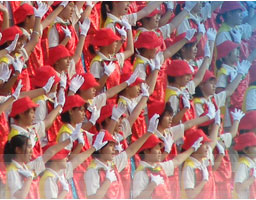
http://rexcurry.net/peoples-action-party-pap-singapore-nazi-salute.jpg
to continue reading...
Rex Curry
A recent Opinion Editorials column gained attention for showing the swastika's modern use as overlapping S-shapes for "Socialism." The column, which exposed the British Union of Fascists and National Socialists and its logo (an S-shaped lightning bolt for "Socialists") led to new discoveries regarding symbolism in the Peoples Action Party (PAP) of Singapore.
http://rexcurry.net/peoples-action-party-pap-singapore-socialism.html
The PAP began as a socialist party and adopted as its logo the same S-shaped symbolism of the British Union of Fascists and National Socialists (BUFNS). The noted historian Dr. Rex Curry (author of "Swastika Secrets") has established that the PAP's logo originated as an "S" letter for "Socialists."
http://rexcurry.net/british-union-of-fascists-sir-oswald-mosley.html
Wikipedia is announcing the amazing discoveries concerning the PAP and the BUFNS. Dr. Curry's research about the BUFNS ranks at the top of internet searches. Recent articles at opinioneditorials.com report on the many references to the research on Wikipedia. Even Wikipedia's founder Jimbo Wales has publicly commented on Dr. Curry's influence on Wikipedia. His work is probably be the most referenced historical research on Wikipedia. The work has been reviewed and verified by wikipedia writers. Some Wikipedia writers use Dr. Curry's work without attribution in apparent attempts to bolster their own credibility.
Of course, Wikipedia is a glorified anonymous bulletin board and is constantly changed, often at the hands of vandals and even neo-nazis. A recent web search for "British Union of Fascists and National Socialists" showed Dr. Curry's work at the top, and indicated that there is no wikipedia article in existence. Wikipedia gives the mis-impression that the BUFNS never existed, or that its name-change never occurred. It is more air-brushed revisionist history on wakipedia.
Amazon.com adopted as its policies recommendations advocated by Dr. Curry to combat neo nazism like that on wikipedia.
http://rexcurry.net/amazon-com-book-reviews-tags-discussions.html
The PAP smeared its way onto the political scene in 1954 when it was formed by English-educated middle-class men who had returned to Singapore from Britain. The PAP became a member of the Socialist International. The PAP logo has a double connotation for "Singapore Socialists."
http://rexcurry.net/peoples_action_party_pap_logo_singapore_socialist_swastikas.gif
The PAP's logo supports Dr. Curry's discovery that the swastika was used as alphabetic symbolism for overlapping "S" letters for "socialism" under the National Socialist German Workers' Party.
http://rexcurry.net/swastika3clear.jpg
In the early 1950's, when the socialist symbolism was adopted in Singapore, the leader of the BUFNS (Oswald Mosley) was trying to revive his socialist movement in Britain and was still using the same S-shaped symbol for socialism in his Union Movement (UM). Mosley had returned to the leadership of British national socialism by founding the UM in 1948 at a meeting in London's Farringdon Hall, where as many as fifty one separate groups came under the new umbrella. Mosley re-emerged as a candidate in 1959 in North Kensington (which included Notting Hill), in the first parliamentary election for him since 1931.
There is evidence that the PAP also adopted the stiff-arm salute of the National Socialists.
http://rexcurry.net/peoples-action-party-pap-singapore-nazi-salute.jpg
to continue reading...
Wage Hike For Filipino Maids In Singapore Seen As Unlikely
The Philippine government's call for 400-US- dollar monthly salaries for maids overseas is unlikely to have any impact in Singapore, maid agents said Thursday.
Wages in the city-state are determined by market forces, agents told The Straits Times. There is no government-to-government agreement on the issue.
Maids from the Philippines earn 330 dollars to 350 dollars a month.
Half of the 160,000 maids in Singapore are Filipinos. Domestic workers from Indonesia, the second-largest source of maids, are paid far less, along with Sri Lankans.
A Philippine Embassy official told the newspaper that the "reform package" also requires maids going overseas to be at least 23 years old, up from 21. It calls for hiking salaries to 400 dollars from a 200-dollar minimum implemented in the 1970s.
Taiwan and Hong Kong are abiding by the new rules, he said.
"It's high time for a salary increase," he noted, but acknowledged that the new policies will be difficult to enforce in Singapore.
The city-state's Ministry of Manpower maintains that there is no minimum wage for foreign domestic workers. Terms and conditions are negotiated individually between workers and employers.
Filipinos working overseas sent home more than 10.7 billion US dollars in 2005, equal to 12 per cent of their country's gross domestic product, the report said.
© 2007 DPA
to comment
Singapore court rejects Far Eastern Economic Review's bid to have defamation suit dropped
The Associated Press
Thursday, February 22, 2007
to comment
Thursday, February 22, 2007
SINGAPORE: The Far Eastern Economic Review has failed to convince a Singapore court to throw out defamation lawsuits filed against it by two of the Southeast Asian city-state's leaders, the magazine's lawyer said Thursday.
Review Publishing Company Ltd. and Hugo Restall, the Review's editor, were sued for defamation by Singaporean Prime Minister Lee Hsien Loong and his father, Lee Kuan Yew, in August last year over an article about a prominent Singapore opposition activist.
Peter Low, the two defendants' lawyer in Singapore, said they had sought to question the authority of the city-state to hear the lawsuits, but were rejected in a judgment issued Wednesday. Low declined to comment further, saying he was awaiting instructions from his clients.
Because the Review is a Hong-Kong-based monthly which does not have any employees in Singapore, the defendants challenged the right of the Singapore court to enforce damages outside of the city-state, as well as the way the Lees served their legal papers on the two parties overseas.
Judicial Commissioner Sundaresh Menon turned down the magazine's appeal, writing in his judgment that it was clear that the Lees were limiting their claim for damages to Singapore and that the legal papers had been served on the magazine in an appropriate manner.
In the Review article that the Lees say defamed them, Restall wrote about the opposition Singapore Democratic Party's secretary general Chee Soon Juan's campaign for more democratic freedoms in the tightly controlled city-state and how the ruling party has sued a number of opposition politicians.
Singapore's government later banned the Review, which has more than 1,000 subscribers in Singapore, because it did not appoint a legal representative and pay a 200,000 Singapore dollar (US$126,150; €99,430) security bond — new requirements that are unrelated to the lawsuit, but that the Review has called unjustified.
Singapore's leaders have drawn criticism over several successful defamation suits in past years against journalists and political opponents. The leaders say they have sued to defend their personal and professional reputations.
to comment
21 Feb 2007
SINGAPORE: Portrait book's nudity 'excessive'
Book featuring near-nude celebrity photpgraphs banned while Communication and the Arts Minister Lee Boon Yang says he will continue to revise censorship rules
Straits Times
Saturday, February 17, 2007
A photography book that featured near-nude images of celebrities was banned here because it exceeded the current content standards for publications.
Information, Communications and the Arts Minister Lee Boon Yang said the Public Consultative Panel, made up of members of the public, agreed that the book Superstars -- by Singapore photographer Leslie Kee -- should not be allowed to be sold here.
to continue reading...
Date Posted: 2/17/2007
20 Feb 2007
THAILAND: Singapore asks for explanation over satellite row
From ABC
Thai's coup leader is involved in a row with Singapore over the sale of Thai satellites to a government-owned Singapore company. Singapore's foreign ministry has asked for a diplomatic explanation from the Thais.
Presenter - Karon Snowdon, Speaker - Robert Broadfoot, managing director, Political and Economic Risk Consultancy
listen via windows media
Thai's coup leader is involved in a row with Singapore over the sale of Thai satellites to a government-owned Singapore company. Singapore's foreign ministry has asked for a diplomatic explanation from the Thais.
Presenter - Karon Snowdon, Speaker - Robert Broadfoot, managing director, Political and Economic Risk Consultancy
listen via windows media
SNOWDON: The Head of the Thai army, coup leader and political king maker, General Sonthi wants to get Thailand's satellites back.
They're the assets of the Shin Corporation satellite subsidiary.
They were sold off last year to the Singapore government's investment company Temasek as part of a controversial multi-billion dollar sale by the Thaksin family.
General Sonthi says the satellites are national assets and should be returned to Thailand.
Managing Director of Hong Kong based Political and Economic Risk Consultancy, Robert Broadfoot.
BROADFOOT: So that's why it's even more important because the comments are by the military which has put the government in place.
Read the rest of the transcript
What does Singapore Permanent Residency mean to a Filipino?
Culture Shiok!
One known reason (if it's not the main reason) of why Filipino workers take Singapore Permanent Residency (PR) is security. If an employment pass (EP) holder leaves the company, the EP is canceled and he must leave Singapore unless employment with another company.
This was addressed when the Singapore government introduced the Personal Employment Pass (PEP) scheme. The new PEP allow the holder is not tied to the employer and will be granted on the holder's individual merits. The PEP allows the holder to remain in Singapore for up to six months in between jobs to evaluate new employment opportunities.
But for a Filipino who has become as "kiasu" (Singlish, afraid to loose) as a Singaporean, this is not secured enough. Changing jobs in Singapore won't be that easy and there's always the risk of being rejected when you apply for an EP.
to continue reading...
Journalism in Singapore
From Holland Village Voice
Losing Faith of the Printed Word
Watch the video documentary
to continue reading...
Losing Faith of the Printed Word
I just spent the past hour and a half watching a BBC documentary on Tehran, and somehow what struck me was the spirit of journalism, both of the BBC journalist and the journalists in Tehran. If Prof. Mahbubani said journalists have a tough job in Singapore, I suppose he was not speaking in relative terms to Iran. Yet the Iranian journalists seem to display tenacity and passion I don't sense from reading the Straits Times. But I'm making an unfair comparison because those Iranian journalists featured probably didn't work for the equivalent of the ST.
In the documentary Rageh Omaar said that despite being news-obsessed, Iranians were "losing faith of the printed word." They browse newspapers but don't buy them. They have the fourth largest blogging community in the world, and Iranians are increasingly turning to Satellite TV and the Internet.
Perhaps the reason why Holland Village Voice started out as a novel modeled after Kundera's is because I deeply feel and fear that media freedom in Singapore is an illusion. I felt compelled to speak in riddles, as Kundera did.
The documentary makes me feel we don't stand very far from where Iran is in terms of media freedom. We have to paraphrase issues in euphemistic ways, and that is if we're allowed to talk openly about them. Bloggers are ok, so long as they do not attract too much attention. An Iranian film had to be censored extensively before it could be screened locally, but went on to win at International Film Festivals - sounds familiar to Singapore?
Journalists, documentary makers, filmmakers, visual artists have a central part in our world, because they communicate to us and remind us what we should be doing to progress our world.
Watch the video documentary
to continue reading...
16 Feb 2007
A relationship built on sand
Below are extracts from an article by Bill Guerin who has managed to take a step back from Singapore's and in particluar Temasek's ongoing financial dealings with its neighbours. The Peoples Action Party has often stated that no opposition party would be capable of running the economy and financial investments as well as they have been doing for the last thirty plus years. The rise to economic dominance in South East Asia was a majestic climb but now that the Peoples Action Party has reached a plateux they seem to be incapable of investing in their neighbours without causing a political stink. So just how great a job have the PAP been doing over the last few years.
The Peoples Action Party will of course point the finger of blame not at their own party but that of the allegedly independent Temasek in order to defuse allegations that they are somehow mismanaging investments. This seems to be the current line of response in the Thaksin Shin Corp deal, but with the land-reclamation programme and its need for sand imported from Indonesia, such a defence is redundant. I am in no way buying the party line that Temasek is a separate 'business entity', but in this particular case the Peoples Action Party have less of a 'deniabililty' position to fall back on. The land reclamation project is an initiative undertaken and promoted by the Singaporean government. The Indonesian government has banned such sand exports to Singapore as leverage in negotiations over a planned extradition treaty.
Singapore's drive to be the Switzerland of South East Asia is built on the very premise that the accounts are easy to set up and the money placed in them is done so on a 'no-questions-asked' basis. Of course it attracts money gained through corruption or other questionable means. That's the whole point of running a 'Switzerland' style banking system. The problem for Singapore and the People's Action Party is that in doing it with money in South East Asia which has such a wide and visible lack of social equality it is 'theft'. According to Andy Xie "Actually, Singapore’s success came mainly from being the money laundering center for corrupt Indonesian businessmen and government officials." So until the extradition treaty is drawn up and it includes provisions to include economic crime the situation and antagonism between the two nations will remain.
to continue reading...
JAKARTA - Singapore's aggressive regional investment strategy has already taken bilateral relations with Thailand to an all-time low, but a rising tide of economic nationalism and unresolved extradition issues with neighboring Indonesia potentially represents a more crucial test for the island state's economic diplomacy. [...]
The Peoples Action Party will of course point the finger of blame not at their own party but that of the allegedly independent Temasek in order to defuse allegations that they are somehow mismanaging investments. This seems to be the current line of response in the Thaksin Shin Corp deal, but with the land-reclamation programme and its need for sand imported from Indonesia, such a defence is redundant. I am in no way buying the party line that Temasek is a separate 'business entity', but in this particular case the Peoples Action Party have less of a 'deniabililty' position to fall back on. The land reclamation project is an initiative undertaken and promoted by the Singaporean government. The Indonesian government has banned such sand exports to Singapore as leverage in negotiations over a planned extradition treaty.
Controversy over Singapore's land-reclamation projects, which entail huge imports of foreign sand and soil, represent the latest spat in a historically prickly bilateral relationship - one that is coming under increasing strain that threatens Singapore's Indonesia-based investments. [...]
The two sides have been negotiating the issue [extradition treaty]on and off for more than three decades, although the issue became particularly heated after the 1997-98 Asian financial crisis, when a number of ethnic-Chinese Indonesian businessmen absconded with huge amounts of cash they allegedly illegally deposited in Singaporean bank accounts.
Singapore's drive to be the Switzerland of South East Asia is built on the very premise that the accounts are easy to set up and the money placed in them is done so on a 'no-questions-asked' basis. Of course it attracts money gained through corruption or other questionable means. That's the whole point of running a 'Switzerland' style banking system. The problem for Singapore and the People's Action Party is that in doing it with money in South East Asia which has such a wide and visible lack of social equality it is 'theft'. According to Andy Xie "Actually, Singapore’s success came mainly from being the money laundering center for corrupt Indonesian businessmen and government officials." So until the extradition treaty is drawn up and it includes provisions to include economic crime the situation and antagonism between the two nations will remain.
to continue reading...
Secret Life of Brian (Python Doc')
48 minutes
Documentary examining how Monty Python's seminal 1979 comedy Life of Brian caused such a global furore amongst religious groups, who saw the film as blasphemous. Featuring exclusive interviews with John Cleese, Michael Palin, Terry Jones an
d Terry Gilliam, the Pythons reflect on the concept and making of the film and discuss the obstacles overcame. Given the uproar it created over 25 years ago, the programme also asks whether the film could have been made in today's political
climate.
Thailand's Sondhi Wants Assets Back From Singapore
By Anuchit Nguyen and Beth Jinks
Feb. 16 (Bloomberg) -- Thailand's military leader said he wants to take back control of 140 billion baht ($3.9 billion) of assets sold to Singapore's government, escalating a diplomatic spat between the Southeast Asian nations.
``Singapore is a very small country, but it is so rich that it can buy 140 billion baht of our national assets,'' said Sondhi Boonyarataklin, who led a September coup that toppled the government of Thaksin Shinawatra. ``I am thinking about whether we can take those assets back.''
Singapore's Temasek Holdings Pte last year bought control of Thaksin's mobile phone and satellite group, provoking an outcry against the sale of strategic companies to a foreign government. Sondhi last month accused Singapore of using those assets for spying, a charge the city-state has denied.
``I thought things had calmed down on the subject, but this does suggest that maybe things took a turn for the worse,'' said David Cohen, a Singapore-based economist at Action Economics. ``It is difficult to anticipate which direction the politics in Thailand would go right now.''
The sale of Shin Corp., the holding company founded by Thaksin, angered Thais because the billionaire businessman's family didn't pay tax on the proceeds. The deal exacerbated protests and a political stalemate in Thailand that led to Thaksin's ouster in the Sept. 19 coup.
Business Decision
Many Thais were also concerned at Singapore's involvement in the transaction, even though Temasek and its parent, the Ministry of Finance, said the 33-year old company made the investment as a pure business decision and not at the direction of the city- state's government.
Temasek's Chief Executive Officer, Ho Ching, is the wife of Singapore Prime Minister Lee Hsien Loong.
to continue reading...
Feb. 16 (Bloomberg) -- Thailand's military leader said he wants to take back control of 140 billion baht ($3.9 billion) of assets sold to Singapore's government, escalating a diplomatic spat between the Southeast Asian nations.
``Singapore is a very small country, but it is so rich that it can buy 140 billion baht of our national assets,'' said Sondhi Boonyarataklin, who led a September coup that toppled the government of Thaksin Shinawatra. ``I am thinking about whether we can take those assets back.''
Singapore's Temasek Holdings Pte last year bought control of Thaksin's mobile phone and satellite group, provoking an outcry against the sale of strategic companies to a foreign government. Sondhi last month accused Singapore of using those assets for spying, a charge the city-state has denied.
``I thought things had calmed down on the subject, but this does suggest that maybe things took a turn for the worse,'' said David Cohen, a Singapore-based economist at Action Economics. ``It is difficult to anticipate which direction the politics in Thailand would go right now.''
The sale of Shin Corp., the holding company founded by Thaksin, angered Thais because the billionaire businessman's family didn't pay tax on the proceeds. The deal exacerbated protests and a political stalemate in Thailand that led to Thaksin's ouster in the Sept. 19 coup.
Business Decision
Many Thais were also concerned at Singapore's involvement in the transaction, even though Temasek and its parent, the Ministry of Finance, said the 33-year old company made the investment as a pure business decision and not at the direction of the city- state's government.
Temasek's Chief Executive Officer, Ho Ching, is the wife of Singapore Prime Minister Lee Hsien Loong.
to continue reading...
15 Feb 2007
Nigeria: Speaking Out: Shame, Singapore
Singapore is still rather barbaric...
February 15, 2007
Posted to the web February 15, 2007
Morenike Taire
Lagos
The contrast is the classic one, which is obviously why it has been explored so widely since the two events. In Lagos, a popular actress of the Yoruba genre was sentenced to a few years in jail with the option of some puny fine for attempting to traffic through the Murtala Mohammed international airport some cocaine. If her destination had been the Asian Singapore and she had been caught, her fate might have been somewhat different as was that of her younger - much younger - compatriot who was recently executed by that State, having been indicted and tried for the possession of heroine.
The controversy surrounding the execution of 19 year old Tochi has also failed to abate. Human rights communities as well as bodies the globe over have decried the manner in which the trial was conducted, and the speed with which the execution was carried out. It is also of concern that, though a young man by international standard, a 19 year old is considered just but a boy in Nigeria, and definitely too young to be executed as a first offender by any standard. Tochi might have breathed a sigh of relief upon escaping NDLEA in whatever Nigerian airport he passed through, assuming that indeed he had been a willing courier. It has been argued that, particularly after the fate of Yetunde Wunmi had been determined so expediently and favourably, that Tochi would on hindsight wished this to have been his fate.
While this can at first thought to be neither here nor there on the surface, many genuine questions have arisen from it. There is on one hand those who are complaining that the Wunmi sentence is too light, and that such lenient and seemingly indecisive treatments of drug offenders is the reason that drug abuse and trafficking is on the rise in Nigeria; there is on the other those who are protesting the extreme severity of the Tochi treatment.
Here, as with many other issues, we have yet to take some definite national and traditional stance on the issue of drugs, its trafficking, its internal distribution its (ab)use and the effect of their presence on our communities.
to continue reading...
It is a shame that Singapore, one of the countries so greatly praised for rising so swiftly and so gloriously to 1st World from 3rd World status, is still rather barbaric after all.
February 15, 2007
Posted to the web February 15, 2007
Morenike Taire
Lagos
The contrast is the classic one, which is obviously why it has been explored so widely since the two events. In Lagos, a popular actress of the Yoruba genre was sentenced to a few years in jail with the option of some puny fine for attempting to traffic through the Murtala Mohammed international airport some cocaine. If her destination had been the Asian Singapore and she had been caught, her fate might have been somewhat different as was that of her younger - much younger - compatriot who was recently executed by that State, having been indicted and tried for the possession of heroine.
The controversy surrounding the execution of 19 year old Tochi has also failed to abate. Human rights communities as well as bodies the globe over have decried the manner in which the trial was conducted, and the speed with which the execution was carried out. It is also of concern that, though a young man by international standard, a 19 year old is considered just but a boy in Nigeria, and definitely too young to be executed as a first offender by any standard. Tochi might have breathed a sigh of relief upon escaping NDLEA in whatever Nigerian airport he passed through, assuming that indeed he had been a willing courier. It has been argued that, particularly after the fate of Yetunde Wunmi had been determined so expediently and favourably, that Tochi would on hindsight wished this to have been his fate.
While this can at first thought to be neither here nor there on the surface, many genuine questions have arisen from it. There is on one hand those who are complaining that the Wunmi sentence is too light, and that such lenient and seemingly indecisive treatments of drug offenders is the reason that drug abuse and trafficking is on the rise in Nigeria; there is on the other those who are protesting the extreme severity of the Tochi treatment.
Here, as with many other issues, we have yet to take some definite national and traditional stance on the issue of drugs, its trafficking, its internal distribution its (ab)use and the effect of their presence on our communities.
to continue reading...
It is a shame that Singapore, one of the countries so greatly praised for rising so swiftly and so gloriously to 1st World from 3rd World status, is still rather barbaric after all.
Singapore's wealth divide widening

SINGAPORE (Reuters) -- For years, Singaporeans measured success by "the five Cs" -- cash, car, condominium, credit card and club membership.
But such trophies, especially condos, remain firmly out of reach for many Singaporeans.
While Singapore is the wealthiest country in Asia after Japan in terms of gross national income per capita, it is grappling with a widening income gap that puts it alongside countries such as Burundi and Kenya in terms of income inequality.
The 2007 budget issued on Thursday is expected to tackle such disparities through government handouts to poorer workers after a report released this week showed that 19.3 percent of Singaporean households earn less than S$24,000 ($15,600) a year.
"The five Cs used to be an aspirational goal," said Colin Goh, whose award-winning feature film "Singapore Dreaming" showed how such aspirations can shatter family relations.
"Now, Singaporeans regard them as essentials, and if you're of a certain class, practically an entitlement. Having the five Cs is no longer a sign of attaining entry into the elite. Rather, the absence of the five Cs indicates one's inadequacy," he said.
Exclusive clubs
True, some of the Cs have become more attainable.
Banks, increasingly eager to earn fat fees from consumers, are falling over themselves to offer cash advances and credit cards, although in the case of DBS, the country's biggest bank, customers need to have an annual income exceeding S$30,000.
Prices for club memberships and cars have also declined. But the entrance fee for the 160-year-old Tanglin Club, a relic of the colonial era, still costs S$20,000.
Moreover, exclusivity matters.
to continue reading...
14 Feb 2007
Singapore's Democratic Discourse
The recent rather misguided admission by the Peoples Action Party that they comment anonymously in online forums and blogs in order to mount a 'counter-insurgency' against the perceived anti-establishment tone of the those of us who currently dominate the discourse on Singaporean politics, has led to some questioning of the current state of affairs of online discussion.
In an article published in 2001 by Lincoln Dahlberg an attempt to overcome such structural limitations as state intervention and corporate dominance is made. Dahlberg argues that there are three 'camps' or types of internet interaction that dominate the internet. A communitarian camp which stresses the enhancement of communal spirit and vlaues. The second camp, 'liberal individualist' which facilitates the expression of individual interests, and a third and as far as I am concerned the model that is lacking in the Singaporean discourse - a deliberative camp that promotes the internet as a means for expansion of a public sphere of rational-critical citizen discourse.
As the third camp is of interest here I will quickly outline the types of sites that fit into the first two camps before asking how online deliberative forums that extend the public sphere can be created in Singapore.
to continue reading...
In an article published in 2001 by Lincoln Dahlberg an attempt to overcome such structural limitations as state intervention and corporate dominance is made. Dahlberg argues that there are three 'camps' or types of internet interaction that dominate the internet. A communitarian camp which stresses the enhancement of communal spirit and vlaues. The second camp, 'liberal individualist' which facilitates the expression of individual interests, and a third and as far as I am concerned the model that is lacking in the Singaporean discourse - a deliberative camp that promotes the internet as a means for expansion of a public sphere of rational-critical citizen discourse.
As the third camp is of interest here I will quickly outline the types of sites that fit into the first two camps before asking how online deliberative forums that extend the public sphere can be created in Singapore.
to continue reading...
SDP writes to International Bar Association about its conference in Singapore
13 Feb 07
The International Bar Association, an organisation of legal professionals and bodies spanning the globe, is holding is Annual Conference in Singapore in October this year. (see www.ibanet.org) Below is the SDP's letter to the IBA asking it to reconsider its decision to have its meeting here.
9 February 2007
Mark Ellis
Executive Director
International Bar Association
10th Floor
1 Stephen Street
London W1T 1AT
United Kingdom
Dear Sir,
I am given to understand that the International Bar Association (IBA) will hold its Annual Conference in Singapore from 14-19 October this year. While I would very much like to welcome you to my country, I have to highlight to you some very disturbing developments that I believe would concern the IBA.
to continue reading...
The International Bar Association, an organisation of legal professionals and bodies spanning the globe, is holding is Annual Conference in Singapore in October this year. (see www.ibanet.org) Below is the SDP's letter to the IBA asking it to reconsider its decision to have its meeting here.
9 February 2007
Mark Ellis
Executive Director
International Bar Association
10th Floor
1 Stephen Street
London W1T 1AT
United Kingdom
Dear Sir,
I am given to understand that the International Bar Association (IBA) will hold its Annual Conference in Singapore from 14-19 October this year. While I would very much like to welcome you to my country, I have to highlight to you some very disturbing developments that I believe would concern the IBA.
to continue reading...
13 Feb 2007
Singabloodypore Moves to Reporters Without Borders
http://singabloodypore.rsfblog.org

As a result of the recent incident when the comment section of this site was hacked by persons unknown it is moving to a new address. The Singapore police have been informed but because of the nature of the alleged offence I am not sure the perpetrators will be caught.
I have also searched blogger to try to work out how someone could do this and how I can protect the site from future attacks. I have been unable to find such information and previous attempts at trying to contact blogger personnel have come to nothing. So on this occasion I am moving to a paid for service.
The current blogspot site will remain available for as long as blogger continues to host it. This is to enable me to archive old articles and comments in order to hyperlink to them. I have however disabled the comment facility.
The new site is now fully operational and although it lacks the 'logo' of the original it will continue to focus on Singapore and the articles, journalistic commentary that some out there love to hate.
For the next week I will post all articles on both sites but you will only be able to comment on the new site.
I hope that those of you who so kindly link here will update your links.
http://singabloodypore.rsfblog.org

As a result of the recent incident when the comment section of this site was hacked by persons unknown it is moving to a new address. The Singapore police have been informed but because of the nature of the alleged offence I am not sure the perpetrators will be caught.
I have also searched blogger to try to work out how someone could do this and how I can protect the site from future attacks. I have been unable to find such information and previous attempts at trying to contact blogger personnel have come to nothing. So on this occasion I am moving to a paid for service.
The current blogspot site will remain available for as long as blogger continues to host it. This is to enable me to archive old articles and comments in order to hyperlink to them. I have however disabled the comment facility.
The new site is now fully operational and although it lacks the 'logo' of the original it will continue to focus on Singapore and the articles, journalistic commentary that some out there love to hate.
For the next week I will post all articles on both sites but you will only be able to comment on the new site.
I hope that those of you who so kindly link here will update your links.
http://singabloodypore.rsfblog.org
12 Feb 2007
Indonesia bans sand to Singapore
George Yeo is apparently surprised that this action might be 'politically' motivated. Imagine politics interfering in a business deal - my God. Next the foreign media will be telling George that Temasek is actually being run by the Singapore government and that it has upset the Thai authorities and led to a military coup.
George also argues that these rather drawn out negotiations have not been easy. It can be rather difficult to string a conversation out while behind his back your accomplice is robbing their home.
As the article by Michael Backman asserts
So we all know how 'difficult' such negotiations can be. But for anyone to claim that any descision amongst these politicians, is some how a 'political matter' other than a mere business arrangement, well that is just down right unreasonable.
From the BBC
George also argues that these rather drawn out negotiations have not been easy. It can be rather difficult to string a conversation out while behind his back your accomplice is robbing their home.
As the article by Michael Backman asserts
The authorities have found out and you're facing arrest. You need somewhere to go where authorities can't touch you. So where do you go? The answer is Singapore. Why? Because it is a half-hour flight from Jakarta, or 45 minutes by ferry from the Indonesian island of Batam, and, most importantly, it does not have an extradition treaty with Indonesia.
It is largely ethnically Chinese, just like many of Indonesia's white-collar criminals, if only because Indonesians of Chinese ancestry dominate that country's business sector.
Singapore finally agreed to negotiate an extradition treaty last year after years of Indonesia begging for one. The process has been ridiculously drawn out. At least six rounds of talks have been held. Indonesia is angry and feels that Singapore is being obstructionist. But why should Singapore be slow? Probably because it is a haven for Indonesian crooks on the run, and they bring their money with them. Billions of dollars in corruptly obtained funds have flowed into Singapore's property market and its banks.
So we all know how 'difficult' such negotiations can be. But for anyone to claim that any descision amongst these politicians, is some how a 'political matter' other than a mere business arrangement, well that is just down right unreasonable.
From the BBC
Singapore is to fix the price of sand used in the construction industry after Indonesia banned all exports to its city-state neighbour.
Officially Indonesia has said the ban is due to environmental concerns, but some believe it is politically driven.
A Singapore newspaper reported that it had been told that the ban was due to a difference over an extradition treaty.
Singapore is one of the largest importers of Indonesian sand, which is used to make concrete.
'Counter-productive'
Singapore Foreign Minister George Yeo has said that, if true, Indonesia's suggestion that the ban was in protest over delays to an extradition treaty, was "unfortunate and counter-productive".
The two countries are separated by the Strait of Singapore
The comments were reported to have been made by an Indonesian official.
Mr Yeo added that negotiating the first extradition treaty between the two nations was not easy.
Indonesia has been pushing Singapore for an extradition treaty which Jakarta says is vital in its fight against corruption.
The Indonesian government alleges that many suspects wanted in Indonesia on corruption charges have simple fled to Singapore.
Jakarta has previously banned the export of sea sand to Singapore, which is used in land reclamation.
Singapore is now fixing the price of sand to curb any inflationary pressures as importers have to switch to alternative sources.
Singapore detainee for 18 years dies in London
dpa German Press Agency
Published: Thursday February 8, 2007
Singapore- Ho Toon Chin, a former trade unionist detained in Singapore for 18 years, died in London from a stroke at the age of 70, news reports said Friday.
Ho served one of the longest detentions without a trial in the city-state. He was released in 1982 and became manager in a small media company.
Ho had a stroke on Sunday and died in a hospital on Tuesday, his son Hehao, 21, told The Straits Times from Britain. Ho will becremated in London on Monday.
Ho was arrested in 1963 when the government nabbed more than 100left-wing politicians and trade unionists for alleged subversive activities.
He was then general secretary of the Singapore National Seamen's Union, which was later banned.
On his release, Ho disputed the government's claim that his ideological outlook had changed and that he no longer wanted to be involved in trade union activities.
He claimed the government's statement was an attempt to "cover up" its failure to break the will of political detainees like himself, the newspaper said.
He subsequently married and went to Britain, but retained his Singaporean citizenship.
© 2006 - dpa German Press Agency
Published: Thursday February 8, 2007
Singapore- Ho Toon Chin, a former trade unionist detained in Singapore for 18 years, died in London from a stroke at the age of 70, news reports said Friday.
Ho served one of the longest detentions without a trial in the city-state. He was released in 1982 and became manager in a small media company.
Ho had a stroke on Sunday and died in a hospital on Tuesday, his son Hehao, 21, told The Straits Times from Britain. Ho will becremated in London on Monday.
Ho was arrested in 1963 when the government nabbed more than 100left-wing politicians and trade unionists for alleged subversive activities.
He was then general secretary of the Singapore National Seamen's Union, which was later banned.
On his release, Ho disputed the government's claim that his ideological outlook had changed and that he no longer wanted to be involved in trade union activities.
He claimed the government's statement was an attempt to "cover up" its failure to break the will of political detainees like himself, the newspaper said.
He subsequently married and went to Britain, but retained his Singaporean citizenship.
© 2006 - dpa German Press Agency
8 Feb 2007
Questions of Singapore's human rights violations raised in British Parliament
From Singapore Democratic Party
Liberal International (30 Jan 07)
7 Feb 07
Liberal International (30 Jan 07)
7 Feb 07
Mr Michael Moore, Liberal Democrats' Shadow Foreign Secretary, had tabled Parliamentary Questions regarding Singapore's restrictions of freedom of speech and expression in the British Parliament.
He received the below responses from Ms Margaret Beckett, the Secretary of State for Foreign and Commonwealth Affairs.
Mr Moore is due to meet the high commissioner of Singapore in London and he will ensure a demand for easing policy for freedom of expression will be discussed amongst others during that meeting.
Michael Moore:
To ask the Secretary of State for Foreign and Commonwealth Affairs what assessment she has made of the right to freedom of speech and expression in Singapore.
Margaret Beckett:
Sngapore's constitution provides for freedom of speech, assembly and association for Singaporean citizens. However, it also allows Singapore's Parliament to impose by law such restrictions as it sees fit to protect national security, friendly relations with other countries, public order and morality, the protection of parliamentary privilege and laws concerning contempt of court, defamation or incitement to any offence.
The Public Entertainment and Meetings Act requires a permit for public speech or entertainment, although its rules have been relaxed to allow some indoor speaking events to be exempted. By law, police permission is required for public assemblies of five or more persons. Most associations, societies, clubs, religious groups and other organisations with more than 10 members are required to register with the Government under the Societies Act and the Government can deny registration to groups that it believes are likely to have been formed for unlawful purposes.
Defamation cases can be brought and have been used by the Singapore Government. The Films Act forbids political advertising using films or videos and also prohibits films deemed to have political goals. Political and religious websites must be registered and may be subject to restrictions e.g. during elections. The Sedition Act has been used to prosecute racist comments made online. New laws to criminalise comments deemed to be harmful to racial and religious harmony are currently being discussed.
Michael Moore:
To ask the Secretary of State for Foreign and Commonwealth Affairs what discussions she has had with the Government of Singapore on the application of freedom of speech, association and assembly in Singapore.
Margaret Beckett:
The Singapore Government is well aware of our views, and that of our EU partners, on these issues. Most recently we raised our concerns to the Singaporean Government, through our high commission in Singapore, regarding access for accredited non-governmental organisations to the International Monetary Fund/World Bank Annual Meetings held in Singapore in September 2006.
Michael Moore:
To ask the Secretary of State for Foreign and Commonwealth Affairs what assessment she has made of the detention of Dr Chee Soon Juan and other Singapore Democratic Party members by the Government of Singapore.
Margaret Beckett:
Dr Chee Soon Juan was detained on 23 November 2006 for five weeks for non-payment of a fine he received for speaking in public without a permit, a requirement under Singapore law. Dr Chee was released early on 16 December 2006. Two other members of the Singapore Democratic Party were detained at the same time and given shorter jail terms for non-payment of smaller fines. They have also been released.
Michael Moore:
To ask the Secretary of State for Foreign and Commonwealth Affairs what assessment she has made of the use of the death penalty in Singapore; and what representations she has made to the Government of Singapore on the use of the death penalty.
Margaret Beckett:
The UK is opposed to the death penalty in all circumstances. We believe that the abolition of the death penalty is essential for the protection of human rights under Article 3 of the Universal Declaration of Human Rights. The Singapore Government continues to use the death penalty, though the number of executions in recent years has been much lower than in the past. There is little public opposition in Singapore to use of the death penalty.
The Singapore Government is well aware of our views. Our high commissioner in Singapore raised the issue most recently in December 2006 with the Singapore Deputy Prime Minster, who is also Minister for Law.
Singapore Bans Madonna’s Confessions
And in case you thought you might actually be missing something. Here is a video clip of the offending song and image.
Madonna Confessions Tour - Live to Tell
Anyone out there willing to argue that Singapore does not censor material?
February 6, 2007
singapore bans madonna’s confessions tour DVD for mock-crucifixion scene
By News Editor
Madonna Confessions Tour - Live to Tell
Anyone out there willing to argue that Singapore does not censor material?
February 6, 2007
singapore bans madonna’s confessions tour DVD for mock-crucifixion scene
By News Editor
Gay icon Madonna's The Confessions Tour: Live from London DVD, which features the singer performing the ballad Live To Tell while suspended from a giant mirrored cross, has been banned by Singapore censors. Fans who can't wait to get their hands on her latest DVD can order through the Fridae Shop.
Madonna's record breaking Confessions Tour filmed at London's Wembley Arena during her worldwide sold-out 25-city run in 2006 has been banned in Singapore for her performance on a massive neon cross in a mock-crucifixion.
Madonna performed the ballad ''Live To Tell'' while suspended from a giant mirrored cross during her ''Confessions Tour'' last year.
The Confessions Tour: Live from London DVD includes the full, unedited version of the controversial performance of her 1986 single "Live To Tell” as well as songs that span the course of Madonna's extraordinary career such as "Ray of Light", "La Isla Bonita", "Like A Virgin", "Erotica", "Music" to "Hung Up" and “Sorry” from her "Confessions On A Dance Floor" CD.
Having already been criticised in the United States where the tour first launched, the 48-year-old mother of two was again criticised by religious groups for kneeling and taking off a crown of thorns to the back-drop of a crucifix during her concert in Rome where the Holy See - which governs the Catholic Church on behalf of the Pope - is located.
The sold-out Confessions World Tour, which went to from major US cities, Canada, Europe and Japan, is the highest-grossing tour ever by a female artist in history.
Nearly two decades ago, Madonna who has a Catholic Italian-American father attracted the ire of the Catholic Church for featuring burning crosses, statues crying blood and seducing a black Jesus in her "Like a Prayer" video.
In late January, Dutch prosecutors announced that the singer will not face charges over the mock crucifixion staged on her 2006 world tour after a Protestant party SGP had called for the singer to be prosecuted. The Amsterdam prosecutor's office said the scene lent itself “to different interpretations” and through her show, “the singer tried to express her frustrations about certain situations in the world."
"It is not a question of contempt for God. Furthermore, Madonna did not discredit Christians as a group," said the prosecutor's office.
In September last year, the star said her performance was an appeal for AIDS charities and released a statement regarding the controversy. She said her specific intent is to “bring attention to the millions of children in Africa who are dying every day, and are living without care, without medicine and without hope.”
“My 'confession' follows and takes place on a Crucifix that I ultimately come down from. This is not a mocking of the church. It is no different than a person wearing a Cross or ‘Taking Up the Cross’ as it says in the Bible. My performance is neither anti-Christian, sacrilegious or blasphemous. Rather, it is my plea to the audience to encourage mankind to help one another and to see the world as a unified whole.”
“I am asking people to open their hearts and minds to get involved in whatever way they can.”
According to Warner Music, The Confessions Tour DVD is currently being distrubuted across Asia except for Singapore and Malaysia where the DVD is pending approval.

Subscribe to:
Posts (Atom)