26 Nov 2005

Singapore sacks its hangman

There are somewhat conflicting reports coming out as to whether or not Darshan Singh has been sacked, fired, resigned or is now actually doing the hanging this Friday. The story does have an interest value only with reference to the plight of Van. It is nothing other than a distraction from the main focus of the issues surrounding the death penalty.

From: By Clare Masters in Singapore
November 27, 2005


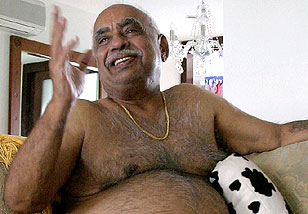
Darshan Singh ... No longer Singapore's hangman. SINGAPORE has sacked its long-serving hangman on the eve of the execution of Australian drug courier Nguyen Tuong Van.

A new executioner is expected to be flown into Singapore this week to carry out Nguyen's death sentence as scheduled on Friday despite pleas for mercy from Australia. It is believed the new hangman will be flown in from another Asian country, possibly Malaysia, with which Singapore has a close relationship.
The 25-year old from Melbourne will become the first prisoner in Singapore in 46 years not to be sent to his death by Darshan Singh. The 74-year-old grandfather was dumped after his identity and picture was revealed by The Australian newspaper.

Mr Singh said he was in big trouble and was out of a job.

"It has been very, very difficult for me," he told The Sunday Telegraph. "I am not the hangman anymore."

Mr Singh said he would miss the $400 fee for each execution but was relieved he would not be placing the noose around Nguyen's neck. "In a way I am happy," he said.

Nguyen's lawyer Lex Lasry said the prospect of an inexperienced hangman was disturbing because mistakes could cause extended suffering. "If this must happen it must be done as humanely as possible. It just shows the high level of inhumanity of it."

A spokesman for Foreign Minister Alexander Downer said the Government was continuing to plead to Singapore to stop the execution.

Australia's Catholic bishops yesterday wrote to Singapore's Prime Minister Lee Hsien Loong urging him to reconsider clemency for the condemned man.

Nguyen was caught with 396.2 grams of heroin at Singapore's Changi Airport in December 2002 while in transit from Cambodia to Sydney. He claimed he was trying to pay off his heroin-addicted twin brother's legal debts.

Nguyen's mother Kim and brother Khoa have been in Singapore for a week visiting Nguyen at Changi each day until yesterday when the prison was closed.

Singapore human rights lawyer M. Ravi has led the local campaign to save the Australian because it was the final wish of his previous death row client.

Thirty eight-year-old Shanmugam Murugesu, who became Nguyen's best friend and confidant in jail, was executed in May for bringing one kilogram of marijuana into the country.

"When I saw Shanmugam on his last day he said to me 'let my death not be in vain, please help this young man next to me'," Mr Ravi said.

It was his last wish that on his birthday, eight days before Nguyen's execution date, his family hold a vigil to pray for the condemned. They fulfilled it last week. "We are not just fighting for my father," Murugesu's 15-year-old son Gopal said at the candle-lit Indian ritual.

"We are fighting for everyone. No one should have to go through this pain, it is not the pain of missing a girlfriend or a friend, the pain of seeing your father's body is very difficult to handle.

"I do not want his mother to have to feel this pain."

Gopal and his twin brother Krishnan, now work alongside Mr Ravi with their grandmother Madame Letchumi Ammah as the only family of a condemned prisoner to speak out publicly against the government. It is a battle largely waged in secret as the lobbyists dodge the government's strict laws. Of the 10 activists who formed the Singapore Anti Death Penalty Committee (SADPC), nine will not divulge their identity.

"But we are slowly making a difference," said one activist.

"Van has made an impact. He has struck a chord. But this will be a long and slow fight."

From Our Own Correspondent

From Our Own Correspondent on the BBC covers numerous stories this week but one reporter Andrew Harding talks about a strange little city in South East Asia, a certain 73 year old who is attempting to resign from a job that has a murderous timetable and a young man by the name of Van Nguyen who is soon to be his latest assignment.

Also refers to the recent meeting against the death penalty in Singapore.

As far as I am concerned this report by the BBC is long overdue. The report from Andrew Harding starts at 00:17:00 and ends at 00:22:00. Really worth a listen.

To Download From Our Own Correspondent click here... Saturday, 26 November 2005

Related Video from ABC News.

New Zealand Prime Minister Helen Clark has raised the case of Nguyen with Singapore's Prime Minister, independently of Australian efforts.

[Real Broadband] [Real Dialup] [Win Broadband] [Win Dialup]

Don't promise what you can't deliver: MM Lee

Weekend • November 26, 2005

ONE of Asia's most respected leaders, Minister Mentor Lee Kuan Yew's views on leadership were much sought after during his recent visits to both Dubai and New Delhi.

In a recent interview with India TV in New Delhi, Mr Lee stressed that a crucial factor in leadership was credibility.

He recounted how he gained credibility the hard way — by being knocked about by the communists and by having nasty conflicts with the communalists.

And Mr Lee said that this was when the people concluded he was not a fake and was prepared to put his life on the line.

Speaking at a memorial lecture in the name of India's first Prime Minister Jawaharlal Nehru, Mr Lee dished out some advice to India's young politicians.

"I think the first thing they must remember is to not promise something they can't deliver. It sounds good at election time but three years later, they become empty words.

"You know you couldn't produce it, you promised this, you're not credible and you lose credibility," said Mr Lee.

He added: "You take George W Bush, he's a tough man, 9-11, if you saw him on television at the World Trade Centre, he took that bullhorn and he says to the firemen; 'I heard you and the world will hear from you'.

"And he went to Afghanistan and he hit the Taliban. Now he's in trouble in Iraq, but he's not a quitter. If he has good policies out of this chaos to establish a stabilised Iraq, maybe not a full democracy, but a stabilised Iraq with a properly democratic Iraqi elected government, his credibility will be very high, he'll go down in glory.

"And there's still a chance, in fact, I believe he's going to fight to create that. I think you want that kind of leader.

"Of course, his opponents say he's misled us into a wrong war but they were the people who voted for the war.

"Everybody believed there were weapons of mass destruction including the intelligence agencies.

"I would say that's leadership," Singapore's first prime minister said.

Copyright MediaCorp Press Ltd. All rights reserved.

====

I can't help being disturbed when our leaders started commenting on the situation in other countries but I think this one cuts the cake. Not everyone believed that there were weapons of mass destruction before the war begun. Moreover, George Bush went to war despite lacking UN and home support. What does Mr Lee mean when he said "they were the people who voted for the war"

Last I know, Bush did not call for a referendum before he attacked Iraq and there were obviously strong opposition from the grounds. There were worldwide protests before the war begun. 3 million people in Rome against the war which is listed in the Guiness Book of Records as the largest ever anti-war rally. Millions of people protested, in approximately 800 cities around the world. The event was listed by the 2004 Guiness Book of Records as the largest mass protest movement in history. When a few Singaporeans tried to protest outside the American embassy pre Iraqi invasion, our police hauled those protestors away and gave them a stern warning. Do we want seriously want to endorse leadership despite protests from the ground?

Dr Chee trains guns on foreign media, former Australian PM

Weekend • November 26, 2005
Derrick A Paulo
derrick@newstoday.com.sg

Opposition figure Dr Chee Soon Juan has long criticised the local media for feeding Singaporeans with only the Government's views.

On Friday, he admitted he has also been disappointed with the foreign media for the longest time.

Speaking at a lunch with foreign and local journalists, Dr Chee said that international media organisations with offices here either "stay away from critical and hard-nosed reporting" or self-censor political stories on Singapore.

He claimed that overseas publications, too, have "capitulated in every instance" to the Singaporean authorities.

The Government's stance that foreign media should not meddle in Singapore's domestic affairs has long been established.

However, Dr Chee questioned the foreign media's objectivity.

"That is exactly why I am so vexed. By self-censoring or completely staying away from reporting Singaporean politics, are you being neutral?" he asked members of the Foreign Correspondents' Association.

An example of this, he claimed, was the lack of coverage on the growing civil society and activism here.

"In the past 12 months, we've seen some Singaporeans finally become more active in speaking up, that you'd never have seen in the years past.

"And it's the most disheartening, discouraging feeling when they get into trouble and the foreign media stays away, doesn't want to report," he said.

However, the "bigger point" for Dr Chee is that other governments are following Singapore's method of handling the media. He mentioned Thailand and China.

"People are looking at Singapore ... How do you do it? To be able to continue to keep this facade that you are a well-run society, have the popular backing of the people," he said.

"They are learning. They see Singapore as a model. I do worry that are we going to see a rollback (of democracy)."

Interestingly, while he has been criticised for joining the Australian chorus against the government over the impending execution of Nguyen Tuong Van, he took umbrage at former Australian prime minister Gough Whitlam's characterisation of Singapore as a "rogue Chinese port city".

"In the first place, Singapore is a nation and not just a port city ... To use language that does not recognise this fact is disrespectful to the people of Singapore," Dr Chee wrote to the Australian High Commission.

"Second, Singapore is not 'Chinese'. Our population is made up of various ethnic groups including Chinese, Malays, Indians, Eurasians, and smaller communities of various ethnicities. We call ourselves Singaporeans, not Chinese."

He added that many Singaporeans disagreed with the Singapore Government and were praying that the execution would not take place.

Copyright MediaCorp Press Ltd. All rights reserved.

Chee replies to PAP supporters: Is the life of a Singaporean that cheap compared to a foreigner's?

25 Nov 05

Below is the letter Dr Chee Soon Juan sent to Today and Straits Times in reply to letters published in the newspapers' forum pages on 24 Nov 05.

I am not surprised that the Government-controlled media has again portrayed me as a “traitor” out to “undermine” Singapore. This is exactly the tactic the press is adopting with the flurry of letters published. (24 Nov 2005)

It merely confirms my suspicion that the Government cannot answer the questions and arguments that I and other Singaporeans have raised about the execution of small-time drug couriers. As a result, it resorts to labeling me as a traitor in the belief that if you smear the messenger, you don’t have to address the message. It’s an age-old tactic.

Singapore is reported to be the biggest business partner of Burma with US$1.5 billion worth of investments. Former US Assistant Secretary of State Robert Gelbard stated that “since 1998 over half of [the investments from] Singapore have been tied to the family of narco-trafficker Lo Hsing Han.''

There are reports that Lo Hsing Han now operates a deepwater port in Rangoon and a highway from the center of Burma's poppy–growing region to the China border, facilities well-suited for exporting drugs.

Remember, the drugs that flow from Burma are ones that our youth consume. If the PAP is really concerned about the scourge of drug abuse, why did it do business with a notorious drug lord and, hypocritically, take the moral high ground by executing drug couriers many of whom are Singaporeans.

Let me ask the questions that I have been asking since 1997: Will the Government open its books so that we can verify if our GIC funds are still invested in projects linked with Lo Hsing Han? What steps has the Government taken to pressure the Burmese regime to crackdown on drug kingpins like Lo? Why does our Government continue to trade with the Burmese junta when it has been shown that the military has close ties with narco-producers like Lo?

In addition, Singapore has been fingered in the laundering of Burma’s drug money. Bruce Hawke, an expert on narco-trafficking in Burma, wrote: “The entry [of drug money] to the legitimate global banking system is not Burma but Singapore.” Is this true?

I have been raising these questions since 1997 but each time the local media assiduously blacks them out. Other arguments against the mandatory death penalty for drug peddlers raised by people like Dr Anthony Yeo, Mr J B Jeyaretnam, Mr M Ravi, Mr Alex Au, Mr Sinapan Samydorai, and Brother Michael Broughton have similarly been censored.

The same arguments were raised when a Singaporean, Mr Shanmugam s/o Murugesu, was executed in May this year. I brought up the Singapore-Burma affair then when we were fighting to save Mr Shanmugam as I am doing now for Mr Nguyen Van Tuong.

The only reason why this issue has gained more prominence now is because the Australian media, which unlike its Singapore counterpart are not controlled by the state, have seen it necessary to highlight it.

Criticising our government for killing small-time drug peddlers while doing business with drug lords is necessary. Whether it is a Singaporean or an Australian who is going to dangle at the end of the rope is immaterial. A life is a life and if we are going to take it, let us be absolutely clear of the excruciating hypocrisy that currently exists.

Ms Siow Jia Rui argues that Singapore’s laws must be allowed to “run their course” and that “no other country has a right to interfere.” If that is the case then why was the charge for Ms Julia Bohl reduced after the German ambassador and government had mounted a diplomatic campaign on her behalf, meeting several senior Singaporean ministers in the process. Within months several of the charges were dropped and the amount of drugs she was accused of carrying was reduced from 687g to 281g. She escaped the gallows and served about three years for her crime. Is this not outside interference in Singapore’s justice system?

Ms Siow continues that laws in Singapore are “applied fairly across the board to Singaporeans and foreigners alike.” The life of Julia Bohl, a German, was spared because of pressure from the German Government. What about the life of Mr Shanmugam, a Singaporean who served in the army and did Singapore proud by winning medals in ski competitions? Ms Bohl served three years in prison but Mr Shanmugam was hanged. Is a Singaporean’s life so cheap compared to a foreigner’s?

I have no doubt that when Singaporeans come to hear both sides of the debate, a debate that the media is determined to quash, they will reject the hypocrisy and discrimination of the PAP Government.

CHEE SOON JUAN
Secretary-General
Singapore Democratic Party

25 Nov 2005

Singapore press unmoved by clemency pleas for Nguyen

This is a transcript from PM. The program is broadcast around Australia at 5:10pm on Radio National and 6:10pm on ABC Local Radio.

You can also listen to the story in REAL AUDIO and WINDOWS MEDIA and MP3 formats.


Transcript

PM - Friday, 25 November , 2005 17:22:00
Reporter: Lisa Millar
MARK COLVIN: More about the press and other reaction from Singapore now from Lisa Miller who's in Singapore and joins me on the line now.

Lisa, Daniel just mentioned in passing the Straits Times editorial there.

What about the rest of the media? Are they getting slightly more concerned about the Australian reaction than they have been?

LISA MILLER: Well, the Straits Times is what we had actually been pointed to. In fact, I was speaking to some local reporters when I first arrived here and said to them - reporters who worked for Reuters and AAP and the like - and I asked them how they got on operating here in Singapore, because I had already found so much difficulty trying to get access to any members of Parliament or anyone who was prepared to speak publicly to me.

And they said they have the same trouble even though they live and work here in Singapore, and they said to watch out for editorials in the Straits Times, that rather than holding a press conference the government will make sure that its thoughts and its opinions are being read.

So of course this morning the Reuters reporter actually rang me and said have you seen this editorial? This is very important. This is not just a newspaper editorial. This is the main English language daily.

And when we talk about the free press in Australia as we know it, that is not how people regard the Straits Times, that it is very closely connected to the governing party, the People's Action Party, and anything that is written in the party can basically be taken to reflect the government position.

And so we've got this editorial right next to a very lengthy feature piece by a senior writer who sets out a very complicated but interesting defence of the death penalty.

And when you put that on top of what we've seen over the last few days - we had the letter from the Speaker of the Parliament sent to David Hawker in Australia and we also had a press release that came out of here after the meeting with Rob Hos (sic) and Ho Peng Kee the Minister of State and Home Affairs…

MARK COLVIN: Rob Hulls.

LISA MILLER: … Rob Hulls, sorry, and Ho Peng Kee. And Ho Peng Kee put out a press release basically saying, thanks very much for coming but this is our opinion, this is how it stands and it absolutely isn't going to change.

So there's certainly been a real push in the strength and the tough stance from the Singapore Government and I think it's culminated with this editorial and the feature in the paper today.

MARK COLVIN: So, as you say, Singapore doesn't have a particularly free press. But any other outlets talking about it at all?

LISA MILLER: No, not at all. All we've seen is reports in the Straits Times. It's not been on any of the local television programs. And when we have gone to the prison to see the family arriving or have turned up at the press conferences with Rob Hulls as we did yesterday, there haven't been any local media who've been taking an interest in it at all.

Of course the anti-death penalty campaigners have been desperate to try and get some publicity here and even the stories that are making it into the Straits Times are really just clutching onto the rebuttals that have occurred. So it…

MARK COLVIN: And Lisa, no real reaction to the rumblings from Australia, some in newspapers and some from individuals, about boycotts of Singaporean products?

LISA MILLER: No. And that wasn't touched on today in this editorial either. It almost seemed to make fun, in a way, describing as in that earlier report that the execution is churning up quite a wash of angst from across the seas. But we're not seeing any sort of concern about the trade sanctions. I don't believe that they feel that that is a real threat.

MARK COLVIN: And what about any pressure that might or might not come on at CHOGM. They feel unthreatened by that as well?

LISA MILLER: Well, they do, and Ho Peng Kee was asked… Rob Hulls was asked whether Ho Peng Kee had given him any guarantee or indication that the letter that came from the Victorian Premier would actually be passed on to the Prime Minister immediately at CHOGM rather than waiting until he returns from his lengthy trip - I understand he's going on after CHOGM to see other people - so, there was no guarantee whether that letter was going to be passed on.

They feel that they are so right with this decision, that this is their laws, it's their country and they almost cannot understand that Australians think that it can just be altered, that leniency can be granted, that clemency can be granted just like that. This is the message they're trying to get through.

MARK COLVIN: Alright, Lisa Miller, thank you very much, as the clock runs down in Singapore for Van Nguyen.

Former leaders call on Singapore to grant reprieve for Nguyen

This is a transcript from PM. The program is broadcast around Australia at 5:10pm on Radio National and 6:10pm on ABC Local Radio.

You can also listen to the story in REAL AUDIO and WINDOWS MEDIA and MP3 formats.


Transcript
PM - Friday, 25 November , 2005 17:18:00
Reporter: Daniel Hoare
MARK COLVIN: Australia's backlash against Singapore continued today.

Former Prime Ministers Gough Whitlam, Bob Hawke and Malcolm Fraser all joined the chorus of politicians and lawyers calling for Nguyen to be spared the death penalty.

But Malcolm Fraser has told PM that Singapore would only ever bow to private diplomacy in such a case. He says the public backlash has been counter-productive.

Mr Fraser says the Nguyen case should spark renewed efforts to abolish the death penalty in all Commonwealth nations.

And Justice Ronald Sackville, the Chairman of the Judicial Conference of Australia, says Singapore has ignored its own constitution in the case of Van Nguyen.

This report from Daniel Hoare.

DANIEL HOARE: In the absence of a miracle, this time next week, Van Nguyen will have been hanged. But that hasn't stopped the growing chorus of opposition to the death penalty handed out to him.

Former Prime Ministers Gough Whitlam, Malcolm Fraser and Bob Hawke have all called for the Singaporean Government to grant Van Nguyen an eleventh hour reprieve.

Mr Whitlam told Southern Cross Radio today that the issue needs to be raised at this week's Commonwealth Heads of Government Meeting.

GOUGH WHITLAM: Singapore has a very thick skin in these matters. But the point is that the matter should be raised at CHOGM, and this is a matter which should be discussed in the Commonwealth, which has a very wide coverage around the world.

DANIEL HOARE: But the man who succeeded Mr Whitlam as Prime Minister has told PM that raising the Nguyen matter at the CHOGM meeting won't achieve anything.

Malcolm Fraser didn't want to speak on tape when PM contacted him this afternoon, but he was happy to put his views on the record.

Mr Fraser says the only approach which might have convinced the Singaporean Government to spare the life of Van Nguyen would have been private diplomacy.

Mr Fraser agrees with Prime Minister John Howard, who has, throughout the case, firmly rejected the use of what he calls 'megaphone diplomacy'.

Malcolm Fraser says the Nguyen case should spark a fresh look at the use of the death penalty by Commonwealth nations.

He says a panel of judges should be appointed by the Commonwealth countries to make recommendations about how to convince all member nations to abolish the death penalty.

Justice Ronald Sackville, who chairs the Judicial Conference of Australia, which represents over 550 judges and magistrates, has joined the growing criticism of the Singaporean Government.

Justice Sackville says the judges in the Van Nguyen case may have breached the country's constitution.

RONALD SACKVILLE: The Singapore Constitution provides that all persons are entitled to equal protection before law. That is a provision which is similar to one found in the United States Constitution and it's also found in many human rights instruments throughout the world. Of course, it's not found in Australia because we don't have a Bill of Rights.

The interpretation that was taken by the Singapore Court of Appeal in this very case involving Mr Nguyen was a rather narrow view. Of course, it is a matter for the Singapore courts as to how they interpret their own constitution, but the point we are making is that that particular interpretation might be thought to be somewhat out of step.

DANIEL HOARE: Despite an unprecedented backlash in Australia against its use of the death penalty in the case of Van Nguyen, the Singaporean Government has made its intransigence strikingly clear.

The country's state-controlled newspaper, the Straits Times, today published a pointed editorial for anyone wishing to test its drug laws. The editorial warned:

"More Australians can expect to face the death penalty here because too many choose to dice with death."

The newspaper said that Van Nguyen's looming execution had "churned up a wash of angst from across the seas".

MARK COLVIN: That report from Daniel Hoare.

Fears Singapore execution linked to shortened military exercise

From ABC News

A former RSL official says the forthcoming execution of an Australian drug trafficker in Singapore may have led to a military exercise being cut short in central Queensland.

Former Rockhampton RSL president Keith Joyce says he has been told the Singapore Armed Forces have cut the exercise at Shoalwater Bay by a week, and are now due to fly out by December 2, the day that Van Nguyen is due to hang.

Mr Joyce says there is concern about a possible backlash towards Singapore troops in central Queensland.

He says Singapore's refusal to stop the execution is damaging valuable military ties.

"I see the aircraft coming over my house every day, the trucks going past with the armoured vehicles on them," he said.

"We have obviously a very close link with Singapore and if the pleas of our Government, of our Prime Minister and of our Foreign Minister aren't having any effect on them, it makes me wonder why we are so closely involved with them at all."

New scams uncovered to sneak Indonesian prostitutes into Singapore

The Jakarta Post

SINGAPORE (DPA): New scams used by pimps have been uncovered to sneak women from Indonesia's Batam island into Singapore to work as prostitutes, a news report said Friday.

The most common ruses are fake marriage documents, forged doctor's referral letters and posing as tourists, The Straits Times revealed.

With fake marriage papers, a Singaporean man and a Batam woman pass themselves off as a married couple. A 42-year-old man was nabbed with 23 so-called marriages to his name.

The forged physician referral letters claim that the women need to visit Singapore for medical treatments including surgeries.

Those posing as tourists produce at least 500 Singapore dollars (US$295) as proof to immigration authorities that they want to visit or see relatives.

The women are often older than and less attractive than prostitutes at home, said Batam social worker Martje-Rogi.

"They are not sellable in Batam, so they try their luck in Singapore," she was quoted as saying.

Hundreds of men primarily from Singapore travel to the nearby island on weekends for sex, often with girls in their early teens.

The latest tactics by trafficking syndicates follow a vice crackdown by Singapore police, Comr. Bonny Djianto, chief of the Batam police station, told the newspaper.

Syndicates usually consist of a Singaporean chief, an Indonesian agent who procures the prostitutes and their fake documents, and a Singaporean runner who accompanies the women.

A suspect arrested for his alleged role in one of the syndicates estimates that there are 10 to 15 Singaporean syndicate chiefs and 20 to 30 minders who help run the sex trade into the city-state.

Singapore opposition leader says foreign media shy away from political reporting

(Updated 05:35 p.m.)


2005/11/25
SINGAPORE (AP)


The international media often avoids reporting on politics in Singapore because it fears lawsuits and financial penalties imposed by the government, an opposition leader said Friday.

Chee Soon Juan, head of the Singapore Democratic Party, said foreign correspondents based in Singapore engage in "self-censorship" on sensitive issues, and he urged journalists to interview activists who campaign for more political freedom.

"Talk to them. It's the most disheartening, discouraging feeling when they get in trouble and the foreign media stays away from it and doesn't report it," Chee said at a lunch hosted by the Foreign Correspondents Association.

Some foreign news organizations have paid large fines or had their circulation restricted from lawsuits brought by members of Singapore's ruling People's Action Party. Those organizations include the Economist magazine, The International Herald Tribune, the Far Eastern Economic Review and The Asian Wall Street Journal.

Singaporean authorities have said they welcome the foreign media as long as it is objective and takes into account the viewpoint of the tightly controlled country.

Last week, Singaporean Prime Minister Lee Hsien Loong said on the sidelines of the Asia-Pacific Economic Cooperation forum in Busan, South Korea, that hundreds of magazines were available in Singapore, the Internet was easily available and that many international media organizations had offices there.

"If you're reporting the facts, you have nothing to fear," Lee said. "All we ask is the right to put our position on the record."

Chee, however, said foreign media, some of which have regional offices in Singapore, were likely to put "corporate interests" above the principles of their profession.

Chee currently faces bankruptcy after he was ordered to pay a fine to Singapore's former prime ministers, Lee Kuan Yew and Goh Chok Tong, for defaming them during an election campaign in 2001.

He has said he won't pay the amount, but the impasse curtails his political activities because the law bars bankrupt people from running for public office.

The ruling party holds 82 out of 84 elected seats in Parliament.

"Are you being completely neutral?" Chee said at the lunch with foreign reporters. "I am just very concerned that our only line of communication with the international community is also being slowly, gradually choked."

Singapore's media face strict censorship, while home TV satellite units remain off-limits.

The government says its tight media regulations help maintain harmony, that it does not seek to implement the features of a Western-style liberal democracy and that local journalists must be sensitive to national interests.